The post Layer 2s Are Destroying Crypto appeared on BitcoinEthereumNews.com. Opinion by: Steven Pu, co-founder of Taraxa The rollup-based layer 2s that are all the rage today are destroying crypto or, more precisely, the very trustless nature of crypto, by rapidly eroding its decentralized trustlessness.  Crypto’s uniqueness comes from its trustlessness, powered by the underlying infrastructure primarily in layer 1s. The only way to be truly trustless is to be fully decentralized, where decisions are made dispassionately by a large and randomized set of nodes from all across the world, operated and owned by people who, in aggregate, have little to no connections.  That decentralization hinges on three pillars: inclusion, ordering and execution. A network is only as decentralized as its weakest pillar. When any of them is handed to a single decision‑maker, the “trustless” label becomes a marketing stunt, and rollups fracture all three simultaneously. Rollups provide no decentralized guarantees on inclusion and ordering and, in the case of optimistic rollups, no guarantee on execution correctness either. Rollup L2s are absolutely a scourge to crypto.  Rollup L2s are rapidly eroding trust in crypto  There are two broad types of rollup L2s today: optimistic and zero-knowledge (ZK). Both are dominated by networks where a single sequencer makes all the decisions. Since having a single entity for this crucial task is a problem, these rollups do make some feeble attempts at enforcing correctness, but only in terms of execution.  Optimistic rollups rely on a weeklong “challenge period,” a ticking clock that invites chaos. Millions of transactions will unwind if just one fraudulent proof sticks, locking capital and confidence for days. For ZK-rollups, they do guarantee executional correctness through ZK-proofs.  Related: Ethereum turns 10: Here’s how its booms and busts shaped history But a perfect proof of execution is useless when a lone sequencer can simply refuse, delay or reorder transactions to… The post Layer 2s Are Destroying Crypto appeared on BitcoinEthereumNews.com. Opinion by: Steven Pu, co-founder of Taraxa The rollup-based layer 2s that are all the rage today are destroying crypto or, more precisely, the very trustless nature of crypto, by rapidly eroding its decentralized trustlessness.  Crypto’s uniqueness comes from its trustlessness, powered by the underlying infrastructure primarily in layer 1s. The only way to be truly trustless is to be fully decentralized, where decisions are made dispassionately by a large and randomized set of nodes from all across the world, operated and owned by people who, in aggregate, have little to no connections.  That decentralization hinges on three pillars: inclusion, ordering and execution. A network is only as decentralized as its weakest pillar. When any of them is handed to a single decision‑maker, the “trustless” label becomes a marketing stunt, and rollups fracture all three simultaneously. Rollups provide no decentralized guarantees on inclusion and ordering and, in the case of optimistic rollups, no guarantee on execution correctness either. Rollup L2s are absolutely a scourge to crypto.  Rollup L2s are rapidly eroding trust in crypto  There are two broad types of rollup L2s today: optimistic and zero-knowledge (ZK). Both are dominated by networks where a single sequencer makes all the decisions. Since having a single entity for this crucial task is a problem, these rollups do make some feeble attempts at enforcing correctness, but only in terms of execution.  Optimistic rollups rely on a weeklong “challenge period,” a ticking clock that invites chaos. Millions of transactions will unwind if just one fraudulent proof sticks, locking capital and confidence for days. For ZK-rollups, they do guarantee executional correctness through ZK-proofs.  Related: Ethereum turns 10: Here’s how its booms and busts shaped history But a perfect proof of execution is useless when a lone sequencer can simply refuse, delay or reorder transactions to…

Layer 2s Are Destroying Crypto

Opinion by: Steven Pu, co-founder of Taraxa

The rollup-based layer 2s that are all the rage today are destroying crypto or, more precisely, the very trustless nature of crypto, by rapidly eroding its decentralized trustlessness. 

Crypto’s uniqueness comes from its trustlessness, powered by the underlying infrastructure primarily in layer 1s. The only way to be truly trustless is to be fully decentralized, where decisions are made dispassionately by a large and randomized set of nodes from all across the world, operated and owned by people who, in aggregate, have little to no connections. 

That decentralization hinges on three pillars: inclusion, ordering and execution. A network is only as decentralized as its weakest pillar. When any of them is handed to a single decision‑maker, the “trustless” label becomes a marketing stunt, and rollups fracture all three simultaneously.

Rollups provide no decentralized guarantees on inclusion and ordering and, in the case of optimistic rollups, no guarantee on execution correctness either. Rollup L2s are absolutely a scourge to crypto. 

Rollup L2s are rapidly eroding trust in crypto 

There are two broad types of rollup L2s today: optimistic and zero-knowledge (ZK). Both are dominated by networks where a single sequencer makes all the decisions. Since having a single entity for this crucial task is a problem, these rollups do make some feeble attempts at enforcing correctness, but only in terms of execution. 

Optimistic rollups rely on a weeklong “challenge period,” a ticking clock that invites chaos. Millions of transactions will unwind if just one fraudulent proof sticks, locking capital and confidence for days.

For ZK-rollups, they do guarantee executional correctness through ZK-proofs. 

Related: Ethereum turns 10: Here’s how its booms and busts shaped history

But a perfect proof of execution is useless when a lone sequencer can simply refuse, delay or reorder transactions to its advantage. Without public, immutable records of who tried to transact and when, censorship cannot be proven and, therefore, cannot be punished.

If a network can’t guarantee transparency, fairness and correctness for inclusion and ordering, what good is a guarantee on execution? Since you can only execute what is being included and ordered, execution fundamentally depends upon inclusion and ordering. Not having any guarantees on inclusion and execution makes guarantees on execution untrustworthy. 

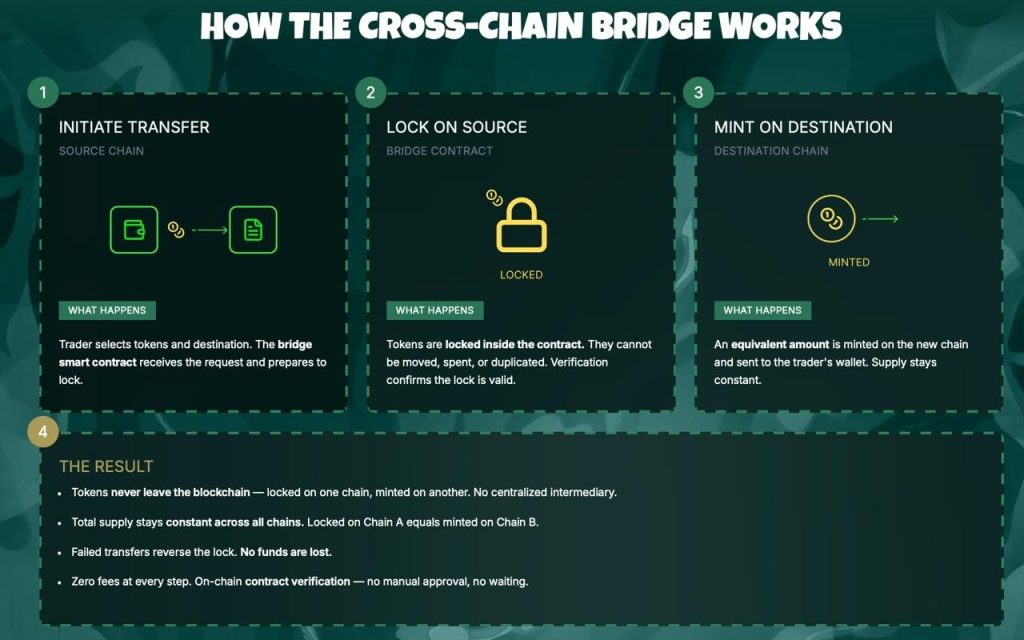
Markets are noticing this. Liquidity is splintering across bridges that inherit each rollup’s weakest‑link assumptions. The resulting web of custodial multisigs and emergency‑pause switches creates systemic risk that traders are now pricing into asset valuations. If the discount for “sequencer risk” widens further, Ether’s monetary premium will suffer.

Decentralizing L2s simply turns them into L1s 

A common fallback counter to the fact that L2s are a centralized mess is that they’ll be decentralized at a future date. This is a self-defeating argument. 

If you take an L2 and turn it into a truly decentralized network of sequencers, whereby the sequencers collaborate using a decentralized consensus to provide strong guarantees on inclusion, ordering and execution, what do you get? You end up with an L1. 

Anyone arguing that L2s can eventually be decentralized is saying they’ll turn into L1s at some point, leaching liquidity, fees and total value locked (TVL) away from the L1 (basically Ethereum) they’re purported to help scale. 

The incumbents running today’s profitable single‑sequencer stacks would hardly see any incentive to dilute their power.

The way to scale Ethereum is to… scale Ethereum

Ethereum doesn’t have to be slow and expensive. Many newer consensus designs on mainnets can be referenced to improve the network’s technical functionalities. 

With a TVL rapidly approaching $100 billion, it’s perfectly reasonable that Ethereum developers would be extra cautious when implementing fundamental changes to the network’s core architecture. However, active progress needs to be made toward scaling Ethereum itself, not solely focused on these parasitic L2s, which are role-playing as decentralized networks. 

Funding key upgrades on production, execution and consensus would reinforce Ethereum’s neutrality, preserve its fee revenue and restore user confidence without the bridge-risk tax rollups imposed.

Let’s ditch the L2s and make scaling the Ethereum L1 a priority. 

Opinion by: Steven Pu, co-founder of Taraxa.

This article is for general information purposes and is not intended to be and should not be taken as legal or investment advice. The views, thoughts, and opinions expressed here are the author’s alone and do not necessarily reflect or represent the views and opinions of Cointelegraph.

Source: https://cointelegraph.com/news/layer-2s-are-destroying-crypto?utm_source=rss_feed&utm_medium=feed&utm_campaign=rss_partner_inbound


Market Opportunity
Moonveil Logo
Moonveil Price(MORE)
$0.002312
$0.002312$0.002312
-0.72%
USD
Moonveil (MORE) Live Price Chart
Disclaimer: The articles reposted on this site are sourced from public platforms and are provided for informational purposes only. They do not necessarily reflect the views of MEXC. All rights remain with the original authors. If you believe any content infringes on third-party rights, please contact service@support.mexc.com for removal. MEXC makes no guarantees regarding the accuracy, completeness, or timeliness of the content and is not responsible for any actions taken based on the information provided. The content does not constitute financial, legal, or other professional advice, nor should it be considered a recommendation or endorsement by MEXC.

You May Also Like

The Economics of Self-Isolation: A Game-Theoretic Analysis of Contagion in a Free Economy

The Economics of Self-Isolation: A Game-Theoretic Analysis of Contagion in a Free Economy

Exploring how the costs of a pandemic can lead to a self-enforcing lockdown in a networked economy, analyzing the resulting changes in network structure and the existence of stable equilibria.
Share
Hackernoon2025/09/17 23:00
One Of Frank Sinatra’s Most Famous Albums Is Back In The Spotlight

One Of Frank Sinatra’s Most Famous Albums Is Back In The Spotlight

The post One Of Frank Sinatra’s Most Famous Albums Is Back In The Spotlight appeared on BitcoinEthereumNews.com. Frank Sinatra’s The World We Knew returns to the Jazz Albums and Traditional Jazz Albums charts, showing continued demand for his timeless music. Frank Sinatra performs on his TV special Frank Sinatra: A Man and his Music Bettmann Archive These days on the Billboard charts, Frank Sinatra’s music can always be found on the jazz-specific rankings. While the art he created when he was still working was pop at the time, and later classified as traditional pop, there is no such list for the latter format in America, and so his throwback projects and cuts appear on jazz lists instead. It’s on those charts where Sinatra rebounds this week, and one of his popular projects returns not to one, but two tallies at the same time, helping him increase the total amount of real estate he owns at the moment. Frank Sinatra’s The World We Knew Returns Sinatra’s The World We Knew is a top performer again, if only on the jazz lists. That set rebounds to No. 15 on the Traditional Jazz Albums chart and comes in at No. 20 on the all-encompassing Jazz Albums ranking after not appearing on either roster just last frame. The World We Knew’s All-Time Highs The World We Knew returns close to its all-time peak on both of those rosters. Sinatra’s classic has peaked at No. 11 on the Traditional Jazz Albums chart, just missing out on becoming another top 10 for the crooner. The set climbed all the way to No. 15 on the Jazz Albums tally and has now spent just under two months on the rosters. Frank Sinatra’s Album With Classic Hits Sinatra released The World We Knew in the summer of 1967. The title track, which on the album is actually known as “The World We Knew (Over and…
Share
BitcoinEthereumNews2025/09/18 00:02
The U.S. Department of Justice files civil forfeiture lawsuit for over $225 million in crypto fraud funds

The U.S. Department of Justice files civil forfeiture lawsuit for over $225 million in crypto fraud funds

PANews reported on June 18 that according to an official announcement, the U.S. Department of Justice filed a civil forfeiture lawsuit in the U.S. District Court for the District of
Share
PANews2025/06/18 23:59