

Behavior Change: The Missing Link in Climate and CX Transformation
Lifestyle and Behavior Change are the New Climate Battleground: What CX & EX Leaders Must Learn from
A plastic bag. A leadership summit. A moment of truth.
Imagine this.
You leave a high-profile climate summit.
You applaud bold targets.
Then, you tweet about resilience.
Then a vendor hands you a plastic bag.
You take it.
That contradiction is the climate crisis in one act.
At the Innovation for Resilience Summit during (DCIW) 2026, Delhi’s Environment Minister delivered a blunt message:
For CX and EX leaders, this statement is not about climate alone.
It is about behavior change at scale.
And behavior change is our business.
What Did the Minister Actually Say — and Why Should CX Leaders Care?
Short answer: Climate change will not be solved by policy alone. It demands daily behavior shifts. The same principle applies to customer and employee experience transformation.
Speaking at DCIW’s flagship Innovation for Resilience Summit, Shri Sirsa revealed a sobering figure:
- 11,000 metric tons of municipal waste per day in Delhi
- 30,000–35,000 tons of legacy waste cleared daily from dump sites
Processing waste into fuel helps.
But it strains roads, logistics, and infrastructure.
His conclusion was clear:
Replace “climate change” with:
- AI adoption
- Journey orchestration
- Sustainability transformation
- Omnichannel integration
The pattern holds.
Technology does not fail.
Adoption fails.
What Is Lifestyle-Led Change — and Why CX Teams Need It?
Short answer: Lifestyle-led change embeds new behaviors into everyday routines. CX teams need it to avoid transformation fatigue and silo relapse.
Traditional change programs focus on systems.
But behavior drives outcomes.
In Delhi’s context, the call was simple:
- Plant trees.
- Use less water.
- Refuse plastic bags.
Small acts. Massive cumulative impact.
For CX leaders, the equivalent behaviors are:
- Logging insights into a shared system.
- Closing the loop within 24 hours.
- Using unified customer IDs.
- Refusing shadow data silos.
Experience transformation is behavioral, not technical.
Why Are Climate and CX Facing the Same Structural Problem?
Short answer: Both suffer from fragmentation, misaligned incentives, and short-termism.
Let’s examine parallels.
| Climate Challenge | CX Equivalent |
|---|---|
| Waste accumulation | Data debt |
| Legacy dump sites | Legacy systems |
| Infrastructure strain | Channel overload |
| Policy vs behavior gap | Strategy vs frontline gap |
| Innovation summits | CX strategy offsites |
At DCIW, stakeholders included:
This coalition model mirrors mature CX governance ecosystems.
Resilience requires:
- Policy alignment
- Financial mechanisms
- Technology enablement
- Implementation discipline
Sound familiar?
What Can CX Leaders Learn from the DCIW Coalition Model?
Short answer: Orchestrate ecosystems, not departments.
DCIW is presented by in strategic partnership with cross-sector players.
CCF itself has:
- Executed 96+ climate tech acceleration programs
- Supported 1,457 early-stage startups
- Enabled USD 235 million in post-program funding
- Backed 409 women-led startups
That scale happened through orchestration.
Not control.
Not centralization.
And not command-and-control governance.
For CX leaders, the implication is clear:
What Is the “Refuse the Plastic Bag” Framework for CX?
Short answer: Make small behavioral refusals that prevent long-term experience debt.
Borrowing from Sirsa’s example, here’s a simple behavioral framework.
1. Refuse Fragmentation
- No new channel without orchestration.
- No AI pilot without governance.
2. Refuse Data Silos
- Mandate unified identifiers.
- Audit duplicate datasets quarterly.
3. Refuse Vanity Metrics
- Replace NPS-only dashboards with outcome-linked KPIs.
- Tie experience metrics to cost-to-serve.
4. Refuse Leadership Theatre
- No innovation event without execution roadmap.
- No strategy document without budget allocation.
Small refusals.
Massive long-term relief.
How Does This Connect to AI Gaps in CX?
Short answer: AI fails when behavior remains analog.
Many CX leaders complain about:
- Low AI adoption.
- Hallucination fears.
- Tool fatigue.
- Shadow copilots.
But the minister’s insight applies here too:
AI enablement must become lifestyle:
- Daily prompts integrated into workflows.
- AI usage tied to performance goals.
- Leaders modeling adoption publicly.
Climate change is not cured by conferences.
AI adoption is not cured by licenses.
What Is the Resilience Lens for CX Strategy?
Short answer: Resilience means designing for stress, volatility, and long-term adaptation — not peak performance alone.
The Innovation for Resilience Summit focused on grounded discussions:
- What works.
- What needs to change.
- How collaboration unlocks durable outcomes.
For CX leaders, resilience means:
- Designing journeys for failure scenarios.
- Planning for regulatory shifts.
- Embedding sustainability into experience.
- Anticipating cost volatility.
Resilient CX absorbs shocks.
Fragile CX amplifies them.
Common Pitfalls CX Leaders Must Avoid
1. Mistaking Technology for Transformation
Platforms enable.
People execute.
2. Over-Centralizing Governance
Orchestration beats bureaucracy.
3. Ignoring Emotional Ownership
Behavior shifts need emotional buy-in.
4. Treating Sustainability as PR
Customers detect performative messaging instantly.
Key Insights from the Summit for CXQuest Leaders
- Lifestyle change is harder than policy change.
- Behavioral micro-actions compound into macro impact.
- Coalitions outperform isolated actors.
- Innovation without implementation is theatre.
- Responsibility must feel personal.
The most powerful line from Sirsa:
For CX leaders, the mirror version reads:
How Should Advanced CX Leaders Respond Now?
Short answer: Embed responsibility, not just reporting, into your operating model.
Step 1: Conduct a Behavioral Audit
Where does your organization default to fragmentation?
Step 2: Align Incentives
Tie bonuses to cross-functional metrics.
Step 3: Build a Coalition Board
Include IT, HR, Finance, Sustainability, Operations.
Step 4: Measure Experience Debt
Quantify friction cost.
Step 5: Normalize Daily Micro-Commitments
Small, repeatable, visible actions.
FAQ: Long-Tail Questions CX Leaders Are Asking
How does climate innovation relate to customer experience strategy?
Climate innovation emphasizes resilience and behavior change. CX strategy requires the same structural discipline.
What can CX teams learn from Delhi Climate Innovation Week?
Ecosystem collaboration, outcome focus, and implementation over narrative.
How do you drive behavior change in siloed CX organizations?
Embed micro-actions into workflows and align incentives with shared KPIs.
Why do AI transformation programs stall in large enterprises?
They focus on tools, not daily behavioral integration.
How can sustainability become part of CX, not marketing?
Link sustainability outcomes directly to product design and service experience.
Crux of the Matter is-
Delhi Minister Says Lifestyle Is the Biggest Climate Threat — CX Leaders Should Listen
At DCIW 2026, Delhi Environment Minister Manjinder Singh Sirsa said lifestyle change is the biggest climate challenge. For CX leaders, the lesson is clear: behavior change, not technology alone, drives transformation success.
Actionable Takeaways for CX & EX Leaders
- Audit daily behaviors, not just strategy decks.
- Eliminate one siloed process this quarter.
- Tie AI adoption to performance reviews.
- Create a cross-functional resilience council.
- Measure experience debt in financial terms.
- Replace vanity CX metrics with outcome-linked KPIs.
- Model micro-behaviors publicly as a leader.
- Refuse one “plastic bag” practice every month.
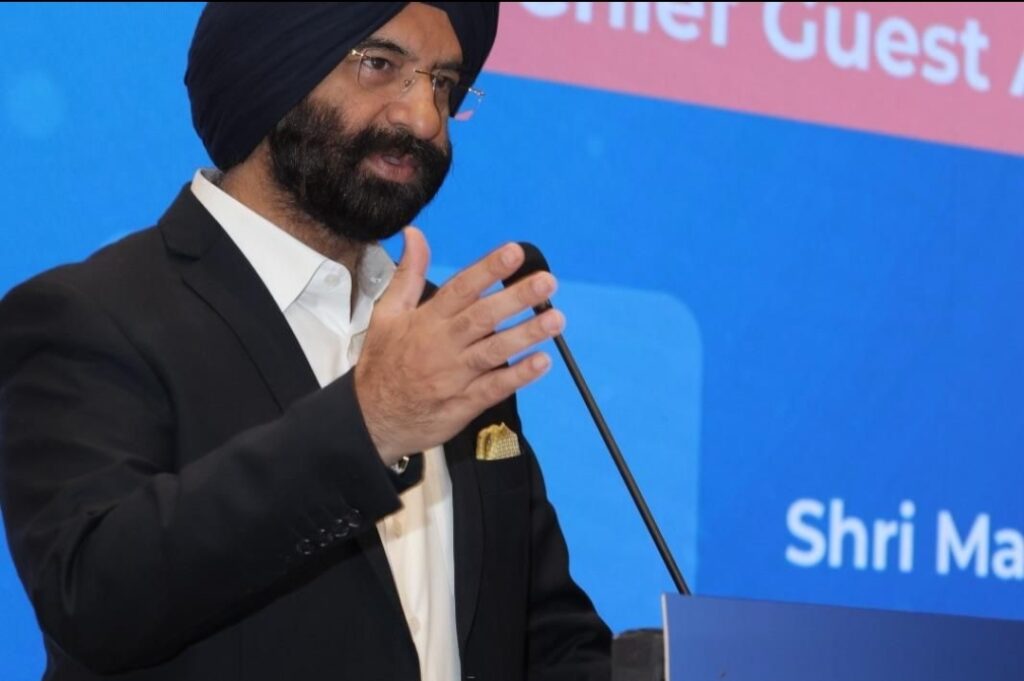
The minister ended with a powerful image:
If 130 crore people contribute a little, the change will be massive.
If every CX leader removes one friction point this quarter,
the transformation will be unstoppable.
Lifestyle is not a soft concept.
It is the hardest operating model shift of our time.
And the biggest competitive advantage waiting to be claimed.
The post Behavior Change: The Missing Link in Climate and CX Transformation appeared first on CX Quest.


You May Also Like

AEVIS VICTORIA Shareholders Approve All Proposals at 2025 AGM

Mike Johnson 'fed up' with Trump as he ditches White House for first time: insiders

How to Spot a South African Cyber-Scam Before You Click “Pay”



