

UK Military Policy Shift: Keir Starmer’s Decisive Stance Against Joining US-Israel Offensive Strikes
BitcoinWorld
UK Military Policy Shift: Keir Starmer’s Decisive Stance Against Joining US-Israel Offensive Strikes
In a significant declaration reshaping transatlantic military cooperation, UK Prime Minister Keir Starmer has unequivocally stated that Britain will not participate in offensive military strikes conducted by the United States and Israel. This pivotal announcement, made from London on July 15, 2025, signals a potential recalibration of the United Kingdom’s long-standing defense and foreign policy posture. Consequently, analysts and diplomats worldwide are scrutinizing the implications for the “Special Relationship” and broader Middle Eastern stability. The decision arrives amid complex geopolitical tensions, marking one of Starmer’s most definitive foreign policy positions since taking office.
UK Military Policy Under Prime Minister Keir Starmer
Prime Minister Keir Starmer’s administration is establishing a distinct foreign policy framework. This framework emphasizes strategic autonomy and a rules-based international order. The recent statement regarding offensive strikes represents a cornerstone of this evolving doctrine. Historically, the UK has frequently aligned its military actions with key allies, particularly the United States. However, the current government appears to be charting a more independent course. This shift involves careful calculation of national interest, legal justifications, and diplomatic consequences.
Furthermore, the government’s stance reflects a broader strategic review initiated earlier this year. This review assesses global threats and the UK’s role in collective security. Officials cite the need for clear parliamentary oversight and unambiguous international legal mandates for military intervention. The policy does not preclude defensive operations or participation in multilateral missions sanctioned by bodies like the United Nations. Instead, it draws a firm line against unilateral or coalition-led offensive actions where the UK’s direct security interests are not explicitly engaged. This nuanced approach seeks to balance alliance commitments with sovereign decision-making.
Analyzing the US-Israel Military Alliance and UK Position
The military partnership between the United States and Israel is one of the world’s most robust and enduring defense relationships. It features extensive arms transfers, joint exercises, and intelligence sharing. In recent months, speculation about potential preemptive or retaliatory offensive strikes against mutual adversaries has increased regional anxieties. The UK’s traditional role in such dynamics has often been as a supportive, if sometimes cautious, partner. Prime Minister Starmer’s declaration, therefore, creates a new diplomatic variable.
This decision may influence operational planning in Washington and Tel Aviv. While the US possesses overwhelming independent military capacity, the political and symbolic value of British participation has historically been significant. The UK’s abstention could affect the perceived legitimacy of such actions among European and NATO allies. A comparative analysis of recent allied military engagements highlights the UK’s changing role.
| Conflict/Operation | UK Participation | Primary Justification |
|---|---|---|
| 2003 Iraq Invasion | Leading Participant | Coalition, WMD Claims |
| 2011 Libya Intervention | Leading Participant | UNSC Resolution 1973 |
| 2014-2021 Anti-ISIS Campaign | Active Participant | Collective Self-Defense, Iraqi Gov’t Request |
| 2025 Stated Policy | Non-Participation in US-Israel Offensives | Lack of Direct Mandate, Sovereign Risk Assessment |
This table illustrates a clear evolution from automatic alignment to conditional engagement based on specific criteria.
Immediate Impacts and Global Reactions
The international response to Prime Minister Starmer’s announcement has been swift and varied. Key allies and adversaries are interpreting the move through their strategic lenses. Within the United States, reactions range from understanding to disappointment among certain political circles. Meanwhile, Israeli officials have noted the statement but emphasize the strength of their bilateral ties with the UK in other domains. European Union capitals largely view the decision as a reaffirmation of sovereign policy-making, though some express concern about potential fragmentation in Western cohesion.
Regionally, the announcement may alter risk calculations for state and non-state actors. The specific exclusion from “offensive strikes” provides a degree of predictability. However, it does not guarantee blanket non-interference, especially if threats to international shipping or direct attacks on allies occur. Financial and defense markets are also adjusting. Analysts are monitoring:
- Defense Procurement: Potential long-term effects on joint weapons programs.
- Intelligence Sharing: The Five Eyes alliance remains intact, but operational intelligence for offensive planning may be affected.
- Diplomatic Channels: Increased dialogue between UK Foreign Office officials and Middle Eastern partners to explain the policy’s contours.
These developments underscore the statement’s immediate, tangible consequences beyond diplomatic rhetoric.
Expert Analysis on Legal and Strategic Precedents
Leading foreign policy experts and constitutional scholars provide critical context for this decision. Professor Anya Sharma, Director of the Royal Institute of Strategic Studies, notes the growing importance of domestic and international legal frameworks in UK military deployments. “The Iraq War inquiries and recent judicial reviews have created a higher threshold for intervention,” Sharma explains. “The government is now exceptionally cautious about actions lacking a clear UN Security Council resolution or an imminent, demonstrable threat.” This legalistic approach forms a core component of the government’s public and parliamentary communication strategy.
Moreover, retired Major General Sir James Powell highlights the strategic calculus. “This is less about abandoning allies and more about defining the UK’s independent role post-Brexit and in a multipolar world,” he states. “The message is that British forces will be deployed following a sovereign UK decision, not as an automatic adjunct to another power’s foreign policy.” This perspective aligns with the government’s stated goal of an “integrated review” of security, defense, and foreign policy. The policy aims to preserve key alliances while asserting the right to independent judgment, a balance that will be tested by future international crises.
Conclusion
Prime Minister Keir Starmer’s declaration that the UK will not join US-Israel offensive strikes represents a defining moment in contemporary British foreign policy. This decision underscores a shift toward greater strategic independence and legal scrutiny in military engagements. While firmly rooted within the UK’s national interest framework, the move inevitably influences the dynamics of the US-UK Special Relationship and the broader Western alliance structure. The long-term implications will depend on evolving global threats and the consistency with which this UK military policy is applied. Ultimately, this stance reaffirms the complex, calculated nature of modern statecraft in an increasingly volatile international landscape.
FAQs
Q1: Does this mean the UK is leaving its alliance with the United States?
No, this is not the case. The statement is specific to participating in offensive military strikes by the US and Israel. The broader UK-US alliance, including NATO membership, intelligence sharing (Five Eyes), and trade, remains fully intact. The policy reflects a choice on specific military actions, not a dissolution of the fundamental partnership.
Q2: What is the difference between an ‘offensive’ and ‘defensive’ strike in this context?
In military and legal terms, an offensive strike is a preemptive or retaliatory action initiated to achieve a strategic objective, often without an immediate, ongoing attack. A defensive strike is a direct response to an active, imminent attack or in collective self-defense of an ally who is under attack. The UK government has indicated it would consider requests for support in defensive scenarios under clear legal frameworks.
Q3: Has the UK ever refused to join US military action before?
Yes, there are historical precedents. Notably, the UK did not participate in the US-led Vietnam War. More recently, Parliament voted against direct military intervention in Syria in 2013, a decision that diverged from the stated preference of the US administration at the time. This new statement formalizes a similar principle for a specific set of potential future actions.
Q4: How might this affect the UK’s standing in NATO?
NATO is a defensive alliance based on Article 5 collective defense. The UK’s commitment to NATO remains unwavering. The policy in question pertains to offensive actions outside the NATO treaty area and framework. As such, it is not expected to directly affect the UK’s core NATO obligations or standing, though it may influence political consultations within the alliance.
Q5: Could this policy change in the future?
All government policies are subject to review based on changing circumstances. A significant escalation of threats, a direct attack on a close ally, or a new United Nations Security Council mandate could prompt a reassessment. The current statement reflects the government’s position based on its present analysis of the geopolitical environment and national interest.
This post UK Military Policy Shift: Keir Starmer’s Decisive Stance Against Joining US-Israel Offensive Strikes first appeared on BitcoinWorld.


You May Also Like

Hyperliquid Climbs Into Crypto’s Top 10 Despite U.S. Geoblock

Glassnode Warns Nearly 30% Of Bitcoin Supply Could Face Future Quantum Risks
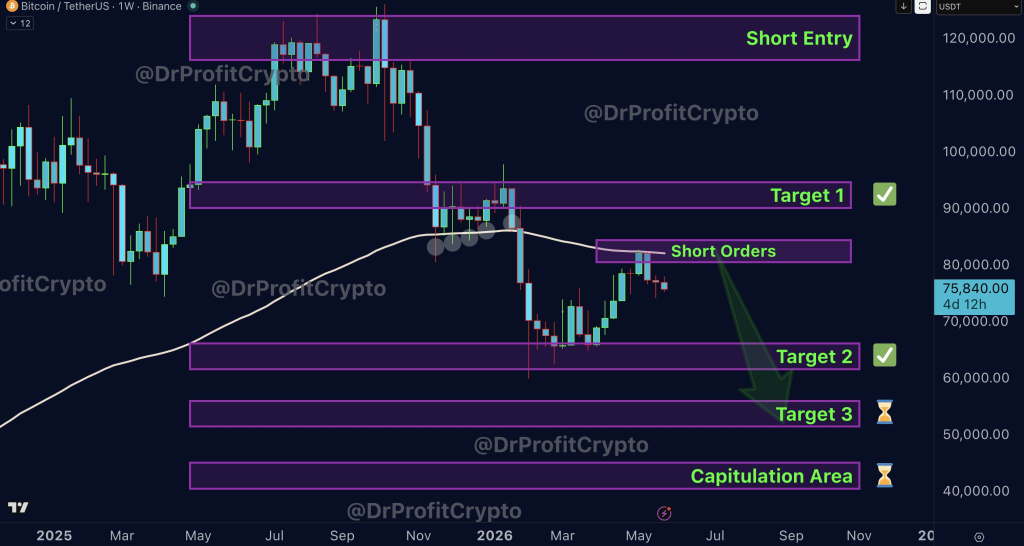
Bitcoin Price News: BTC at Risk of Falling to $70K as Crypto Veteran Calls for 50‑60K in Coming Months



