

Bitcoin Whale Activity Rises While U.S. Spot Demand Stays Weak
Bitcoin is trading near $66,000, while on-chain indicators show a renewed increase in whale activity across spot exchanges.
The Exchange Whale Ratio (30-day SMA) is climbing again, a pattern that previously appeared during the last major drawdown.
At the same time, U.S. spot demand remains muted, creating a market structure that appears increasingly flow-driven rather than demand-driven.
Exchange Whale Ratio Climbs as Price Stalls
The Exchange Whale Ratio measures the share of large transactions flowing into exchanges relative to total inflows. When the 30-day moving average rises, it signals that bigger players are accounting for a larger portion of exchange activity.
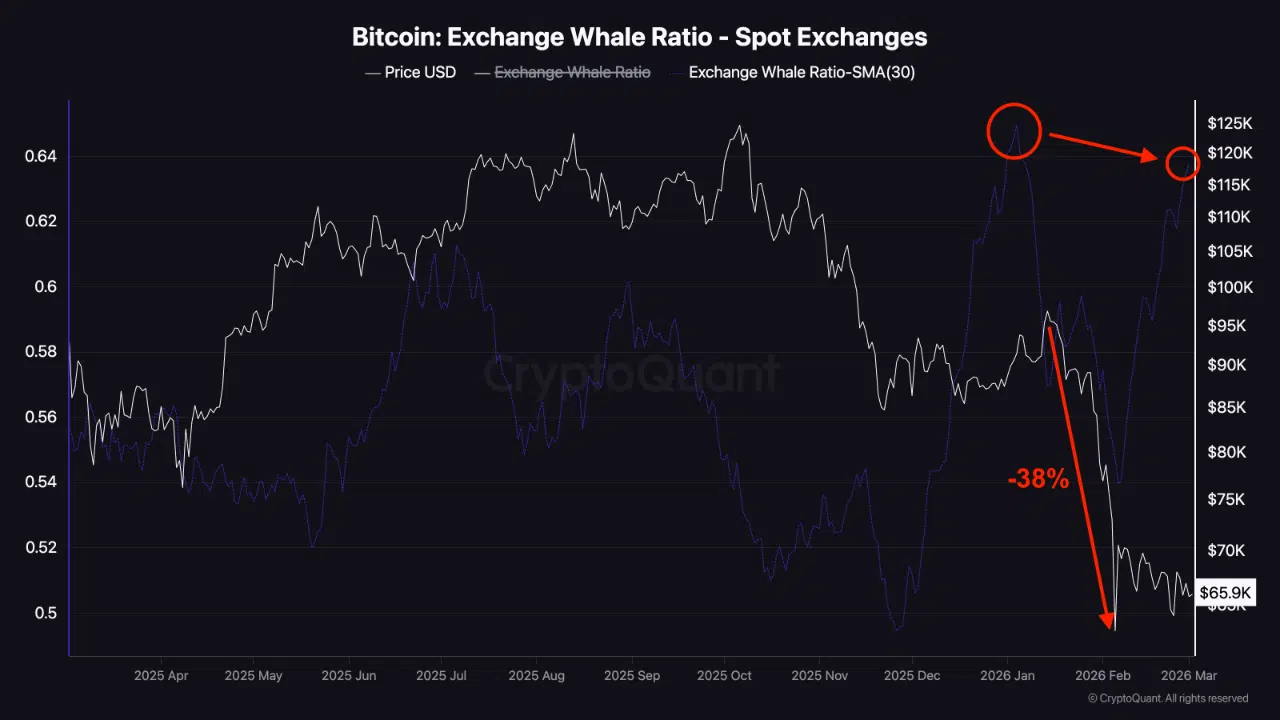 Earlier in the cycle, this metric began climbing as Bitcoin declined roughly 40%. That phase reflected increasing whale participation during weakness. The current structure looks similar, with the Whale Ratio-SMA(30) trending higher again while price trades under pressure.
This does not automatically confirm aggressive selling. However, rising whale participation during price weakness often suggests that large holders are actively positioning around the move rather than remaining passive.
Coinbase Premium Signals Weak U.S. Demand
The second chart shows the Coinbase Premium Index, which has remained negative for extended periods. A negative reading typically indicates weaker spot demand from U.S.-based buyers compared to offshore markets.
The sustained negative premium suggests that U.S. spot buyers are not aggressively stepping in despite recent price declines. In other words, while whales are becoming more active, broad-based spot demand appears fragile.
This divergence adds context to the current market structure.
Liquidity Flows Show Defensive Positioning
USDC (ERC-20) netflows have turned positive again, signaling capital moving back onto exchanges. However, these inflows have not translated into sustained spot Bitcoin buying. Liquidity is present on trading venues but remains largely inactive.
Meanwhile, USDT (ERC-20) netflows continue trending negative, implying capital is leaving Ethereum-based rails. This aligns with a broader migration toward alternative settlement networks such as Tron.
Together, these flows suggest a defensive liquidity environment rather than aggressive risk expansion.
Flow-Driven Market Until Spot Demand Returns
When whale activity rises while spot demand remains weak, price action tends to become more positioning-driven. In such environments, moves can accelerate quickly but may lack durability without organic buying support.
If this structure persists, it suggests large players are actively involved in the market while retail and U.S. spot participation remain cautious.
Until sustained spot demand re-emerges, upside rallies are likely to remain fragile and dependent on liquidity flows rather than broad conviction.
The post Bitcoin Whale Activity Rises While U.S. Spot Demand Stays Weak appeared first on ETHNews.


You May Also Like

Iran agrees to hand over enriched uranium stockpile ahead of Islamabad talks

Flutterwave partner Kulipa secures $6.2 million to bring Stablecoin-funded payment cards to Nigeria




