The post ECB’s Lagarde urges tougher rules on non-EU stablecoins appeared on BitcoinEthereumNews.com. Christine Lagarde, president of the European Central Bank (ECB), has called on policymakers to strengthen oversight of stablecoins that fall outside the European Union’s “robust” Markets in Crypto-Assets (MiCA) framework. EU lawmakers should intervene if an entity covered by the landmark Markets in Crypto-assets regulation (MiCA) works with a non-EU entity to issue stablecoins, Lagarde said Wednesday at the ninth annual European Systemic Risk Board conference.  She said these issuers should be banned from operating in the EU unless there were “robust equivalence regimes” in place in their home markets. She has since argued that these measures, which, she said, introduce a “clear cut off that demonstrates that EU operators are authorized,” should mean that EU investors are not taking on incremental redemption risk and that issuers will be fully reserved by their tokens. “In the event of a run, investors would naturally prefer to redeem in the jurisdiction with the strongest safeguards, which is likely to be the EU, where MiCAR also prohibits redemption fees,” Lagarde said. “But the reserves held in the EU may not be sufficient to meet such concentrated demand.” US stablecoin rules could reshape Europe’s digital currency plans Stablecoins are cryptocurrencies engineered to keep their value, pegging their worth to an underlying asset like the United States dollar or euro. The debate around a digital euro has been ongoing among European Central Bank officials for some time. Still, recent momentum may be driven by the passage of stablecoin legislation overseas, particularly in the U.S. In July, the U.S. Congress approved a law that would provide a regulatory framework for stablecoins, which is likely to help issuers of dollar-pegged tokens. ECB Executive Board member Piero Cipollone warned in April that such policies could have far-reaching implications. “The U.S. government’s policies could potentially result not just in… The post ECB’s Lagarde urges tougher rules on non-EU stablecoins appeared on BitcoinEthereumNews.com. Christine Lagarde, president of the European Central Bank (ECB), has called on policymakers to strengthen oversight of stablecoins that fall outside the European Union’s “robust” Markets in Crypto-Assets (MiCA) framework. EU lawmakers should intervene if an entity covered by the landmark Markets in Crypto-assets regulation (MiCA) works with a non-EU entity to issue stablecoins, Lagarde said Wednesday at the ninth annual European Systemic Risk Board conference.  She said these issuers should be banned from operating in the EU unless there were “robust equivalence regimes” in place in their home markets. She has since argued that these measures, which, she said, introduce a “clear cut off that demonstrates that EU operators are authorized,” should mean that EU investors are not taking on incremental redemption risk and that issuers will be fully reserved by their tokens. “In the event of a run, investors would naturally prefer to redeem in the jurisdiction with the strongest safeguards, which is likely to be the EU, where MiCAR also prohibits redemption fees,” Lagarde said. “But the reserves held in the EU may not be sufficient to meet such concentrated demand.” US stablecoin rules could reshape Europe’s digital currency plans Stablecoins are cryptocurrencies engineered to keep their value, pegging their worth to an underlying asset like the United States dollar or euro. The debate around a digital euro has been ongoing among European Central Bank officials for some time. Still, recent momentum may be driven by the passage of stablecoin legislation overseas, particularly in the U.S. In July, the U.S. Congress approved a law that would provide a regulatory framework for stablecoins, which is likely to help issuers of dollar-pegged tokens. ECB Executive Board member Piero Cipollone warned in April that such policies could have far-reaching implications. “The U.S. government’s policies could potentially result not just in…

ECB’s Lagarde urges tougher rules on non-EU stablecoins

For feedback or concerns regarding this content, please contact us at crypto.news@mexc.com

Christine Lagarde, president of the European Central Bank (ECB), has called on policymakers to strengthen oversight of stablecoins that fall outside the European Union’s “robust” Markets in Crypto-Assets (MiCA) framework.

EU lawmakers should intervene if an entity covered by the landmark Markets in Crypto-assets regulation (MiCA) works with a non-EU entity to issue stablecoins, Lagarde said Wednesday at the ninth annual European Systemic Risk Board conference. 

She said these issuers should be banned from operating in the EU unless there were “robust equivalence regimes” in place in their home markets. She has since argued that these measures, which, she said, introduce a “clear cut off that demonstrates that EU operators are authorized,” should mean that EU investors are not taking on incremental redemption risk and that issuers will be fully reserved by their tokens.

“In the event of a run, investors would naturally prefer to redeem in the jurisdiction with the strongest safeguards, which is likely to be the EU, where MiCAR also prohibits redemption fees,” Lagarde said. “But the reserves held in the EU may not be sufficient to meet such concentrated demand.”

US stablecoin rules could reshape Europe’s digital currency plans

Stablecoins are cryptocurrencies engineered to keep their value, pegging their worth to an underlying asset like the United States dollar or euro. The debate around a digital euro has been ongoing among European Central Bank officials for some time. Still, recent momentum may be driven by the passage of stablecoin legislation overseas, particularly in the U.S.

In July, the U.S. Congress approved a law that would provide a regulatory framework for stablecoins, which is likely to help issuers of dollar-pegged tokens.

ECB Executive Board member Piero Cipollone warned in April that such policies could have far-reaching implications. “The U.S. government’s policies could potentially result not just in further losses of fees and data, but also in euro deposits being moved to the United States and in a further strengthening of the role of the dollar in cross-border payments,” he said.

Global stablecoin race heats up as oversight concerns grow

As a law in the U.S. takes one step toward implementation and EU officials ponder how to handle stablecoins, China may also be planning a yuan-backed coin.

Reports in August indicated that the Chinese government was thinking about its own stablecoin pegged to its renminbi currency after the slow rollout of a digital yuan. As of Monday, officials had not yet announced whether the country would advance a state-issued stablecoin, as it has been considering doing in response to U.S. efforts to bolster the dollar’s role.

Nobel Prize-winning economist Jean Tirole has also cautioned about the “insufficient oversight” of stablecoins, warning that governments could face multibillion-dollar bailouts if the tokens collapse during a future financial crisis.

Speaking to the Financial Times, the 2014 Nobel laureate in economics said he was “very, very worried” about the lack of supervision and the risk of a depositor run if doubts were to arise over the reserve assets backing the digital tokens.

Stablecoins issued by companies like Tether and Circle, pegged to real-world assets, are poised to grow in popularity following a U.S. law passed in July that allows banks to create their own dollar-linked digital assets. 

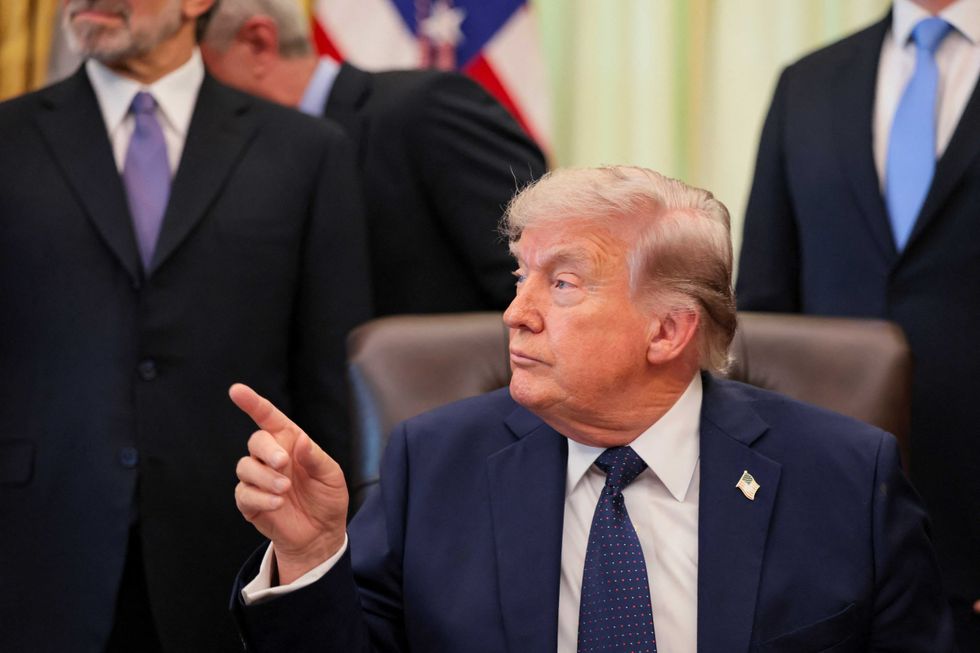
Global stablecoin usage has already climbed to roughly $280 billion, with President Donald Trump advocating for their role as a cornerstone of mainstream finance.

While retail users could regard them as “a perfectly safe deposit”, stablecoins could become a source of losses and trigger calls for costly government-led bailouts, said Tirole, a professor at the Toulouse School of Economics.

He cautioned that backing stablecoins with U.S. government bonds could become unpopular because of the underlying assets’ relatively low yields. Tirole cited earlier instances when the returns of Treasury debt were low for several years, and payouts after inflation were even struggling.

He warned that stablecoin issuers could be lured into the “temptation” to invest in alternative assets that offer higher returns and are riskier.

KEY Difference Wire: the secret tool crypto projects use to get guaranteed media coverage

Source: https://www.cryptopolitan.com/lagarde-urges-stricter-stablecoin-rules/

Market Opportunity
Wink Logo
Wink Price(LIKE)
$0,001708
$0,001708$0,001708
-%0,29
USD
Wink (LIKE) Live Price Chart
Disclaimer: The articles reposted on this site are sourced from public platforms and are provided for informational purposes only. They do not necessarily reflect the views of MEXC. All rights remain with the original authors. If you believe any content infringes on third-party rights, please contact crypto.news@mexc.com for removal. MEXC makes no guarantees regarding the accuracy, completeness, or timeliness of the content and is not responsible for any actions taken based on the information provided. The content does not constitute financial, legal, or other professional advice, nor should it be considered a recommendation or endorsement by MEXC.

You May Also Like

BlackRock boosts AI and US equity exposure in $185 billion models

BlackRock boosts AI and US equity exposure in $185 billion models

The post BlackRock boosts AI and US equity exposure in $185 billion models appeared on BitcoinEthereumNews.com. BlackRock is steering $185 billion worth of model portfolios deeper into US stocks and artificial intelligence. The decision came this week as the asset manager adjusted its entire model suite, increasing its equity allocation and dumping exposure to international developed markets. The firm now sits 2% overweight on stocks, after money moved between several of its biggest exchange-traded funds. This wasn’t a slow shuffle. Billions flowed across multiple ETFs on Tuesday as BlackRock executed the realignment. The iShares S&P 100 ETF (OEF) alone brought in $3.4 billion, the largest single-day haul in its history. The iShares Core S&P 500 ETF (IVV) collected $2.3 billion, while the iShares US Equity Factor Rotation Active ETF (DYNF) added nearly $2 billion. The rebalancing triggered swift inflows and outflows that realigned investor exposure on the back of performance data and macroeconomic outlooks. BlackRock raises equities on strong US earnings The model updates come as BlackRock backs the rally in American stocks, fueled by strong earnings and optimism around rate cuts. In an investment letter obtained by Bloomberg, the firm said US companies have delivered 11% earnings growth since the third quarter of 2024. Meanwhile, earnings across other developed markets barely touched 2%. That gap helped push the decision to drop international holdings in favor of American ones. Michael Gates, lead portfolio manager for BlackRock’s Target Allocation ETF model portfolio suite, said the US market is the only one showing consistency in sales growth, profit delivery, and revisions in analyst forecasts. “The US equity market continues to stand alone in terms of earnings delivery, sales growth and sustainable trends in analyst estimates and revisions,” Michael wrote. He added that non-US developed markets lagged far behind, especially when it came to sales. This week’s changes reflect that position. The move was made ahead of the Federal…
Share
BitcoinEthereumNews2025/09/18 01:44
Dogecoin Price Could See A Major Spike To $10 If This Trend Repeats

Dogecoin Price Could See A Major Spike To $10 If This Trend Repeats

The Dogecoin price may be on the verge of its most historic rally yet, as a crypto market analyst has boldly forecasted an explosive rally to $10. Pointing to historical
Share
Bitcoinist2026/03/07 05:30
‘Obscene’: Grammarly’s New AI Tool Offers Writing Feedback From Dead Scholars

‘Obscene’: Grammarly’s New AI Tool Offers Writing Feedback From Dead Scholars

The post ‘Obscene’: Grammarly’s New AI Tool Offers Writing Feedback From Dead Scholars appeared on BitcoinEthereumNews.com. In brief Grammarly’s “Expert Review”
Share
BitcoinEthereumNews2026/03/07 05:31