The post ODL, RLUSD & XRP–Litecoin Showdown appeared on BitcoinEthereumNews.com. SWIFT vs Ripple: Competing Visions for the Future of Cross-Border Settlement The debate over the future of cross-border payments is intensifying, with SWIFT’s Chief Information Officer Tom Zschach recently stating that banks are unlikely to adopt XRP-based rails.  Instead, he suggested that financial institutions will prioritize internal settlement systems or stablecoin solutions. The comments underscore the cautious stance many incumbents maintain toward public blockchain assets, despite growing interest in digital currencies. Ripple, however, has pushed back with a suite of offerings designed to meet banks halfway. Its On-Demand Liquidity (ODL) product uses XRP as a bridge asset to source liquidity in real time, enabling instant cross-border value transfers without pre-funded nostro accounts. Ripple argues ODL lowers cost and frees capital, making it attractive to smaller remitters and payment providers that lack extensive balance sheets. To counter regulatory and integration objections, Ripple emphasises its licensing efforts and enterprise partnerships. The company points to licences obtained in various jurisdictions and tailored solutions for banks that require custody, compliance tooling and legal clarity.  On the other hand, Ripple’s RLUSD, a fiat-backed stablecoin for continuous settlement, blends blockchain efficiency with the trust and safeguards of traditional finance. Therefore, the debate hinges on trade-offs. Banks valuing control and regulatory certainty may favor internal rails or tightly regulated stablecoins, while those pursuing efficiency and capital optimization could turn to ODL and other bridge-layer solutions.  In markets with thin liquidity or costly remittances, access to intraday liquidity via a bridge asset can transform economics. XRP vs Litecoin Rivalry Intensifies as Ripple CTO Calls PoW a “Flaw” The rivalry between XRP and Litecoin communities has escalated sharply after Ripple’s Chief Technology Officer, David Schwartz, entered the fray with pointed criticism of Litecoin’s consensus model.  In a recent exchange on X, formerly Twitter, Schwartz took aim at Litecoin’s reliance… The post ODL, RLUSD & XRP–Litecoin Showdown appeared on BitcoinEthereumNews.com. SWIFT vs Ripple: Competing Visions for the Future of Cross-Border Settlement The debate over the future of cross-border payments is intensifying, with SWIFT’s Chief Information Officer Tom Zschach recently stating that banks are unlikely to adopt XRP-based rails.  Instead, he suggested that financial institutions will prioritize internal settlement systems or stablecoin solutions. The comments underscore the cautious stance many incumbents maintain toward public blockchain assets, despite growing interest in digital currencies. Ripple, however, has pushed back with a suite of offerings designed to meet banks halfway. Its On-Demand Liquidity (ODL) product uses XRP as a bridge asset to source liquidity in real time, enabling instant cross-border value transfers without pre-funded nostro accounts. Ripple argues ODL lowers cost and frees capital, making it attractive to smaller remitters and payment providers that lack extensive balance sheets. To counter regulatory and integration objections, Ripple emphasises its licensing efforts and enterprise partnerships. The company points to licences obtained in various jurisdictions and tailored solutions for banks that require custody, compliance tooling and legal clarity.  On the other hand, Ripple’s RLUSD, a fiat-backed stablecoin for continuous settlement, blends blockchain efficiency with the trust and safeguards of traditional finance. Therefore, the debate hinges on trade-offs. Banks valuing control and regulatory certainty may favor internal rails or tightly regulated stablecoins, while those pursuing efficiency and capital optimization could turn to ODL and other bridge-layer solutions.  In markets with thin liquidity or costly remittances, access to intraday liquidity via a bridge asset can transform economics. XRP vs Litecoin Rivalry Intensifies as Ripple CTO Calls PoW a “Flaw” The rivalry between XRP and Litecoin communities has escalated sharply after Ripple’s Chief Technology Officer, David Schwartz, entered the fray with pointed criticism of Litecoin’s consensus model.  In a recent exchange on X, formerly Twitter, Schwartz took aim at Litecoin’s reliance…

ODL, RLUSD & XRP–Litecoin Showdown

SWIFT vs Ripple: Competing Visions for the Future of Cross-Border Settlement

The debate over the future of cross-border payments is intensifying, with SWIFT’s Chief Information Officer Tom Zschach recently stating that banks are unlikely to adopt XRP-based rails. 

Instead, he suggested that financial institutions will prioritize internal settlement systems or stablecoin solutions. The comments underscore the cautious stance many incumbents maintain toward public blockchain assets, despite growing interest in digital currencies.

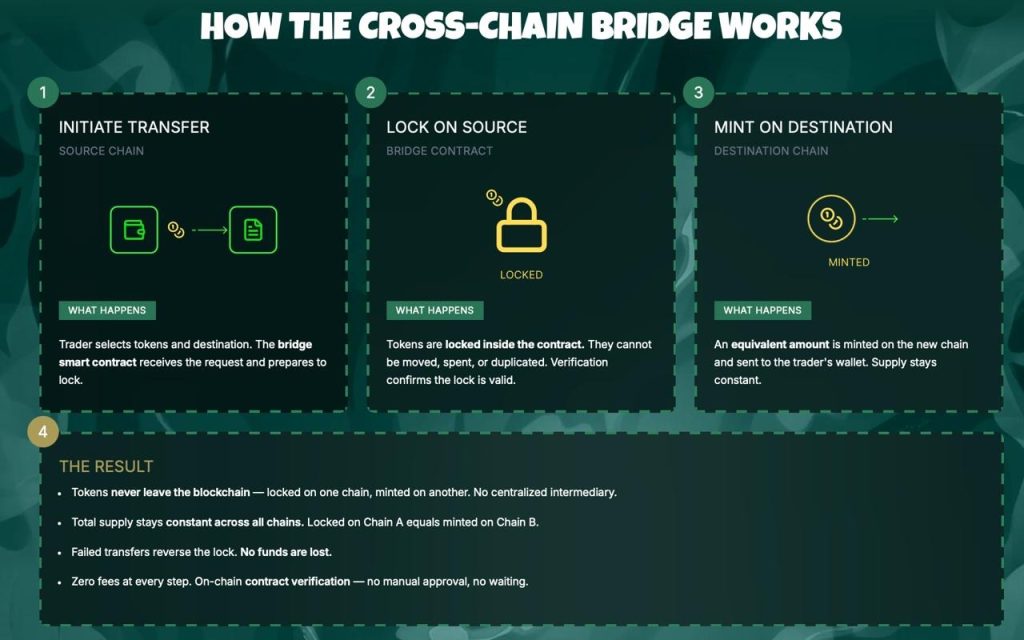
Ripple, however, has pushed back with a suite of offerings designed to meet banks halfway. Its On-Demand Liquidity (ODL) product uses XRP as a bridge asset to source liquidity in real time, enabling instant cross-border value transfers without pre-funded nostro accounts.

Ripple argues ODL lowers cost and frees capital, making it attractive to smaller remitters and payment providers that lack extensive balance sheets.

To counter regulatory and integration objections, Ripple emphasises its licensing efforts and enterprise partnerships. The company points to licences obtained in various jurisdictions and tailored solutions for banks that require custody, compliance tooling and legal clarity. 

On the other hand, Ripple’s RLUSD, a fiat-backed stablecoin for continuous settlement, blends blockchain efficiency with the trust and safeguards of traditional finance.

Therefore, the debate hinges on trade-offs. Banks valuing control and regulatory certainty may favor internal rails or tightly regulated stablecoins, while those pursuing efficiency and capital optimization could turn to ODL and other bridge-layer solutions. 

In markets with thin liquidity or costly remittances, access to intraday liquidity via a bridge asset can transform economics.

XRP vs Litecoin Rivalry Intensifies as Ripple CTO Calls PoW a “Flaw”

The rivalry between XRP and Litecoin communities has escalated sharply after Ripple’s Chief Technology Officer, David Schwartz, entered the fray with pointed criticism of Litecoin’s consensus model. 

In a recent exchange on X, formerly Twitter, Schwartz took aim at Litecoin’s reliance on Proof-of-Work (PoW), arguing that its high energy consumption represents a fundamental weakness, not a strength.

Schwartz’s remarks came in response to claims from LTC advocate Jonny Litecoin who touted the resilience and decentralization of PoW as superior to alternatives like XRP’s consensus protocol. 

However, Ripple’s CTO dismissed the narrative, emphasizing that energy-intensive models are increasingly unsustainable in today’s regulatory and environmental climate. 

By labeling PoW’s inefficiency, Schwartz reignited a long-standing debate over blockchain efficiency and sustainability.

Litecoin, often dubbed the “silver to Bitcoin’s gold,” has maintained its identity as a secure, mineable cryptocurrency since its launch in 2011. Proponents argue that its battle-tested PoW mechanism ensures robust security and decentralization, features that proof-of-stake or consensus-based systems may struggle to replicate. 

Yet, critics highlight the mounting costs of mining, both financial and environmental, at a time when global regulators are tightening scrutiny on energy-hungry digital assets.

XRP, by contrast, uses a consensus algorithm designed to validate transactions without mining. Supporters argue this enables faster settlement times, lower transaction costs, and a fraction of the energy usage compared to PoW networks. Ripple has positioned XRP as an environmentally conscious alternative suited for cross-border payments and institutional adoption.

Conclusion

As the XRP vs. Litecoin rivalry deepens, Schwartz’s critique highlights the growing divide between traditional PoW supporters and advocates of energy-efficient consensus models.

On the other hand, the future of cross-border settlement will hinge on whether banks stick to the safety of internal rails and stablecoins or embrace Ripple’s faster and blended approach of ODL, licensing, and RLUSD.

Source: https://coinpaper.com/10897/banks-wary-ripple-ready-odl-and-rlusd-meet-swift-skepticism-as-schwartz-slams-po-w-in-escalating-xrp-vs-litecoin-showdown


Market Opportunity
RealLink Logo
RealLink Price(REAL)
$0.07887
$0.07887$0.07887
+0.90%
USD
RealLink (REAL) Live Price Chart
Disclaimer: The articles reposted on this site are sourced from public platforms and are provided for informational purposes only. They do not necessarily reflect the views of MEXC. All rights remain with the original authors. If you believe any content infringes on third-party rights, please contact service@support.mexc.com for removal. MEXC makes no guarantees regarding the accuracy, completeness, or timeliness of the content and is not responsible for any actions taken based on the information provided. The content does not constitute financial, legal, or other professional advice, nor should it be considered a recommendation or endorsement by MEXC.

You May Also Like

Crypto Casino Luck.io Pays Influencers Up to $500K Monthly – But Why?

Crypto Casino Luck.io Pays Influencers Up to $500K Monthly – But Why?

Crypto casino Luck.io is reportedly paying influencers six figures a month to promote its services, a June 18 X post from popular crypto trader Jordan Fish, aka Cobie, shows. Crypto Influencers Reportedly Earning Six Figures Monthly According to a screenshot of messages between Cobie and an unidentified source embedded in the Wednesday post, the anonymous messenger confirmed that the crypto company pays influencers “around” $500,000 per month to promote the casino. They’re paying extremely well (6 fig per month) pic.twitter.com/AKRVKU9vp4 — Cobie (@cobie) June 18, 2025 However, not everyone was as convinced of the number’s accuracy. “That’s only for Faze Banks probably,” one user replied. “Other influencers are getting $20-40k per month. So, same as other online crypto casinos.” Cobie pushed back on the user’s claims by identifying the messenger as “a crypto person,” going on to state that he knew of “4 other crypto people” earning “above 200k” from Luck.io. Drake’s Massive Stake.com Deal Cobie’s post comes amid growing speculation over celebrity and influencer collaborations with crypto casinos globally. Aubrey Graham, better known as Toronto-based rapper Drake, is reported to make nearly $100 million every year from his partnership with cryptocurrency casino Stake.com. As part of his deal with the Curaçao-based digital casino, the “Nokia” rapper occasionally hosts live-stream gambling sessions for his more than 140 million Instagram followers. Founded by entrepreneurs Ed Craven and Bijan Therani in 2017, the organization allegedly raked in $2.6 billion in 2022. Stake.com has even solidified key partnerships with Alfa Romeo’s F1 team and Liverpool-based Everton Football Club. However, concerns remain over crypto casinos’ legality as a whole , given their massive accessibility and reach online. Earlier this year, Stake was slapped with litigation out of Illinois for supposedly running an illegal online casino stateside while causing “severe harm to vulnerable populations.” “Stake floods social media platforms with slick ads, influencer videos, and flashy visuals, making its games seem safe, fun, and harmless,” the lawsuit claims. “By masking its real-money gambling platform as just another “social casino,” Stake creates exactly the kind of dangerous environment that Illinois gambling laws were designed to stop.”
Share
CryptoNews2025/06/19 04:53
Brera Holdings Rebrands as Solmate, Raises $300 Million for SOL Treasury

Brera Holdings Rebrands as Solmate, Raises $300 Million for SOL Treasury

Detail: https://coincu.com/news/solmate-rebrand-300m-sol-treasury/
Share
Coinstats2025/09/19 03:40
Sui Mainnet Recovers After 6-Hour Network Stall: No Funds at Risk

Sui Mainnet Recovers After 6-Hour Network Stall: No Funds at Risk

On January 14, 2026, Sui Mainnet faced a significant disruption, leaving the network stalled for roughly six hours. The incident was caused by an internal divergence
Share
Tronweekly2026/01/17 09:30