China released a five-year technology plan on Thursday, pledging to push artificial intelligence across its economy, just as a Middle East war began threatening the internet cables and data centers that US tech giants had staked their AI future on.
The 141-page document, released at the opening of China’s National People’s Congress, mentions AI more than 50 times. It calls for the country to “seize the commanding heights of science and technological development” and achieve “decisive breakthroughs in key core technologies,” including quantum computing and humanoid robots.
A separate report from China’s state planning body claimed the country leads the world in AI, biomedicine, robotics, and quantum technology research, and said independent progress has been made in chip development.
The plan calls for trialing robots in sectors facing labor shortages and deploying AI agents that can work with little human oversight. The government also committed to building large computing clusters on cheap power and backing AI open-source communities.
The push comes as Beijing grapples with an ageing population, a deepening tech rivalry with Washington, and the fast rise of Chinese AI developers like DeepSeek.
Yuan Yuwei, a fund manager at Trinity Synergy Investment, said China’s 2025 targets were drawn up before the US-Israeli attacks on Iran. “That’s very negative for China, which counts the Strait of Hormuz as a crucial trade route,” he said.
Iran’s Revolutionary Guard declared the Strait of Hormuz shut on March 3, threatening to “set ablaze” any vessel that tried to pass. At least five tankers have been damaged, and around 150 ships are stranded. In the Red Sea, Houthi militants said they would resume attacks on shipping to back Iran, ending a ceasefire in place since late 2025. Both waterways turned into war zones at the same time, which analysts say is without precedent.
For this reason, China moved quickly to protect its own position in the conflict. Beijing secured preferential access through Hormuz for its ships and negotiated with Iranian officials to keep oil and gas tankers safe. According to senior executives at Chinese state-owned gas companies briefed by government officials, Beijing asked Iran not to target tankers in the waterway and to leave export hubs like Qatar alone.
Washington distracted in guarding the chips from China, ignoring infrastructure
The war has put more than oil at risk. Amazon, Microsoft, and Google built data centers across the Gulf and ran undersea cables through two narrow passages, the Red Sea and the Strait of Hormuz, to reach Africa, South Asia, and Southeast Asia. Both are now closed to commercial traffic.
Around 17 submarine cables cross the Red Sea, carrying the bulk of data traffic between Europe, Asia, and Africa. More cables pass through the Strait of Hormuz, serving Iran, Iraq, Kuwait, Bahrain, and Qatar. If they are cut, repair ships cannot safely get to them.
“Closing both choke points simultanceously would be a globally disruptive event,” said Doug Madory, director of internet analysis at Kentik. “I’m not aware of that ever happening.”
Drones hit three AWS data centers over the weekend, two in the UAE and one in Bahrain. AWS told customers to think about moving workloads out of the Middle East, saying the regional environment “remains unpredictable.”
US security planning in the Gulf focused on keeping advanced chips away from China, not on protecting physical infrastructure from attack.
“U.S. government and industry leaders have prioritized expansion over kinetic risk mitigation, reflecting how AI development is outpacing national security doctrine,” said Sam Zabin of the Center for Strategic and International Studies.
A White House visit to the Gulf last May brought in $2.2 trillion in investment pledges.
OpenAI, G42, Oracle, Nvidia, and SoftBank announced Stargate UAE, a planned 5-gigawatt AI campus in Abu Dhabi. Amazon put $5 billion into an AI hub in Riyadh with Saudi Arabia’s Humain.
“The structural advantages have not yet changed, although the story is still being written,” said Ryan Bohl of RANE Network. “If this conflict continues, there will increasingly be a greater likelihood that major impacts will alter the perception of safety and value for the long term.”
US battles soaring electricity bills at home
Apart from the risk to its infrastructure, the U.S is trying to work around criticism of energy use by Big Tech. Seven tech companies, Google, Microsoft, Meta, Oracle, xAI, OpenAI, and Amazon, signed a “ratepayer protection pledge” at the White House this week. They agreed to build or buy new power for their data centers, pay for grid upgrades, and hire locally where they build.
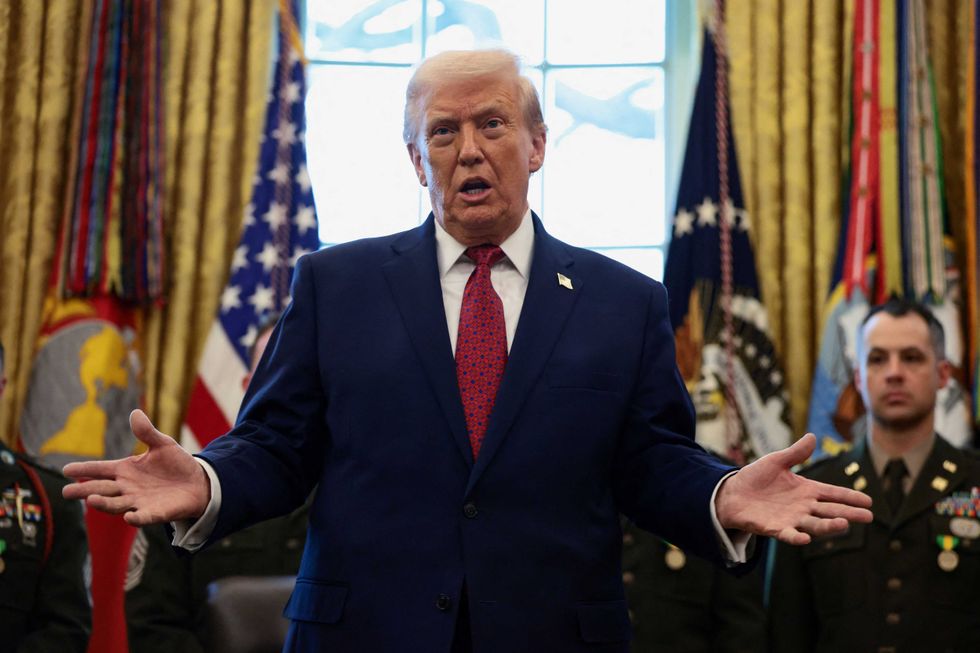
Trump said the deal “will help keep down utility bills very substantially,” though he said it would “take a little bit of time to get there.” Energy Secretary Chris Wright said the goal is to lead in AI “without raising electricity prices for Americans.”
John Quigley of the Kleinman Center for Energy Policy at the University of Pennsylvania was skeptical. “The burden of proof is on them,” he said of White House officials, “to prove this is more than just a stunt.”
Trump had promised to halve household energy bills in his first year. Residential prices rose 6% in 2025 instead, according to the US Energy Information Administration. The war with Iran could push them higher, analysts say, as supply chains tighten and oil and gas prices rise.
Source: https://www.cryptopolitan.com/the-war-big-tech-ignored/