AI Man Camps: Controversial ICE Facility Owner Targets Lucrative Data Center Boom
BitcoinWorld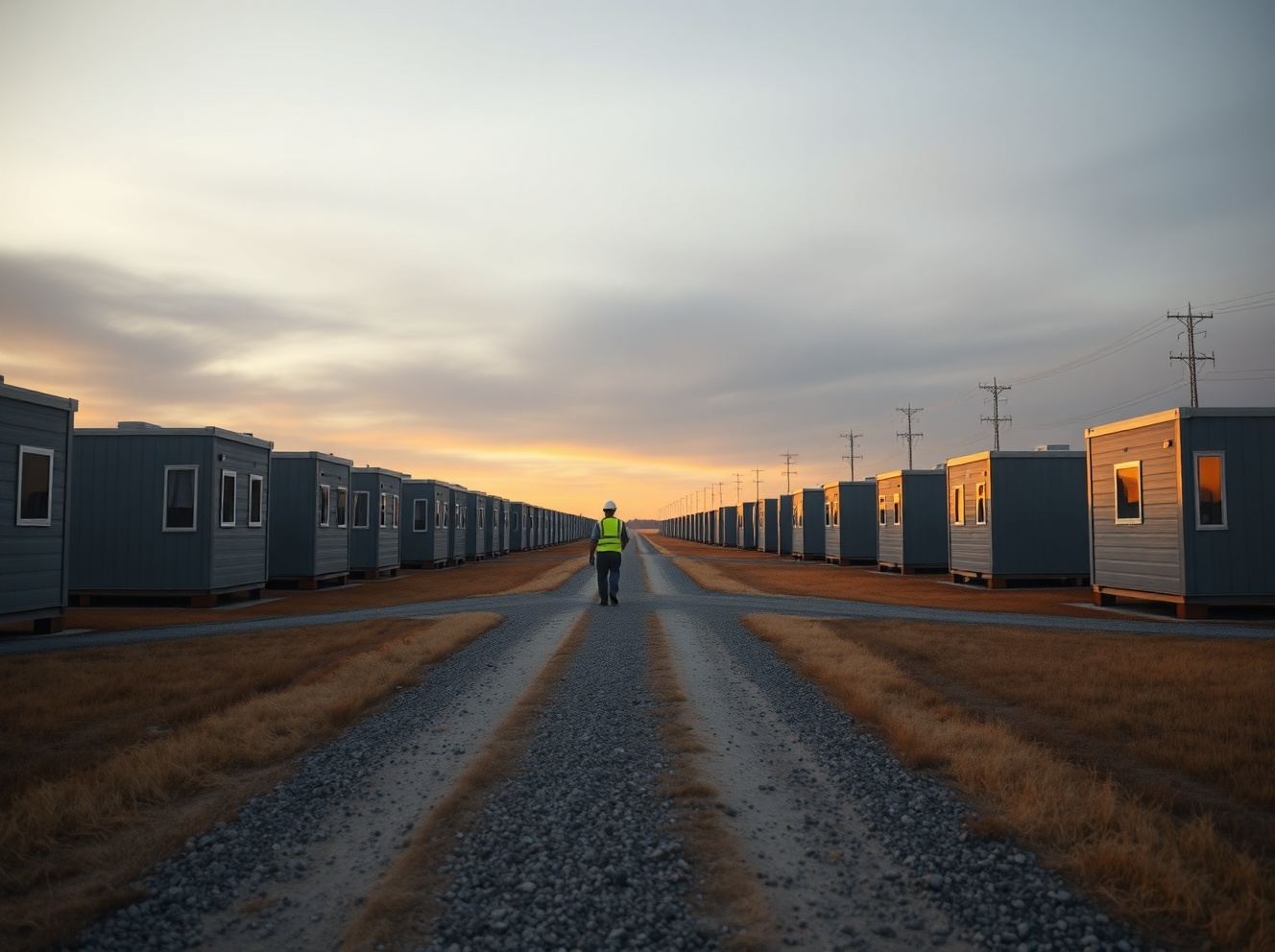
AI Man Camps: Controversial ICE Facility Owner Targets Lucrative Data Center Boom
DICKENS COUNTY, Texas — March 8, 2026. The explosive growth of artificial intelligence infrastructure is creating an unexpected secondary market: temporary housing for thousands of construction workers. Companies are now building massive “man camps” in remote areas to support data center projects. Notably, a firm with deep experience in government detention services is aggressively pursuing this new opportunity.
AI Man Camps Emerge as Critical Infrastructure
To house the hundreds or thousands of temporary workers needed to build an AI data center, developers increasingly rely on temporary villages known as man camps. This style of camp was popularized decades ago as housing for men working in remote oil fields. Consequently, the model is now being adapted for the tech industry’s latest building spree. For example, a former Bitcoin mining facility in rural Dickens County, Texas, is converting into a 1.6 gigawatt data center. Reports indicate its workers now live in gray housing units with amenities like a gym, a laundromat, game rooms, and a cafeteria.
This shift represents a significant logistical challenge. Building these facilities requires specialized labor that often must be imported. Therefore, providing on-site housing is not just a perk but a operational necessity. The remote locations chosen for data centers, often due to cheap land and power access, lack existing housing stock. As a result, the man camp model provides an immediate solution.
Target Hospitality Sees Unprecedented Pipeline
A company called Target Hospitality has signed multiple contracts worth $132 million to build and operate the Dickens County camp. This facility could eventually house more than 1,000 workers. Target’s leadership explicitly views the U.S. data center construction boom as its most lucrative growth opportunity. Chief Commercial Officer Troy Schrenk described it as “the largest, most actionable pipeline I’ve ever seen.”
The company’s expertise in large-scale, temporary accommodations gives it a distinct advantage. Managing utilities, food service, and sanitation for a transient population requires specific operational knowledge. Target Hospitality has developed this knowledge through other business lines. This background allows it to scale operations quickly to meet developer demands.
A Controversial Corporate History
Target Hospitality also owns the Dilley Immigration Processing Center in Texas. This center holds families detained by U.S. Immigration and Customs Enforcement (ICE). This connection has drawn scrutiny. Court filings have previously alleged issues at the Dilley center, including problems with food quality and accommodations for children with special dietary needs.
The company’s pivot from operating federal detention facilities to housing tech construction workers highlights a strategic business calculation. Both models involve managing contained, temporary populations. However, the contexts and public perceptions are vastly different. This move diversifies the company’s revenue stream while leveraging its core logistical competencies.
The Scale of the Data Center Construction Boom
The demand for AI man camps is directly tied to an unprecedented surge in data center construction. Analysts project that global data center capacity must double by 2030 to handle AI computational loads. This construction is not happening in tech hubs but in regions with available power and land.
Key drivers for remote data center locations include:
- Power Availability: AI data centers require immense, reliable electricity.
- Land Cost: Rural acreage is significantly cheaper than urban plots.
- Cooling Potential: Colder climates or areas with water access reduce cooling costs.
- Tax Incentives: Many local governments offer incentives for large infrastructure projects.
These factors concentrate projects in places like Texas, Iowa, and Ohio. These locations lack the readily available skilled labor and housing, thus creating the need for man camps.
Worker Life in a Modern Man Camp
The modern AI man camp is a far cry from the rudimentary oil field camps of the past. Today’s versions aim to attract and retain skilled workers in a competitive labor market. The Dickens County camp, for instance, offers amenities designed for comfort during long shifts. Reports mention a cafeteria that grills steaks on-demand, addressing a basic desire for quality food after demanding work.
These camps function as self-contained communities. They provide essential services to keep workers on-site and productive. This setup minimizes commute times and maximizes labor efficiency for the construction firms. However, it also means workers live where they work, often for weeks at a time, with limited connection to the surrounding local community.
Economic and Social Impacts on Local Communities
The arrival of a large man camp has complex effects on rural host communities. On one hand, it brings an influx of economic activity. Local businesses may see increased demand for supplies and services. On the other hand, it can strain local infrastructure like roads and create social friction. The temporary nature of the population means these benefits and challenges are not permanent.
Furthermore, the camps themselves are often operated by external corporations like Target Hospitality. Consequently, the primary financial benefits of housing and feeding workers may not flow to local businesses but to the camp operator. This dynamic can lead to tensions regarding who truly benefits from the large-scale development project.
Regulatory and Ethical Considerations
The rapid rise of AI man camps operates in a regulatory gray area. Zoning laws in rural counties may not have anticipated such large, temporary residential developments. Building codes designed for permanent dwellings might not fully apply. This situation requires careful navigation by developers and operators to ensure safety and compliance.
Ethical questions also arise from the operator’s background. Stakeholders may scrutinize whether operational practices from one context appropriately transfer to another. The focus for a detention center is security and cost-control, while a worker camp must prioritize welfare and retention. Target Hospitality will need to demonstrate a clear and distinct operational philosophy for its new venture.
Conclusion
The rise of AI man camps is a direct consequence of the breakneck pace of data center construction. Companies like Target Hospitality, with specialized experience in managing large-scale temporary housing, are positioning themselves to capitalize on this boom. Their involvement highlights how the AI infrastructure wave is creating ancillary industries far removed from software development. The success of these camps, and the projects they support, will depend on balancing efficient operations with quality of life for workers. Ultimately, the story of AI man camps is a story of the physical groundwork required to build a digital future.
FAQs
Q1: What is an “AI man camp”?
An AI man camp is a temporary housing community built to accommodate the large construction workforce required to build AI data centers in remote locations. These camps provide lodging, meals, and amenities to keep workers on-site.
Q2: Why are man camps needed for data center construction?
Massive AI data centers are often built in rural areas with cheap land and power access. These locations lack sufficient local housing and labor. Man camps solve this by importing and housing a temporary workforce for the duration of construction.
Q3: What company is building the AI man camp in Dickens County, Texas?
Target Hospitality, a company that also operates ICE detention facilities, has secured $132 million in contracts to build and operate the man camp supporting a major data center project in Dickens County.
Q4: What are the concerns about Target Hospitality’s involvement?
Concerns stem from the company’s operation of immigration detention centers, where court filings have alleged issues with food quality and care. Observers question if operational priorities from that context are appropriate for worker housing.
Q5: How does the AI data center boom affect local communities?
The boom brings investment and jobs but can strain local infrastructure. Man camps create a temporary population surge, with economic benefits potentially flowing more to camp operators than to local small businesses.
This post AI Man Camps: Controversial ICE Facility Owner Targets Lucrative Data Center Boom first appeared on BitcoinWorld.


You May Also Like

Tether Files Seven Trademarks in South Korea

Trump's $1B ballroom funding on the verge of being 'ejected' by his own party