Oil's $100 → $85 Swing: What Crypto Learned From the Iran Trade
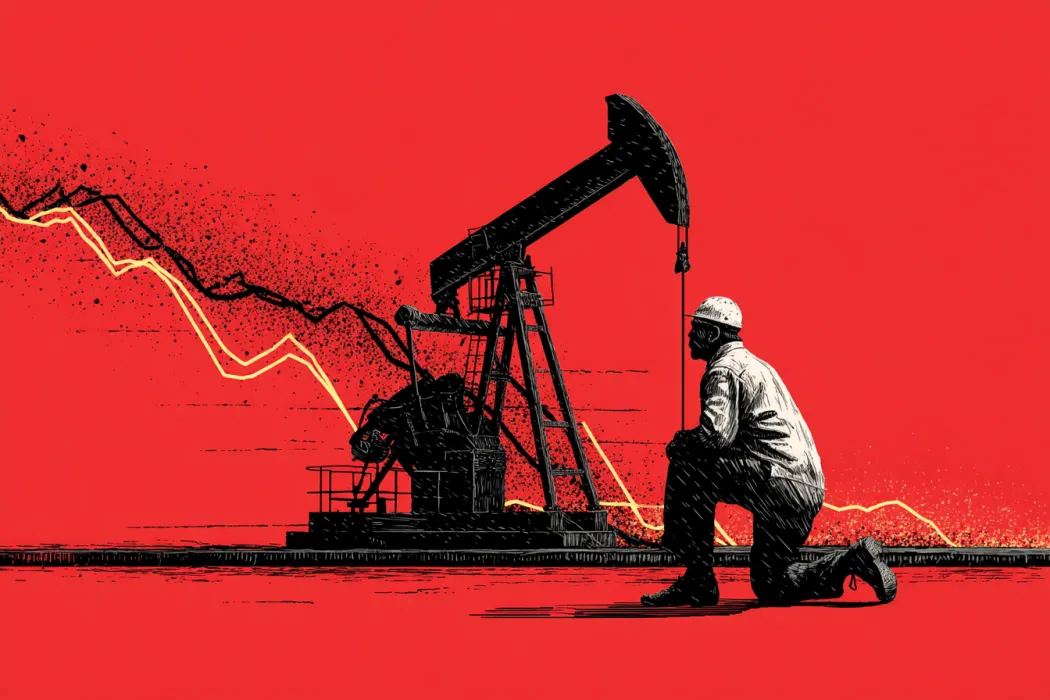
For about six hours yesterday, crude oil told us everything we needed to know about crypto.
Brent spiked above $118 a barrel overnight as Iran's closure of the Strait of Hormuz choked global supply. Bitcoin dropped to $65,600. Risk-off across the board.
Then President Trump told CBS the war with Iran is "very complete" and could end "very soon." Oil cratered to $85. The Dow erased a 900-point decline while Bitcoin ripped back above $69,000.
Trading volume surged 53% to $37.89 billion as investors piled back into risk assets. BTC is now up 3.6% since the first U.S. strike on Iran.
The correlation wasn't subtle nor was it delayed. Crypto traded the Iran war in real-time – exactly like a risk asset should.
The Macro Case for BTC in a War
Not everyone sees war as bearish for Bitcoin.
Mark Connors, former head of research at 3iQ and ex-Credit Suisse global head of portfolio advisory, argues that a prolonged conflict could actually support BTC. The logic: wars are expensive. Governments finance them by issuing debt. More debt means more dollars in circulation. Dollar debasement favors non-dollar assets.
"Liquidity drives bitcoin," Connors told CoinDesk. "If the war runs longer, that means more spending and more deficit spending. That's constructive for bitcoin."
U.S. federal debt has been growing at roughly 14% annualized since mid-2025, he noted. If the trend holds, that's 15% year-over-year – pure debasement math.
Even a stagflationary scenario (rising prices + slowing growth) could work, Connors said. Policymakers would likely prioritize financial stability over fighting inflation. And with a larger share of debt rolling over on short-term bills, the Fed has strong incentive to cut rates, which is historically constructive for BTC.
Prediction Markets Called It First
Polymarket has become an unlikely source of alpha on geopolitical risk. The platform has seen over $500 million wagered on Iran-related markets since the conflict began, including bets on ceasefire dates, regime change, and whether specific Iranian leaders will remain in power by year-end. (Current frontrunner for Iran's next Supreme Leader: Mojtaba Khamenei at 38%.)
The US-Iran ceasefire market became a real-time sentiment tracker on Monday, with odds shifting minute-by-minute as Trump's CBS comments circulated. For traders watching, Polymarket offered faster signal than cable news.
This is what prediction markets were built for — pricing uncertainty in real-time. The Iran trade proved the thesis.
DeFi's Weekend Price Discovery Moment
But the most interesting development was not happening on centralized exchange; it was on Hyperliquid.
The decentralized exchange's permissionless futures market, where anyone can create a perpetual contract on any asset, hit a record $1.2 billion in open interest over the weekend.
Only 7 of the top 30 markets were crypto pairs. The rest? Oil. Gold. Silver. S&P 500. Tokenized traditional assets.
The oil futures contract (CL-USDC) saw $1.62 billion in 24-hour volume — more than any crypto pair on the platform. Traders used DeFi to express views on commodities while traditional markets were closed.
"This makes sense given the moves in silver, gold, and oil over the past few months," noted Arca in a weekly update. "It is a testament to Hyperliquid that we finally have a real platform where tokenized trading of RWAs is happening in meaningful size."
What Crypto Learned
Three takeaways from Monday's whipsaw:
1. Bitcoin is a risk asset for now. The "digital gold" narrative didn't hold. BTC moved with equities, not against oil. In a real flight-to-safety, gold and the dollar won. Bitcoin followed risk appetite.
2. Prediction markets are becoming serious infrastructure. Polymarket's Iran coverage showed what crypto-native information markets can do: faster signal, harder-to-manipulate pricing, 24/7 availability.
3. DeFi is eating TradFi's weekend. When oil spiked on Saturday, traditional futures markets were closed. Hyperliquid wasn't. That gap — 24/7 permissionless price discovery on real-world assets — is the wedge DeFi has been looking for.
The Iran trade was a stress test. Crypto passed – not as a hedge, but as a real-time mirror of global risk sentiment. And increasingly, as the venue where that risk trades when nothing else is open.
Blockcast – Licensed to Shill: Designing Decentralization: Governance, Power, and the Validator Problem
This episode examines what happens when decentralization moves from whitepaper language to operational reality. Tanisha Katara joins the discussion to unpack three structural tensions inside modern crypto governance: validator power concentration, voter apathy, and the emerging role of AI agents in decision-making systems.
If you enjoyed this episode, please like and subscribe to Blockcast on your favorite podcast platforms like Spotify and Apple.
Blockcast is hosted by Head of APAC at Ledger, Takatoshi Shibayama. Previous episodes of Blockcast can be found here, with guests like Fredrick Gregaard (Cardano Foundation), Daren Guo (Reap), Yat Siu (Animoca Brands), Kean Gilbert (Lido), Joey Isaacson (Nook), Kapil Dhiman (Quranium) Eric van Miltenburg (Ripple), Davide Menegaldo (Neon EVM), Anastasia Plotnikova (Fideum), Jeremy Tan (Singapore parliament candidate), Hassan Ahmed (Coinbase) and more on our recent shows.
Be at the heart of TradFi–DeFi collaboration at Money20/20 Asia 2026.
Are you looking to forge partnerships with banks and fintechs? To expand into new markets across Asia, or to secure funding from top-tier investors? This April, the world of digital assets, blockchain, and Web3 converges with the biggest players in APAC’s financial ecosystem at Money20/20 Asia 2026 and its brand new ‘Intersection’ zone, complete with a dedicated content stage, TradFi-Defi innovator showcase, and curated networking spaces. From traditional banking giants to decentralised innovators, private equity leaders, and cutting-edge fintech disruptors, this is where they meet to forge partnerships, spark dialogue, and shape the future of finance.


You May Also Like

How To Time The Dogecoin Bottom And When The Price Will Reach $2
South Korean Banking Giant Enters Stablecoin Race with Kaia Pilot