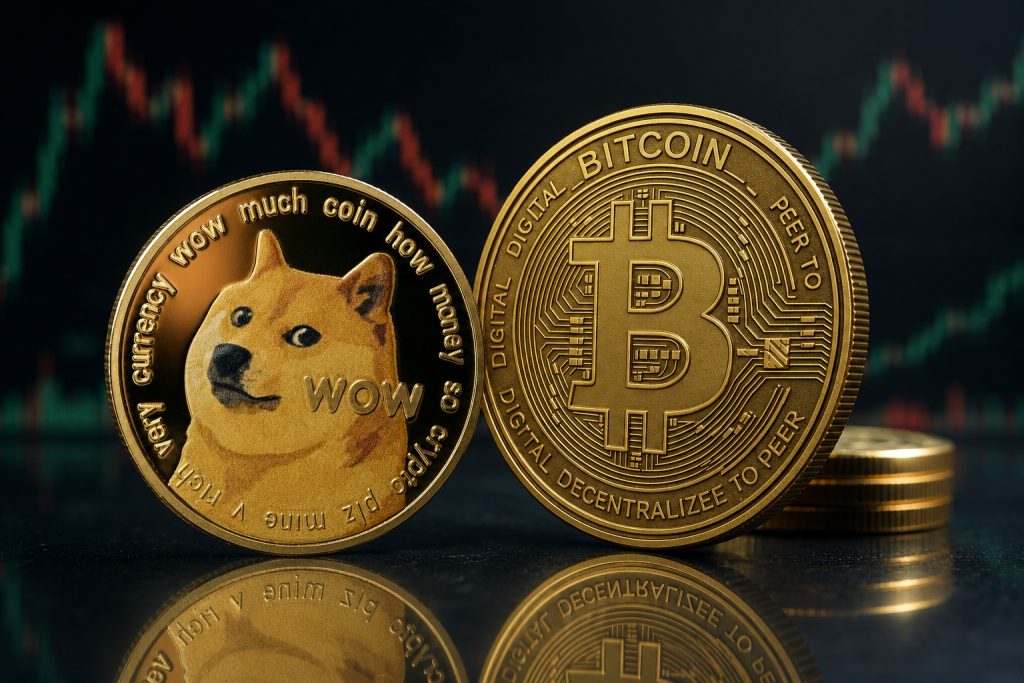
Bitcoin Outperforms Gold and Nasdaq During US Iran Tensions Says Hayes
Arthur Hayes Says Bitcoin Outperformed Traditional Assets During US Iran Conflict Period
Bitcoin has reportedly outperformed several traditional financial assets since the beginning of the recent geopolitical tensions between the United States and Iran, according to commentary from crypto industry figure Arthur Hayes.
Hayes noted that Bitcoin has gained roughly 7 percent during the period, while gold declined about 2 percent and the Nasdaq 100 index remained slightly negative. The comparison has sparked discussion among market analysts about how digital assets behave during times of geopolitical uncertainty.
The remarks gained attention across the cryptocurrency community after being highlighted in a post on X by Cointelegraph and later cited by Hokanews as part of its reporting on market trends involving digital assets and global macroeconomic events.
Analysts say the data reflects how Bitcoin’s role in financial markets continues evolving as investors evaluate whether the cryptocurrency can function as an alternative asset during periods of global instability.
 |
| Source: XPost |
Bitcoin’s Performance During Geopolitical Tensions
Financial markets often react strongly to geopolitical developments such as wars, diplomatic disputes, or regional conflicts.
When uncertainty increases, investors sometimes move capital into assets they believe may preserve value during periods of instability.
Historically, commodities such as gold have often been viewed as safe haven assets during geopolitical crises.
However, Bitcoin has increasingly entered this conversation as a digital asset that some investors consider an alternative store of value.
According to Hayes, Bitcoin’s price movement during the recent period of US Iran tensions suggests that some investors may be turning toward cryptocurrency when global uncertainty rises.
Comparing Bitcoin With Gold and Equity Markets
The comparison presented by Hayes highlights the contrasting performance of three different asset classes.
Bitcoin reportedly increased by about 7 percent over the observed period.
Gold, traditionally considered a safe haven during geopolitical turmoil, declined roughly 2 percent.
Meanwhile, the Nasdaq 100, which tracks major technology companies listed in the United States, remained slightly negative during the same timeframe.
These contrasting trends have prompted debate about whether Bitcoin may be evolving into an asset class that reacts differently to geopolitical events than traditional financial instruments.
Some analysts suggest that Bitcoin’s decentralized structure may appeal to investors seeking assets outside conventional financial systems.
Arthur Hayes and His Influence in Crypto Markets
Arthur Hayes is widely known within the cryptocurrency industry as the co founder of the digital asset derivatives platform BitMEX.
Over the years, he has frequently shared commentary on global macroeconomic trends and their potential impact on cryptocurrency markets.
Hayes often analyzes Bitcoin within the context of broader financial conditions including monetary policy, liquidity cycles, and geopolitical developments.
His market observations are closely followed by many investors and analysts interested in understanding how digital assets may respond to global economic shifts.
Because of his experience within cryptocurrency markets, his views often contribute to broader discussions about the future role of digital assets in global finance.
The Safe Haven Debate
One of the ongoing debates in financial markets centers on whether Bitcoin can function as a safe haven asset.
Traditional safe havens such as gold have historically attracted investors during times of economic instability or geopolitical conflict.
Bitcoin, by contrast, has often been characterized as a high volatility asset.
However, some investors believe that Bitcoin’s decentralized design and limited supply may eventually position it as a form of digital gold.
The asset’s performance during certain geopolitical events has added fuel to this debate.
While Bitcoin has sometimes moved in tandem with risk assets such as technology stocks, there have also been periods where its price movements diverged from traditional markets.
Global Liquidity and Market Behavior
Bitcoin’s market performance is often influenced by global liquidity conditions.
During periods of abundant liquidity and low interest rates, investors tend to allocate capital toward higher risk assets including cryptocurrencies.
Conversely, when liquidity tightens due to higher interest rates or economic uncertainty, risk assets may experience downward pressure.
Geopolitical events can also affect liquidity conditions by influencing energy markets, trade flows, and investor sentiment.
The relationship between Bitcoin and macroeconomic conditions therefore remains an area of ongoing research among financial analysts.
Institutional Interest in Bitcoin
Institutional participation in Bitcoin markets has expanded significantly over the past several years.
Asset managers, hedge funds, and publicly traded companies have increasingly incorporated Bitcoin into their investment strategies.
The introduction of regulated financial products such as Bitcoin exchange traded funds has further expanded access to the cryptocurrency.
Institutional investors often evaluate Bitcoin within diversified portfolios that include equities, commodities, and bonds.
As more institutions enter the market, Bitcoin’s price movements may increasingly reflect broader financial trends.
Geopolitical Risk and Market Volatility
Periods of geopolitical tension often lead to increased volatility across global financial markets.
Energy prices, stock markets, and currency values can all respond quickly to news involving international conflicts.
Investors frequently monitor geopolitical developments when making portfolio allocation decisions.
Some assets may benefit from uncertainty, while others may decline as investors seek stability.
Bitcoin’s performance during such periods continues to be studied by analysts attempting to understand its behavior within the global financial system.
The Future Role of Bitcoin in Financial Markets
The evolving role of Bitcoin remains a subject of significant discussion among economists, investors, and policymakers.
Some experts view Bitcoin primarily as a speculative asset influenced by market sentiment.
Others argue that the cryptocurrency could eventually become a widely recognized store of value similar to digital gold.
The answer may depend on factors such as regulatory developments, technological innovation, and broader adoption of blockchain technology.
As digital asset markets mature, Bitcoin’s relationship with traditional financial markets may continue evolving.
Conclusion
Arthur Hayes’ observation that Bitcoin has outperformed traditional assets during the recent period of geopolitical tension between the United States and Iran highlights the ongoing debate about the role of cryptocurrency in global finance.
The update, highlighted on X by Cointelegraph and later cited by Hokanews, illustrates how investors are increasingly comparing digital assets with traditional investments such as gold and equities.
While Bitcoin’s long term position in financial markets remains a topic of discussion, its recent performance during a period of geopolitical uncertainty has drawn renewed attention from analysts and investors alike.
As the cryptocurrency industry continues to evolve, market participants will likely keep examining how digital assets respond to global economic and geopolitical developments.
hokanews.com – Not Just Crypto News. It’s Crypto Culture.
Writer @Ethan
Ethan Collins is a passionate crypto journalist and blockchain enthusiast, always on the hunt for the latest trends shaking up the digital finance world. With a knack for turning complex blockchain developments into engaging, easy-to-understand stories, he keeps readers ahead of the curve in the fast-paced crypto universe. Whether it’s Bitcoin, Ethereum, or emerging altcoins, Ethan dives deep into the markets to uncover insights, rumors, and opportunities that matter to crypto fans everywhere.
Disclaimer:
The articles on HOKANEWS are here to keep you updated on the latest buzz in crypto, tech, and beyond—but they’re not financial advice. We’re sharing info, trends, and insights, not telling you to buy, sell, or invest. Always do your own homework before making any money moves.
HOKANEWS isn’t responsible for any losses, gains, or chaos that might happen if you act on what you read here. Investment decisions should come from your own research—and, ideally, guidance from a qualified financial advisor. Remember: crypto and tech move fast, info changes in a blink, and while we aim for accuracy, we can’t promise it’s 100% complete or up-to-date.


You May Also Like

Trump Reportedly Made More Than 3,700 Trades in Q1

Xi Jinping eases tensions with Trump at summit, seeks global stability