

Must Read
What’s the point of 'stranger danger' if the danger is already in the palm of every young girl’s hand?What’s the point of 'stranger danger' if the danger is already in the palm of every young girl’s hand?
‘Instruments of misogyny’: How AI is targeting young girls online
For feedback or concerns regarding this content, please contact us at crypto.news@mexc.com
MANILA, Philippines – Groups have been sounding the alarm for years about the use of artificial intelligence (AI) to exploit Filipino children, especially girls, even before any recorded cases appeared in the country. This risk builds on long-standing patterns of abuse that young women and girls face online.
“Even before the rise of generative AI, girls were already facing various forms of online harm such as body shaming, harassment, coercion, and other forms of violence. What AI has done is amplify these,” said Pebbles Sanchez-Ogang, executive director of Plan International Pilipinas, in an interview with Rappler.
The non-profit organization launched their Stand with Girls campaign in October 2025, a national movement dedicated to advancing long-term investment in girls’ rights, safety, and leadership. In February 2026, they convened tech companies, lawmakers, and youth advocates at a Safer Internet Day celebration, where they discussed ways to curb the threat of AI-enabled online abuse targeting children.
A recent UNICEF study discovered that, across 11 countries, at least 1.2 million children reported having their images manipulated into sexually explicit content using AI tools.
In a typical classroom, that could mean one child has been a victim of this form of abuse. At least.
They cite examples from countries like South Korea, where AI-assisted sexual offenses targeting teenagers have increased tenfold in just two years. Meanwhile, in the United States, one in ten teens knows of cases where peers used AI to create sexualized images of other children without their consent.
No face, no case
Closer to home, the International Justice Mission (IJM) reported nearly half a million Filipino children were trafficked to produce new child sexual exploitation materials in 2022, amounting to approximately one in every 100 children.
Since its rise, AI has made it easier. According to Sanchez-Ogang, a Plan International Pilipinas study found that child exploitation in the Philippines no longer requires a physical trafficker — instructions are delivered online, livestreamed events offer almost no opportunity for detection or intervention, and payments are AI-assisted.
Virtually, the exploited child has no identifiable perpetrator to hold accountable.
Most of the time, these victims are girls — but that shouldn’t come as a shock.
“Girls are disproportionately targeted because AI-enabled abuse often reflects and amplifies deeply rooted gender-based violence and harmful social norms,” Sanchez-Ogang stated. “[AI tools] are frequently used as instruments of misogyny, designed to shame, silence, or sexualize girls and young women.”
A report from The Nerve highlighted that 7 in 10 women human rights defenders and journalists have faced online violence, with nearly a quarter suspecting the violence was AI-assisted.
But you don’t have to look too far to know this exists. In fact, for a brief moment at the start of 2026, it was all over the social media platform X, and they allowed you to participate.
The digital platform rolled out a new feature for its AI chatbot, Grok, which allowed users to digitally alter photos posted online. Suddenly, images of women, including minors, stripped down to their underwear, littered the internet without their consent, prompted by the predatory impulses of users who wanted to see them that way.
Hidden in plain sight
While X and other mainstream platforms dominate, Sanchez-Ogang warns that young girls are increasingly turning to lesser-known platforms where the risks are even higher. These platforms are mostly AI-driven, featuring private messaging, livestreaming, and weak age-assurance mechanisms. Harmful content can be produced and distributed across these channels without the victim even knowing it.
“The anonymity and accessibility of AI tools lower the barrier for perpetrators,” Sanchez-Ogang added, “enabling more individuals to participate.”
In a September 2025 hearing by the Senate committee on women, children, family relations and gender equality — which tackled the use of AI and deepfakes in producing and spreading pornographic content involving women and minors — Senator Risa Hontiveros brought up the arrests of two foreign sex offenders who had taken refuge for years in the province of Cebu.
“The Philippines is not your playground and our children are not your toys,” Hontiveros said. She then cited a research that found that 90% of pornographic deepfakes had women and minors as their subjects.
As terrifying as these figures are, they likely represent only the tip of the iceberg.
Many cases of online abuse remain unreported to this day. Sanchez-Ogang states that, despite years of progress, the issue remains in how our society views victims.
“For many, reporting may also mean reliving the trauma, facing public scrutiny, or risking damage to their reputations and relationships,” she said.
The last part is important to note. The same IJM study that found nearly half a million Filipino children who were trafficked also revealed that many of the victims were exploited by adults they knew.
Child protection by design
Plan International Pilipinas urges AI developers and tech companies to build child protection into their platforms, ensuring children understand the rules from the second they log in, and putting safeguards in place to prevent abuse and the misuse of their images.
“Let’s make it easier for them,” Cielo, a youth advocate, remarked in the organization’s Safer Internet Day event. “Use language that most people — and most children — use. If we want to fight the problem, we need to understand it, too.”
Given how fast the digital word has become, new risks are bound to emerge even before we have the chance to respond effectively to existing ones.
Still, it shouldn’t stop us from trying, for the sake of every child and young girl who counts on us to protect them. – Rappler.com


Disclaimer: The articles reposted on this site are sourced from public platforms and are provided for informational purposes only. They do not necessarily reflect the views of MEXC. All rights remain with the original authors. If you believe any content infringes on third-party rights, please contact crypto.news@mexc.com for removal. MEXC makes no guarantees regarding the accuracy, completeness, or timeliness of the content and is not responsible for any actions taken based on the information provided. The content does not constitute financial, legal, or other professional advice, nor should it be considered a recommendation or endorsement by MEXC.
You May Also Like

Japanese Tech Giant’s Ambitious Bitcoin Accumulation
The post Japanese Tech Giant’s Ambitious Bitcoin Accumulation appeared on BitcoinEthereumNews.com. Tokyo-based Metaplanet has made a major move in the cryptocurrency
Share
BitcoinEthereumNews2026/04/02 17:47
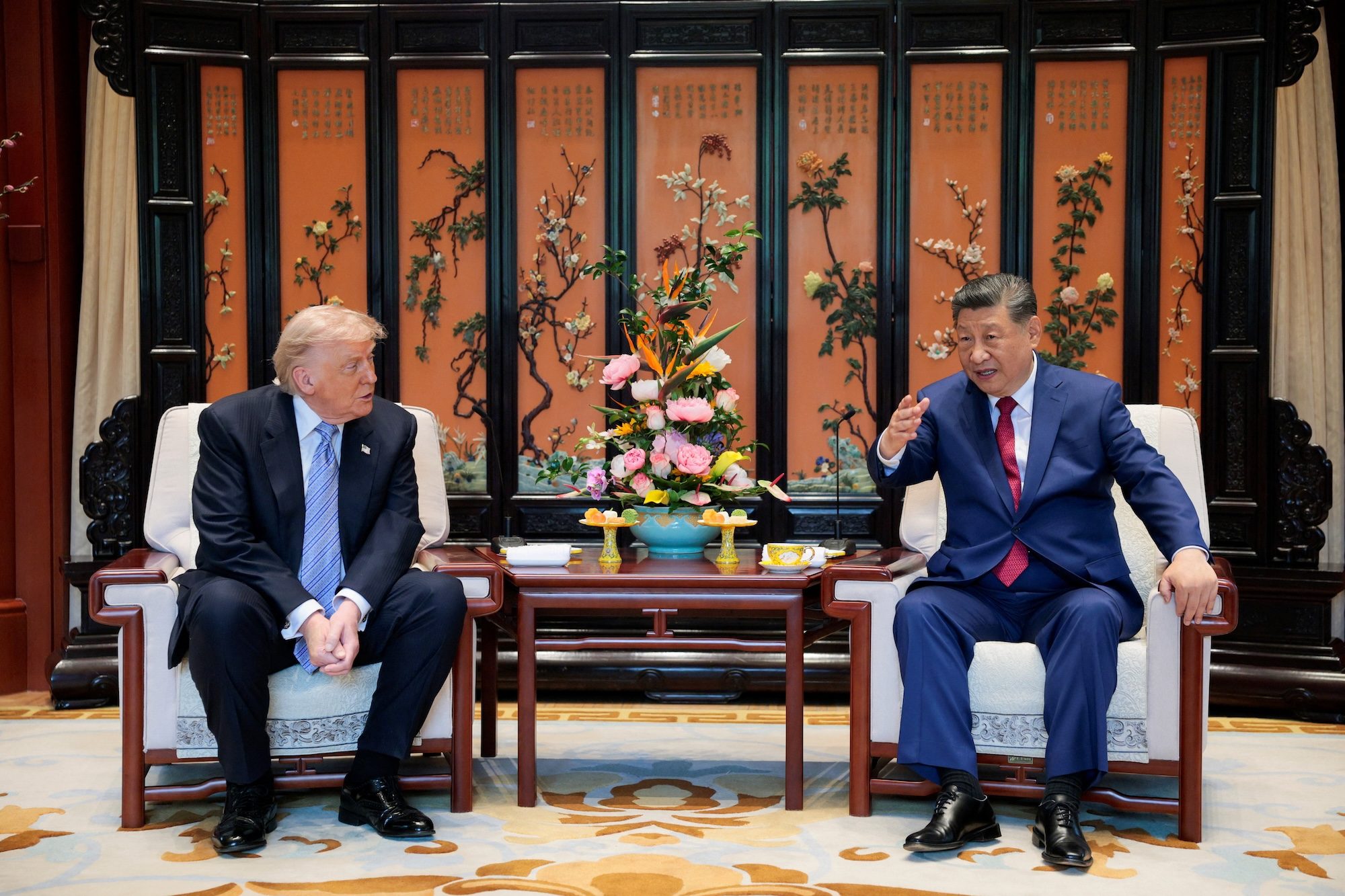
Trump says he and China’s Xi agree Iran cannot have nuclear weapons
'We’ve settled a lot of different problems that other people wouldn’t have been able to solve,' Trump says after meeting with Chinese President Xi Jinping in Beijing
Share
Rappler2026/05/15 15:10

LAB Token Crashes 50% as Insider Trading Allegations Surface
BitcoinWorld LAB Token Crashes 50% as Insider Trading Allegations Surface The LAB token experienced a dramatic intraday collapse on [Date], plunging as much as
Share
bitcoinworld2026/05/15 14:40



