Federal Reserve Holds Firm: Defiant Stance on Rates as Inflation Charts Signal Persistent Risks
BitcoinWorld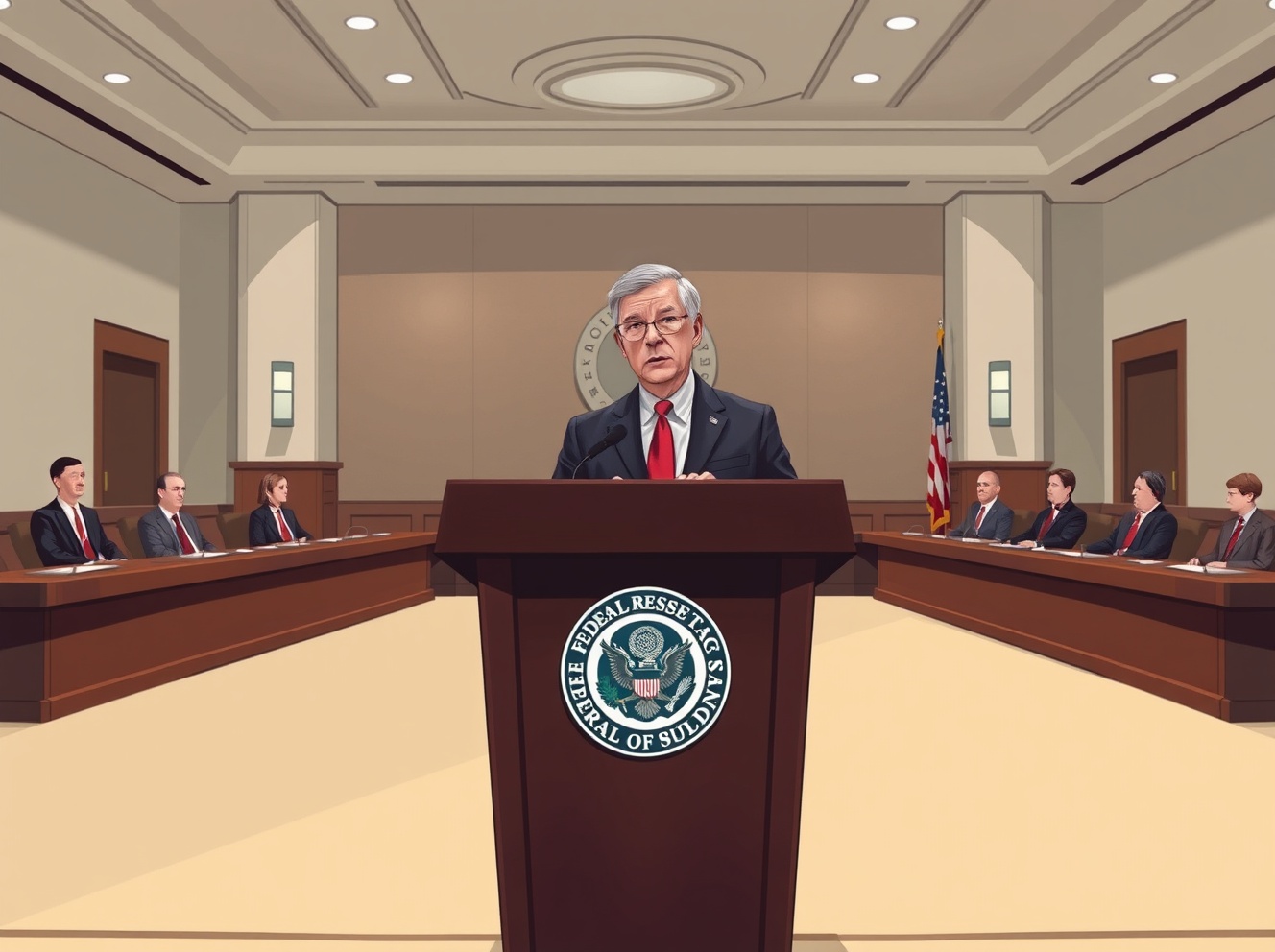
Federal Reserve Holds Firm: Defiant Stance on Rates as Inflation Charts Signal Persistent Risks
The Federal Reserve maintained its benchmark interest rate unchanged this week, delivering a defiant message to markets anticipating imminent cuts as troubling inflation charts continue to signal persistent economic risks. WASHINGTON, D.C. — March 12, 2025 — Central bank officials reinforced their commitment to price stability, explicitly pushing back against growing expectations for near-term rate reductions. This decision follows months of volatile economic data and comes at a critical juncture for the U.S. economy.
Federal Reserve Charts a Cautious Course Amid Economic Uncertainty
The Federal Open Market Committee unanimously voted to keep the federal funds rate target range at 5.25% to 5.50%. This marks the seventh consecutive meeting without policy adjustment. Consequently, the central bank maintains its highest interest rate level in over two decades. The accompanying policy statement revealed subtle but significant changes in language regarding inflation progress. Specifically, officials removed previous references to “continued progress” toward their 2% inflation target. Instead, they noted that “inflation remains elevated” and requires “greater confidence” before considering policy easing.
During the subsequent press conference, Chair Jerome Powell emphasized the committee’s data-dependent approach. He pointed to recent economic indicators showing unexpected resilience in price pressures. “The data we have received in recent months has not given us greater confidence,” Powell stated definitively. “We need to see more good data before we can begin the normalization process.” This cautious tone immediately impacted financial markets, with Treasury yields rising and equity markets adjusting their expectations for 2025 rate cuts.
Inflation Charts Reveal Persistent Underlying Pressures
Recent inflation data presents a complex picture that justifies the Fed’s cautious stance. The Consumer Price Index rose 3.1% year-over-year in February, exceeding economist expectations. More concerningly, core inflation—which excludes volatile food and energy prices—remained stubbornly high at 3.7%. Service sector inflation, particularly in housing and healthcare, continues to demonstrate remarkable persistence. These trends appear clearly in the Fed’s internal economic projections and public data releases.
The following table illustrates key inflation metrics that influenced the Fed’s decision:
| Metric | February 2025 | Year-Ago Level | Fed Target |
|---|---|---|---|
| Headline CPI | 3.1% | 3.4% | 2.0% |
| Core CPI | 3.7% | 3.8% | 2.0% |
| PCE Inflation | 2.8% | 2.9% | 2.0% |
| Services Inflation | 4.2% | 4.5% | N/A |
Several factors contribute to this persistent inflation environment. First, tight labor market conditions continue to support wage growth above productivity gains. Second, geopolitical tensions have renewed supply chain pressures in certain sectors. Third, housing costs remain elevated despite cooling in some regional markets. Finally, consumer spending has proven more resilient than many economists anticipated, maintaining demand-side pressure on prices.
Expert Analysis of Monetary Policy Implications
Former Federal Reserve economist Dr. Sarah Chen, now with the Brookings Institution, provides crucial context for the current policy stance. “The Fed faces a delicate balancing act,” Chen explains. “While economic growth has moderated from 2023 levels, it remains above trend. Simultaneously, inflation has proven more persistent than models predicted.” She notes that historical parallels exist with the 1990s, when the Fed maintained higher rates for longer to ensure inflation was fully contained.
Market strategists have adjusted their expectations significantly following the Fed’s communication. According to CME Group’s FedWatch Tool, traders now price in only two quarter-point rate cuts for 2025, down from four anticipated just three months ago. The probability of a June rate cut has fallen below 40%, reflecting growing consensus that policy will remain restrictive through mid-year. This repricing has important implications across financial markets, particularly for:
- Fixed income investors facing extended duration risk
- Corporate borrowers with floating-rate debt
- Homebuyers confronting sustained mortgage rates
- Emerging markets dealing with strong dollar pressures
Economic Projections and Forward Guidance
The Fed released updated economic projections alongside its policy decision. These projections, known as the “dot plot,” show committee members’ individual expectations for future rates. The median projection now indicates fewer rate cuts in 2025 than previously anticipated. Additionally, the long-run neutral rate estimate edged higher, suggesting structural changes in the economy may require permanently higher interest rates.
Forward guidance from the statement emphasized several key points. First, the committee will continue reducing its balance sheet as planned. Second, policy remains data-dependent with no predetermined path. Third, risks to achieving employment and inflation goals are moving toward better balance. Fourth, the committee remains highly attentive to inflation risks. This carefully calibrated language aims to manage market expectations while maintaining policy flexibility.
Global central banks are watching the Fed’s actions closely. The European Central Bank and Bank of England face similar inflation challenges, though their economic contexts differ. Historically, the Fed’s policy decisions have significant spillover effects on global financial conditions. Emerging market central banks, in particular, must balance domestic priorities with external pressures from dollar strength and capital flows.
Historical Context and Policy Evolution
The current policy stance represents a significant evolution from the Fed’s approach during the pandemic recovery. In 2021 and 2022, the central bank maintained an accommodative policy for an extended period, contributing to the inflation surge. Since March 2022, the Fed has raised rates by 5.25 percentage points—the most aggressive tightening cycle since the 1980s. This historical context helps explain the committee’s current caution about declaring victory over inflation prematurely.
Research from the Federal Reserve Bank of San Francisco suggests that the last mile of inflation reduction often proves most challenging. Their analysis indicates that service sector inflation, particularly wage-sensitive components, tends to respond more slowly to monetary policy. This research informs the committee’s patient approach despite political pressure and market expectations for earlier easing.
Market Reactions and Economic Implications
Financial markets responded immediately to the Fed’s communication. Treasury yields across the curve increased, with the 2-year note rising 15 basis points. Equity markets experienced sector rotation, with financial stocks benefiting from the higher-for-longer rate environment while rate-sensitive sectors underperformed. The dollar strengthened against major currencies, reflecting expectations for continued interest rate differentials.
The economic implications extend beyond financial markets. Businesses face continued uncertainty about financing costs and demand conditions. Consumers confront sustained borrowing costs for mortgages, auto loans, and credit cards. Policymakers at all levels must account for the fiscal implications of higher interest rates on government debt servicing. These interconnected effects demonstrate the Fed’s profound influence throughout the economy.
Looking forward, several scenarios could unfold. If inflation data moderates as expected, the Fed may begin a gradual normalization process in late 2025. Alternatively, persistent inflation could force the committee to maintain restrictive policy into 2026. An economic downturn would present different challenges, potentially requiring the Fed to balance inflation concerns against growth objectives. The committee’s data-dependent framework aims to navigate these uncertain paths effectively.
Conclusion
The Federal Reserve’s decision to hold interest rates steady reflects a prudent response to persistent inflation risks evident in recent economic charts. By pushing back against market expectations for imminent cuts, the central bank reinforces its commitment to price stability. This cautious approach acknowledges the complex inflation dynamics facing the U.S. economy while maintaining flexibility to respond to evolving conditions. As Chair Powell emphasized, the path forward remains data-dependent, with the committee prepared to maintain restrictive policy until inflation shows convincing signs of returning sustainably to the 2% target.
FAQs
Q1: Why did the Federal Reserve decide to keep interest rates unchanged?
The Federal Reserve maintained current interest rates because inflation remains above their 2% target and recent data hasn’t provided sufficient confidence that price pressures are sustainably moderating. Economic charts show persistent inflation in services and core categories.
Q2: How does this decision affect mortgage rates and housing markets?
Mortgage rates will likely remain elevated in the near term, continuing pressure on housing affordability. The Fed’s higher-for-longer stance means prospective homebuyers face sustained borrowing costs, potentially slowing housing market activity.
Q3: What economic indicators will the Fed watch most closely?
The Federal Reserve focuses particularly on core inflation measures, wage growth data, employment trends, and service sector price pressures. They also monitor inflation expectations surveys and various real-time economic indicators.
Q4: How does this policy affect stock market investments?
The Fed’s stance creates headwinds for rate-sensitive sectors like technology and real estate while potentially benefiting financial stocks. Overall, higher interest rates typically reduce equity valuations by increasing discount rates for future earnings.
Q5: When might the Fed consider cutting interest rates?
Most analysts now expect the first rate cut in late 2025 or early 2026, contingent on clear evidence of inflation returning sustainably to the 2% target. The exact timing depends entirely on incoming economic data.
This post Federal Reserve Holds Firm: Defiant Stance on Rates as Inflation Charts Signal Persistent Risks first appeared on BitcoinWorld.


You May Also Like

Tom Lee Predicts Ethereum Could Surge to $62,000 as Global Payment Infrastructure Evolves

BitGo Launches Revolutionary Institutional Stablecoin Service for Major Financial Players