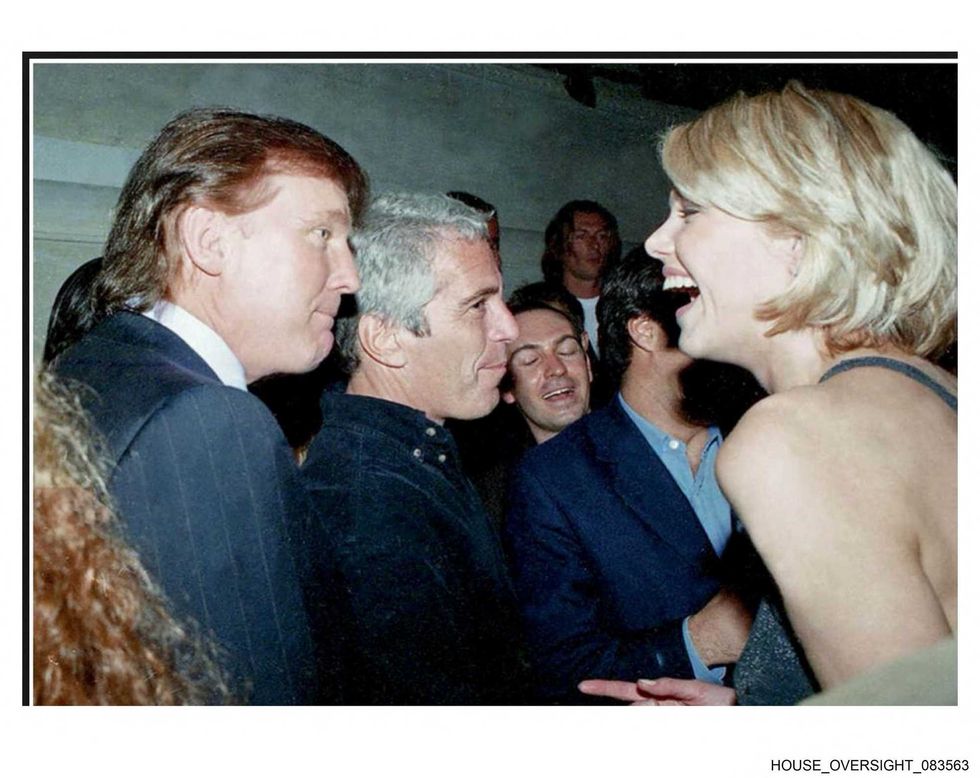
America's economy is about to be hit with another major stress point
President Donald Trump's economy is already struggling under the weight of his tariffs and his war in Iran. Now there's a risk of beef prices going up thanks to what some say is corporate greed.
One of the largest meatpacking plants in the country has gone on strike for the first time in 40 years, and the New York Times is explaining why.
JBS workers are represented by the United Food and Commercial Workers union, Local 7. They've been able to fight for decent pay, but it's still so low that the people who work there can't afford to buy the meat that they're cutting. Many of them showed their injuries. One had a scar from a gash across her arm. Another had her shoulder dislocated when her meat hook got "lodged in a moving belt," the Times report said.
Worker safety is a big issue and the federal government even cited JBS for safety violations after a died from falling into a vat of chemicals in 2021. The pandemic ravaged the workers, who continued to work through the virus while slicing meat that Americans would eat. Six died from it.
“The hurt from these workers runs deep,” said union president Kim Cordova. “This is a long time coming."
Another problem is that the company charges workers to replace their knife sharpeners or even safety equipment when they are lost or stolen. Some workers alleged that they aren't allowed to take bathroom breaks because then they can't keep up with the "chain" that carries cow parts from station to station.
“They don’t care about their employees any more than the cattle,” complained plant worker Jim Kees, a plant worker who takes images of meat to determine its quality grades. He compared the job to Upton Sinclair’s 1906 novel about Chicago’s meatpacking industry. “If you’ve ever read ‘The Jungle,’ it’s still going on.”
JBS denies all of the allegations, saying that the company provides them with sharp knives and that they can leave the line to use the bathroom. Nikki Richardson, a spokeswoman the American branch of JBS, told the Times that they give employees safety equipment and they only charge the employee for it when it's “maliciously damaged.”
“When equipment wears out through normal use, the company replaces it at no cost,” she said.
- george conway
- noam chomsky
- civil war
- Kayleigh mcenany
- Melania trump
- drudge report
- paul krugman
- Lindsey graham
- Lincoln project
- al franken bill maher
- People of praise
- Ivanka trump
- eric trump


You May Also Like
Crypto Fear & Greed Index Holds Steady at 52: Market Sentiment Remains Neutral
Major Token Unlocks This Week: $68M in AVAX, APT, CONX, STRK, and ARB Set to Hit the Market