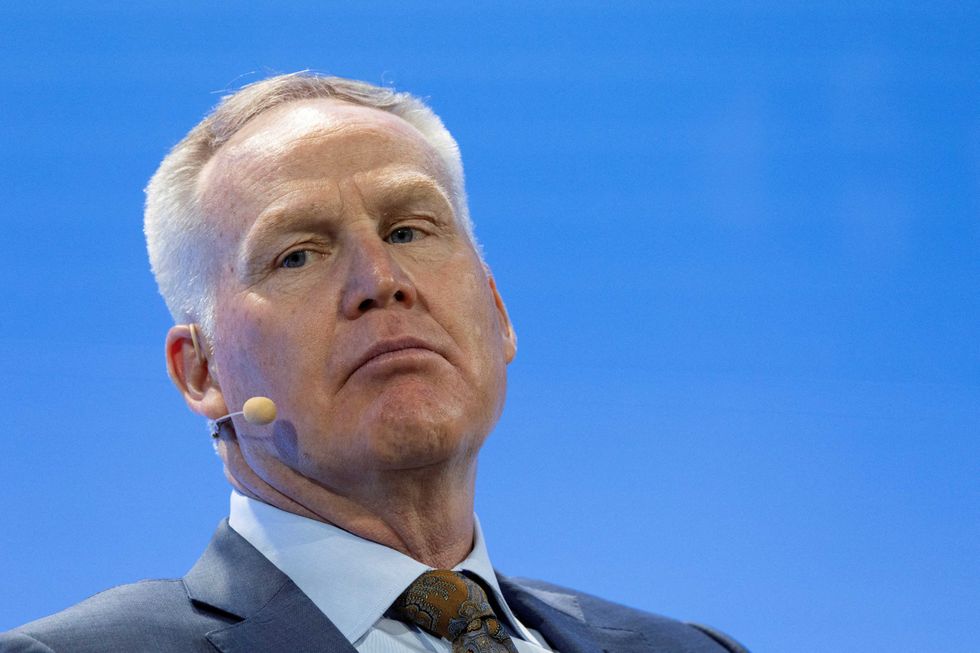
South Korea’s Monetary Policy: The Crucial Balanced Outlook Under BOK Governor Rhee Chang-yong
BitcoinWorld
South Korea’s Monetary Policy: The Crucial Balanced Outlook Under BOK Governor Rhee Chang-yong
SEOUL, South Korea – The Bank of Korea (BOK) maintains a carefully balanced monetary policy stance as it navigates complex global and domestic economic crosscurrents in early 2025. Under the leadership of Governor Rhee Chang-yong, the central bank faces the persistent challenge of managing inflation while supporting fragile economic growth. This analysis examines the key factors shaping South Korea’s monetary policy outlook, drawing on recent data, historical context, and expert assessments from institutions like DBS Bank.
South Korea’s Monetary Policy at a Critical Juncture
The Bank of Korea’s current policy framework reflects a delicate balancing act. Consequently, policymakers must weigh several competing priorities. Firstly, consumer price inflation remains above the BOK’s 2% target, though it has moderated from recent peaks. Secondly, household debt levels continue to pose a significant financial stability risk. Thirdly, export performance shows mixed signals amid fluctuating global demand. Finally, geopolitical tensions in the region add an element of uncertainty to the economic forecast.
Governor Rhee, appointed in 2022, has emphasized a data-dependent approach throughout his tenure. His previous experience at the International Monetary Fund informs his global perspective on monetary policy. The BOK’s most recent policy decision held the benchmark interest rate steady at 3.50%. This pause follows a prolonged tightening cycle that began in 2021. Market analysts widely interpret this stability as a signal of the board’s cautious, wait-and-see posture.
Analyzing the Domestic Economic Landscape
South Korea’s domestic economy presents a mosaic of strengths and vulnerabilities. Strong semiconductor exports provide a crucial buffer against global headwinds. However, domestic consumption remains subdued, reflecting persistent consumer caution. The property market correction continues to exert a drag on broader economic sentiment and construction activity.
The Inflation and Growth Trade-Off
The core dilemma for the BOK involves the trade-off between price stability and economic growth. Recent inflation data offers some encouraging signs. For instance, the headline Consumer Price Index (CPI) rose 2.8% year-on-year in the latest reading. This represents a meaningful decline from the 3.8% rate observed six months prior. The moderation is partly attributable to stabilizing global energy and agricultural commodity prices.
Nevertheless, service-sector inflation and core measures excluding food and energy remain sticky. This stickiness suggests underlying domestic price pressures are persistent. The BOK’s own forecasts project inflation will converge to the target range by the latter half of 2025. Achieving this forecast requires maintaining restrictive policy settings for an extended period. Premature easing could risk re-anchoring inflation expectations at a higher level.
Key South Korean Economic Indicators (Latest Available Data)| Indicator | Value | Trend |
|---|---|---|
| Policy Interest Rate | 3.50% | Hold (Stable) |
| Headline CPI Inflation | 2.8% | Moderating |
| GDP Growth (QoQ) | 0.6% | Modest Expansion |
| Unemployment Rate | 2.8% | Low and Stable |
| Household Debt-to-GDP | ~102% | Elevated |
The Global Context and External Pressures
South Korea’s open economy is highly sensitive to global financial conditions and trade dynamics. The monetary policy paths of the U.S. Federal Reserve and other major central banks create a powerful external influence. A significant divergence between BOK policy and the Fed’s actions could trigger unwanted capital flow volatility and exchange rate pressure. The Korean won has experienced periods of heightened volatility against the U.S. dollar, impacting import costs and corporate hedging strategies.
Furthermore, China’s economic recovery pace directly affects Korean export fortunes. China remains South Korea’s largest trading partner. Sluggish demand in China for Korean intermediate goods and consumer electronics translates into weaker export receipts. Regional supply chain reconfigurations also present both challenges and opportunities for Korean manufacturers. The BOK must factor these external variables into its risk assessment.
Expert Analysis and Forward Guidance
Financial institutions like DBS Bank provide critical third-party analysis of the BOK’s trajectory. Their research typically highlights the central bank’s prudent and balanced approach. DBS economists have noted that Governor Rhee’s communication has been deliberately calibrated to avoid fueling premature rate-cut speculation. The BOK’s forward guidance emphasizes continuity and caution.
The central bank’s policy board comprises members with diverse expertise in academia, markets, and international finance. This diversity supports robust debate and mitigates groupthink. Upcoming decisions will hinge on several data points:
- Monthly CPI and core inflation prints
- Quarterly GDP growth and consumption data
- Export order books and manufacturing PMI surveys
- Developments in the housing and credit markets
- Federal Reserve policy signals and global risk sentiment
Potential Policy Scenarios for 2025
Market consensus currently points to a prolonged pause in the BOK’s policy rate. The timeline for any potential shift toward easing remains uncertain and data-contingent. A scenario analysis suggests three possible paths:
Base Case (Balanced Hold): The BOK maintains the 3.50% rate through mid-2025, awaiting clearer signs of sustained inflation convergence and assessing the impact of global policy shifts.
Upside Risk (Hawkish Hold): A resurgence in inflation or a sharp depreciation of the won could force the bank to retain its restrictive stance longer than expected, or even entertain a final hike.
Downside Risk (Dovish Pivot): A sharper-than-expected domestic slowdown or a severe global recession could prompt the BOK to consider preemptive rate cuts to support growth, even if inflation is not fully tamed.
Conclusion
The Bank of Korea’s monetary policy outlook under Governor Rhee Chang-yong is defined by its balanced and vigilant stance. The central bank successfully navigated a historic inflation surge and now faces the complex task of engineering a soft landing. Its commitment to a data-driven framework provides stability for financial markets. The ultimate trajectory of South Korea’s monetary policy will depend on the evolving interplay between domestic price pressures, growth momentum, and the volatile global economic environment. The BOK’s careful stewardship remains crucial for the nation’s economic stability in 2025 and beyond.
FAQs
Q1: What is the current Bank of Korea interest rate?
The BOK’s benchmark base rate is 3.50% as of its latest meeting. The bank has held this rate steady after concluding a series of hikes that began in 2021 to combat high inflation.
Q2: Who is the current Governor of the Bank of Korea?
Rhee Chang-yong has served as the Governor of the Bank of Korea since April 2022. He is a former International Monetary Fund executive with extensive experience in global finance and crisis management.
Q3: What is the main challenge for South Korea’s monetary policy?
The primary challenge is balancing the need to ensure inflation returns sustainably to the 2% target while avoiding excessive tightening that could undermine the country’s economic growth and exacerbate financial stability risks from high household debt.
Q4: How does the U.S. Federal Reserve influence BOK policy?
As a small, open economy, South Korea is sensitive to global capital flows. Significant policy divergence from the Fed can lead to excessive volatility in the Korean won, affecting import prices and financial stability, which the BOK must consider.
Q5: When might the BOK consider cutting interest rates?
Most analysts believe rate cuts are not imminent. The BOK will likely require consistent evidence that inflation is firmly anchored at the target and that economic growth is weakening meaningfully before considering a shift to an easing cycle, potentially in late 2025 or 2026.
This post South Korea’s Monetary Policy: The Crucial Balanced Outlook Under BOK Governor Rhee Chang-yong first appeared on BitcoinWorld.
You May Also Like

Nvidia CEO Says AI Skills Beat Degrees in Hiring

Solana Price Prediction Needs a Year to Match What Pepeto Targets on Listing Day