Consistent Infosystems HORNET & RAPTOR Signal Shift Toward Thermal Efficiency in CX
Consistent Infosystems HORNET & RAPTOR: Redefining Performance Stability in Compact PC Builds
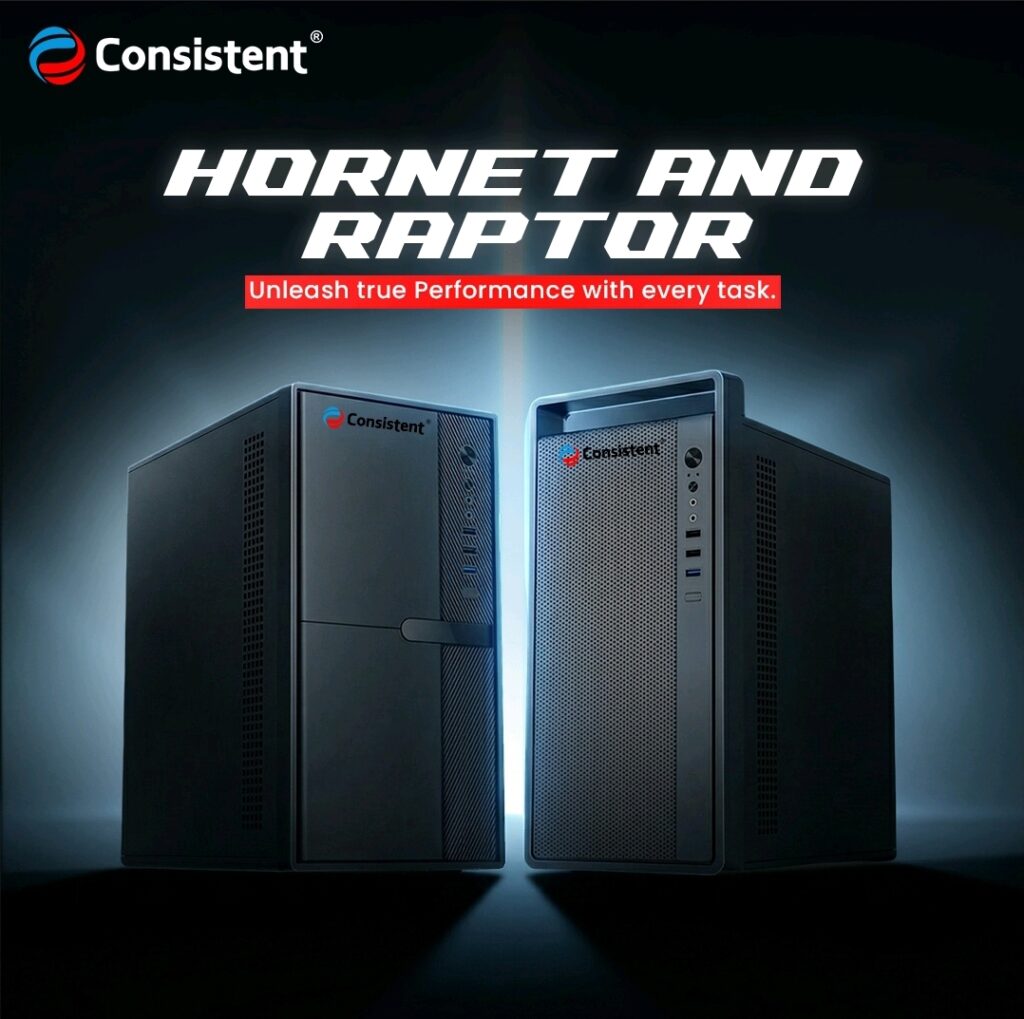
The launch of Consistent Infosystems HORNET & RAPTOR marks a notable shift in how hardware vendors are approaching performance reliability in compact computing environments. While PC cabinets have traditionally been treated as peripheral infrastructure, this release underscores their growing importance in shaping consistent, predictable user experiences.
At a time when computing demands are intensifying across gaming, content creation, and hybrid work environments, users are no longer evaluating systems purely on peak performance. Instead, the emphasis has moved toward sustained performance under real-world conditions. The introduction of Consistent Infosystems HORNET & RAPTOR reflects an attempt to address this evolving expectation through engineering efficiency rather than raw hardware escalation.
Industry Context: Rising Expectations, Constrained Environments
The computing landscape is undergoing a structural transition. Users increasingly prefer compact systems due to space constraints and aesthetic considerations, but they are unwilling to compromise on performance. This creates a fundamental engineering challenge: delivering high output within thermally constrained environments.
In price-sensitive markets, this challenge is amplified. Users often operate within fixed budgets, limiting their ability to invest in advanced cooling systems or premium enclosures. As a result, the responsibility shifts to hardware manufacturers to optimize baseline design efficiency.
The growing adoption of hybrid work models and entry-to-mid-level gaming setups has further accelerated this trend. Systems are expected to run longer, handle diverse workloads, and maintain stability without frequent intervention.
Strategic Layer: Expanding into System-Level Differentiation
For Consistent Infosystems, the introduction of Consistent Infosystems HORNET & RAPTOR represents a strategic move to deepen its presence in the value-performance segment while strengthening its positioning as a comprehensive hardware provider.
Rather than focusing exclusively on high-performance components, the company is addressing a foundational layer that directly influences system behavior. This indicates a shift toward system-level differentiation, where the goal is to ensure consistency across the entire computing experience.
The timing is aligned with increased demand for localized, self-built, and upgradeable PC systems. By focusing on cabinets, Consistent is targeting a category that has historically been under-optimized despite its critical role in performance stability.
Technology Layer: Engineering for Thermal and Spatial Efficiency
At the core of Consistent Infosystems HORNET & RAPTOR is a design philosophy centered on airflow optimization and spatial efficiency. The cabinets incorporate ventilated side panels and durable metal construction to facilitate passive heat dissipation, reducing dependence on additional cooling mechanisms.
Both models support Micro ATX motherboards and offer compatibility with GPUs up to 270mm and CPU coolers up to 155mm. This ensures alignment with mainstream hardware configurations while maintaining a compact footprint. Storage flexibility—supporting both HDDs and SSDs—addresses evolving user requirements for hybrid storage architectures.
The RAPTOR variant is positioned for more demanding workloads, where sustained thermal performance becomes critical. This segmentation allows the brand to cater to both everyday users and performance-oriented segments within the same design framework.
CX Impact: From Performance Variability to Consistency
The most significant implication of Consistent Infosystems HORNET & RAPTOR lies in their ability to reduce performance variability—one of the most common sources of user frustration in compact systems.
Improved airflow directly mitigates thermal throttling, enabling systems to maintain stable performance during extended usage. For end users, this translates into fewer slowdowns, reduced system crashes, and a more predictable computing experience.
Additionally, enhanced hardware compatibility simplifies the assembly and upgrade process. This reduces friction during initial setup—a critical yet often overlooked stage in the customer journey. Users benefit from a smoother onboarding experience, particularly in DIY and semi-professional segments.
Durability also contributes to long-term experience consistency by minimizing wear-related degradation and reducing maintenance frequency.
Industry Implications: Reframing the Role of Enclosures
The introduction of Consistent Infosystems HORNET & RAPTOR reflects a broader industry shift in how PC cabinets are perceived. No longer passive enclosures, they are increasingly recognized as active contributors to system performance and reliability.
As component-level innovation becomes incremental, differentiation is moving toward system-level optimization. This includes airflow design, material quality, and ease of integration. Vendors that continue to treat cabinets as commoditized products risk falling behind in performance-sensitive segments.
This shift also signals a move toward holistic hardware ecosystems, where every element contributes to the overall user experience.
Future Outlook: Toward Experience-Centric Hardware Design
Looking ahead, hardware innovation is likely to be increasingly driven by customer experience considerations rather than purely technical specifications. This includes a stronger focus on reliability, ease of use, and lifecycle performance.
The trajectory suggests that foundational components—such as cabinets—will play a more strategic role in shaping user perceptions of quality and performance. As computing environments become more complex and space-constrained, the importance of optimized enclosures will continue to grow.
The evolution reflected in Consistent Infosystems HORNET & RAPTOR aligns with this broader trend. It highlights a shift toward experience-centric hardware design, where engineering decisions are evaluated based on their impact on end-user outcomes.
Key Takeaways
- Performance consistency is becoming the primary CX metric in computing, surpassing peak performance benchmarks.
- Thermal efficiency is now a critical experience driver, directly influencing reliability and user satisfaction.
- Cabinet design is evolving into a strategic differentiator, not just a functional requirement.
- Compact computing trends are forcing smarter engineering, especially in cost-sensitive markets.
- System-level optimization is replacing component-level differentiation as the key competitive lever.
The post Consistent Infosystems HORNET & RAPTOR Signal Shift Toward Thermal Efficiency in CX appeared first on CX Quest.


You May Also Like

RE/MAX Philippines launches Commercial APEX to strengthen advisory in commercial, industrial segments

Experienced Analyst Claims a New Bull Run Could Be Starting for Cardano (ADA)