Ethereum’s L2 Problem Just Got a Fix — Here’s What the EEZ Actually Does
TLDR
- Gnosis, Zisk, and the Ethereum Foundation announced the Ethereum Economic Zone (EEZ) at EthCC in Cannes
- The EEZ aims to let Ethereum layer-2 networks interact without bridges, in a single transaction
- Over 20 active L2 networks hold nearly $40 billion in total value but operate as separate silos
- Vitalik Buterin has publicly said Ethereum’s L2 roadmap needs rethinking due to fragmentation
- An “EEZ Alliance” will coordinate standards and drive adoption across the ecosystem
A group of Ethereum developers have announced a new framework designed to fix one of the network’s biggest problems: its layer-2 networks work like separate islands.
The project is called the Ethereum Economic Zone, or EEZ. It was unveiled at the EthCC conference in Cannes on March 29. It is being built by Gnosis, Zisk, and the Ethereum Foundation.
Right now, Ethereum relies on layer-2 networks to handle more transactions at lower cost. But these networks — including Arbitrum, Base, and Optimism — each operate independently. Moving assets between them requires bridges, which can be slow, expensive, and risky.
The EEZ would change that. It would allow smart contracts on different layer-2 networks to interact in real time, without bridges, while still settling back to Ethereum’s main chain.
The project also plans to keep ETH as the main token used for fees, rather than introducing new ones.
Data from L2BEAT shows more than 20 active layer-2 networks currently hold close to $40 billion in total value. That value is spread across separate environments, not pooled together.
Why This Matters for Developers and Users
For developers, the EEZ would mean they no longer need to rebuild the same tools on every individual network. Infrastructure could be shared across rollups.
For users, the goal is a smoother experience where the many Ethereum networks feel like one unified system.
Vitalik Buterin Has Raised Concerns
His comments drew mixed reactions from layer-2 builders. Karl Floersch of Optimism acknowledged L2s must evolve beyond simple scaling. Steven Goldfeder of Offchain Labs, which builds Arbitrum, argued scaling remains a core function.
The EEZ appears to directly address Buterin’s concerns by focusing on unified liquidity, shared infrastructure, and better user flows.
An “EEZ Alliance” is also being formed. It will bring together ecosystem participants to coordinate standards and support adoption.
Technical details and performance benchmarks are expected in the coming weeks.
The post Ethereum’s L2 Problem Just Got a Fix — Here’s What the EEZ Actually Does appeared first on CoinCentral.


You May Also Like
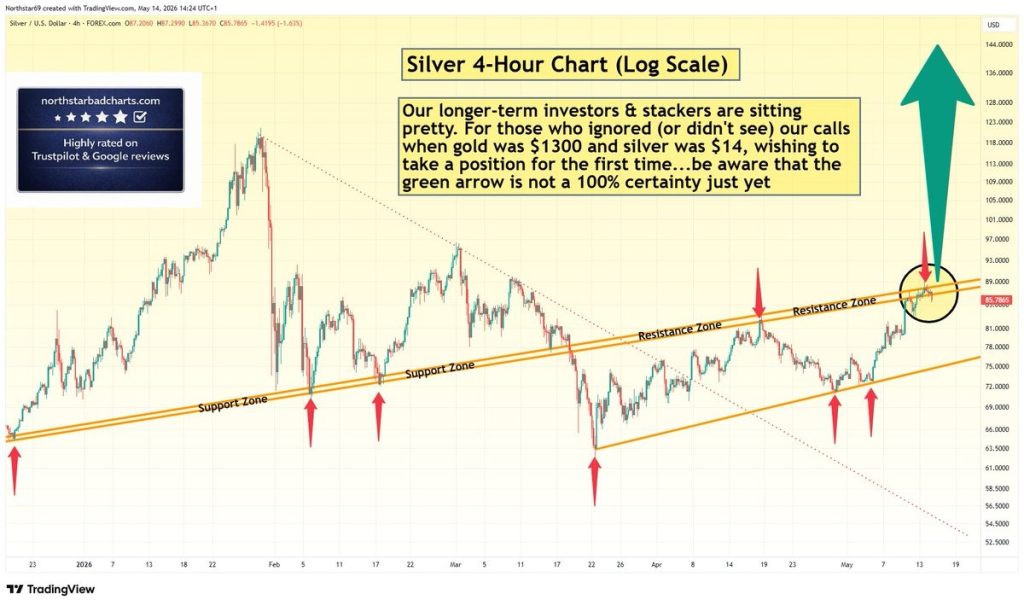
Silver Price Warning: Green Arrow Setup Is Not Confirmed – Wait for Clear Signal

Facebook spotlights African cinema in 6th ‘Made by Africa, loved by the world’ campaign