The post AI Boom Lifts Markets but Tariffs Strain Small Businesses Under Trump Economy appeared on BitcoinEthereumNews.com. COINOTAG recommends • Exchange signup 💹 Trade with pro tools Fast execution, robust charts, clean risk controls. 👉 Open account → COINOTAG recommends • Exchange signup 🚀 Smooth orders, clear control Advanced order types and market depth in one view. 👉 Create account → COINOTAG recommends • Exchange signup 📈 Clarity in volatile markets Plan entries & exits, manage positions with discipline. 👉 Sign up → COINOTAG recommends • Exchange signup ⚡ Speed, depth, reliability Execute confidently when timing matters. 👉 Open account → COINOTAG recommends • Exchange signup 🧭 A focused workflow for traders Alerts, watchlists, and a repeatable process. 👉 Get started → COINOTAG recommends • Exchange signup ✅ Data‑driven decisions Focus on process—not noise. 👉 Sign up → America’s $350 billion AI investments by major tech firms are propelling GDP growth to 3.8% in Q2 2025 under Trump’s policies, yet tariffs are inflating costs for small businesses, curbing consumer spending, and triggering layoffs across sectors. AI investments contributed 1.1% to U.S. GDP in early 2025, surpassing consumer spending as the top driver. Tariffs have raised import expenses, forcing businesses like florists to reduce product quantities to maintain prices. Consumer confidence has hit a 28-year low, with 57% expecting economic decline and holiday spending cuts up to 34% among younger generations. Explore the AI boom’s role in Trump’s economy: tech giants thrive while small businesses face tariff pressures and job losses. Uncover key impacts and forecasts for 2025—read now for insights. What is the impact of the AI boom on the US economy under Trump? The AI boom in Trump’s economy is fueling robust GDP expansion through massive tech investments, but it’s masking underlying weaknesses in consumer and small business sectors. In the second quarter of 2025, U.S. GDP surged 3.8% after a 0.5% dip earlier, largely due… The post AI Boom Lifts Markets but Tariffs Strain Small Businesses Under Trump Economy appeared on BitcoinEthereumNews.com. COINOTAG recommends • Exchange signup 💹 Trade with pro tools Fast execution, robust charts, clean risk controls. 👉 Open account → COINOTAG recommends • Exchange signup 🚀 Smooth orders, clear control Advanced order types and market depth in one view. 👉 Create account → COINOTAG recommends • Exchange signup 📈 Clarity in volatile markets Plan entries & exits, manage positions with discipline. 👉 Sign up → COINOTAG recommends • Exchange signup ⚡ Speed, depth, reliability Execute confidently when timing matters. 👉 Open account → COINOTAG recommends • Exchange signup 🧭 A focused workflow for traders Alerts, watchlists, and a repeatable process. 👉 Get started → COINOTAG recommends • Exchange signup ✅ Data‑driven decisions Focus on process—not noise. 👉 Sign up → America’s $350 billion AI investments by major tech firms are propelling GDP growth to 3.8% in Q2 2025 under Trump’s policies, yet tariffs are inflating costs for small businesses, curbing consumer spending, and triggering layoffs across sectors. AI investments contributed 1.1% to U.S. GDP in early 2025, surpassing consumer spending as the top driver. Tariffs have raised import expenses, forcing businesses like florists to reduce product quantities to maintain prices. Consumer confidence has hit a 28-year low, with 57% expecting economic decline and holiday spending cuts up to 34% among younger generations. Explore the AI boom’s role in Trump’s economy: tech giants thrive while small businesses face tariff pressures and job losses. Uncover key impacts and forecasts for 2025—read now for insights. What is the impact of the AI boom on the US economy under Trump? The AI boom in Trump’s economy is fueling robust GDP expansion through massive tech investments, but it’s masking underlying weaknesses in consumer and small business sectors. In the second quarter of 2025, U.S. GDP surged 3.8% after a 0.5% dip earlier, largely due…

AI Boom Lifts Markets but Tariffs Strain Small Businesses Under Trump Economy

For feedback or concerns regarding this content, please contact us at crypto.news@mexc.com
COINOTAG recommends • Exchange signup
💹 Trade with pro tools
Fast execution, robust charts, clean risk controls.
👉 Open account →
COINOTAG recommends • Exchange signup
🚀 Smooth orders, clear control
Advanced order types and market depth in one view.
👉 Create account →
COINOTAG recommends • Exchange signup
📈 Clarity in volatile markets
Plan entries & exits, manage positions with discipline.
👉 Sign up →
COINOTAG recommends • Exchange signup
⚡ Speed, depth, reliability
Execute confidently when timing matters.
👉 Open account →
COINOTAG recommends • Exchange signup
🧭 A focused workflow for traders
Alerts, watchlists, and a repeatable process.
👉 Get started →
COINOTAG recommends • Exchange signup
✅ Data‑driven decisions
Focus on process—not noise.
👉 Sign up →
  • AI investments contributed 1.1% to U.S. GDP in early 2025, surpassing consumer spending as the top driver.

  • Tariffs have raised import expenses, forcing businesses like florists to reduce product quantities to maintain prices.

  • Consumer confidence has hit a 28-year low, with 57% expecting economic decline and holiday spending cuts up to 34% among younger generations.

Explore the AI boom’s role in Trump’s economy: tech giants thrive while small businesses face tariff pressures and job losses. Uncover key impacts and forecasts for 2025—read now for insights.

What is the impact of the AI boom on the US economy under Trump?

The AI boom in Trump’s economy is fueling robust GDP expansion through massive tech investments, but it’s masking underlying weaknesses in consumer and small business sectors. In the second quarter of 2025, U.S. GDP surged 3.8% after a 0.5% dip earlier, largely due to AI-related spending that added 1.1 percentage points, according to a JPMorgan Chase analysis. However, this growth overlooks shrinking manufacturing, stagnant construction, and tariff-induced cost hikes affecting everyday operations.

COINOTAG recommends • Professional traders group
💎 Join a professional trading community
Work with senior traders, research‑backed setups, and risk‑first frameworks.
👉 Join the group →
COINOTAG recommends • Professional traders group
📊 Transparent performance, real process
Spot strategies with documented months of triple‑digit runs during strong trends; futures plans use defined R:R and sizing.
👉 Get access →
COINOTAG recommends • Professional traders group
🧭 Research → Plan → Execute
Daily levels, watchlists, and post‑trade reviews to build consistency.
👉 Join now →
COINOTAG recommends • Professional traders group
🛡️ Risk comes first
Sizing methods, invalidation rules, and R‑multiples baked into every plan.
👉 Start today →
COINOTAG recommends • Professional traders group
🧠 Learn the “why” behind each trade
Live breakdowns, playbooks, and framework‑first education.
👉 Join the group →
COINOTAG recommends • Professional traders group
🚀 Insider • APEX • INNER CIRCLE
Choose the depth you need—tools, coaching, and member rooms.
👉 Explore tiers →

How are Trump’s tariffs squeezing small businesses and consumers?

Trump’s tariffs are driving up import costs, pushing small businesses into survival mode and eroding consumer confidence. A KeyBank survey from September revealed that one in four small business owners are struggling to stay afloat, representing about 40% of U.S. GDP contribution. For instance, at Norton’s Florist in Birmingham, Alabama—a family-run operation since 1921—owner Cameron Pappas has trimmed flower stems from bouquets to avoid price increases amid higher costs for imports from Colombia and Ecuador, which supply 80% of U.S. cut flowers.

Pappas noted the unique pressure from tariffs, stating, “It’s really forced us to focus on that and to make sure that we’re pricing things the best that we possibly can.” Broader estimates from S&P Global project $1.2 trillion in global business costs this year from tariffs, with much passed to consumers. Construction expenses are also rising 4.6% this quarter, per Cushman & Wakefield, due to material price surges. Deloitte’s survey indicates 57% of Americans anticipate a weaker economy in 2026, the most pessimistic since 1997, with Gen Z planning 34% less holiday spending and millennials 13% less.

COINOTAG recommends • Exchange signup
📈 Clear interface, precise orders
Sharp entries & exits with actionable alerts.
👉 Create free account →
COINOTAG recommends • Exchange signup
🧠 Smarter tools. Better decisions.
Depth analytics and risk features in one view.
👉 Sign up →
COINOTAG recommends • Exchange signup
🎯 Take control of entries & exits
Set alerts, define stops, execute consistently.
👉 Open account →
COINOTAG recommends • Exchange signup
🛠️ From idea to execution
Turn setups into plans with practical order types.
👉 Join now →
COINOTAG recommends • Exchange signup
📋 Trade your plan
Watchlists and routing that support focus.
👉 Get started →
COINOTAG recommends • Exchange signup
📊 Precision without the noise
Data‑first workflows for active traders.
👉 Sign up →

Frequently Asked Questions

What is the total AI spending by America’s largest tech companies in 2025?

America’s biggest tech firms, including Nvidia, Microsoft, and Alphabet, have poured $350 billion into AI this year, driving market highs and contributing significantly to GDP. This investment supports trillion-dollar valuations and infrastructure like Nvidia’s $100 billion OpenAI deal for massive computing power.

How has the AI economy affected job markets under Trump?

The AI economy under Trump has boosted tech sector growth but led to widespread layoffs elsewhere, with new U.S. hires down 58% from last year per Challenger, Gray & Christmas. Companies like Target cut 1,800 jobs, Starbucks 900 non-retail roles in a $1 billion restructuring, and even Microsoft eliminated 9,000 positions in July to streamline operations.

COINOTAG recommends • Traders club
⚡ Futures with discipline
Defined R:R, pre‑set invalidation, execution checklists.
👉 Join the club →
COINOTAG recommends • Traders club
🎯 Spot strategies that compound
Momentum & accumulation frameworks managed with clear risk.
👉 Get access →
COINOTAG recommends • Traders club
🏛️ APEX tier for serious traders
Deep dives, analyst Q&A, and accountability sprints.
👉 Explore APEX →
COINOTAG recommends • Traders club
📈 Real‑time market structure
Key levels, liquidity zones, and actionable context.
👉 Join now →
COINOTAG recommends • Traders club
🔔 Smart alerts, not noise
Context‑rich notifications tied to plans and risk—never hype.
👉 Get access →
COINOTAG recommends • Traders club
🤝 Peer review & coaching
Hands‑on feedback that sharpens execution and risk control.
👉 Join the club →

Key Takeaways

  • AI as GDP Engine: Tech investments alone added 1.1% to U.S. growth in early 2025, outpacing traditional drivers like consumer spending.
  • Tariff Burden on Small Firms: Import duties are raising costs by billions, forcing adaptations like direct sourcing and product reductions to preserve margins.
  • Declining Consumer Outlook: With confidence at historic lows, expect subdued holiday retail hiring—the lowest since 2009—and broader economic moderation ahead.

Conclusion

The AI boom in Trump’s economy highlights a stark divide: Silicon Valley’s $350 billion splurge elevates stock markets and GDP figures, while tariffs and high costs strain small businesses and consumers, as seen in florist adjustments and retail layoffs. Reports from CNBC and JPMorgan underscore this uneven recovery, with manufacturing contraction and pessimistic surveys signaling modest growth at best. As earnings from Meta, Microsoft, and others approach, stakeholders should monitor how this disparity evolves, preparing for potential shifts in economic policy to balance tech-driven gains with broader support.

COINOTAG recommends • Members‑only research
📌 Curated setups, clearly explained
Entry, invalidation, targets, and R:R defined before execution.
👉 Get access →
COINOTAG recommends • Members‑only research
🧠 Data‑led decision making
Technical + flow + context synthesized into actionable plans.
👉 Join now →
COINOTAG recommends • Members‑only research
🧱 Consistency over hype
Repeatable rules, realistic expectations, and a calmer mindset.
👉 Get access →
COINOTAG recommends • Members‑only research
🕒 Patience is an edge
Wait for confirmation and manage risk with checklists.
👉 Join now →
COINOTAG recommends • Members‑only research
💼 Professional mentorship
Guidance from seasoned traders and structured feedback loops.
👉 Get access →
COINOTAG recommends • Members‑only research
🧮 Track • Review • Improve
Documented PnL tracking and post‑mortems to accelerate learning.
👉 Join now →

Source: https://en.coinotag.com/ai-boom-lifts-markets-but-tariffs-strain-small-businesses-under-trump-economy/

Market Opportunity
null Logo
null Price(null)
--
----
USD
null (null) Live Price Chart
Disclaimer: The articles reposted on this site are sourced from public platforms and are provided for informational purposes only. They do not necessarily reflect the views of MEXC. All rights remain with the original authors. If you believe any content infringes on third-party rights, please contact crypto.news@mexc.com for removal. MEXC makes no guarantees regarding the accuracy, completeness, or timeliness of the content and is not responsible for any actions taken based on the information provided. The content does not constitute financial, legal, or other professional advice, nor should it be considered a recommendation or endorsement by MEXC.

You May Also Like

Tether Backs Ark Labs’ $5.2 Million Bet on Bitcoin’s Stablecoin Revival

Tether Backs Ark Labs’ $5.2 Million Bet on Bitcoin’s Stablecoin Revival

The post Tether Backs Ark Labs’ $5.2 Million Bet on Bitcoin’s Stablecoin Revival appeared on BitcoinEthereumNews.com. In brief Ark Labs secured backing from Tether
Share
BitcoinEthereumNews2026/03/12 21:44
MySQL Single Leader Replication with Node.js and Docker

MySQL Single Leader Replication with Node.js and Docker

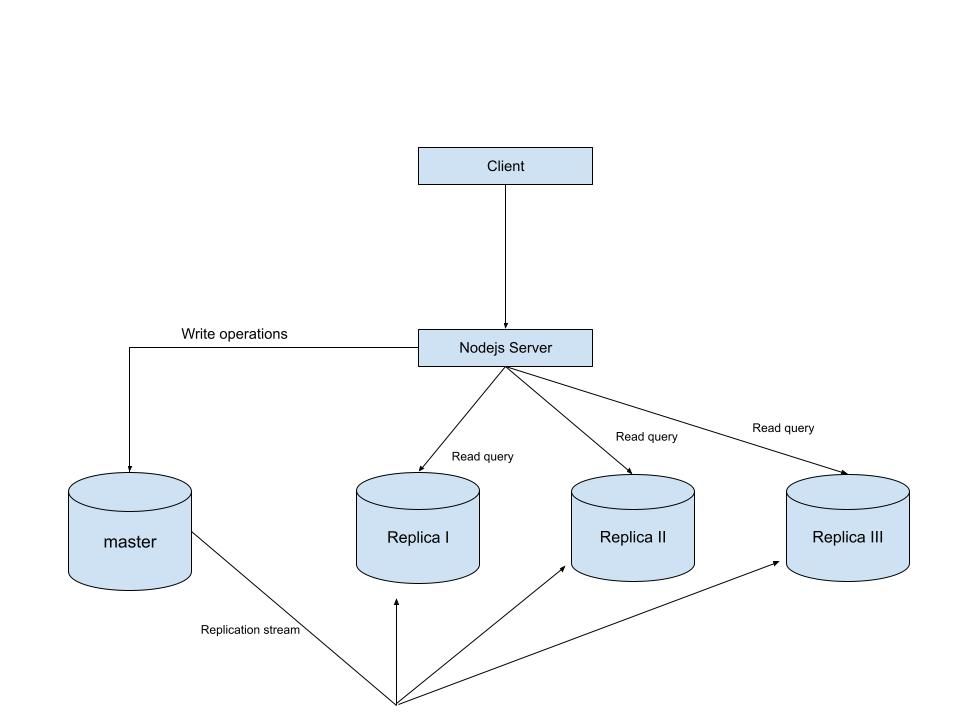
Modern applications demand high availability and the ability to scale reads without compromising performance. One of the most common strategies to achieve this is Replication. In this setup, we configured a single database to act as the leader (master) and handle all write operations, while three replicas handle read operations. In this article, we’ll walk through how to set up MySQL single-leader replication on your local machine using Docker. Once the replication is working, we’ll connect it to a Node.js application using Sequelize ORM, so that reads are routed to the replica and writes go to the master. By the end, you’ll have a working environment where you can see replication in real time Prerequisites knowledge of database replication Background knowledge of docker and docker compose Background knowledge of Nodejs and how to run a NodeJS server An Overview of what we are building Setup Setup our database servers on docker compose in the root of our project directory, create a file named docker-compose.yml with the following content to setup our mysql primary and replica databases. \ \ name: "learn-replica" volumes: mysqlMasterDatabase: mysqlSlaveDatabase: mysqlSlaveDatabaseII: mysqlSlaveDatabaseIII: networks: mysql-replication-network: services: mysql-master: image: mysql:latest container_name: mysql-master command: --server-id=1 --log-bin=ON environment: MYSQL_ROOT_PASSWORD: master MYSQL_DATABASE: replicaDb ports: - "3306:3306" volumes: - mysqlMasterDatabase:/var/lib/mysql networks: - mysql-replication-network mysql-slave: image: mysql:latest container_name: mysql-slave command: --server-id=2 --log-bin=ON environment: MYSQL_ROOT_PASSWORD: slave MYSQL_DATABASE: replicaDb MYSQL_ROOT_HOST: "%" ports: - "3307:3306" volumes: - mysqlSlaveDatabase:/var/lib/mysql depends_on: - mysql-master networks: - mysql-replication-network mysql-slaveII: image: mysql:latest container_name: mysql-slaveII command: --server-id=2 --log-bin=ON environment: MYSQL_ROOT_PASSWORD: slave MYSQL_DATABASE: replicaDb MYSQL_ROOT_HOST: "%" ports: - "3308:3306" volumes: - mysqlSlaveDatabaseII:/var/lib/mysql depends_on: - mysql-master networks: - mysql-replication-network mysql-slaveIII: image: mysql:latest container_name: mysql-slaveIII command: --server-id=3 --log-bin=ON environment: MYSQL_ROOT_PASSWORD: slave MYSQL_DATABASE: replicaDb MYSQL_ROOT_HOST: "%" ports: - "3309:3306" volumes: - mysqlSlaveDatabaseIII:/var/lib/mysql depends_on: - mysql-master networks: - mysql-replication-network In this setup, I’m creating a master database container called mysql-master and 3 replica containers called mysql-slave, mysql-slaveII and mysql-slaveIII. I won’t go too deep into the docker-compose.yml file since it’s just a basic setup, but I do want to walk you through the command line instructions used in all four services because that’s where things get interesting.
command: --server-id=1 --log-bin=ON The --server-id option gives each MySQL server in your replication setup its own name tag. Each one has to be unique and without it, replication won’t work at all. Another cool option not included here is binlog_format=ROW. This tells MySQL how to keep track of changes before passing them along to the replicas. By default, MySQL already uses row-based replication, but you can explicitly set it to ROW to be sure or switch it to STATEMENT if you’d rather log the actual SQL statements instead of row-by-row changes. \ Run our containers on docker Now, in the terminal, we can run the following command to spin up our database containers: docker-compose up -d \ Setting Up Our Master (Primary) Server To configure our master server, we would have to first access the running instance on docker using the following command docker exec -it mysql-master bash This command opens an interactive Bash shell inside the running Docker container named mysql-master, allowing us to run commands directly inside that container. \ Now that we’re inside the container, we can access the MySQL server and start running commands. type: mysql -uroot -p This will log you into MySQL as the root user. You’ll be prompted to enter the password you set in your docker-compose.yml file. \ Next, we need to create a special user that our replicas will use to connect to the master server and pull data. Inside the MySQL prompt, run the following commands: \ CREATE USER 'repl_user'@'%' IDENTIFIED BY 'replication_pass'; GRANT REPLICATION SLAVE ON . TO 'repl_user'@'%'; FLUSH PRIVILEGES; Here’s what’s happening: CREATE USER makes a new MySQL user called repl_user with the password replication_pass. GRANT REPLICATION SLAVE gives this user permission to act as a replication client. FLUSH PRIVILEGES tells MySQL to reload the user permissions so they take effect immediately. \ Time to Configure the Replica (Secondary) Servers a. First, let’s access the replica containers the same way we did with the master. Run this command in your terminal for each of the replica containers: \ docker exec -it <replica_container_name> bash mysql -uroot -p <replica_container_name> should be replace with the name of the replica container you are trying to setup b. Now it’s time to tell our replica where to get its data from. While inside the replica’s MySQL shell, run the following command to configure replication using the master’s details: CHANGE REPLICATION SOURCE TO SOURCE_HOST='mysql-master', SOURCE_USER='repl_user', SOURCE_PASSWORD='replication_pass', GET_SOURCE_PUBLIC_KEY=1; With the replication settings in place, let’s fire up the replica and get it syncing with the master. Still inside the MySQL shell on the replica, run: START REPLICA; This starts the replication process. To make sure everything is working, check the replica’s status with:
SHOW REPLICA STATUS\G; Look for Replica_IO_Running and Replica_SQL_Running — if both say Yes, congratulations! 🎉 Your replica is now successfully connected to the master and replicating data in real time.
Testing Our Replication Setup from the Node.js App Now that our replication is successfully set up, we can configure our Node.js server to observe the real-time effect of data being replicated from the master server to the replica server whenever we write to it. We start by installing the following dependencies:
npm i express mysql2 sequelize \ Now create a folder called src in the root directory and add the following files inside that folder connection.js, index.js and model.js. Our current directory should look like this We can now set up our connections to our master and replica server in the connection.js file as shown below
const Sequelize = require("sequelize"); const sequelize = new Sequelize({ dialect: "mysql", replication: { write: { host: "127.0.0.1", username: "root", password: "master", database: "replicaDb", }, read: [ { host: "127.0.0.1", username: "root", password: "slave", database: "replicaDb", port: 3307 }, { host: "127.0.0.1", username: "root", password: "slave", database: "replicaDb", port: 3308 }, { host: "127.0.0.1", username: "root", password: "slave", database: "replicaDb", port: 3309 }, ], }, }); async function connectdb() { try { await sequelize.authenticate(); } catch (error) { console.error("❌ unable to connect to the follower database", error); } } connectdb(); module.exports = { sequelize, }; \ We can now create a User table in the model.js file
const {DataTypes} = require("sequelize"); const { sequelize } = require("./connection"); const User = sequelize.define("User", { name: { type: DataTypes.STRING, allowNull: false, }, email: { type: DataTypes.STRING, unique: true, allowNull: false, }, }); module.exports = User \ and finally in our index.js file we can start our server and listen for connections on port 3000. from the code sample below, all inserts or updates will be routed by sequelize to the master server. while all read queries will be routed to the read replicas.
const express = require("express"); const { sequelize } = require("./connection"); const User = require("./model"); const app = express(); app.use(express.json()); async function main() { await sequelize.sync({ alter: true }); app.get("/", (req, res) => { res.status(200).json({ message: "first step to setting server up", }); }); app.post("/user", async (req, res) => { const { email, name } = req.body; let newUser = await User.build({ name, email, }); // This INSERT will go to the write (master) connection newUser = newUser.save({ returning: false }); res.status(201).json({ message: "User successfully created", }); }); app.get("/user", async (req, res) => { // This SELECT query will go to one of the read replicas const users = await User.findAll(); res.status(200).json(users); }); app.listen(3000, () => { console.log("server has connected"); }); } main(); When you make a POST request to the /users endpoint, take a moment to check both the master and replica servers to observe how data is replicated in real time. Right now, we are relying on Sequelize to automatically route requests, which works for development but isn’t robust enough for a production environment. In particular, if the master node goes down, Sequelize cannot automatically redirect requests to a newly elected leader. In the next part of this series, we’ll explore strategies to handle these challenges
Share
Hackernoon2025/09/18 14:44
Nvidia shares fall 3%

Nvidia shares fall 3%

The post Nvidia shares fall 3% appeared on BitcoinEthereumNews.com. Home » AI » Nvidia shares fall 3% Chipmaker extends decline as investors continue to take profits from recent highs. Photo: Budrul Chukrut/SOPA Images/LightRocket via Getty Images Key Takeaways Nvidia’s stock decreased by 3% today. The decline extends Nvidia’s recent losing streak. Nvidia shares fell 3% today, extending the chipmaker’s recent decline. The stock dropped further during trading as the artificial intelligence chip leader continued its pullback from recent highs. Disclaimer Source: https://cryptobriefing.com/nvidia-shares-fall-2-8/
Share
BitcoinEthereumNews2025/09/18 03:13