The post BlockDAG’s Near Ending $435M Presale & Scarcity Surpass Solana’s ETF Selloff & Avalanche’s Resistance appeared on BitcoinEthereumNews.com. Crypto News Explore Avalanche’s price resistance, Solana’s ETF selloff, and why BlockDAG’s $435M presale, 4.5B coins left, and fixed price make it the best crypto to buy before February 10, 2026. Avalanche (AVAX) has seen global attention rise due to its expanding ecosystem integrations, while Solana (SOL) stumbled 5% following its $69 million ETF debut, leaving traders questioning whether hype alone can sustain market strength. Meanwhile, BlockDAG’s Value Era has begun, focusing not on speculation but on structure. With only 4.5 billion BDAG coins left, a $0.005 price in Batch 32, and $435 million raised, BlockDAG’s presale enters its final phase before February 10, 2026. This isn’t a typical crypto cycle of pumps and dumps, it’s scarcity-driven precision. The project’s fixed 50 billion supply cap defines a roadmap built on finality and measurable confidence. Avalanche Interest Grows but Price Resistance Holds Avalanche continues to gain global exposure through ecosystem expansions and protocol partnerships, making it one of the most active blockchain environments of the year. Yet, despite rising developer adoption and cross-chain integrations, the AVAX price movement remains limited, as the token struggles to turn network growth into market performance. The enthusiasm surrounding Avalanche interest is genuine, but investors remain cautious. Without a clear supply-based catalyst, AVAX is vulnerable to the same speculative fatigue that often follows high-utility narratives. This creates a divide between real adoption and price appreciation, leaving investors searching for the best crypto to buy today that offers quantifiable scarcity. Solana ETF Selloff Sparks Market Reality Check The Solana ETF debut, valued at $69 million, was one of the most anticipated moments of the quarter. However, instead of lifting SOL’s price higher, the launch triggered a 5% decline, as profit-takers rushed to exit. This post-announcement retreat reveals a growing sentiment among traders that ETF hype alone cannot… The post BlockDAG’s Near Ending $435M Presale & Scarcity Surpass Solana’s ETF Selloff & Avalanche’s Resistance appeared on BitcoinEthereumNews.com. Crypto News Explore Avalanche’s price resistance, Solana’s ETF selloff, and why BlockDAG’s $435M presale, 4.5B coins left, and fixed price make it the best crypto to buy before February 10, 2026. Avalanche (AVAX) has seen global attention rise due to its expanding ecosystem integrations, while Solana (SOL) stumbled 5% following its $69 million ETF debut, leaving traders questioning whether hype alone can sustain market strength. Meanwhile, BlockDAG’s Value Era has begun, focusing not on speculation but on structure. With only 4.5 billion BDAG coins left, a $0.005 price in Batch 32, and $435 million raised, BlockDAG’s presale enters its final phase before February 10, 2026. This isn’t a typical crypto cycle of pumps and dumps, it’s scarcity-driven precision. The project’s fixed 50 billion supply cap defines a roadmap built on finality and measurable confidence. Avalanche Interest Grows but Price Resistance Holds Avalanche continues to gain global exposure through ecosystem expansions and protocol partnerships, making it one of the most active blockchain environments of the year. Yet, despite rising developer adoption and cross-chain integrations, the AVAX price movement remains limited, as the token struggles to turn network growth into market performance. The enthusiasm surrounding Avalanche interest is genuine, but investors remain cautious. Without a clear supply-based catalyst, AVAX is vulnerable to the same speculative fatigue that often follows high-utility narratives. This creates a divide between real adoption and price appreciation, leaving investors searching for the best crypto to buy today that offers quantifiable scarcity. Solana ETF Selloff Sparks Market Reality Check The Solana ETF debut, valued at $69 million, was one of the most anticipated moments of the quarter. However, instead of lifting SOL’s price higher, the launch triggered a 5% decline, as profit-takers rushed to exit. This post-announcement retreat reveals a growing sentiment among traders that ETF hype alone cannot…

BlockDAG’s Near Ending $435M Presale & Scarcity Surpass Solana’s ETF Selloff & Avalanche’s Resistance

Crypto News

Explore Avalanche’s price resistance, Solana’s ETF selloff, and why BlockDAG’s $435M presale, 4.5B coins left, and fixed price make it the best crypto to buy before February 10, 2026.

Avalanche (AVAX) has seen global attention rise due to its expanding ecosystem integrations, while Solana (SOL) stumbled 5% following its $69 million ETF debut, leaving traders questioning whether hype alone can sustain market strength. Meanwhile, BlockDAG’s Value Era has begun, focusing not on speculation but on structure.

With only 4.5 billion BDAG coins left, a $0.005 price in Batch 32, and $435 million raised, BlockDAG’s presale enters its final phase before February 10, 2026. This isn’t a typical crypto cycle of pumps and dumps, it’s scarcity-driven precision. The project’s fixed 50 billion supply cap defines a roadmap built on finality and measurable confidence.

Avalanche Interest Grows but Price Resistance Holds

Avalanche continues to gain global exposure through ecosystem expansions and protocol partnerships, making it one of the most active blockchain environments of the year. Yet, despite rising developer adoption and cross-chain integrations, the AVAX price movement remains limited, as the token struggles to turn network growth into market performance.

The enthusiasm surrounding Avalanche interest is genuine, but investors remain cautious. Without a clear supply-based catalyst, AVAX is vulnerable to the same speculative fatigue that often follows high-utility narratives. This creates a divide between real adoption and price appreciation, leaving investors searching for the best crypto to buy today that offers quantifiable scarcity.

Solana ETF Selloff Sparks Market Reality Check

The Solana ETF debut, valued at $69 million, was one of the most anticipated moments of the quarter. However, instead of lifting SOL’s price higher, the launch triggered a 5% decline, as profit-takers rushed to exit. This post-announcement retreat reveals a growing sentiment among traders that ETF hype alone cannot sustain valuation strength.

The Solana ETF selloff has exposed a market increasingly driven by quick speculation rather than steady value creation. Retail buyers who entered late now face an uncertain outlook as liquidity shifts to safer, more structured opportunities. This pattern mirrors the short-lived reactions typical in ETF-linked rallies, where temporary excitement often masks long-term uncertainty.

Finality & Scarcity Position BlockDAG for Long-Term Market Strength

BlockDAG’s Value Era marks a departure from the speculative approach seen in projects like Avalanche and Solana. With bonuses permanently removed, a supply cap of 50 billion BDAG, and institutional backers securing $86 million (2.664 billion BDAG), its presale strategy is disciplined and final. Currently priced at $0.005 in Batch 32, the presale will end on February 10, 2026, making this the last entry point before the official listing at $0.05. This approach positions BlockDAG (BDAG) as a calculated asset designed for long-term value, not reactive to short-term trading cycles.

Unlike projects driven by ETF speculation or vague ecosystem promises, BlockDAG’s foundation is built on verifiable demand and transparent allocation. Only 4.5 billion BDAG coins remain, and $435 million has already been raised. The presale represents a finite window for those who prioritize certainty and disciplined growth over market hype.

What sets BlockDAG apart from Avalanche and Solana is its scarcity model. While Avalanche leans on ongoing integrations and Solana on ETF optimism, BlockDAG has converted market excitement into a structured, predictable model. With a hard presale cutoff on February 10, 2026, and no future dilution, BlockDAG offers the clarity that other large-cap assets lack.

As the market shifts focus, BlockDAG offers finality and measurable scarcity, providing a distinct advantage over its peers.

Final Take

For traders comparing top altcoins now, the contrast between hype-driven momentum and structure-driven value has rarely been sharper. Avalanche and Solana remain giants in activity and brand strength, but both face volatility from reliance on external catalysts.

BlockDAG, however, has effectively insulated itself from these cycles through predetermined economics. Its Value Era messaging isn’t about future potential; it’s about current finality, a presale that is mathematically winding down.

The psychology driving BlockDAG’s rise lies in its scarcity appeal. With institutional interest already absorbing more than 2.6 billion BDAG, and 4.5 billion left for public sale, the remaining allocation acts as a countdown for retail traders. Unlike the uncertainty surrounding AVAX’s resistance or SOL’s post-ETF dip, BDAG’s value proposition is locked by design, not by market sentiment.

Presale: https://purchase.blockdag.network

Website: https://blockdag.network

Telegram: https://t.me/blockDAGnetworkOfficial

Discord: https://discord.gg/Q7BxghMVyu 


This publication is sponsored. Coindoo does not endorse or assume responsibility for the content, accuracy, quality, advertising, products, or any other materials on this page. Readers are encouraged to conduct their own research before engaging in any cryptocurrency-related actions. Coindoo will not be liable, directly or indirectly, for any damages or losses resulting from the use of or reliance on any content, goods, or services mentioned. Always do your own research.

Author

Kosta joined the team in 2021 and quickly established himself with his thirst for knowledge, incredible dedication, and analytical thinking. He not only covers a wide range of current topics, but also writes excellent reviews, PR articles, and educational materials. His articles are also quoted by other news agencies.

Next article

Source: https://coindoo.com/blockdags-near-ending-435m-presale-scarcity-surpass-solanas-etf-selloff-avalanches-resistance/

Market Opportunity
NEAR Logo
NEAR Price(NEAR)
$0.9829
$0.9829$0.9829
-0.44%
USD
NEAR (NEAR) Live Price Chart
Disclaimer: The articles reposted on this site are sourced from public platforms and are provided for informational purposes only. They do not necessarily reflect the views of MEXC. All rights remain with the original authors. If you believe any content infringes on third-party rights, please contact service@support.mexc.com for removal. MEXC makes no guarantees regarding the accuracy, completeness, or timeliness of the content and is not responsible for any actions taken based on the information provided. The content does not constitute financial, legal, or other professional advice, nor should it be considered a recommendation or endorsement by MEXC.

You May Also Like

The Stunning ASEAN Winner Emerges As Manufacturing Shifts Accelerate

The Stunning ASEAN Winner Emerges As Manufacturing Shifts Accelerate

The post The Stunning ASEAN Winner Emerges As Manufacturing Shifts Accelerate appeared on BitcoinEthereumNews.com. Vietnam US Tariffs: The Stunning ASEAN Winner
Share
BitcoinEthereumNews2026/02/24 08:20
MySQL Single Leader Replication with Node.js and Docker

MySQL Single Leader Replication with Node.js and Docker

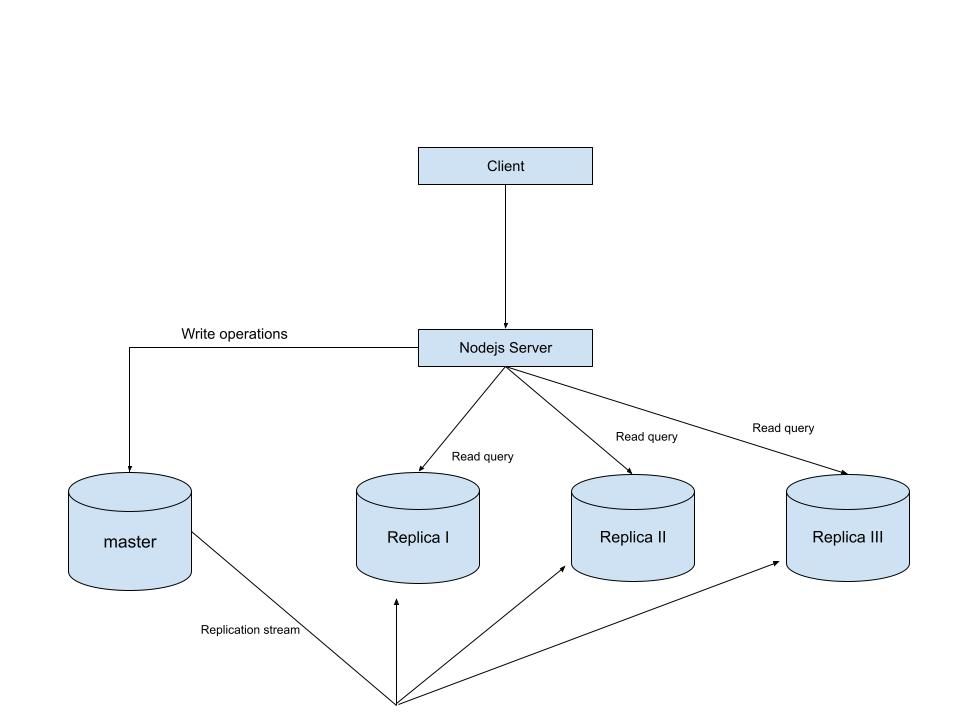
Modern applications demand high availability and the ability to scale reads without compromising performance. One of the most common strategies to achieve this is Replication. In this setup, we configured a single database to act as the leader (master) and handle all write operations, while three replicas handle read operations. In this article, we’ll walk through how to set up MySQL single-leader replication on your local machine using Docker. Once the replication is working, we’ll connect it to a Node.js application using Sequelize ORM, so that reads are routed to the replica and writes go to the master. By the end, you’ll have a working environment where you can see replication in real time Prerequisites knowledge of database replication Background knowledge of docker and docker compose Background knowledge of Nodejs and how to run a NodeJS server An Overview of what we are building Setup Setup our database servers on docker compose in the root of our project directory, create a file named docker-compose.yml with the following content to setup our mysql primary and replica databases. \ \ name: "learn-replica" volumes: mysqlMasterDatabase: mysqlSlaveDatabase: mysqlSlaveDatabaseII: mysqlSlaveDatabaseIII: networks: mysql-replication-network: services: mysql-master: image: mysql:latest container_name: mysql-master command: --server-id=1 --log-bin=ON environment: MYSQL_ROOT_PASSWORD: master MYSQL_DATABASE: replicaDb ports: - "3306:3306" volumes: - mysqlMasterDatabase:/var/lib/mysql networks: - mysql-replication-network mysql-slave: image: mysql:latest container_name: mysql-slave command: --server-id=2 --log-bin=ON environment: MYSQL_ROOT_PASSWORD: slave MYSQL_DATABASE: replicaDb MYSQL_ROOT_HOST: "%" ports: - "3307:3306" volumes: - mysqlSlaveDatabase:/var/lib/mysql depends_on: - mysql-master networks: - mysql-replication-network mysql-slaveII: image: mysql:latest container_name: mysql-slaveII command: --server-id=2 --log-bin=ON environment: MYSQL_ROOT_PASSWORD: slave MYSQL_DATABASE: replicaDb MYSQL_ROOT_HOST: "%" ports: - "3308:3306" volumes: - mysqlSlaveDatabaseII:/var/lib/mysql depends_on: - mysql-master networks: - mysql-replication-network mysql-slaveIII: image: mysql:latest container_name: mysql-slaveIII command: --server-id=3 --log-bin=ON environment: MYSQL_ROOT_PASSWORD: slave MYSQL_DATABASE: replicaDb MYSQL_ROOT_HOST: "%" ports: - "3309:3306" volumes: - mysqlSlaveDatabaseIII:/var/lib/mysql depends_on: - mysql-master networks: - mysql-replication-network In this setup, I’m creating a master database container called mysql-master and 3 replica containers called mysql-slave, mysql-slaveII and mysql-slaveIII. I won’t go too deep into the docker-compose.yml file since it’s just a basic setup, but I do want to walk you through the command line instructions used in all four services because that’s where things get interesting.
command: --server-id=1 --log-bin=ON The --server-id option gives each MySQL server in your replication setup its own name tag. Each one has to be unique and without it, replication won’t work at all. Another cool option not included here is binlog_format=ROW. This tells MySQL how to keep track of changes before passing them along to the replicas. By default, MySQL already uses row-based replication, but you can explicitly set it to ROW to be sure or switch it to STATEMENT if you’d rather log the actual SQL statements instead of row-by-row changes. \ Run our containers on docker Now, in the terminal, we can run the following command to spin up our database containers: docker-compose up -d \ Setting Up Our Master (Primary) Server To configure our master server, we would have to first access the running instance on docker using the following command docker exec -it mysql-master bash This command opens an interactive Bash shell inside the running Docker container named mysql-master, allowing us to run commands directly inside that container. \ Now that we’re inside the container, we can access the MySQL server and start running commands. type: mysql -uroot -p This will log you into MySQL as the root user. You’ll be prompted to enter the password you set in your docker-compose.yml file. \ Next, we need to create a special user that our replicas will use to connect to the master server and pull data. Inside the MySQL prompt, run the following commands: \ CREATE USER 'repl_user'@'%' IDENTIFIED BY 'replication_pass'; GRANT REPLICATION SLAVE ON . TO 'repl_user'@'%'; FLUSH PRIVILEGES; Here’s what’s happening: CREATE USER makes a new MySQL user called repl_user with the password replication_pass. GRANT REPLICATION SLAVE gives this user permission to act as a replication client. FLUSH PRIVILEGES tells MySQL to reload the user permissions so they take effect immediately. \ Time to Configure the Replica (Secondary) Servers a. First, let’s access the replica containers the same way we did with the master. Run this command in your terminal for each of the replica containers: \ docker exec -it <replica_container_name> bash mysql -uroot -p <replica_container_name> should be replace with the name of the replica container you are trying to setup b. Now it’s time to tell our replica where to get its data from. While inside the replica’s MySQL shell, run the following command to configure replication using the master’s details: CHANGE REPLICATION SOURCE TO SOURCE_HOST='mysql-master', SOURCE_USER='repl_user', SOURCE_PASSWORD='replication_pass', GET_SOURCE_PUBLIC_KEY=1; With the replication settings in place, let’s fire up the replica and get it syncing with the master. Still inside the MySQL shell on the replica, run: START REPLICA; This starts the replication process. To make sure everything is working, check the replica’s status with:
SHOW REPLICA STATUS\G; Look for Replica_IO_Running and Replica_SQL_Running — if both say Yes, congratulations! 🎉 Your replica is now successfully connected to the master and replicating data in real time.
Testing Our Replication Setup from the Node.js App Now that our replication is successfully set up, we can configure our Node.js server to observe the real-time effect of data being replicated from the master server to the replica server whenever we write to it. We start by installing the following dependencies:
npm i express mysql2 sequelize \ Now create a folder called src in the root directory and add the following files inside that folder connection.js, index.js and model.js. Our current directory should look like this We can now set up our connections to our master and replica server in the connection.js file as shown below
const Sequelize = require("sequelize"); const sequelize = new Sequelize({ dialect: "mysql", replication: { write: { host: "127.0.0.1", username: "root", password: "master", database: "replicaDb", }, read: [ { host: "127.0.0.1", username: "root", password: "slave", database: "replicaDb", port: 3307 }, { host: "127.0.0.1", username: "root", password: "slave", database: "replicaDb", port: 3308 }, { host: "127.0.0.1", username: "root", password: "slave", database: "replicaDb", port: 3309 }, ], }, }); async function connectdb() { try { await sequelize.authenticate(); } catch (error) { console.error("❌ unable to connect to the follower database", error); } } connectdb(); module.exports = { sequelize, }; \ We can now create a User table in the model.js file
const {DataTypes} = require("sequelize"); const { sequelize } = require("./connection"); const User = sequelize.define("User", { name: { type: DataTypes.STRING, allowNull: false, }, email: { type: DataTypes.STRING, unique: true, allowNull: false, }, }); module.exports = User \ and finally in our index.js file we can start our server and listen for connections on port 3000. from the code sample below, all inserts or updates will be routed by sequelize to the master server. while all read queries will be routed to the read replicas.
const express = require("express"); const { sequelize } = require("./connection"); const User = require("./model"); const app = express(); app.use(express.json()); async function main() { await sequelize.sync({ alter: true }); app.get("/", (req, res) => { res.status(200).json({ message: "first step to setting server up", }); }); app.post("/user", async (req, res) => { const { email, name } = req.body; let newUser = await User.build({ name, email, }); // This INSERT will go to the write (master) connection newUser = newUser.save({ returning: false }); res.status(201).json({ message: "User successfully created", }); }); app.get("/user", async (req, res) => { // This SELECT query will go to one of the read replicas const users = await User.findAll(); res.status(200).json(users); }); app.listen(3000, () => { console.log("server has connected"); }); } main(); When you make a POST request to the /users endpoint, take a moment to check both the master and replica servers to observe how data is replicated in real time. Right now, we are relying on Sequelize to automatically route requests, which works for development but isn’t robust enough for a production environment. In particular, if the master node goes down, Sequelize cannot automatically redirect requests to a newly elected leader. In the next part of this series, we’ll explore strategies to handle these challenges
Share
Hackernoon2025/09/18 14:44
Robinhood: Investors Are Looking Beyond BTC

Robinhood: Investors Are Looking Beyond BTC

The post Robinhood: Investors Are Looking Beyond BTC appeared on BitcoinEthereumNews.com. Investors Diversifying Beyond BTC and ETH Robinhood’s crypto division
Share
BitcoinEthereumNews2026/02/24 08:32