The post BNY Mellon Explores Tokenized Deposits To Speed Up Payments: Bloomberg appeared first on Coinpedia Fintech News The banking world is changing fast. Traditional methods are slowly giving way to digital innovation, and major institutions are turning to blockchain and tokenized deposits to move money faster, easier, and more efficiently.  BNY Mellon Explores Blockchain-Based Payments According to Bloomberg, BNY Mellon, one of the world’s largest custodians with $55.8 trillion in assets under management and custody, is exploring tokenized deposits, a way for clients to make payments using blockchain technology.  The initiative is part of BNY Mellon’s broader plan to modernize its infrastructure, including real-time, instant, and cross-border payments. Carl Slabicki, who leads the bank’s Treasury Services platform, explained that tokenized deposits could help banks break free from outdated systems. Breaking Barriers in Banking Tokenized deposits could help “banks overcome legacy technology constraints, making it easier to move deposits and payments across their own ecosystems, and eventually, across the broader market as standards mature,” Slabicki said. With this technology, banks could move money around more easily, both within their own systems and, eventually, across the wider financial world. BNY Mellon’s treasury services already handle roughly $2.5 trillion in daily payments. It has been exploring digital assets and blockchain for years. Back in July, BNY Mellon and Goldman Sachs announced a partnership to use blockchain technology for tracking customer ownership of certain money market funds (MMFs). Banks Experiment with Digital Tokens BNY Mellon is not the only bank exploring digital tools. Major banks and global companies are exploring new ways to move money faster and cheaper using digital tools. JPMorgan Chase rolled out a pilot token called JPMD for dollar deposits, while HSBC launched a tokenised deposit service letting corporate clients send money across borders quickly and securely. How Tokenization is Shaping Finance Tokenised deposits, which are digital versions of the cash people already hold in their accounts, are gaining traction. As these coins run on blockchain networks, payments can settle instantly, cutting costs and delays. Tokenization is already transforming financial services far beyond payments. It is making processes like digital bond issuance, custody, and settlement more efficient, while also enabling the tokenization of traditional assets such as bonds, real estate, and money markets. SWIFT Teams Up with Banks  Building on this momentum, global financial network SWIFT has teamed up with over 30 major banks, including BNY Mellon, to make cross-border payments instantaneous.  These partnerships are helping to develop a shared blockchain ledger designed for real-time settlements.The post BNY Mellon Explores Tokenized Deposits To Speed Up Payments: Bloomberg appeared first on Coinpedia Fintech News The banking world is changing fast. Traditional methods are slowly giving way to digital innovation, and major institutions are turning to blockchain and tokenized deposits to move money faster, easier, and more efficiently.  BNY Mellon Explores Blockchain-Based Payments According to Bloomberg, BNY Mellon, one of the world’s largest custodians with $55.8 trillion in assets under management and custody, is exploring tokenized deposits, a way for clients to make payments using blockchain technology.  The initiative is part of BNY Mellon’s broader plan to modernize its infrastructure, including real-time, instant, and cross-border payments. Carl Slabicki, who leads the bank’s Treasury Services platform, explained that tokenized deposits could help banks break free from outdated systems. Breaking Barriers in Banking Tokenized deposits could help “banks overcome legacy technology constraints, making it easier to move deposits and payments across their own ecosystems, and eventually, across the broader market as standards mature,” Slabicki said. With this technology, banks could move money around more easily, both within their own systems and, eventually, across the wider financial world. BNY Mellon’s treasury services already handle roughly $2.5 trillion in daily payments. It has been exploring digital assets and blockchain for years. Back in July, BNY Mellon and Goldman Sachs announced a partnership to use blockchain technology for tracking customer ownership of certain money market funds (MMFs). Banks Experiment with Digital Tokens BNY Mellon is not the only bank exploring digital tools. Major banks and global companies are exploring new ways to move money faster and cheaper using digital tools. JPMorgan Chase rolled out a pilot token called JPMD for dollar deposits, while HSBC launched a tokenised deposit service letting corporate clients send money across borders quickly and securely. How Tokenization is Shaping Finance Tokenised deposits, which are digital versions of the cash people already hold in their accounts, are gaining traction. As these coins run on blockchain networks, payments can settle instantly, cutting costs and delays. Tokenization is already transforming financial services far beyond payments. It is making processes like digital bond issuance, custody, and settlement more efficient, while also enabling the tokenization of traditional assets such as bonds, real estate, and money markets. SWIFT Teams Up with Banks  Building on this momentum, global financial network SWIFT has teamed up with over 30 major banks, including BNY Mellon, to make cross-border payments instantaneous.  These partnerships are helping to develop a shared blockchain ledger designed for real-time settlements.

BNY Mellon Explores Tokenized Deposits To Speed Up Payments: Bloomberg
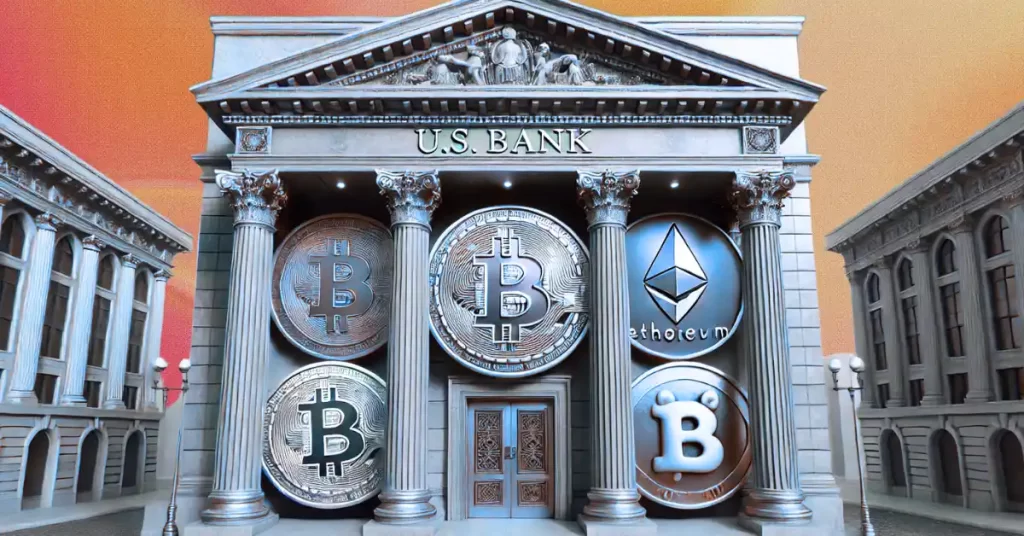
186 Banks at Risk - Is the US Banking System on the Verge of Collapse?

The post BNY Mellon Explores Tokenized Deposits To Speed Up Payments: Bloomberg appeared first on Coinpedia Fintech News

The banking world is changing fast. Traditional methods are slowly giving way to digital innovation, and major institutions are turning to blockchain and tokenized deposits to move money faster, easier, and more efficiently. 

BNY Mellon Explores Blockchain-Based Payments

According to Bloomberg, BNY Mellon, one of the world’s largest custodians with $55.8 trillion in assets under management and custody, is exploring tokenized deposits, a way for clients to make payments using blockchain technology. 

The initiative is part of BNY Mellon’s broader plan to modernize its infrastructure, including real-time, instant, and cross-border payments. Carl Slabicki, who leads the bank’s Treasury Services platform, explained that tokenized deposits could help banks break free from outdated systems.

Breaking Barriers in Banking

Tokenized deposits could help “banks overcome legacy technology constraints, making it easier to move deposits and payments across their own ecosystems, and eventually, across the broader market as standards mature,” Slabicki said.

With this technology, banks could move money around more easily, both within their own systems and, eventually, across the wider financial world.

BNY Mellon’s treasury services already handle roughly $2.5 trillion in daily payments. It has been exploring digital assets and blockchain for years. Back in July, BNY Mellon and Goldman Sachs announced a partnership to use blockchain technology for tracking customer ownership of certain money market funds (MMFs).

Banks Experiment with Digital Tokens

BNY Mellon is not the only bank exploring digital tools.

Major banks and global companies are exploring new ways to move money faster and cheaper using digital tools. JPMorgan Chase rolled out a pilot token called JPMD for dollar deposits, while HSBC launched a tokenised deposit service letting corporate clients send money across borders quickly and securely.

How Tokenization is Shaping Finance

Tokenised deposits, which are digital versions of the cash people already hold in their accounts, are gaining traction. As these coins run on blockchain networks, payments can settle instantly, cutting costs and delays.

Tokenization is already transforming financial services far beyond payments. It is making processes like digital bond issuance, custody, and settlement more efficient, while also enabling the tokenization of traditional assets such as bonds, real estate, and money markets.

SWIFT Teams Up with Banks 

Building on this momentum, global financial network SWIFT has teamed up with over 30 major banks, including BNY Mellon, to make cross-border payments instantaneous. 

These partnerships are helping to develop a shared blockchain ledger designed for real-time settlements.

Market Opportunity
Major Logo
Major Price(MAJOR)
$0.12434
$0.12434$0.12434
+0.54%
USD
Major (MAJOR) Live Price Chart
Disclaimer: The articles reposted on this site are sourced from public platforms and are provided for informational purposes only. They do not necessarily reflect the views of MEXC. All rights remain with the original authors. If you believe any content infringes on third-party rights, please contact service@support.mexc.com for removal. MEXC makes no guarantees regarding the accuracy, completeness, or timeliness of the content and is not responsible for any actions taken based on the information provided. The content does not constitute financial, legal, or other professional advice, nor should it be considered a recommendation or endorsement by MEXC.

You May Also Like

Unleashing A New Era Of Seller Empowerment

Unleashing A New Era Of Seller Empowerment

The post Unleashing A New Era Of Seller Empowerment appeared on BitcoinEthereumNews.com. Amazon AI Agent: Unleashing A New Era Of Seller Empowerment Skip to content Home AI News Amazon AI Agent: Unleashing a New Era of Seller Empowerment Source: https://bitcoinworld.co.in/amazon-ai-seller-tools/
Share
BitcoinEthereumNews2025/09/18 00:10
Aave DAO to Shut Down 50% of L2s While Doubling Down on GHO

Aave DAO to Shut Down 50% of L2s While Doubling Down on GHO

The post Aave DAO to Shut Down 50% of L2s While Doubling Down on GHO appeared on BitcoinEthereumNews.com. Aave DAO is gearing up for a significant overhaul by shutting down over 50% of underperforming L2 instances. It is also restructuring its governance framework and deploying over $100 million to boost GHO. This could be a pivotal moment that propels Aave back to the forefront of on-chain lending or sparks unprecedented controversy within the DeFi community. Sponsored Sponsored ACI Proposes Shutting Down 50% of L2s The “State of the Union” report by the Aave Chan Initiative (ACI) paints a candid picture. After a turbulent period in the DeFi market and internal challenges, Aave (AAVE) now leads in key metrics: TVL, revenue, market share, and borrowing volume. Aave’s annual revenue of $130 million surpasses the combined cash reserves of its competitors. Tokenomics improvements and the AAVE token buyback program have also contributed to the ecosystem’s growth. Aave global metrics. Source: Aave However, the ACI’s report also highlights several pain points. First, regarding the Layer-2 (L2) strategy. While Aave’s L2 strategy was once a key driver of success, it is no longer fit for purpose. Over half of Aave’s instances on L2s and alt-L1s are not economically viable. Based on year-to-date data, over 86.6% of Aave’s revenue comes from the mainnet, indicating that everything else is a side quest. On this basis, ACI proposes closing underperforming networks. The DAO should invest in key networks with significant differentiators. Second, ACI is pushing for a complete overhaul of the “friendly fork” framework, as most have been unimpressive regarding TVL and revenue. In some cases, attackers have exploited them to Aave’s detriment, as seen with Spark. Sponsored Sponsored “The friendly fork model had a good intention but bad execution where the DAO was too friendly towards these forks, allowing the DAO only little upside,” the report states. Third, the instance model, once a smart…
Share
BitcoinEthereumNews2025/09/18 02:28
WIF Price Prediction: Targets $0.46 Breakout by February 2026

WIF Price Prediction: Targets $0.46 Breakout by February 2026

The post WIF Price Prediction: Targets $0.46 Breakout by February 2026 appeared on BitcoinEthereumNews.com. Timothy Morano Jan 16, 2026 08:57 WIF Price Prediction
Share
BitcoinEthereumNews2026/01/17 03:29