BitcoinWorld Crucial Update: Basel Committee Rethinks Crypto Regulations for Banks, Signaling Potential Shift The financial world is abuzz with a significant development: the Basel Committee on Banking Supervision (BCBS) is taking a fresh look at its existing crypto regulations for banks. This review signals a potentially pivotal moment for how traditional financial institutions engage with the rapidly evolving digital asset landscape. For anyone tracking the intersection of banking and blockchain, this news is undoubtedly exciting. Understanding the Current Basel Committee Crypto Regulations Before diving into the potential changes, it is essential to understand the existing framework. In 2022, the Basel Committee introduced stringent guidelines for banks dealing with cryptocurrencies. These rules were designed to ensure financial stability and mitigate risks associated with volatile digital assets. High-Risk Weight: The committee recommended a maximum risk weight of 1,250% for unbacked digital assets like Bitcoin. This high percentage means banks must hold a substantial amount of capital against their crypto exposures, making it costly to hold these assets. Capital Allocation Limit: Furthermore, banks were advised not to allocate more than 2% of their core capital to such high-risk assets. This conservative limit significantly restricted banks’ ability to invest heavily in the crypto market. These guidelines reflected a cautious approach, aiming to shield the traditional banking system from the inherent volatility and nascent regulatory environment of cryptocurrencies. Why is the Basel Committee Reviewing Crypto Regulations Now? Recent reports, including one by Bloomberg, indicate that the Basel Committee may be adopting a more lenient stance. But what’s driving this reconsideration? The digital asset market has matured considerably since 2022. Institutional interest has grown, and regulatory clarity has slowly begun to emerge in various jurisdictions. The BCBS likely recognizes the need to adapt its framework to these evolving market realities. Market Maturation: The crypto market, while still volatile, has seen increased institutional participation and a greater understanding of its underlying technology. Innovation Demand: Banks are increasingly seeing demand from clients for crypto-related services. Current strict rules make it challenging to meet this demand competitively. Global Harmonization: There’s an ongoing effort to harmonize global financial regulations. Adjusting these rules could contribute to a more consistent international approach to digital assets. This review suggests a pragmatic shift, acknowledging that an overly restrictive approach might hinder innovation and push crypto activities into less regulated corners of the financial system. What Could a More Flexible Stance on Basel Committee Crypto Regulations Mean for Banks? A more lenient approach to Basel Committee crypto regulations could unlock significant opportunities for traditional financial institutions. It could pave the way for broader institutional adoption and integration of digital assets into mainstream banking services. Imagine banks offering a wider range of services, such as: Enhanced Custody Solutions: Providing secure storage for a broader array of digital assets for institutional and retail clients. Crypto Trading and Brokerage: Facilitating direct trading of cryptocurrencies, increasing market liquidity and accessibility. Lending and Borrowing: Exploring new financial products collateralized by digital assets, carefully managing associated risks. Payment Innovations: Utilizing blockchain technology for faster, more efficient cross-border payments. Such changes would not only benefit banks by opening new revenue streams but also provide greater security and regulatory oversight for crypto investors, fostering a more stable and trustworthy environment. Navigating the Path Forward: Challenges and Opportunities in Crypto Regulations While the prospect of eased crypto regulations for banks is promising, the path forward still involves navigating certain challenges. Banks will need to enhance their technological infrastructure, develop specialized expertise, and ensure robust risk management frameworks. Key Considerations for Banks: Technology Integration: Seamlessly integrating blockchain technology and digital asset platforms into existing banking systems. Talent Development: Cultivating expertise in cryptocurrency, blockchain, and digital asset security within their teams. Risk Management: Developing sophisticated models to assess and manage the unique market, operational, and cyber risks associated with digital assets. Compliance Frameworks: Adapting internal compliance policies to align with evolving regulatory standards and anti-money laundering (AML) requirements for crypto. This evolving landscape presents a unique opportunity for forward-thinking financial institutions to innovate and position themselves at the forefront of the digital economy. Conclusion: A New Era for Basel Committee Crypto Regulations? The Basel Committee’s review of its crypto regulations for banks marks a significant turning point. While the exact details of the revised framework are yet to be finalized, the move towards a potentially more accommodating stance reflects a growing recognition of digital assets’ role in the future of finance. This development could lead to greater institutional engagement, enhanced market stability, and a more integrated financial ecosystem. Banks, regulators, and crypto enthusiasts alike will be closely watching the outcome of this review, as it has the potential to reshape the landscape of digital finance for years to come. Frequently Asked Questions (FAQs) What is the Basel Committee on Banking Supervision (BCBS)? The BCBS is an international committee of banking supervisory authorities that formulates global regulatory standards for banks. Its aim is to strengthen the regulation, supervision, and practices of banks worldwide with the purpose of enhancing financial stability. What were the main restrictions under the 2022 crypto regulations for banks? The 2022 guidelines recommended a maximum risk weight of 1,250% for unbacked digital assets like Bitcoin and prohibited banks from allocating more than 2% of their core capital to such high-risk assets. Why is the Basel Committee reconsidering its stance on crypto regulations? The reconsideration is likely driven by the maturation of the digital asset market, increased institutional interest, and a desire to adapt regulations to evolving financial technologies and market demands. The goal is to find a balance between managing risks and fostering innovation. How might eased Basel Committee crypto regulations impact the broader crypto market? A more lenient approach could lead to increased participation from traditional banks, bringing more capital, liquidity, and regulatory oversight to the crypto market. This could enhance stability and legitimacy, potentially attracting even more institutional and retail investors. Will all banks immediately start offering crypto services if regulations ease? Not necessarily. While eased regulations would remove some barriers, banks would still need to conduct their own risk assessments, build necessary infrastructure, and develop internal expertise before launching new crypto-related services. Adoption would likely be gradual and strategic. If you found this update on the Basel Committee’s review of crypto regulations insightful, please consider sharing it with your network. Your insights and discussions help shed light on these crucial developments in the world of finance! To learn more about the latest crypto market trends, explore our article on key developments shaping Bitcoin institutional adoption. This post Crucial Update: Basel Committee Rethinks Crypto Regulations for Banks, Signaling Potential Shift first appeared on BitcoinWorld.BitcoinWorld Crucial Update: Basel Committee Rethinks Crypto Regulations for Banks, Signaling Potential Shift The financial world is abuzz with a significant development: the Basel Committee on Banking Supervision (BCBS) is taking a fresh look at its existing crypto regulations for banks. This review signals a potentially pivotal moment for how traditional financial institutions engage with the rapidly evolving digital asset landscape. For anyone tracking the intersection of banking and blockchain, this news is undoubtedly exciting. Understanding the Current Basel Committee Crypto Regulations Before diving into the potential changes, it is essential to understand the existing framework. In 2022, the Basel Committee introduced stringent guidelines for banks dealing with cryptocurrencies. These rules were designed to ensure financial stability and mitigate risks associated with volatile digital assets. High-Risk Weight: The committee recommended a maximum risk weight of 1,250% for unbacked digital assets like Bitcoin. This high percentage means banks must hold a substantial amount of capital against their crypto exposures, making it costly to hold these assets. Capital Allocation Limit: Furthermore, banks were advised not to allocate more than 2% of their core capital to such high-risk assets. This conservative limit significantly restricted banks’ ability to invest heavily in the crypto market. These guidelines reflected a cautious approach, aiming to shield the traditional banking system from the inherent volatility and nascent regulatory environment of cryptocurrencies. Why is the Basel Committee Reviewing Crypto Regulations Now? Recent reports, including one by Bloomberg, indicate that the Basel Committee may be adopting a more lenient stance. But what’s driving this reconsideration? The digital asset market has matured considerably since 2022. Institutional interest has grown, and regulatory clarity has slowly begun to emerge in various jurisdictions. The BCBS likely recognizes the need to adapt its framework to these evolving market realities. Market Maturation: The crypto market, while still volatile, has seen increased institutional participation and a greater understanding of its underlying technology. Innovation Demand: Banks are increasingly seeing demand from clients for crypto-related services. Current strict rules make it challenging to meet this demand competitively. Global Harmonization: There’s an ongoing effort to harmonize global financial regulations. Adjusting these rules could contribute to a more consistent international approach to digital assets. This review suggests a pragmatic shift, acknowledging that an overly restrictive approach might hinder innovation and push crypto activities into less regulated corners of the financial system. What Could a More Flexible Stance on Basel Committee Crypto Regulations Mean for Banks? A more lenient approach to Basel Committee crypto regulations could unlock significant opportunities for traditional financial institutions. It could pave the way for broader institutional adoption and integration of digital assets into mainstream banking services. Imagine banks offering a wider range of services, such as: Enhanced Custody Solutions: Providing secure storage for a broader array of digital assets for institutional and retail clients. Crypto Trading and Brokerage: Facilitating direct trading of cryptocurrencies, increasing market liquidity and accessibility. Lending and Borrowing: Exploring new financial products collateralized by digital assets, carefully managing associated risks. Payment Innovations: Utilizing blockchain technology for faster, more efficient cross-border payments. Such changes would not only benefit banks by opening new revenue streams but also provide greater security and regulatory oversight for crypto investors, fostering a more stable and trustworthy environment. Navigating the Path Forward: Challenges and Opportunities in Crypto Regulations While the prospect of eased crypto regulations for banks is promising, the path forward still involves navigating certain challenges. Banks will need to enhance their technological infrastructure, develop specialized expertise, and ensure robust risk management frameworks. Key Considerations for Banks: Technology Integration: Seamlessly integrating blockchain technology and digital asset platforms into existing banking systems. Talent Development: Cultivating expertise in cryptocurrency, blockchain, and digital asset security within their teams. Risk Management: Developing sophisticated models to assess and manage the unique market, operational, and cyber risks associated with digital assets. Compliance Frameworks: Adapting internal compliance policies to align with evolving regulatory standards and anti-money laundering (AML) requirements for crypto. This evolving landscape presents a unique opportunity for forward-thinking financial institutions to innovate and position themselves at the forefront of the digital economy. Conclusion: A New Era for Basel Committee Crypto Regulations? The Basel Committee’s review of its crypto regulations for banks marks a significant turning point. While the exact details of the revised framework are yet to be finalized, the move towards a potentially more accommodating stance reflects a growing recognition of digital assets’ role in the future of finance. This development could lead to greater institutional engagement, enhanced market stability, and a more integrated financial ecosystem. Banks, regulators, and crypto enthusiasts alike will be closely watching the outcome of this review, as it has the potential to reshape the landscape of digital finance for years to come. Frequently Asked Questions (FAQs) What is the Basel Committee on Banking Supervision (BCBS)? The BCBS is an international committee of banking supervisory authorities that formulates global regulatory standards for banks. Its aim is to strengthen the regulation, supervision, and practices of banks worldwide with the purpose of enhancing financial stability. What were the main restrictions under the 2022 crypto regulations for banks? The 2022 guidelines recommended a maximum risk weight of 1,250% for unbacked digital assets like Bitcoin and prohibited banks from allocating more than 2% of their core capital to such high-risk assets. Why is the Basel Committee reconsidering its stance on crypto regulations? The reconsideration is likely driven by the maturation of the digital asset market, increased institutional interest, and a desire to adapt regulations to evolving financial technologies and market demands. The goal is to find a balance between managing risks and fostering innovation. How might eased Basel Committee crypto regulations impact the broader crypto market? A more lenient approach could lead to increased participation from traditional banks, bringing more capital, liquidity, and regulatory oversight to the crypto market. This could enhance stability and legitimacy, potentially attracting even more institutional and retail investors. Will all banks immediately start offering crypto services if regulations ease? Not necessarily. While eased regulations would remove some barriers, banks would still need to conduct their own risk assessments, build necessary infrastructure, and develop internal expertise before launching new crypto-related services. Adoption would likely be gradual and strategic. If you found this update on the Basel Committee’s review of crypto regulations insightful, please consider sharing it with your network. Your insights and discussions help shed light on these crucial developments in the world of finance! To learn more about the latest crypto market trends, explore our article on key developments shaping Bitcoin institutional adoption. This post Crucial Update: Basel Committee Rethinks Crypto Regulations for Banks, Signaling Potential Shift first appeared on BitcoinWorld.

Crucial Update: Basel Committee Rethinks Crypto Regulations for Banks, Signaling Potential Shift

2025/10/31 22:45
6 min read

BitcoinWorld

Crucial Update: Basel Committee Rethinks Crypto Regulations for Banks, Signaling Potential Shift

The financial world is abuzz with a significant development: the Basel Committee on Banking Supervision (BCBS) is taking a fresh look at its existing crypto regulations for banks. This review signals a potentially pivotal moment for how traditional financial institutions engage with the rapidly evolving digital asset landscape. For anyone tracking the intersection of banking and blockchain, this news is undoubtedly exciting.

Understanding the Current Basel Committee Crypto Regulations

Before diving into the potential changes, it is essential to understand the existing framework. In 2022, the Basel Committee introduced stringent guidelines for banks dealing with cryptocurrencies. These rules were designed to ensure financial stability and mitigate risks associated with volatile digital assets.

  • High-Risk Weight: The committee recommended a maximum risk weight of 1,250% for unbacked digital assets like Bitcoin. This high percentage means banks must hold a substantial amount of capital against their crypto exposures, making it costly to hold these assets.
  • Capital Allocation Limit: Furthermore, banks were advised not to allocate more than 2% of their core capital to such high-risk assets. This conservative limit significantly restricted banks’ ability to invest heavily in the crypto market.

These guidelines reflected a cautious approach, aiming to shield the traditional banking system from the inherent volatility and nascent regulatory environment of cryptocurrencies.

Why is the Basel Committee Reviewing Crypto Regulations Now?

Recent reports, including one by Bloomberg, indicate that the Basel Committee may be adopting a more lenient stance. But what’s driving this reconsideration?

The digital asset market has matured considerably since 2022. Institutional interest has grown, and regulatory clarity has slowly begun to emerge in various jurisdictions. The BCBS likely recognizes the need to adapt its framework to these evolving market realities.

  • Market Maturation: The crypto market, while still volatile, has seen increased institutional participation and a greater understanding of its underlying technology.
  • Innovation Demand: Banks are increasingly seeing demand from clients for crypto-related services. Current strict rules make it challenging to meet this demand competitively.
  • Global Harmonization: There’s an ongoing effort to harmonize global financial regulations. Adjusting these rules could contribute to a more consistent international approach to digital assets.

This review suggests a pragmatic shift, acknowledging that an overly restrictive approach might hinder innovation and push crypto activities into less regulated corners of the financial system.

What Could a More Flexible Stance on Basel Committee Crypto Regulations Mean for Banks?

A more lenient approach to Basel Committee crypto regulations could unlock significant opportunities for traditional financial institutions. It could pave the way for broader institutional adoption and integration of digital assets into mainstream banking services.

Imagine banks offering a wider range of services, such as:

  • Enhanced Custody Solutions: Providing secure storage for a broader array of digital assets for institutional and retail clients.
  • Crypto Trading and Brokerage: Facilitating direct trading of cryptocurrencies, increasing market liquidity and accessibility.
  • Lending and Borrowing: Exploring new financial products collateralized by digital assets, carefully managing associated risks.
  • Payment Innovations: Utilizing blockchain technology for faster, more efficient cross-border payments.

Such changes would not only benefit banks by opening new revenue streams but also provide greater security and regulatory oversight for crypto investors, fostering a more stable and trustworthy environment.

While the prospect of eased crypto regulations for banks is promising, the path forward still involves navigating certain challenges. Banks will need to enhance their technological infrastructure, develop specialized expertise, and ensure robust risk management frameworks.

Key Considerations for Banks:

  • Technology Integration: Seamlessly integrating blockchain technology and digital asset platforms into existing banking systems.
  • Talent Development: Cultivating expertise in cryptocurrency, blockchain, and digital asset security within their teams.
  • Risk Management: Developing sophisticated models to assess and manage the unique market, operational, and cyber risks associated with digital assets.
  • Compliance Frameworks: Adapting internal compliance policies to align with evolving regulatory standards and anti-money laundering (AML) requirements for crypto.

This evolving landscape presents a unique opportunity for forward-thinking financial institutions to innovate and position themselves at the forefront of the digital economy.

Conclusion: A New Era for Basel Committee Crypto Regulations?

The Basel Committee’s review of its crypto regulations for banks marks a significant turning point. While the exact details of the revised framework are yet to be finalized, the move towards a potentially more accommodating stance reflects a growing recognition of digital assets’ role in the future of finance. This development could lead to greater institutional engagement, enhanced market stability, and a more integrated financial ecosystem.

Banks, regulators, and crypto enthusiasts alike will be closely watching the outcome of this review, as it has the potential to reshape the landscape of digital finance for years to come.

Frequently Asked Questions (FAQs)

What is the Basel Committee on Banking Supervision (BCBS)?

The BCBS is an international committee of banking supervisory authorities that formulates global regulatory standards for banks. Its aim is to strengthen the regulation, supervision, and practices of banks worldwide with the purpose of enhancing financial stability.

What were the main restrictions under the 2022 crypto regulations for banks?

The 2022 guidelines recommended a maximum risk weight of 1,250% for unbacked digital assets like Bitcoin and prohibited banks from allocating more than 2% of their core capital to such high-risk assets.

Why is the Basel Committee reconsidering its stance on crypto regulations?

The reconsideration is likely driven by the maturation of the digital asset market, increased institutional interest, and a desire to adapt regulations to evolving financial technologies and market demands. The goal is to find a balance between managing risks and fostering innovation.

How might eased Basel Committee crypto regulations impact the broader crypto market?

A more lenient approach could lead to increased participation from traditional banks, bringing more capital, liquidity, and regulatory oversight to the crypto market. This could enhance stability and legitimacy, potentially attracting even more institutional and retail investors.

Will all banks immediately start offering crypto services if regulations ease?

Not necessarily. While eased regulations would remove some barriers, banks would still need to conduct their own risk assessments, build necessary infrastructure, and develop internal expertise before launching new crypto-related services. Adoption would likely be gradual and strategic.

If you found this update on the Basel Committee’s review of crypto regulations insightful, please consider sharing it with your network. Your insights and discussions help shed light on these crucial developments in the world of finance!

To learn more about the latest crypto market trends, explore our article on key developments shaping Bitcoin institutional adoption.

This post Crucial Update: Basel Committee Rethinks Crypto Regulations for Banks, Signaling Potential Shift first appeared on BitcoinWorld.

Market Opportunity
LOOK Logo
LOOK Price(LOOK)
$0.00543
$0.00543$0.00543
-8.58%
USD
LOOK (LOOK) Live Price Chart
Disclaimer: The articles reposted on this site are sourced from public platforms and are provided for informational purposes only. They do not necessarily reflect the views of MEXC. All rights remain with the original authors. If you believe any content infringes on third-party rights, please contact service@support.mexc.com for removal. MEXC makes no guarantees regarding the accuracy, completeness, or timeliness of the content and is not responsible for any actions taken based on the information provided. The content does not constitute financial, legal, or other professional advice, nor should it be considered a recommendation or endorsement by MEXC.

You May Also Like

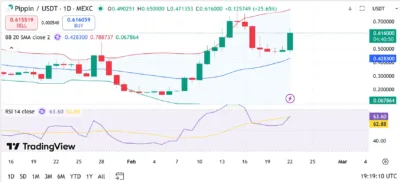
Pippin (PIPPIN) Price Prediction 2026–2030: Can PIPPIN Hit $0.70 Soon?

Pippin (PIPPIN) Price Prediction 2026–2030: Can PIPPIN Hit $0.70 Soon?

PIPPIN has surged sharply on the daily timeframe, printing a powerful bullish candle with over 25% gains. RSI is holding above 60, signaling strengthening momentum
Share
Coinstats2026/02/23 04:29
Will Cardano Reach $10 by 2030? Analysts Break Down ADA’s Growth Cycles

Will Cardano Reach $10 by 2030? Analysts Break Down ADA’s Growth Cycles

The post Will Cardano Reach $10 by 2030? Analysts Break Down ADA’s Growth Cycles appeared first on Coinpedia Fintech News Cardano (ADA) is trading at $0.9024 with a market cap of $32.91 billion. Experts say ADA has the potential to climb much higher, with some placing long-term targets as high as $10. The token continues to benefit from stronger visibility, rising liquidity, and increasing inflows from both institutional and retail markets. Can Cardano Hit $10 …
Share
CoinPedia2025/09/18 17:19
Crypto whale loses $6M to sneaky phishing scheme targeting staked Ethereum

Crypto whale loses $6M to sneaky phishing scheme targeting staked Ethereum

The post Crypto whale loses $6M to sneaky phishing scheme targeting staked Ethereum appeared on BitcoinEthereumNews.com. A crypto whale lost more than $6 million in staked Ethereum (stETH) and Aave-wrapped Bitcoin (aEthWBTC) after approving malicious signatures in a phishing scheme on Sept. 18, according to blockchain security firm Scam Sniffer. According to the firm, the attackers disguised their move as a routine wallet confirmation through “Permit” signatures, which tricked the victim into authorizing fund transfers without triggering obvious red flags. Yu Xian, founder of blockchain security company SlowMist, noted that the victim did not recognize the danger because the transaction required no gas fees. He wrote: “From the victim’s perspective, he just clicked a few times to confirm the wallet’s pop-up signature requests, didn’t spend a single penny of gas, and $6.28 million was gone.” How Permit exploits work Permit approvals were originally designed to simplify token transfers. Instead of submitting an on-chain approval and paying fees, a user can sign an off-chain message authorizing a spender. That efficiency, however, has created a new attack surface for malicious players. Once a user signs such a permit, attackers can combine two functions—Permit and TransferFrom—to drain assets directly. Because the authorization takes place off-chain, wallet dashboards show no unusual activity until the funds move. As a result, the assets are gone when the approval executes on-chain, and tokens are redirected to the attacker’s wallet. This loophole has made permit exploits increasingly attractive for malicious actors, who can siphon millions without needing complex hacks or high-cost gas wars. Phishing losses The latest theft highlights a wider trend of escalating phishing campaigns. Scam Sniffer reported that in August alone, attackers stole $12.17 million from more than 15,200 victims. That figure represented a 72% jump in losses compared with July. According to the firm, the most significant share of August’s damages came from three large accounts that accounted for nearly half…
Share
BitcoinEthereumNews2025/09/19 02:31