

Elon Musk’s attorneys: Musk compensation plan does not affect investors
xAI and Tesla CEO Elon Musk is hoping a years-long legal battle over his record $56 billion pay package from Tesla comes to an end on Wednesday. His attorneys are set to appear before the Delaware Supreme Court to plead for the reinstatement of the compensation plan rescinded two years ago by a lower court ruling in Delaware.
The Tesla CEO appealed the ruling on his 2018 compensation plan approved by Tesla shareholders, to reward him only if the company hit ambitious growth targets.
As seen on court filings, the structure consisted entirely of Tesla’s stock market value and operational performance.
Elon Musk’s attorneys: Musk compensation plan does not affect investors
According to Tesla’s lawyers, the package was fair, and it motivated Musk to fight for the company’s success and, by extension, its shareholders’ profits.
“Against all odds and with many betting against him, Musk grew Tesla’s value by roughly 1,400%, with stockholders keeping more than 90% of that explosive growth,” the company’s legal team wrote in one filing.
Delaware’s Court of Chancery Judge Kathaleen McCormick crushed the CEO’s compensation dreams by ruling in favor of Tesla shareholder Richard Tornetta in 2023, who had sued to block the plan years earlier.
Tornetta owned just nine Tesla shares at the time of the lawsuit, but accused Musk and the board of violating their fiduciary duty to act in the best interests of the company and its shareholders.
Tornetta’s 2018 lawsuit alleged that Musk exerted outsized control over Tesla’s board, influencing the decision to grant him a pay deal that was “unfathomable” in scale. He claimed that directors were not truly independent and failed to negotiate on behalf of shareholders. The case was filed when Tesla was still incorporated in Delaware.
Judge McCormick sided with Tornetta, finding that Musk’s influence over the board undermined the fairness of the negotiation. She ordered Tesla to revoke the $56 billion plan and draft a new compensation package in tandem with fairness standards.
Tesla resubmitted the same pay structure to shareholders in 2024, where it passed again by a large majority. McCormick, however, rejected the second vote, saying it did not qualify as a new plan under her directive.
Final appeal before Delaware Supreme Court closes in
Delaware’s Supreme Court five-justice panel will review both the lower court’s decision and the related $345 million legal fee McCormick awarded to Tornetta’s attorneys. The justices will have to determine whether the package represented a legitimate corporate move or reflected undue influence and inadequate disclosure.
If the court finds the decision was fairly made, it will likely reinstate the package. If not, it could affirm the ruling that struck it down in 2023. Tesla has already agreed to a replacement deal reached in August if Musk loses the appeal, where the billionaire could still receive tens of billions of dollars in stock compensation.
After McCormick’s decision, several companies, including Tesla itself, Dropbox, and Andreessen Horowitz, moved their corporate registration from Delaware to states like Texas and Nevada, where shareholders are not quite successful in challenging board decisions.
The “Dexit” exodus prompted Delaware lawmakers to amend corporate statutes to prevent companies from bidding bye to the US State.
“There have been a string of decisions in Delaware Chancery Court that have begun to shake the faith of the corporate folks who are incorporated there in Delaware,” said Beth Boland, a partner with Wisconsin-based firm Foley and Lardner.
In other related news, Tesla’s board has proposed a new long-term compensation package for Musk that, if fully realized, could make him the world’s first trillionaire. The proposal is almost similar to the structure of the 2018 deal of stock-based and entirely contingent on performance targets, but introduces new targets tied to Tesla’s business model.
Some of the benchmarks Musk has been tasked with improving are the number of subscribers to Tesla’s “Full Self-Driving (Supervised)” software, the deployment of robotaxis, and the company’s overall financial performance. Shareholders are set to vote on this new plan at Tesla’s annual meeting on November 6.
According to a Reuters analysis, Musk could still earn billions under the plan even if some of the company’s most ambitious technological goals, like achieving fully autonomous driving, are not met.
Get seen where it counts. Advertise in Cryptopolitan Research and reach crypto’s sharpest investors and builders.
You May Also Like

Tether Backs Ark Labs’ $5.2 Million Bet on Bitcoin’s Stablecoin Revival
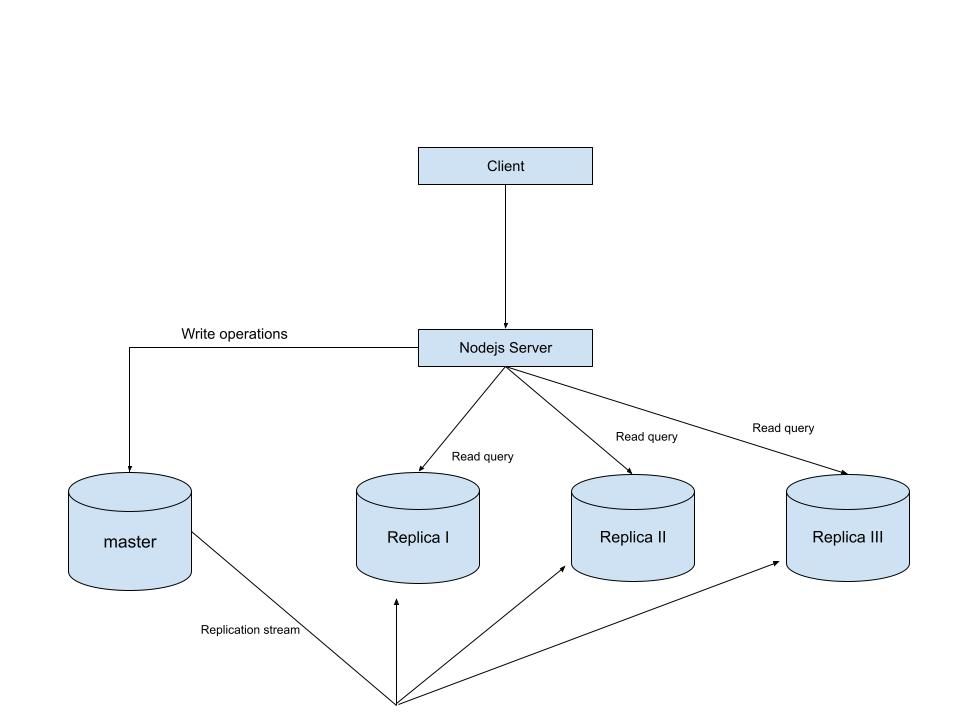
MySQL Single Leader Replication with Node.js and Docker
command: --server-id=1 --log-bin=ON The --server-id option gives each MySQL server in your replication setup its own name tag. Each one has to be unique and without it, replication won’t work at all. Another cool option not included here is binlog_format=ROW. This tells MySQL how to keep track of changes before passing them along to the replicas. By default, MySQL already uses row-based replication, but you can explicitly set it to ROW to be sure or switch it to STATEMENT if you’d rather log the actual SQL statements instead of row-by-row changes. \ Run our containers on docker Now, in the terminal, we can run the following command to spin up our database containers: docker-compose up -d \ Setting Up Our Master (Primary) Server To configure our master server, we would have to first access the running instance on docker using the following command docker exec -it mysql-master bash This command opens an interactive Bash shell inside the running Docker container named mysql-master, allowing us to run commands directly inside that container. \ Now that we’re inside the container, we can access the MySQL server and start running commands. type: mysql -uroot -p This will log you into MySQL as the root user. You’ll be prompted to enter the password you set in your docker-compose.yml file. \ Next, we need to create a special user that our replicas will use to connect to the master server and pull data. Inside the MySQL prompt, run the following commands: \ CREATE USER 'repl_user'@'%' IDENTIFIED BY 'replication_pass'; GRANT REPLICATION SLAVE ON . TO 'repl_user'@'%'; FLUSH PRIVILEGES; Here’s what’s happening: CREATE USER makes a new MySQL user called repl_user with the password replication_pass. GRANT REPLICATION SLAVE gives this user permission to act as a replication client. FLUSH PRIVILEGES tells MySQL to reload the user permissions so they take effect immediately. \ Time to Configure the Replica (Secondary) Servers a. First, let’s access the replica containers the same way we did with the master. Run this command in your terminal for each of the replica containers: \ docker exec -it <replica_container_name> bash mysql -uroot -p <replica_container_name> should be replace with the name of the replica container you are trying to setup b. Now it’s time to tell our replica where to get its data from. While inside the replica’s MySQL shell, run the following command to configure replication using the master’s details: CHANGE REPLICATION SOURCE TO SOURCE_HOST='mysql-master', SOURCE_USER='repl_user', SOURCE_PASSWORD='replication_pass', GET_SOURCE_PUBLIC_KEY=1; With the replication settings in place, let’s fire up the replica and get it syncing with the master. Still inside the MySQL shell on the replica, run: START REPLICA; This starts the replication process. To make sure everything is working, check the replica’s status with:
SHOW REPLICA STATUS\G; Look for Replica_IO_Running and Replica_SQL_Running — if both say Yes, congratulations! 🎉 Your replica is now successfully connected to the master and replicating data in real time.
Testing Our Replication Setup from the Node.js App Now that our replication is successfully set up, we can configure our Node.js server to observe the real-time effect of data being replicated from the master server to the replica server whenever we write to it. We start by installing the following dependencies:
npm i express mysql2 sequelize \ Now create a folder called src in the root directory and add the following files inside that folder connection.js, index.js and model.js. Our current directory should look like this We can now set up our connections to our master and replica server in the connection.js file as shown below
const Sequelize = require("sequelize"); const sequelize = new Sequelize({ dialect: "mysql", replication: { write: { host: "127.0.0.1", username: "root", password: "master", database: "replicaDb", }, read: [ { host: "127.0.0.1", username: "root", password: "slave", database: "replicaDb", port: 3307 }, { host: "127.0.0.1", username: "root", password: "slave", database: "replicaDb", port: 3308 }, { host: "127.0.0.1", username: "root", password: "slave", database: "replicaDb", port: 3309 }, ], }, }); async function connectdb() { try { await sequelize.authenticate(); } catch (error) { console.error("❌ unable to connect to the follower database", error); } } connectdb(); module.exports = { sequelize, }; \ We can now create a User table in the model.js file
const {DataTypes} = require("sequelize"); const { sequelize } = require("./connection"); const User = sequelize.define("User", { name: { type: DataTypes.STRING, allowNull: false, }, email: { type: DataTypes.STRING, unique: true, allowNull: false, }, }); module.exports = User \ and finally in our index.js file we can start our server and listen for connections on port 3000. from the code sample below, all inserts or updates will be routed by sequelize to the master server. while all read queries will be routed to the read replicas.
const express = require("express"); const { sequelize } = require("./connection"); const User = require("./model"); const app = express(); app.use(express.json()); async function main() { await sequelize.sync({ alter: true }); app.get("/", (req, res) => { res.status(200).json({ message: "first step to setting server up", }); }); app.post("/user", async (req, res) => { const { email, name } = req.body; let newUser = await User.build({ name, email, }); // This INSERT will go to the write (master) connection newUser = newUser.save({ returning: false }); res.status(201).json({ message: "User successfully created", }); }); app.get("/user", async (req, res) => { // This SELECT query will go to one of the read replicas const users = await User.findAll(); res.status(200).json(users); }); app.listen(3000, () => { console.log("server has connected"); }); } main(); When you make a POST request to the /users endpoint, take a moment to check both the master and replica servers to observe how data is replicated in real time. Right now, we are relying on Sequelize to automatically route requests, which works for development but isn’t robust enough for a production environment. In particular, if the master node goes down, Sequelize cannot automatically redirect requests to a newly elected leader. In the next part of this series, we’ll explore strategies to handle these challenges
