At TOKEN2049 Singapore, Capriole Investments founder Charles Edwards set aside his well-known Bitcoin bullishness to deliver an unambiguous warning: a quantum “Q-Day” could arrive far sooner than most of the industry expects, with potentially existential consequences if Bitcoin’s core cryptography is not upgraded in time. “Within two to eight years, a quantum machine will break […]At TOKEN2049 Singapore, Capriole Investments founder Charles Edwards set aside his well-known Bitcoin bullishness to deliver an unambiguous warning: a quantum “Q-Day” could arrive far sooner than most of the industry expects, with potentially existential consequences if Bitcoin’s core cryptography is not upgraded in time. “Within two to eight years, a quantum machine will break […]

Greatest Bitcoin Threat? Charles Edwards Predicts Quantum Break In 2–8 Years

At TOKEN2049 Singapore, Capriole Investments founder Charles Edwards set aside his well-known Bitcoin bullishness to deliver an unambiguous warning: a quantum “Q-Day” could arrive far sooner than most of the industry expects, with potentially existential consequences if Bitcoin’s core cryptography is not upgraded in time. “Within two to eight years, a quantum machine will break Bitcoin’s current encryption,” he told the audience, urging developers, companies and holders to treat the issue as urgent engineering, not distant theory.

Edwards framed Q-Day as the moment a sufficiently powerful quantum computer can break widely-used classical cryptography such as RSA—and, by extension, the elliptic-curve cryptography (ECC) underpinning Bitcoin’s public-private key model. “Q-day is the day in which a quantum machine will break classic encryption,” he said, adding that once that threshold is crossed, anything protected by those primitives—from financial networks to “sensitive data” and “of course Bitcoin”—is at risk. He asserted that Bitcoin’s ECC would likely fall sooner than RSA when the industry approaches that breakpoint.

Quantum Computing Could Break Bitcoin Within 8 Years

Pushing back on the common refrain that practical quantum attacks are decades away, Edwards argued the timeline has materially compressed, citing both rapid technical progress and a collective incentive among states and large firms to accelerate. “Even quantum years away. If you ask ChatGPT or Grok, it’ll tell you 10, 20, 30 years away. It’s rubbish,” he said. He pointed to quantum computer access already available via major cloud providers—AWS, Google and Azure—and its use cases in “drug discovery, defense, [and] optimizing bond yields,” presenting these as markers of real-world traction rather than laboratory demos.

Edwards anchored his 2–8 year forecast to a convergence of views he described as independent and sober. He referenced security specialist Jameson Lopp as assigning “50% risk in four to nine years,” a “math PhD doctor specializing in quantum” at “2 to six years for Bitcoin,” and McKinsey’s estimate for RSA-level Q-Day in “2 to 10 years,” reiterating his belief that “Bitcoin breaks years earlier than that.”

He also drew attention to a 2017 “Bitcoin quantum paper” that, in his reading, suggests “you only need 2,300 qubits—logical qubits—to break Bitcoin’s ECC,” noting its authorship by researchers affiliated with Microsoft, IonQ and Meta. While those numbers and affiliations were presented as evidence, his central message was less about any single study and more about the overall direction of travel: a multilateral “quantum arms race” that he said has already attracted “$55 billion” in commitments, with China “spending double the US.”

In Edwards’ telling, technological trendlines are compounding that investment wave. He described qubit growth as “basically a straight line in a log chart,” claiming it is “progressing faster than Moore’s law,” and likened today’s skepticism to the disbelief many held about AI adoption in 2021—right before chatbots went mainstream.

“Imagine 2021 and thinking about AI… You thought it was years away. So ChatGPT happened. I think we’re in a similar moment with quantum. It’s ignored today, but it’s coming.” He also highlighted a perceived shift in sentiment from Nvidia’s Jensen Huang, saying that after downplaying quantum timelines early in the year, Huang later called quantum at “an inflection point” and has been “spending billions buying quantum companies.” For Edwards, the takeaway is simple: “As always, follow the money.”

The operational risks Edwards outlined for Bitcoin were concrete and immediate. If adversaries can derive private keys from public keys exposed on-chain, coins sitting at addresses that have previously revealed public keys become vulnerable to theft. That set includes long-dormant “lost” coins and, potentially, some portion of Satoshi-era holdings.

“Satoshi’s coins will probably be market dumped,” he said starkly, not because their owner would necessarily act, but because the associated keys could be computed and the UTXOs swept once Q-Day arrives.

He contrasted dormant addresses with actively maintained wallets, arguing that modern key management and timely migration would reduce exposure: “We want to keep active wallets… it’s good to maintain security upgrades and relevancy of the tech through time.” He referenced Michael Saylor’s recent remark about doing “something ethically proper and burn[ing] his coins,” using it to underscore an inversion in perceived safety: “Actually burnt—the lost coins—the highest risk because no one has maintained that infrastructure.”

Beyond the cryptographic break itself, Edwards emphasized the logistical constraints of any industry-wide upgrade. Bitcoin can only process so many transactions per day, meaning a migration to quantum-safe addresses cannot be done overnight. “We have long lead times to upgrade Bitcoin,” he said.

“For Bitcoin itself it takes at least a month if you ignore all other transactions on the network to simply move everyone across to new wallets… so we’re looking at at least basically 6 to 12 months to fix this.” On that basis, he argued work on a concrete migration path cannot wait: “We need to be solving this really next year—2026—in order to get a solution before 2027.”

Edwards pointed to ongoing technical efforts as a starting point rather than a finished plan. “There’s solutions to protect crypto… There’s a few BIPs for example like this one… by Jameson Lopp. So there are solutions. We can solve this but there is an urgency to it.”

He called on developers to evaluate proposals for quantum-resistant schemes and on the broader community to “get talking to [the] community, your social media, get involved in the Bitcoin improvement proposals. Review them, give feedback, just get talking.” The subtext was that governance friction—social consensus, client implementation, wallet support, exchange coordination—becomes the gating factor once a candidate scheme is chosen, and that delay is itself a security risk if adversaries are on a clock of their own.

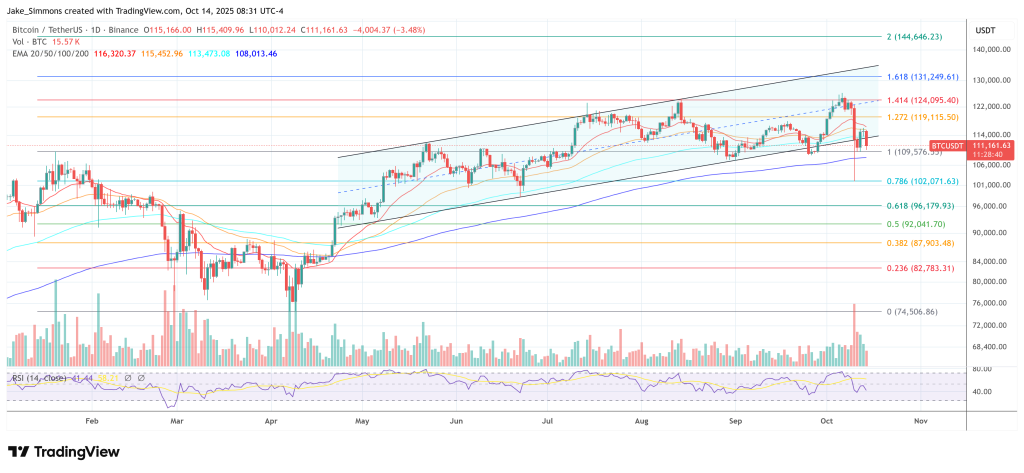
At press time, Bitcoin traded at $111,161.
Bitcoin price
Market Opportunity
QUANTUM Logo
QUANTUM Price(QUANTUM)
$0,00347
$0,00347$0,00347
+0,26%
USD
QUANTUM (QUANTUM) Live Price Chart
Disclaimer: The articles reposted on this site are sourced from public platforms and are provided for informational purposes only. They do not necessarily reflect the views of MEXC. All rights remain with the original authors. If you believe any content infringes on third-party rights, please contact service@support.mexc.com for removal. MEXC makes no guarantees regarding the accuracy, completeness, or timeliness of the content and is not responsible for any actions taken based on the information provided. The content does not constitute financial, legal, or other professional advice, nor should it be considered a recommendation or endorsement by MEXC.

You May Also Like

Unprecedented Surge: Gold Price Hits Astounding New Record High

Unprecedented Surge: Gold Price Hits Astounding New Record High

BitcoinWorld Unprecedented Surge: Gold Price Hits Astounding New Record High While the world often buzzes with the latest movements in Bitcoin and altcoins, a traditional asset has quietly but powerfully commanded attention: gold. This week, the gold price has once again made headlines, touching an astounding new record high of $3,704 per ounce. This significant milestone reminds investors, both traditional and those deep in the crypto space, of gold’s enduring appeal as a store of value and a hedge against uncertainty. What’s Driving the Record Gold Price Surge? The recent ascent of the gold price to unprecedented levels is not a random event. Several powerful macroeconomic forces are converging, creating a perfect storm for the precious metal. Geopolitical Tensions: Escalating conflicts and global instability often drive investors towards safe-haven assets. Gold, with its long history of retaining value during crises, becomes a preferred choice. Inflation Concerns: Persistent inflation in major economies erodes the purchasing power of fiat currencies. Consequently, investors seek assets like gold that historically maintain their value against rising prices. Central Bank Policies: Many central banks globally are accumulating gold at a significant pace. This institutional demand provides a strong underlying support for the gold price. Furthermore, expectations around interest rate cuts in the future also make non-yielding assets like gold more attractive. These factors collectively paint a picture of a cautious market, where investors are looking for stability amidst a turbulent economic landscape. Understanding Gold’s Appeal in Today’s Market For centuries, gold has held a unique position in the financial world. Its latest record-breaking performance reinforces its status as a critical component of a diversified portfolio. Gold offers a tangible asset that is not subject to the same digital vulnerabilities or regulatory shifts that can impact cryptocurrencies. While digital assets offer exciting growth potential, gold provides a foundational stability that appeals to a broad spectrum of investors. Moreover, the finite supply of gold, much like Bitcoin’s capped supply, contributes to its perceived value. The current market environment, characterized by economic uncertainty and fluctuating currency values, only amplifies gold’s intrinsic benefits. It serves as a reliable hedge when other asset classes, including stocks and sometimes even crypto, face downward pressure. How Does This Record Gold Price Impact Investors? A soaring gold price naturally raises questions for investors. For those who already hold gold, this represents a significant validation of their investment strategy. For others, it might spark renewed interest in this ancient asset. Benefits for Investors: Portfolio Diversification: Gold often moves independently of other asset classes, offering crucial diversification benefits. Wealth Preservation: It acts as a robust store of value, protecting wealth against inflation and economic downturns. Liquidity: Gold markets are highly liquid, allowing for relatively easy buying and selling. Challenges and Considerations: Opportunity Cost: Investing in gold means capital is not allocated to potentially higher-growth assets like equities or certain cryptocurrencies. Volatility: While often seen as stable, gold prices can still experience significant fluctuations, as evidenced by its rapid ascent. Considering the current financial climate, understanding gold’s role can help refine your overall investment approach. Looking Ahead: The Future of the Gold Price What does the future hold for the gold price? While no one can predict market movements with absolute certainty, current trends and expert analyses offer some insights. Continued geopolitical instability and persistent inflationary pressures could sustain demand for gold. Furthermore, if global central banks continue their gold acquisition spree, this could provide a floor for prices. However, a significant easing of inflation or a de-escalation of global conflicts might reduce some of the immediate upward pressure. Investors should remain vigilant, observing global economic indicators and geopolitical developments closely. The ongoing dialogue between traditional finance and the emerging digital asset space also plays a role. As more investors become comfortable with both gold and cryptocurrencies, a nuanced understanding of how these assets complement each other will be crucial for navigating future market cycles. The recent surge in the gold price to a new record high of $3,704 per ounce underscores its enduring significance in the global financial landscape. It serves as a powerful reminder of gold’s role as a safe haven asset, a hedge against inflation, and a vital component for portfolio diversification. While digital assets continue to innovate and capture headlines, gold’s consistent performance during times of uncertainty highlights its timeless value. Whether you are a seasoned investor or new to the market, understanding the drivers behind gold’s ascent is crucial for making informed financial decisions in an ever-evolving world. Frequently Asked Questions (FAQs) Q1: What does a record-high gold price signify for the broader economy? A record-high gold price often indicates underlying economic uncertainty, inflation concerns, and geopolitical instability. Investors tend to flock to gold as a safe haven when they lose confidence in traditional currencies or other asset classes. Q2: How does gold compare to cryptocurrencies as a safe-haven asset? Both gold and some cryptocurrencies (like Bitcoin) are often considered safe havens. Gold has a centuries-long history of retaining value during crises, offering tangibility. Cryptocurrencies, while newer, offer decentralization and can be less susceptible to traditional financial system failures, but they also carry higher volatility and regulatory risks. Q3: Should I invest in gold now that its price is at a record high? Investing at a record high requires careful consideration. While the price might continue to climb due to ongoing market conditions, there’s also a risk of a correction. It’s crucial to assess your personal financial goals, risk tolerance, and consider diversifying your portfolio rather than putting all your capital into a single asset. Q4: What are the main factors that influence the gold price? The gold price is primarily influenced by global economic uncertainty, inflation rates, interest rate policies by central banks, the strength of the U.S. dollar, and geopolitical tensions. Demand from jewelers and industrial uses also play a role, but investment and central bank demand are often the biggest drivers. Q5: Is gold still a good hedge against inflation? Historically, gold has proven to be an effective hedge against inflation. When the purchasing power of fiat currencies declines, gold tends to hold its value or even increase, making it an attractive asset for preserving wealth during inflationary periods. To learn more about the latest crypto market trends, explore our article on key developments shaping Bitcoin’s price action. This post Unprecedented Surge: Gold Price Hits Astounding New Record High first appeared on BitcoinWorld.
Share
Coinstats2025/09/18 02:30
USD/CNH stays below 7.0000 – BBH

USD/CNH stays below 7.0000 – BBH

The post USD/CNH stays below 7.0000 – BBH appeared on BitcoinEthereumNews.com. USD/CNH remains under 7.0000 as China’s December inflation data showed headline CPI
Share
BitcoinEthereumNews2026/01/09 22:13
Ethereum Name Service price prediction 2025-2031: Is ENS a good investment?

Ethereum Name Service price prediction 2025-2031: Is ENS a good investment?

Key takeaways: The Ethereum Name Service is a network that enables crypto enthusiasts to rename their cryptocurrency addresses into something simpler, making them easier to remember. Renaming crypto addresses through ENS will enable users to recollect and write them quickly. Even though Ethereum Name Service is based on the Ethereum blockchain, it uses its cryptocurrency, […]
Share
Cryptopolitan2025/09/18 01:38