When Venezuelan opposition leader María Corina Machado accepted the 2025 Nobel Peace Prize, she did more than claim a global stage. She indirectly shone a light on Bitcoin’s role in resistance and financial sovereignty. In her speeches and interviews, Machado has described Bitcoin not as speculative hype, but as a lifeline in a crisis-racked nation. Her Nobel win lends a surprising, real-world weight to what many consider Bitcoin’s idealistic narrative. Machado’s advocacy long preceded the prize. In prior interviews, she said, “Some Venezuelans found a lifeline in Bitcoin during hyperinflation, using it to protect their wealth and to finance their escape.” Her framing is powerful: Bitcoin bypasses state-imposed barriers and gives control back to individuals. The Nobel Committee awarded her the prize for democratic activism. By extension, observers see the decision as acknowledging not just her political battle, but the financial tools she champions as part of that struggle. ChatGPT said: Bitcoin, Democracy, and a Nobel Moment Venezuela’s María Corina Machado won the Nobel Peace Prize for her relentless fight for democracy and human rights. But behind the political symbolism lies a subtle nod to Bitcoin. Machado has long viewed the digital currency as “freedom money”, a decentralized tool to rebuild economies destroyed by inflation and authoritarian control. During Venezuela’s 2024 elections, she even used crypto-style hashing to secure electoral records, showing how blockchain principles could defend truth in a manipulated system. Her advocacy connects technology with liberty, echoing the belief that Bitcoin, unlike fiat money, cannot be forged or weaponized by those in power. As hyperinflation ravaged Venezuela and wages collapsed, her push to adopt Bitcoin as part of a national recovery plan turned digital code into a statement of resistance. The Nobel Committee’s recognition inadvertently amplified a bigger story, that in the age of financial repression, decentralization may be democracy’s quiet ally. From Activism to Money: The Context of Bitcoin as Resistance In Venezuela, economic crisis is everyday life: runaway inflation, restricted currency conversions, capital controls. The bolívar’s collapse forced many citizens to find alternatives. Bitcoin became one. Machado’s consistent message is that Bitcoin is not just a trading instrument but a bulwark against monetary repression. Her rhetoric aligns with a broader narrative inside crypto: that money grounded in rules, not rulers, has value when people live under regimes that break faith with their citizens. Machado’s Nobel vindicates that narrative. Still, critics caution: a political accolade does not transform Bitcoin into a flawless tool. Scalability problems, regulatory risk, and environmental debate remain. Yet in regions like Venezuela, where fiat systems fail, the theory and the lived reality converge. Why It Matters: Narrative, Adoption and Risk Narrative Reinforcement Machado’s win reframes Bitcoin. For many observers, it’s no longer just a speculative asset. It becomes embedded in human rights, democracy, and financial freedom. Adoption Signal For regions suffering monetary collapse, it signals legitimacy. If a Nobel laureate uses Bitcoin publicly to resist financial suppression, others may follow. Regulatory Pressure States may recoil. An overt embrace of Bitcoin in opposition may provoke stronger regulatory or legal backlash. The narrative could push governments to confront whether crypto is political or financial. Story vs Structure One prize doesn’t change tech. Bitcoin still faces adoption, usability, and institutional inertia challenges. But the symbolism may shift where people look. Key Indicators to Watch from Here To see whether this moment shifts real value and not just rhetoric, experts will track: Adoption in crisis zones: wallet growth, transaction volume from countries with failing fiat regimes On-chain flows: particularly cross-border and remittance-related transfers Reserve allocations: governments, NGOs, institutional funds quietly adding Bitcoin Narrative metrics: how much Bitcoin appears in policy debates, human rights rhetoric Regulatory reactions: how states respond, especially where monetary control is central to power These metrics show whether the Nobel moment becomes a turning point, or a symbolic peak. Conclusion María Corina Machado’s receipt of the Nobel Peace Prize gives Bitcoin more than a media blip. It ties the token to the story of freedom, control, and resilience. Her advocacy turns Bitcoin into more than code and markets, into a statement about what money means in a broken world. Whether this moment becomes a pivot depends on whether the tech, networks, and institutions can keep up. But the symbolic shift is real. Frequently Asked Questions Q: Why is this Nobel award tied to Bitcoin significance?Because Machado’s activism has long incorporated Bitcoin as a tool in financial resistance, the prize gives that stance mainstream recognition. Q: Does this change Bitcoin’s fundamentals?Not immediately. The tech, network, adoption, and regulatory landscape remain the same. What changes is perception and narrative. Q: Could governments crack down harder now?Possibly. If Bitcoin becomes tied to political opposition, states may intensify regulation or suppression. Q: Is Bitcoin now a “political” asset?It was always political in many contexts. This event makes that role more explicit, but in freer societies, it may continue to act as financial infrastructure. Read More: How Nobel Peace Prize Puts Bitcoin in the Spotlight">How Nobel Peace Prize Puts Bitcoin in the SpotlightWhen Venezuelan opposition leader María Corina Machado accepted the 2025 Nobel Peace Prize, she did more than claim a global stage. She indirectly shone a light on Bitcoin’s role in resistance and financial sovereignty. In her speeches and interviews, Machado has described Bitcoin not as speculative hype, but as a lifeline in a crisis-racked nation. Her Nobel win lends a surprising, real-world weight to what many consider Bitcoin’s idealistic narrative. Machado’s advocacy long preceded the prize. In prior interviews, she said, “Some Venezuelans found a lifeline in Bitcoin during hyperinflation, using it to protect their wealth and to finance their escape.” Her framing is powerful: Bitcoin bypasses state-imposed barriers and gives control back to individuals. The Nobel Committee awarded her the prize for democratic activism. By extension, observers see the decision as acknowledging not just her political battle, but the financial tools she champions as part of that struggle. ChatGPT said: Bitcoin, Democracy, and a Nobel Moment Venezuela’s María Corina Machado won the Nobel Peace Prize for her relentless fight for democracy and human rights. But behind the political symbolism lies a subtle nod to Bitcoin. Machado has long viewed the digital currency as “freedom money”, a decentralized tool to rebuild economies destroyed by inflation and authoritarian control. During Venezuela’s 2024 elections, she even used crypto-style hashing to secure electoral records, showing how blockchain principles could defend truth in a manipulated system. Her advocacy connects technology with liberty, echoing the belief that Bitcoin, unlike fiat money, cannot be forged or weaponized by those in power. As hyperinflation ravaged Venezuela and wages collapsed, her push to adopt Bitcoin as part of a national recovery plan turned digital code into a statement of resistance. The Nobel Committee’s recognition inadvertently amplified a bigger story, that in the age of financial repression, decentralization may be democracy’s quiet ally. From Activism to Money: The Context of Bitcoin as Resistance In Venezuela, economic crisis is everyday life: runaway inflation, restricted currency conversions, capital controls. The bolívar’s collapse forced many citizens to find alternatives. Bitcoin became one. Machado’s consistent message is that Bitcoin is not just a trading instrument but a bulwark against monetary repression. Her rhetoric aligns with a broader narrative inside crypto: that money grounded in rules, not rulers, has value when people live under regimes that break faith with their citizens. Machado’s Nobel vindicates that narrative. Still, critics caution: a political accolade does not transform Bitcoin into a flawless tool. Scalability problems, regulatory risk, and environmental debate remain. Yet in regions like Venezuela, where fiat systems fail, the theory and the lived reality converge. Why It Matters: Narrative, Adoption and Risk Narrative Reinforcement Machado’s win reframes Bitcoin. For many observers, it’s no longer just a speculative asset. It becomes embedded in human rights, democracy, and financial freedom. Adoption Signal For regions suffering monetary collapse, it signals legitimacy. If a Nobel laureate uses Bitcoin publicly to resist financial suppression, others may follow. Regulatory Pressure States may recoil. An overt embrace of Bitcoin in opposition may provoke stronger regulatory or legal backlash. The narrative could push governments to confront whether crypto is political or financial. Story vs Structure One prize doesn’t change tech. Bitcoin still faces adoption, usability, and institutional inertia challenges. But the symbolism may shift where people look. Key Indicators to Watch from Here To see whether this moment shifts real value and not just rhetoric, experts will track: Adoption in crisis zones: wallet growth, transaction volume from countries with failing fiat regimes On-chain flows: particularly cross-border and remittance-related transfers Reserve allocations: governments, NGOs, institutional funds quietly adding Bitcoin Narrative metrics: how much Bitcoin appears in policy debates, human rights rhetoric Regulatory reactions: how states respond, especially where monetary control is central to power These metrics show whether the Nobel moment becomes a turning point, or a symbolic peak. Conclusion María Corina Machado’s receipt of the Nobel Peace Prize gives Bitcoin more than a media blip. It ties the token to the story of freedom, control, and resilience. Her advocacy turns Bitcoin into more than code and markets, into a statement about what money means in a broken world. Whether this moment becomes a pivot depends on whether the tech, networks, and institutions can keep up. But the symbolic shift is real. Frequently Asked Questions Q: Why is this Nobel award tied to Bitcoin significance?Because Machado’s activism has long incorporated Bitcoin as a tool in financial resistance, the prize gives that stance mainstream recognition. Q: Does this change Bitcoin’s fundamentals?Not immediately. The tech, network, adoption, and regulatory landscape remain the same. What changes is perception and narrative. Q: Could governments crack down harder now?Possibly. If Bitcoin becomes tied to political opposition, states may intensify regulation or suppression. Q: Is Bitcoin now a “political” asset?It was always political in many contexts. This event makes that role more explicit, but in freer societies, it may continue to act as financial infrastructure. Read More: How Nobel Peace Prize Puts Bitcoin in the Spotlight">How Nobel Peace Prize Puts Bitcoin in the Spotlight

How Nobel Peace Prize Puts Bitcoin in the Spotlight

When Venezuelan opposition leader María Corina Machado accepted the 2025 Nobel Peace Prize, she did more than claim a global stage. She indirectly shone a light on Bitcoin’s role in resistance and financial sovereignty.

In her speeches and interviews, Machado has described Bitcoin not as speculative hype, but as a lifeline in a crisis-racked nation. Her Nobel win lends a surprising, real-world weight to what many consider Bitcoin’s idealistic narrative.

Machado’s advocacy long preceded the prize. In prior interviews, she said, “Some Venezuelans found a lifeline in Bitcoin during hyperinflation, using it to protect their wealth and to finance their escape.” Her framing is powerful: Bitcoin bypasses state-imposed barriers and gives control back to individuals.

The Nobel Committee awarded her the prize for democratic activism. By extension, observers see the decision as acknowledging not just her political battle, but the financial tools she champions as part of that struggle.

ChatGPT said:

Bitcoin, Democracy, and a Nobel Moment

Venezuela’s María Corina Machado won the Nobel Peace Prize for her relentless fight for democracy and human rights. But behind the political symbolism lies a subtle nod to Bitcoin. Machado has long viewed the digital currency as “freedom money”, a decentralized tool to rebuild economies destroyed by inflation and authoritarian control.

During Venezuela’s 2024 elections, she even used crypto-style hashing to secure electoral records, showing how blockchain principles could defend truth in a manipulated system. Her advocacy connects technology with liberty, echoing the belief that Bitcoin, unlike fiat money, cannot be forged or weaponized by those in power.

As hyperinflation ravaged Venezuela and wages collapsed, her push to adopt Bitcoin as part of a national recovery plan turned digital code into a statement of resistance. The Nobel Committee’s recognition inadvertently amplified a bigger story, that in the age of financial repression, decentralization may be democracy’s quiet ally.

From Activism to Money: The Context of Bitcoin as Resistance

In Venezuela, economic crisis is everyday life: runaway inflation, restricted currency conversions, capital controls. The bolívar’s collapse forced many citizens to find alternatives. Bitcoin became one. Machado’s consistent message is that Bitcoin is not just a trading instrument but a bulwark against monetary repression.

Her rhetoric aligns with a broader narrative inside crypto: that money grounded in rules, not rulers, has value when people live under regimes that break faith with their citizens. Machado’s Nobel vindicates that narrative.

Still, critics caution: a political accolade does not transform Bitcoin into a flawless tool. Scalability problems, regulatory risk, and environmental debate remain. Yet in regions like Venezuela, where fiat systems fail, the theory and the lived reality converge.

Why It Matters: Narrative, Adoption and Risk

Narrative Reinforcement

Machado’s win reframes Bitcoin. For many observers, it’s no longer just a speculative asset. It becomes embedded in human rights, democracy, and financial freedom.

Adoption Signal

For regions suffering monetary collapse, it signals legitimacy. If a Nobel laureate uses Bitcoin publicly to resist financial suppression, others may follow.

Regulatory Pressure

States may recoil. An overt embrace of Bitcoin in opposition may provoke stronger regulatory or legal backlash. The narrative could push governments to confront whether crypto is political or financial.

Story vs Structure

One prize doesn’t change tech. Bitcoin still faces adoption, usability, and institutional inertia challenges. But the symbolism may shift where people look.

Key Indicators to Watch from Here

To see whether this moment shifts real value and not just rhetoric, experts will track:

  • Adoption in crisis zones: wallet growth, transaction volume from countries with failing fiat regimes

  • On-chain flows: particularly cross-border and remittance-related transfers

  • Reserve allocations: governments, NGOs, institutional funds quietly adding Bitcoin

  • Narrative metrics: how much Bitcoin appears in policy debates, human rights rhetoric

  • Regulatory reactions: how states respond, especially where monetary control is central to power

These metrics show whether the Nobel moment becomes a turning point, or a symbolic peak.

Conclusion

María Corina Machado’s receipt of the Nobel Peace Prize gives Bitcoin more than a media blip. It ties the token to the story of freedom, control, and resilience. Her advocacy turns Bitcoin into more than code and markets, into a statement about what money means in a broken world. Whether this moment becomes a pivot depends on whether the tech, networks, and institutions can keep up. But the symbolic shift is real.

Frequently Asked Questions

Q: Why is this Nobel award tied to Bitcoin significance?
Because Machado’s activism has long incorporated Bitcoin as a tool in financial resistance, the prize gives that stance mainstream recognition.

Q: Does this change Bitcoin’s fundamentals?
Not immediately. The tech, network, adoption, and regulatory landscape remain the same. What changes is perception and narrative.

Q: Could governments crack down harder now?
Possibly. If Bitcoin becomes tied to political opposition, states may intensify regulation or suppression.

Q: Is Bitcoin now a “political” asset?
It was always political in many contexts. This event makes that role more explicit, but in freer societies, it may continue to act as financial infrastructure.

Read More: How Nobel Peace Prize Puts Bitcoin in the Spotlight">How Nobel Peace Prize Puts Bitcoin in the Spotlight

Market Opportunity
Moonveil Logo
Moonveil Price(MORE)
$0.002152
$0.002152$0.002152
-10.85%
USD
Moonveil (MORE) Live Price Chart
Disclaimer: The articles reposted on this site are sourced from public platforms and are provided for informational purposes only. They do not necessarily reflect the views of MEXC. All rights remain with the original authors. If you believe any content infringes on third-party rights, please contact service@support.mexc.com for removal. MEXC makes no guarantees regarding the accuracy, completeness, or timeliness of the content and is not responsible for any actions taken based on the information provided. The content does not constitute financial, legal, or other professional advice, nor should it be considered a recommendation or endorsement by MEXC.

You May Also Like

Gold Hits $3,700 as Sprott’s Wong Says Dollar’s Store-of-Value Crown May Slip
Gold Hits $3,700 as Sprott’s Wong Says Dollar’s Store-of-Value Crown May Slip

The post Gold Hits $3,700 as Sprott’s Wong Says Dollar’s Store-of-Value Crown May Slip appeared on BitcoinEthereumNews.com. Gold is strutting its way into record territory, smashing through $3,700 an ounce Wednesday morning, as Sprott Asset Management strategist Paul Wong says the yellow metal may finally snatch the dollar’s most coveted role: store of value. Wong Warns: Fiscal Dominance Puts U.S. Dollar on Notice, Gold on Top Gold prices eased slightly to $3,678.9 […] Source: https://news.bitcoin.com/gold-hits-3700-as-sprotts-wong-says-dollars-store-of-value-crown-may-slip/
Share
BitcoinEthereumNews2025/09/18 00:33
China Launches Cross-Border QR Code Payment Trial

China Launches Cross-Border QR Code Payment Trial

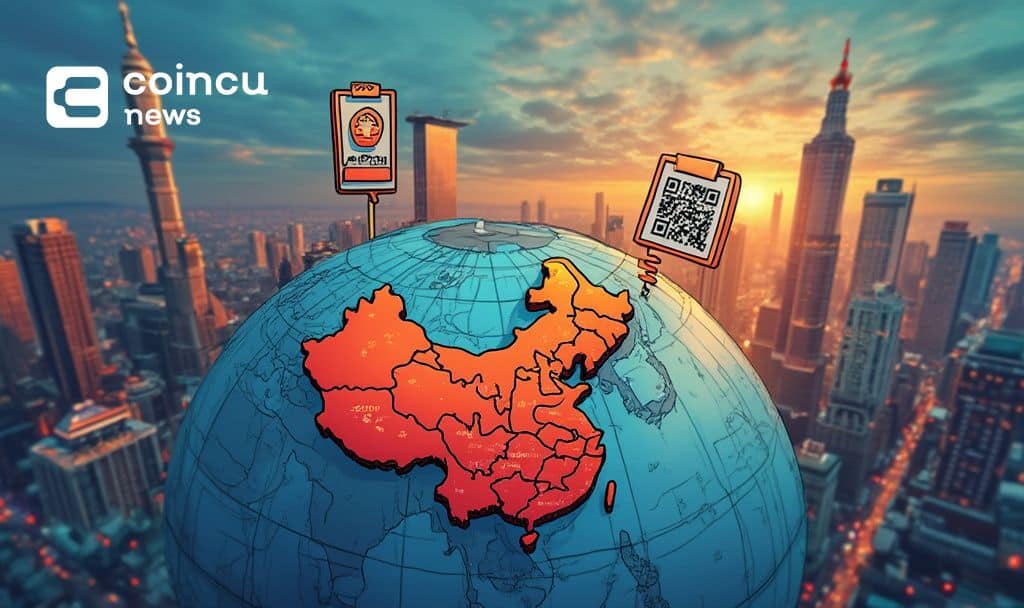
The post China Launches Cross-Border QR Code Payment Trial appeared on BitcoinEthereumNews.com. Key Points: Main event involves China initiating a cross-border QR code payment trial. Alipay and Ant International are key participants. Impact on financial security and regulatory focus on illicit finance. China’s central bank, led by Deputy Governor Lu Lei, initiated a trial of a unified cross-border QR code payment gateway with Alipay and Ant International as participants. This pilot addresses cross-border fund risks, aiming to enhance financial security amid rising money laundering through digital channels, despite muted crypto market reactions. China’s Cross-Border Payment Gateway Trial with Alipay The trial operation of a unified cross-border QR code payment gateway marks a milestone in China’s financial landscape. Prominent entities such as Alipay and Ant International are at the forefront, participating as the initial institutions in this venture. Lu Lei, Deputy Governor of the People’s Bank of China, highlighted the systemic risks posed by increased cross-border fund flows. Changes are expected in the dynamics of digital transactions, potentially enhancing transaction efficiency while tightening regulations around illicit finance. The initiative underscores China’s commitment to bolstering financial security amidst growing global fund movements. “The scale of cross-border fund flows is expanding, and the frequency is accelerating, providing opportunities for risks such as cross-border money laundering and terrorist financing. Some overseas illegal platforms transfer funds through channels such as virtual currencies and underground banks, creating a ‘resonance’ of risks at home and abroad, posing a challenge to China’s foreign exchange management and financial security.” — Lu Lei, Deputy Governor, People’s Bank of China Bitcoin and Impact of China’s Financial Initiatives Did you know? China’s latest initiative echoes the Payment Connect project of June 2025, furthering real-time cross-boundary remittances and expanding its influence on global financial systems. As of September 17, 2025, Bitcoin (BTC) stands at $115,748.72 with a market cap of $2.31 trillion, showing a 0.97%…
Share
BitcoinEthereumNews2025/09/18 05:28
Zero Knowledge Proof Stage 2 Coin Burns Signal a Possible 7000x Explosion! ETH Slows Down & Pepe Drops

Zero Knowledge Proof Stage 2 Coin Burns Signal a Possible 7000x Explosion! ETH Slows Down & Pepe Drops

Explore how experts are pointing to a possible 7000x rise for Zero Knowledge Proof (ZKP) while ETH slows and Pepe moves sideways, driven by ongoing coin burns and
Share
CoinLive2026/01/19 07:00