The post Klarna (KLAR) Q3 earnings report 2025 appeared on BitcoinEthereumNews.com. Sebastian Siemiatkowski, CEO and Co-Founder of Swedish fintech Klarna, gives a thumbs up during the company’s IPO at the New York Stock Exchange in New York City, U.S., Sept. 10, 2025. Brendan McDermid | Reuters Klarna topped Wall Street third-quarter revenue expectations in its first earnings report after debuting on the New York Stock Exchange in September. Here’s how the company performed compared to LSEG estimates Revenues: $903 million vs. $882 million expected Revenues grew 26% from $706 million in the year-ago period. The company reported a net loss of $95 million, a drop from a year ago when it had net income of $12 million. The buy now, pay later firm said it’s getting a boost from outsized U.S. growth, where gross merchandise volume grew 43% from a year ago. Gross merchandise volume, which measures merchandise sold, rose 25% to $32.7 billion from $26.2 billion last year. The adoption of features such as the Klarna Card and fair financing, which offer longer installment options for bigger purchases, contributed to U.S. gains. The feature offers varying interest rates and saw gross merchandise volume more than triple from a year ago. Since its July launch, the fintech firm said its Klarna Card has reached more than four million customers and accounted for 15% of transactions by October. CEO Sebastian Siemiatkowski said fair financing has doubled the number of users from a year ago, but only penetrated about a fifth of merchants. That creates “tons of opportunity” for Klarna, he told CNBC. “We want to be the one that helps you save time, save money, be in control of your finances and that’s obviously not necessarily what we’ve been associated with,” he said, adding that Klarna will continue working to gain that reputation. Merchants grew 38% to 850,000 from 616,000 in the… The post Klarna (KLAR) Q3 earnings report 2025 appeared on BitcoinEthereumNews.com. Sebastian Siemiatkowski, CEO and Co-Founder of Swedish fintech Klarna, gives a thumbs up during the company’s IPO at the New York Stock Exchange in New York City, U.S., Sept. 10, 2025. Brendan McDermid | Reuters Klarna topped Wall Street third-quarter revenue expectations in its first earnings report after debuting on the New York Stock Exchange in September. Here’s how the company performed compared to LSEG estimates Revenues: $903 million vs. $882 million expected Revenues grew 26% from $706 million in the year-ago period. The company reported a net loss of $95 million, a drop from a year ago when it had net income of $12 million. The buy now, pay later firm said it’s getting a boost from outsized U.S. growth, where gross merchandise volume grew 43% from a year ago. Gross merchandise volume, which measures merchandise sold, rose 25% to $32.7 billion from $26.2 billion last year. The adoption of features such as the Klarna Card and fair financing, which offer longer installment options for bigger purchases, contributed to U.S. gains. The feature offers varying interest rates and saw gross merchandise volume more than triple from a year ago. Since its July launch, the fintech firm said its Klarna Card has reached more than four million customers and accounted for 15% of transactions by October. CEO Sebastian Siemiatkowski said fair financing has doubled the number of users from a year ago, but only penetrated about a fifth of merchants. That creates “tons of opportunity” for Klarna, he told CNBC. “We want to be the one that helps you save time, save money, be in control of your finances and that’s obviously not necessarily what we’ve been associated with,” he said, adding that Klarna will continue working to gain that reputation. Merchants grew 38% to 850,000 from 616,000 in the…

Klarna (KLAR) Q3 earnings report 2025

Sebastian Siemiatkowski, CEO and Co-Founder of Swedish fintech Klarna, gives a thumbs up during the company’s IPO at the New York Stock Exchange in New York City, U.S., Sept. 10, 2025.

Brendan McDermid | Reuters

Klarna topped Wall Street third-quarter revenue expectations in its first earnings report after debuting on the New York Stock Exchange in September.

Here’s how the company performed compared to LSEG estimates

  • Revenues: $903 million vs. $882 million expected

Revenues grew 26% from $706 million in the year-ago period. The company reported a net loss of $95 million, a drop from a year ago when it had net income of $12 million.

The buy now, pay later firm said it’s getting a boost from outsized U.S. growth, where gross merchandise volume grew 43% from a year ago. Gross merchandise volume, which measures merchandise sold, rose 25% to $32.7 billion from $26.2 billion last year.

The adoption of features such as the Klarna Card and fair financing, which offer longer installment options for bigger purchases, contributed to U.S. gains. The feature offers varying interest rates and saw gross merchandise volume more than triple from a year ago.

Since its July launch, the fintech firm said its Klarna Card has reached more than four million customers and accounted for 15% of transactions by October.

CEO Sebastian Siemiatkowski said fair financing has doubled the number of users from a year ago, but only penetrated about a fifth of merchants. That creates “tons of opportunity” for Klarna, he told CNBC.

“We want to be the one that helps you save time, save money, be in control of your finances and that’s obviously not necessarily what we’ve been associated with,” he said, adding that Klarna will continue working to gain that reputation.

Merchants grew 38% to 850,000 from 616,000 in the year-ago period, but average revenue per active customer declined.

For the fourth quarter, Klarna expects gross merchandise volume to range between $37.5 and $38.5 billion and revenues between $1.065 million and $1.08 million.

Transaction margin dollars, which measures profitability of its core business, are forecast to range between $390 million and $400 million. The figure totaled $281 million in the third quarter

Klarna opened on the NYSE about two months ago, after delaying its initial public offering plans in April as President Donald Trump’s aggressive tariff plans rattled financial markets.

In recent weeks, stocks have taken a tumble as concerns mount over a potential AI bubble with stretched valuations. Worries of a slowdown in consumer spending have also grown.

Klarna shares have shed more than one-third in value from their highs.

Siemiatkowski said the company isn’t yet seeing “material differences” in payback or spending habits due to the microenvironment, but is monitoring the AI wave that is slated to impact more white collar careers.

Over the years, Klarna has bet big on artificial intelligence. Siemiatkowski told CNBC in May that the technology, along with attrition, has helped the fintech firm slash its workforce by 40%.

He said its natural attrition rate is as much as 20%.

Klarna isn’t alone. Palantir, Salesforce and Amazon have all warned that they plan to cut their workforces or slow hiring due to AI adoption.

Siemiatkowski said AI ties into the company’s “customer-obsessed” mentality and has dropped the average amount of time to solve a customer service issue to under two minutes.

Companies that only use AI or robots to deal with customers are making a “big mistake, because you want to have a human connection,” Siemiatkowski said. “There’s this tremendous value.”

Source: https://www.cnbc.com/2025/11/18/klarna-klar-stock-q3-earnings-report-2025.html
Market Opportunity
Manchester City Fan Logo
Manchester City Fan Price(CITY)
$0.6672
$0.6672$0.6672
-5.68%
USD
Manchester City Fan (CITY) Live Price Chart
Disclaimer: The articles reposted on this site are sourced from public platforms and are provided for informational purposes only. They do not necessarily reflect the views of MEXC. All rights remain with the original authors. If you believe any content infringes on third-party rights, please contact service@support.mexc.com for removal. MEXC makes no guarantees regarding the accuracy, completeness, or timeliness of the content and is not responsible for any actions taken based on the information provided. The content does not constitute financial, legal, or other professional advice, nor should it be considered a recommendation or endorsement by MEXC.

You May Also Like

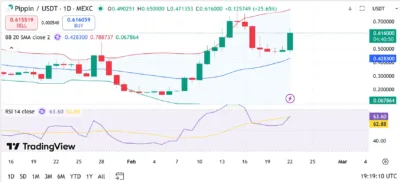
Pippin (PIPPIN) Price Prediction 2026–2030: Can PIPPIN Hit $0.70 Soon?

Pippin (PIPPIN) Price Prediction 2026–2030: Can PIPPIN Hit $0.70 Soon?

PIPPIN has surged sharply on the daily timeframe, printing a powerful bullish candle with over 25% gains. RSI is holding above 60, signaling strengthening momentum
Share
Coinstats2026/02/23 04:29
Will Cardano Reach $10 by 2030? Analysts Break Down ADA’s Growth Cycles

Will Cardano Reach $10 by 2030? Analysts Break Down ADA’s Growth Cycles

The post Will Cardano Reach $10 by 2030? Analysts Break Down ADA’s Growth Cycles appeared first on Coinpedia Fintech News Cardano (ADA) is trading at $0.9024 with a market cap of $32.91 billion. Experts say ADA has the potential to climb much higher, with some placing long-term targets as high as $10. The token continues to benefit from stronger visibility, rising liquidity, and increasing inflows from both institutional and retail markets. Can Cardano Hit $10 …
Share
CoinPedia2025/09/18 17:19
Crypto whale loses $6M to sneaky phishing scheme targeting staked Ethereum

Crypto whale loses $6M to sneaky phishing scheme targeting staked Ethereum

The post Crypto whale loses $6M to sneaky phishing scheme targeting staked Ethereum appeared on BitcoinEthereumNews.com. A crypto whale lost more than $6 million in staked Ethereum (stETH) and Aave-wrapped Bitcoin (aEthWBTC) after approving malicious signatures in a phishing scheme on Sept. 18, according to blockchain security firm Scam Sniffer. According to the firm, the attackers disguised their move as a routine wallet confirmation through “Permit” signatures, which tricked the victim into authorizing fund transfers without triggering obvious red flags. Yu Xian, founder of blockchain security company SlowMist, noted that the victim did not recognize the danger because the transaction required no gas fees. He wrote: “From the victim’s perspective, he just clicked a few times to confirm the wallet’s pop-up signature requests, didn’t spend a single penny of gas, and $6.28 million was gone.” How Permit exploits work Permit approvals were originally designed to simplify token transfers. Instead of submitting an on-chain approval and paying fees, a user can sign an off-chain message authorizing a spender. That efficiency, however, has created a new attack surface for malicious players. Once a user signs such a permit, attackers can combine two functions—Permit and TransferFrom—to drain assets directly. Because the authorization takes place off-chain, wallet dashboards show no unusual activity until the funds move. As a result, the assets are gone when the approval executes on-chain, and tokens are redirected to the attacker’s wallet. This loophole has made permit exploits increasingly attractive for malicious actors, who can siphon millions without needing complex hacks or high-cost gas wars. Phishing losses The latest theft highlights a wider trend of escalating phishing campaigns. Scam Sniffer reported that in August alone, attackers stole $12.17 million from more than 15,200 victims. That figure represented a 72% jump in losses compared with July. According to the firm, the most significant share of August’s damages came from three large accounts that accounted for nearly half…
Share
BitcoinEthereumNews2025/09/19 02:31