Looking back at Trump’s first 100 days in office, crypto markets gain and lose
By Connor Sephton , CryptoNews
Compiled by: Felix, PANews
It has been 100 days since Trump returned to the White House, a period during which global markets have been turbulent, filled with uncertainty and chaos.
The crypto market was hopeful when Trump was successfully re-elected. However, despite some major Bitcoin-positive announcements from Trump after he took office, crypto investors were disappointed.
Just before the inauguration, Trump released the official token $TRUMP, which caused a frenzy in the market and also sparked a lot of controversy. Some critics believe that this move is a clear conflict of interest and may even threaten national security.
$TRUMP is now down 82% from its all-time high of $75.35 on January 19. But $MELANIA has performed even worse, plummeting by nearly 97%.
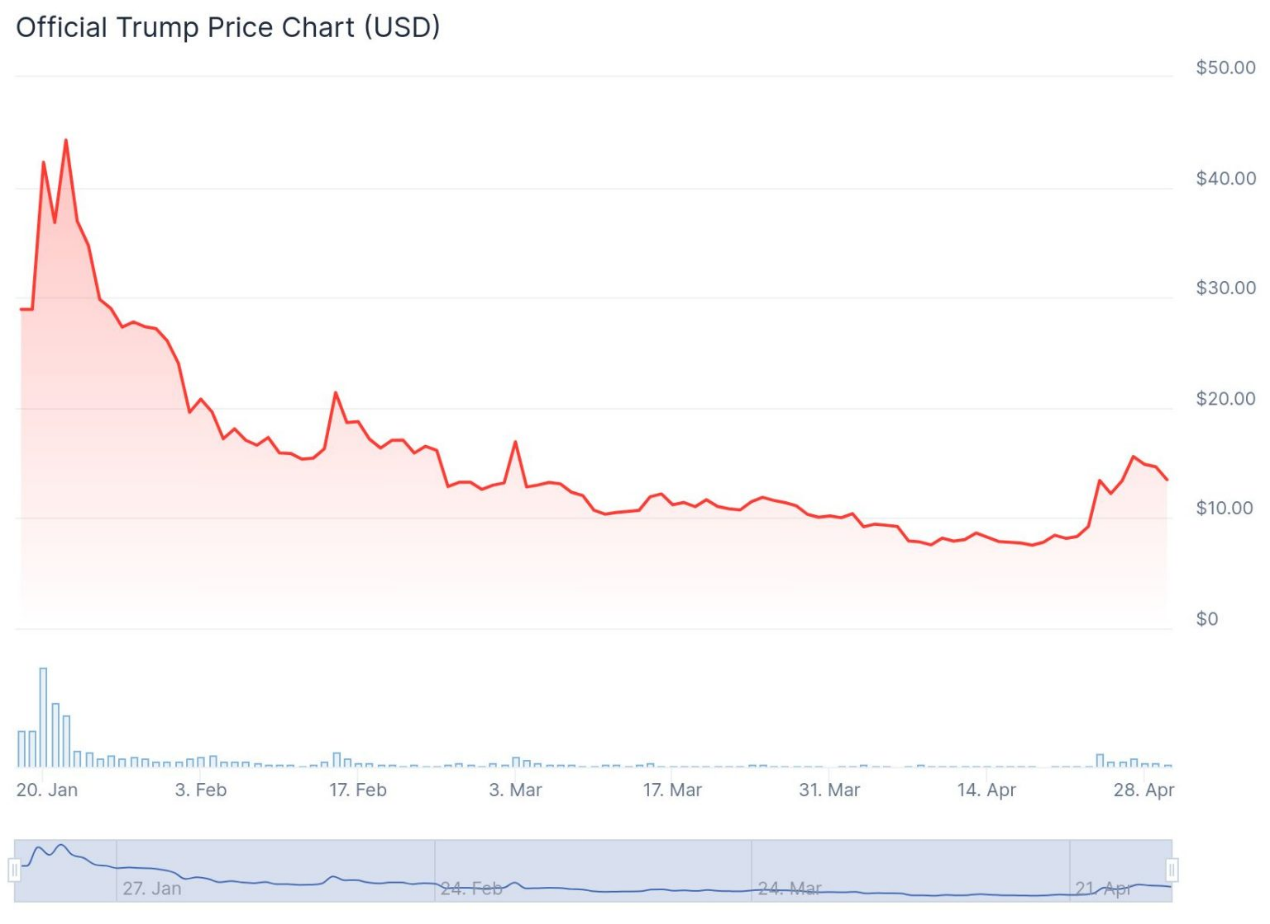
Source: CoinGecko
After Trump entered the White House, people speculated that he would sign a series of executive orders supporting cryptocurrencies on his first day in office, including the establishment of a strategic Bitcoin reserve. But these orders did not come out. On January 20, Bitcoin soared to a record high of $109,000 and has never returned to this level since then.
Trump did quickly deliver on some of his campaign promises made at the Bitcoin 2024 conference in Nashville. Ross Ulbricht, the founder of the darknet market Silk Road, received a full and unconditional pardon. Photos circulated online showed him smiling for the first time after being released from prison after 11 years. Sam Bankman-Fried (SBF) was also reportedly lobbying for a pardon, but this has not yet materialized.
Meanwhile, several Bitcoin-friendly members of Trump’s cabinet were quickly confirmed by the Senate, including Treasury Secretary Scott Bessent, who once declared: “Cryptocurrency is about freedom, and the cryptocurrency economy is here to stay.”
Others are facing intense scrutiny. Commerce Secretary Howard Lutnick was sharply criticized during his confirmation hearing but downplayed questions about his company’s relationship with the Tether stablecoin.
The White House appointed David Sacks as the first AI and cryptocurrency "czar". Before taking office, he sold his BTC, ETH and SOL holdings. The appointment won widespread praise, even Trump critic Anthony Scaramucci, founder of Skybridge Capital, praised it.
In addition, Trump's businesses are increasingly involved in the field of digital assets. Trump Media and Technology Group has accumulated huge cryptocurrency reserves and launched a series of exchange-traded funds (ETFs).
For Trump, there is a simple rule: always be prepared for the unexpected. As early as March 2, Trump suddenly announced on Truth Social that he intended to create a "US Crypto Reserve" containing XRP, Solana and Cardano. As soon as the news came out, the prices of these altcoins soared, some even increased by as much as 70%. However, BTC and ETH were not mentioned in the initial post, but subsequent supplementary statements emphasized that these two flagship digital assets will also "become the core of the reserve."
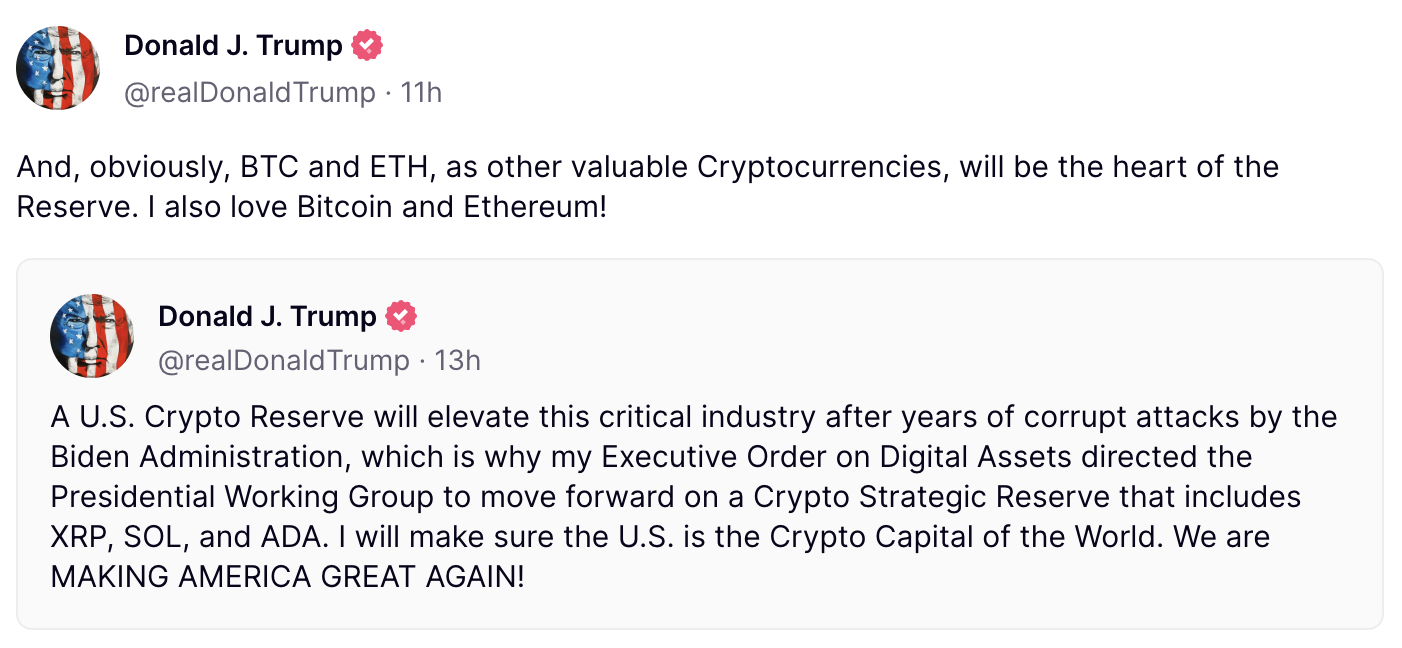
As soon as the news that BTC will be lumped in with other altcoins came out, it quickly sparked heated discussions, with experts calling the proposal "ridiculous" and "chaotic." People also expressed concerns about the feasibility of the plan, fearing that it may require congressional approval to launch, and that there are few specific details, including the allocation of funds, the source of funds for the reserve, and when it will take effect.
All of these issues ultimately became irrelevant. Trump did a U-turn and quickly signed an executive order to build a strategic bitcoin reserve as planned—along with other cryptocurrencies.
Although this marks one of the biggest adoption milestones in Bitcoin’s history, BTC sold off sharply as investors digested the news. Why? Because the executive order states that no new BTC may be purchased for reserves, other than Bitcoin seized from criminals, unless the acquisition can be done in a way that does not impact the budget. This is also bad news for XRP, SOL, and ADA, as the United States does not currently hold these tokens.
Bitcoin supporters have long expected the U.S. to become a significant buyer of bitcoin — and meet Sen. Cynthia Lummis’s ambitious goal of amassing 1 million bitcoins in five years. But using taxpayer money to do so would be extremely hypocritical, especially given Musk’s commitment to drastically cut federal government spending.
According to Arkham Intelligence, there are currently about 198,000 bitcoins in the U.S. wallets, worth about $18.8 billion. But as JAN3 CEO Samson Mow pointed out, the actual size of the U.S. strategic bitcoin reserve may be much smaller - because 95,000 of them will eventually be returned to Bitfinex. However, Mow is not pessimistic about this, and he believes that the significance of Trump's policy is still "significant" because it will encourage other major economies to follow suit.

Shortly after Trump announced the establishment of the Bitcoin reserve, the White House held its first cryptocurrency summit on March 7, attended by industry giants including MicroStrategy's Michael Saylor and Coinbase's Brian Armstrong. However, the outside world's evaluation of the summit was mixed, with some analysts believing that "it was more like a political stage than a meaningful policy forum."
But investors have tougher issues to deal with, with Trump facing accusations that he is deliberately suppressing the stock market to force the Federal Reserve to lower interest rates. The S&P 500 and the tech-heavy Nasdaq 100 have been hammered, and the close correlation between the two means that Bitcoin's sell-off is larger.
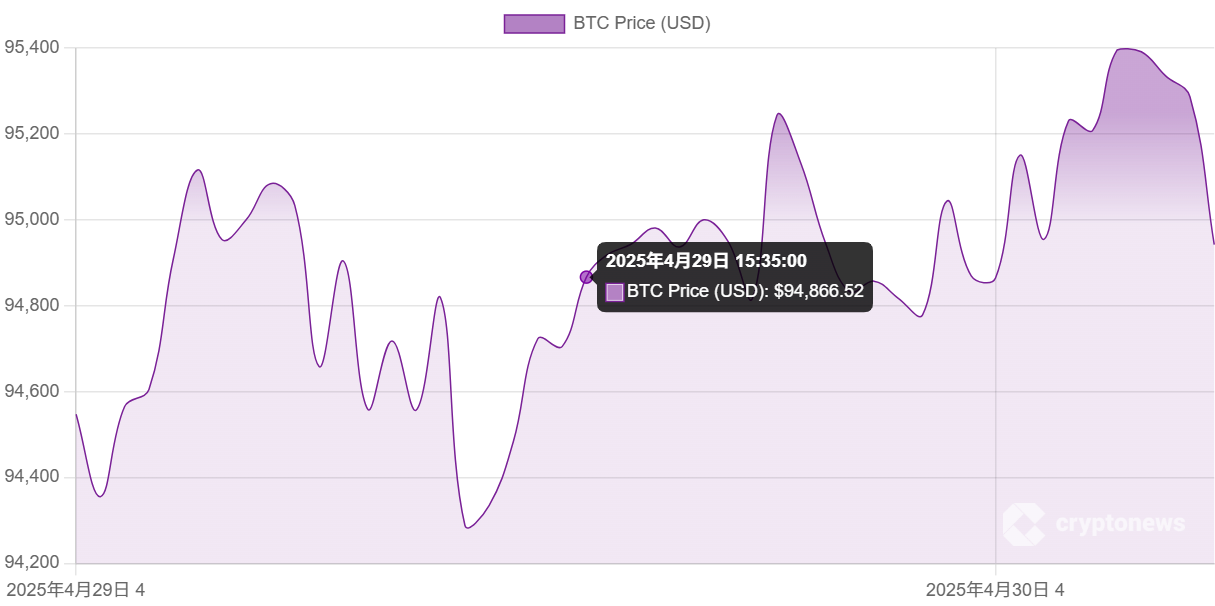
To make matters worse after “Liberation Day,” the president announced sweeping and punitive tariffs on some of America’s closest trading partners, causing a sharp increase in the cost of imported goods. Bitcoin fell to around $80,000 in early April as the likelihood of a recession rose and the war of words between Washington and Beijing escalated.
Bitcoin was at risk of falling below $75,000, a 30% discount to its all-time high on Inauguration Day. But Trump confirmed a 90-day suspension of reciprocal tariffs on most countries, while tariffs on China were raised again to 145%, temporarily bringing some relief to the market. When smartphones and computers were exempted from these aggressive trade policies, the market further fueled optimism. However, the White House's constant back-and-forth has left investors anxious and exhausted, and many are now reducing their holdings of US assets and investing in gold instead.
It’s nearly impossible to keep up with the constant flow of news coming out of Washington these days. As all this is happening, Trump has stepped up his attacks on Federal Reserve Chairman Jerome Powell — posting on Truth Social, “The sooner Powell gets fired the better!”
While presidents generally do not have the power to fire the heads of independent federal agencies, a Supreme Court case could change that precedent, allowing Trump to begin meddling in the Fed’s affairs. Critics across the political spectrum worry that could lead to another market rout that briefly brought the S&P 500 to the brink of a bear market.
One key appointment that was slightly delayed was the confirmation of SEC Chairman Paul Atkins, who was chosen to replace anti-cryptocurrency Gary Gensler. That appointment was finally completed last week, and one of his first tasks will be to decide whether to approve an ETF that tracks altcoins like XRP.
Meanwhile, even as the price of $TRUMP has been falling, the team behind it has come up with a novel way to attract attention. They are hosting an “exclusive” dinner for the 220 people who hold the most tokens, sparking a hoarding frenzy between now and May 12. Upon the announcement, the value of $TRUMP soared 64%.
But some on crypto Twitter were upset, believing the dinner was “a trap to dump and take more profits from those who bought in due to FOMO.” One analyst urged those who bought $TRUMP at the highs to get out as soon as possible.
Bitcoin is down 12% over the past 100 days, while the S&P 500 is down 8.6%. Tariff threats linger. A new CNN poll shows 59% of Americans believe Trump's policies have made the U.S. economy worse. About 60% believe he has exacerbated the cost of living crisis, and more consumers are worried a recession could be imminent.
At the same time, expectations for Bitcoin to hit new highs this year are fading rapidly. On the Polymarket platform, only 67% of people believe that Bitcoin will break through $110,000 by the end of 2025, while the probability of breaking through $120,000, $130,000 and $150,000 has dropped to 54%, 40% and 30% respectively. In January of this year, these targets were considered quite conservative expectations, which shows that the situation is changing rapidly.
Trump’s political erraticness makes it nearly impossible to predict what will happen next week, let alone next month or next year. This makes predicting Bitcoin’s future movements even more difficult. Any bold and confident price predictions should be treated with caution.
A lot has happened in the past 100 days, but there are still 1,361 days to go.
Related reading: Trump’s 100-day crypto policy “report card”: Why is it difficult to stop the Bitcoin “roller coaster” despite the promises?
You May Also Like

Novelis’ Koblenz Plant Awarded Bronze Status in the Aero Excellence Initiative

Why Community-Driven Crypto Casinos Are Gaining Momentum in 2026