rom the vantage point of seven years across exchanges, media, and infrastructure in this space, you learn to recognize patterns. The technology evolves, the narratives shift, but the cycles of human greed remain remarkably consistent. We are currently in a cycle dominated by celebrity-endorsed memecoins, a frothy, dangerous casino that promises generational wealth but often delivers systemic exploitation. And if you’ve been on the losing end, you’ve likely contributed to the profits of operators who have mastered this new, predatory playbook. To understand this system, we need to look no further than the on-chain trail of Hayden Davis, also known as Kelsier of Kelsier Ventures. His alleged activities provide a perfect blueprint for how insiders weaponize hype, manipulate nascent markets, and drain liquidity, leaving retail investors as the final bagholders. This isn’t just about one person; it’s about a repeatable model that betrays the first principles of Web3. The Anatomy of the Hunt The playbook is both simple and devastatingly effective. It has three core phases: Infiltration and Pre-Positioning: The operator gains proximity to a major cultural figure — a politician, a musician, a celebrity. Before any public announcement, a network of insider wallets acquires a significant portion of the token supply at virtually zero cost. This is the critical, unseen setup. We saw this with the $MELANIA token, where Davis himself admitted to shaping the launch strategy, while on-chain data later revealed a cohort of wallets loading up moments before the public could. Manufacturing Legitimacy and Hype: The token is launched, wrapped in the borrowed credibility of the celebrity. In the case of the $LIBRA token, linked to Argentine President Javier Milei, Davis went as far as positioning himself as a “blockchain and AI advisor” to the president. This creates a powerful narrative that overrides traditional due diligence. Retail investors see a famous name and rush in, creating the parabolic price surge the insiders were waiting for. The Exit: As public buying reaches a fever pitch, the insiders execute their exit with brutal precision. They dump their pre-mined tokens into the market, crashing the price. In the most egregious cases, like the $LIBRA collapse where the market cap bled $4.6 billion in six hours, the team goes a step further by pulling tens of millions in USDC and SOL directly from the liquidity pool. The game is over. Insiders walk away with fortunes; the public is left with a worthless asset and a painful lesson. The Cycle Continues This is not a historical account. The cycle is accelerating. The latest analysis from on-chain forensics platform Bubblemaps suggests the same operator may have just run this playbook on the $YZY token, launched by Kanye West, to the tune of a $12 million profit in a single night. The names change, but the mechanics remain the same. A celebrity’s cultural capital is converted into market hype, which is then systematically drained by insiders who were positioned from the start. A Betrayal of First Principles What makes this cycle so corrosive is that it uses the very tools of Web3 — decentralized exchanges, permissionless token creation, and public ledgers — to perpetrate the oldest forms of financial manipulation. The promise of Web3 was to create fairer, more transparent systems. Instead, in the memecoin arena, transparency has merely given us a clearer view of the crime after it has occurred. As an industry, we must decide what we want to be. Will we continue to celebrate these short-term, extractive cycles, or will we build systems resilient to them? Until we prioritize sustainable value over manufactured hype, the playbook will be run again and again. The only question is who the next celebrity will be, and how many more retail investors will become their exit liquidity. Rinse, Rug, Repeat: Deconstructing the Modern Memecoin Playboo was originally published in Coinmonks on Medium, where people are continuing the conversation by highlighting and responding to this storyrom the vantage point of seven years across exchanges, media, and infrastructure in this space, you learn to recognize patterns. The technology evolves, the narratives shift, but the cycles of human greed remain remarkably consistent. We are currently in a cycle dominated by celebrity-endorsed memecoins, a frothy, dangerous casino that promises generational wealth but often delivers systemic exploitation. And if you’ve been on the losing end, you’ve likely contributed to the profits of operators who have mastered this new, predatory playbook. To understand this system, we need to look no further than the on-chain trail of Hayden Davis, also known as Kelsier of Kelsier Ventures. His alleged activities provide a perfect blueprint for how insiders weaponize hype, manipulate nascent markets, and drain liquidity, leaving retail investors as the final bagholders. This isn’t just about one person; it’s about a repeatable model that betrays the first principles of Web3. The Anatomy of the Hunt The playbook is both simple and devastatingly effective. It has three core phases: Infiltration and Pre-Positioning: The operator gains proximity to a major cultural figure — a politician, a musician, a celebrity. Before any public announcement, a network of insider wallets acquires a significant portion of the token supply at virtually zero cost. This is the critical, unseen setup. We saw this with the $MELANIA token, where Davis himself admitted to shaping the launch strategy, while on-chain data later revealed a cohort of wallets loading up moments before the public could. Manufacturing Legitimacy and Hype: The token is launched, wrapped in the borrowed credibility of the celebrity. In the case of the $LIBRA token, linked to Argentine President Javier Milei, Davis went as far as positioning himself as a “blockchain and AI advisor” to the president. This creates a powerful narrative that overrides traditional due diligence. Retail investors see a famous name and rush in, creating the parabolic price surge the insiders were waiting for. The Exit: As public buying reaches a fever pitch, the insiders execute their exit with brutal precision. They dump their pre-mined tokens into the market, crashing the price. In the most egregious cases, like the $LIBRA collapse where the market cap bled $4.6 billion in six hours, the team goes a step further by pulling tens of millions in USDC and SOL directly from the liquidity pool. The game is over. Insiders walk away with fortunes; the public is left with a worthless asset and a painful lesson. The Cycle Continues This is not a historical account. The cycle is accelerating. The latest analysis from on-chain forensics platform Bubblemaps suggests the same operator may have just run this playbook on the $YZY token, launched by Kanye West, to the tune of a $12 million profit in a single night. The names change, but the mechanics remain the same. A celebrity’s cultural capital is converted into market hype, which is then systematically drained by insiders who were positioned from the start. A Betrayal of First Principles What makes this cycle so corrosive is that it uses the very tools of Web3 — decentralized exchanges, permissionless token creation, and public ledgers — to perpetrate the oldest forms of financial manipulation. The promise of Web3 was to create fairer, more transparent systems. Instead, in the memecoin arena, transparency has merely given us a clearer view of the crime after it has occurred. As an industry, we must decide what we want to be. Will we continue to celebrate these short-term, extractive cycles, or will we build systems resilient to them? Until we prioritize sustainable value over manufactured hype, the playbook will be run again and again. The only question is who the next celebrity will be, and how many more retail investors will become their exit liquidity. Rinse, Rug, Repeat: Deconstructing the Modern Memecoin Playboo was originally published in Coinmonks on Medium, where people are continuing the conversation by highlighting and responding to this story

Rinse, Rug, Repeat: Deconstructing the Modern Memecoin Playboo

2025/08/26 23:43

rom the vantage point of seven years across exchanges, media, and infrastructure in this space, you learn to recognize patterns. The technology evolves, the narratives shift, but the cycles of human greed remain remarkably consistent. We are currently in a cycle dominated by celebrity-endorsed memecoins, a frothy, dangerous casino that promises generational wealth but often delivers systemic exploitation. And if you’ve been on the losing end, you’ve likely contributed to the profits of operators who have mastered this new, predatory playbook.

To understand this system, we need to look no further than the on-chain trail of Hayden Davis, also known as Kelsier of Kelsier Ventures. His alleged activities provide a perfect blueprint for how insiders weaponize hype, manipulate nascent markets, and drain liquidity, leaving retail investors as the final bagholders. This isn’t just about one person; it’s about a repeatable model that betrays the first principles of Web3.

The Anatomy of the Hunt

The playbook is both simple and devastatingly effective. It has three core phases:

  1. Infiltration and Pre-Positioning: The operator gains proximity to a major cultural figure — a politician, a musician, a celebrity. Before any public announcement, a network of insider wallets acquires a significant portion of the token supply at virtually zero cost. This is the critical, unseen setup. We saw this with the $MELANIA token, where Davis himself admitted to shaping the launch strategy, while on-chain data later revealed a cohort of wallets loading up moments before the public could.
  2. Manufacturing Legitimacy and Hype: The token is launched, wrapped in the borrowed credibility of the celebrity. In the case of the $LIBRA token, linked to Argentine President Javier Milei, Davis went as far as positioning himself as a “blockchain and AI advisor” to the president. This creates a powerful narrative that overrides traditional due diligence. Retail investors see a famous name and rush in, creating the parabolic price surge the insiders were waiting for.
  3. The Exit: As public buying reaches a fever pitch, the insiders execute their exit with brutal precision. They dump their pre-mined tokens into the market, crashing the price. In the most egregious cases, like the $LIBRA collapse where the market cap bled $4.6 billion in six hours, the team goes a step further by pulling tens of millions in USDC and SOL directly from the liquidity pool. The game is over. Insiders walk away with fortunes; the public is left with a worthless asset and a painful lesson.

The Cycle Continues

This is not a historical account. The cycle is accelerating. The latest analysis from on-chain forensics platform Bubblemaps suggests the same operator may have just run this playbook on the $YZY token, launched by Kanye West, to the tune of a $12 million profit in a single night.

The names change, but the mechanics remain the same. A celebrity’s cultural capital is converted into market hype, which is then systematically drained by insiders who were positioned from the start.

A Betrayal of First Principles

What makes this cycle so corrosive is that it uses the very tools of Web3 — decentralized exchanges, permissionless token creation, and public ledgers — to perpetrate the oldest forms of financial manipulation. The promise of Web3 was to create fairer, more transparent systems. Instead, in the memecoin arena, transparency has merely given us a clearer view of the crime after it has occurred.

As an industry, we must decide what we want to be. Will we continue to celebrate these short-term, extractive cycles, or will we build systems resilient to them? Until we prioritize sustainable value over manufactured hype, the playbook will be run again and again. The only question is who the next celebrity will be, and how many more retail investors will become their exit liquidity.


Rinse, Rug, Repeat: Deconstructing the Modern Memecoin Playboo was originally published in Coinmonks on Medium, where people are continuing the conversation by highlighting and responding to this story.

Disclaimer: The articles reposted on this site are sourced from public platforms and are provided for informational purposes only. They do not necessarily reflect the views of MEXC. All rights remain with the original authors. If you believe any content infringes on third-party rights, please contact service@support.mexc.com for removal. MEXC makes no guarantees regarding the accuracy, completeness, or timeliness of the content and is not responsible for any actions taken based on the information provided. The content does not constitute financial, legal, or other professional advice, nor should it be considered a recommendation or endorsement by MEXC.

You May Also Like

Fed Decides On Interest Rates Today—Here’s What To Watch For

Fed Decides On Interest Rates Today—Here’s What To Watch For

The post Fed Decides On Interest Rates Today—Here’s What To Watch For appeared on BitcoinEthereumNews.com. Topline The Federal Reserve on Wednesday will conclude a two-day policymaking meeting and release a decision on whether to lower interest rates—following months of pressure and criticism from President Donald Trump—and potentially signal whether additional cuts are on the way. President Donald Trump has urged the central bank to “CUT INTEREST RATES, NOW, AND BIGGER” than they might plan to. Getty Images Key Facts The central bank is poised to cut interest rates by at least a quarter-point, down from the 4.25% to 4.5% range where they have been held since December to between 4% and 4.25%, as Wall Street has placed 100% odds of a rate cut, according to CME’s FedWatch, with higher odds (94%) on a quarter-point cut than a half-point (6%) reduction. Fed governors Christopher Waller and Michelle Bowman, both Trump appointees, voted in July for a quarter-point reduction to rates, and they may dissent again in favor of a large cut alongside Stephen Miran, Trump’s Council of Economic Advisers’ chair, who was sworn in at the meeting’s start on Tuesday. It’s unclear whether other policymakers, including Kansas City Fed President Jeffrey Schmid and St. Louis Fed President Alberto Musalem, will favor larger cuts or opt for no reduction. Fed Chair Jerome Powell said in his Jackson Hole, Wyoming, address last month the central bank would likely consider a looser monetary policy, noting the “shifting balance of risks” on the U.S. economy “may warrant adjusting our policy stance.” David Mericle, an economist for Goldman Sachs, wrote in a note the “key question” for the Fed’s meeting is whether policymakers signal “this is likely the first in a series of consecutive cuts” as the central bank is anticipated to “acknowledge the softening in the labor market,” though they may not “nod to an October cut.” Mericle said he…
Share
BitcoinEthereumNews2025/09/18 00:23
Why Investors Choose Pepeto As 2025’s Best Crypto: The Next Bitcoin Story
Why Investors Choose Pepeto As 2025’s Best Crypto: The Next Bitcoin Story

Desks still pass that story around because it’s proof that one coin can change everything. And the question that always […] The post Why Investors Choose Pepeto As 2025’s Best Crypto: The Next Bitcoin Story appeared first on Coindoo.
Share
Coindoo2025/09/18 04:39
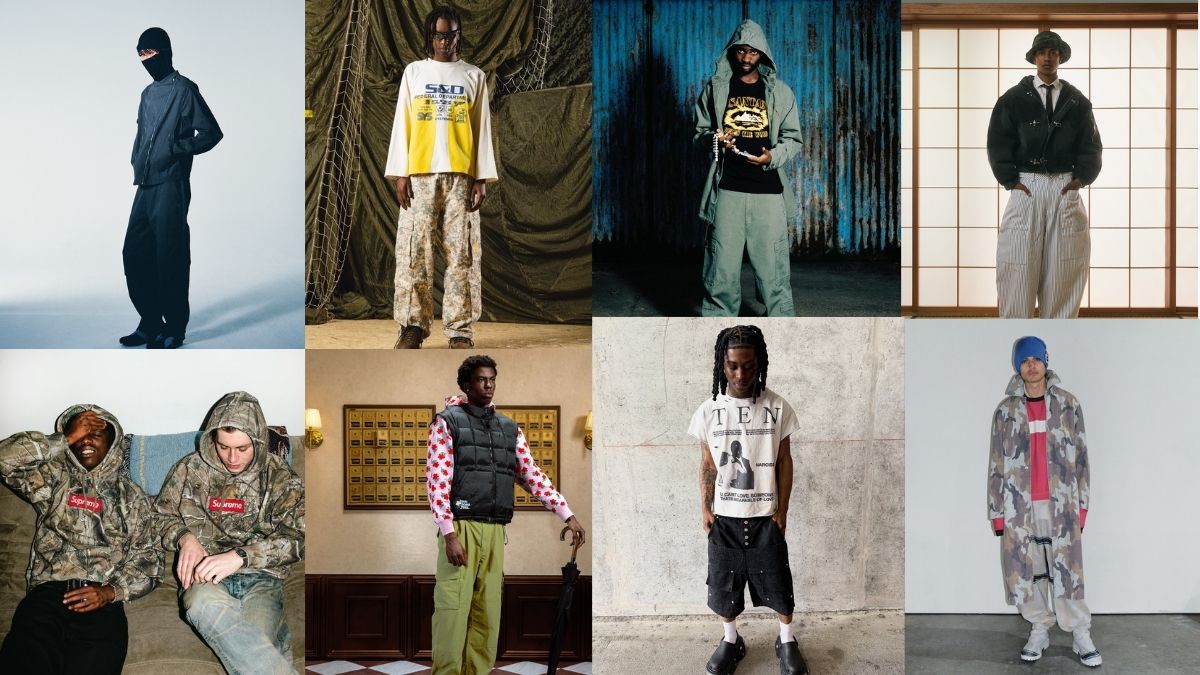
Top Streetwear Brands to Watch in 2026: Streetwear Studios Spotlight

Top Streetwear Brands to Watch in 2026: Streetwear Studios Spotlight

Introduction Streetwear has never been just about the clothes. It’s a cultural movement born in skate parks, underground music scenes, and urban streets—places
Share
Techbullion2026/01/05 13:06