Russian Finance Minister Anton Siluanov announced that cryptocurrencies will be allowed for foreign trade payments in the country. She added that new laws will roll out in 2026 to make it official. This follows a trial period in 2024, where businesses use digital currencies like Bitcoin for international transactions. The move aims to help Russia deal with Western sanctions. The Central Bank will closely monitor transactions as Russia focuses on trade with BRICS+ countries, aiming to leverage its $2 billion mining sector. Legislation and Regulatory Framework  Siluanov highlighted the importance of using cryptocurrencies mined in Russia, which is part of the $2 billion mining industry, to lessen dependence on foreign services. “Crypto is key for import payments & currency outflows. The market will be regulated with stronger Central Bank oversight,” she said. The Central Bank will implement strict controls, such as seizing assets and converting them for illegal crypto use, to address issues like fraud and money laundering. The announcement shows Russia’s strategic move in response to sanctions, as discussed with Prime Minister Mikhail Mishustin. The new laws aim to regulate the unofficial crypto payments that some businesses already use for imports and sending money to countries like China. Under Elvira Nabiullina, the Central Bank will ensure businesses follow the rules to maintain financial stability.  This careful approach manages economic growth while addressing security concerns about cryptocurrency price swings. The complete details of the policy will depend on the results of the trial program, with implementation expected by 2026. Economic and Global Implications Recall that Russia’s Finance Minister had, in 2024, revealed that local companies and businesses were already using crypto assets like Bitcoin (BTC) to facilitate cross-border payments. With the official decision to allow cryptocurrencies for foreign trade, the country can rely less on the US dollar, which makes up less than half of its reserves. The policy could facilitate easier payments with trading partners like India and Turkey, thereby improving trade efficiency. Additionally, Russia’s move might inspire other countries facing sanctions, like Iran, to create similar crypto systems. This could challenge G7 regulations. Meanwhile, strict rules, including penalties for illegal use, might increase costs for smaller businesses. However, there are still risks, such as market fluctuations and cyberattacks, that need solid protection. The strategy shows Russia’s efforts to adapt to global trade restrictions. This could change how cryptocurrencies are used in international finance. The post Russian Ministry of Finance Agrees to Legalize Use of Crypto in Foreign Trades appeared first on CoinTab News.Russian Finance Minister Anton Siluanov announced that cryptocurrencies will be allowed for foreign trade payments in the country. She added that new laws will roll out in 2026 to make it official. This follows a trial period in 2024, where businesses use digital currencies like Bitcoin for international transactions. The move aims to help Russia deal with Western sanctions. The Central Bank will closely monitor transactions as Russia focuses on trade with BRICS+ countries, aiming to leverage its $2 billion mining sector. Legislation and Regulatory Framework  Siluanov highlighted the importance of using cryptocurrencies mined in Russia, which is part of the $2 billion mining industry, to lessen dependence on foreign services. “Crypto is key for import payments & currency outflows. The market will be regulated with stronger Central Bank oversight,” she said. The Central Bank will implement strict controls, such as seizing assets and converting them for illegal crypto use, to address issues like fraud and money laundering. The announcement shows Russia’s strategic move in response to sanctions, as discussed with Prime Minister Mikhail Mishustin. The new laws aim to regulate the unofficial crypto payments that some businesses already use for imports and sending money to countries like China. Under Elvira Nabiullina, the Central Bank will ensure businesses follow the rules to maintain financial stability.  This careful approach manages economic growth while addressing security concerns about cryptocurrency price swings. The complete details of the policy will depend on the results of the trial program, with implementation expected by 2026. Economic and Global Implications Recall that Russia’s Finance Minister had, in 2024, revealed that local companies and businesses were already using crypto assets like Bitcoin (BTC) to facilitate cross-border payments. With the official decision to allow cryptocurrencies for foreign trade, the country can rely less on the US dollar, which makes up less than half of its reserves. The policy could facilitate easier payments with trading partners like India and Turkey, thereby improving trade efficiency. Additionally, Russia’s move might inspire other countries facing sanctions, like Iran, to create similar crypto systems. This could challenge G7 regulations. Meanwhile, strict rules, including penalties for illegal use, might increase costs for smaller businesses. However, there are still risks, such as market fluctuations and cyberattacks, that need solid protection. The strategy shows Russia’s efforts to adapt to global trade restrictions. This could change how cryptocurrencies are used in international finance. The post Russian Ministry of Finance Agrees to Legalize Use of Crypto in Foreign Trades appeared first on CoinTab News.

Russian Ministry of Finance Agrees to Legalize Use of Crypto in Foreign Trades
2025/10/22 20:30
2 min read

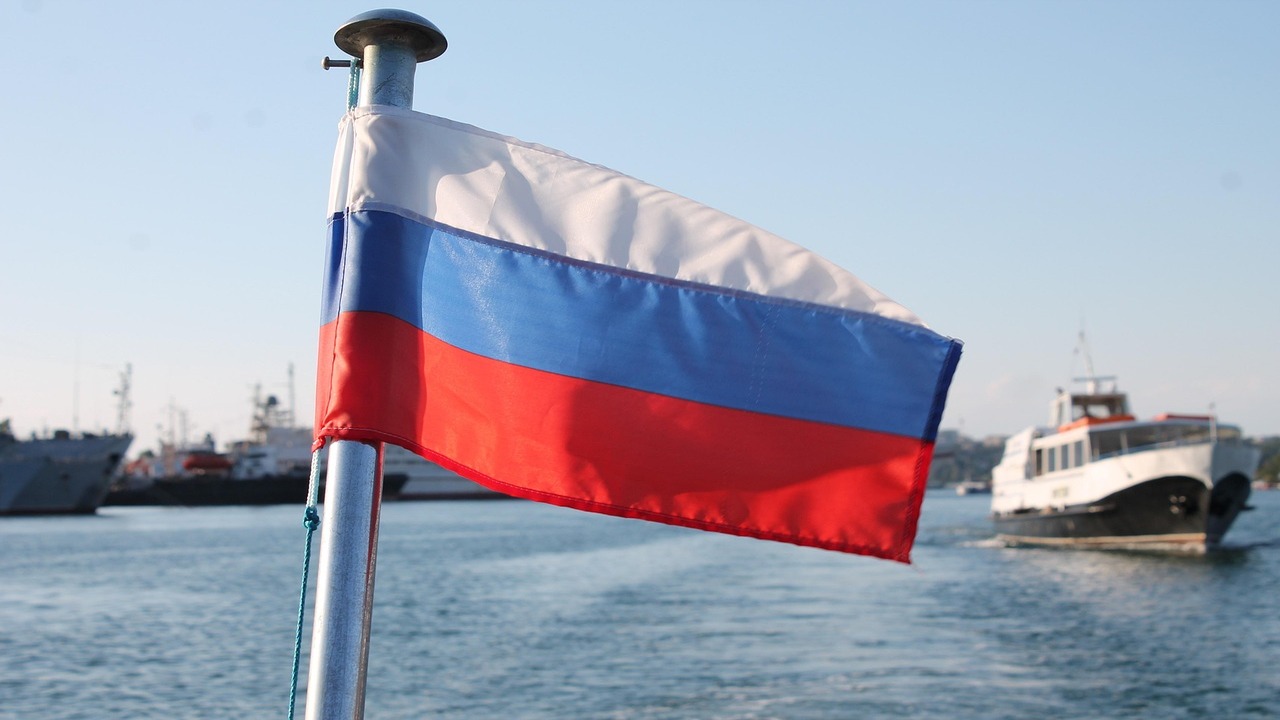
Russian Finance Minister Anton Siluanov announced that cryptocurrencies will be allowed for foreign trade payments in the country. She added that new laws will roll out in 2026 to make it official. This follows a trial period in 2024, where businesses use digital currencies like Bitcoin for international transactions. The move aims to help Russia deal with Western sanctions.

The Central Bank will closely monitor transactions as Russia focuses on trade with BRICS+ countries, aiming to leverage its $2 billion mining sector.

Legislation and Regulatory Framework 

Siluanov highlighted the importance of using cryptocurrencies mined in Russia, which is part of the $2 billion mining industry, to lessen dependence on foreign services.

The Central Bank will implement strict controls, such as seizing assets and converting them for illegal crypto use, to address issues like fraud and money laundering. The announcement shows Russia’s strategic move in response to sanctions, as discussed with Prime Minister Mikhail Mishustin.

The new laws aim to regulate the unofficial crypto payments that some businesses already use for imports and sending money to countries like China. Under Elvira Nabiullina, the Central Bank will ensure businesses follow the rules to maintain financial stability. 

This careful approach manages economic growth while addressing security concerns about cryptocurrency price swings. The complete details of the policy will depend on the results of the trial program, with implementation expected by 2026.

Economic and Global Implications

Recall that Russia’s Finance Minister had, in 2024, revealed that local companies and businesses were already using crypto assets like Bitcoin (BTC) to facilitate cross-border payments. With the official decision to allow cryptocurrencies for foreign trade, the country can rely less on the US dollar, which makes up less than half of its reserves.

The policy could facilitate easier payments with trading partners like India and Turkey, thereby improving trade efficiency. Additionally, Russia’s move might inspire other countries facing sanctions, like Iran, to create similar crypto systems. This could challenge G7 regulations.

Meanwhile, strict rules, including penalties for illegal use, might increase costs for smaller businesses. However, there are still risks, such as market fluctuations and cyberattacks, that need solid protection. The strategy shows Russia’s efforts to adapt to global trade restrictions. This could change how cryptocurrencies are used in international finance.

The post Russian Ministry of Finance Agrees to Legalize Use of Crypto in Foreign Trades appeared first on CoinTab News.

Market Opportunity
Polytrade Logo
Polytrade Price(TRADE)
$0.03362
$0.03362$0.03362
-0.97%
USD
Polytrade (TRADE) Live Price Chart
Disclaimer: The articles reposted on this site are sourced from public platforms and are provided for informational purposes only. They do not necessarily reflect the views of MEXC. All rights remain with the original authors. If you believe any content infringes on third-party rights, please contact crypto.news@mexc.com for removal. MEXC makes no guarantees regarding the accuracy, completeness, or timeliness of the content and is not responsible for any actions taken based on the information provided. The content does not constitute financial, legal, or other professional advice, nor should it be considered a recommendation or endorsement by MEXC.

You May Also Like

BlackRock boosts AI and US equity exposure in $185 billion models

BlackRock boosts AI and US equity exposure in $185 billion models

The post BlackRock boosts AI and US equity exposure in $185 billion models appeared on BitcoinEthereumNews.com. BlackRock is steering $185 billion worth of model portfolios deeper into US stocks and artificial intelligence. The decision came this week as the asset manager adjusted its entire model suite, increasing its equity allocation and dumping exposure to international developed markets. The firm now sits 2% overweight on stocks, after money moved between several of its biggest exchange-traded funds. This wasn’t a slow shuffle. Billions flowed across multiple ETFs on Tuesday as BlackRock executed the realignment. The iShares S&P 100 ETF (OEF) alone brought in $3.4 billion, the largest single-day haul in its history. The iShares Core S&P 500 ETF (IVV) collected $2.3 billion, while the iShares US Equity Factor Rotation Active ETF (DYNF) added nearly $2 billion. The rebalancing triggered swift inflows and outflows that realigned investor exposure on the back of performance data and macroeconomic outlooks. BlackRock raises equities on strong US earnings The model updates come as BlackRock backs the rally in American stocks, fueled by strong earnings and optimism around rate cuts. In an investment letter obtained by Bloomberg, the firm said US companies have delivered 11% earnings growth since the third quarter of 2024. Meanwhile, earnings across other developed markets barely touched 2%. That gap helped push the decision to drop international holdings in favor of American ones. Michael Gates, lead portfolio manager for BlackRock’s Target Allocation ETF model portfolio suite, said the US market is the only one showing consistency in sales growth, profit delivery, and revisions in analyst forecasts. “The US equity market continues to stand alone in terms of earnings delivery, sales growth and sustainable trends in analyst estimates and revisions,” Michael wrote. He added that non-US developed markets lagged far behind, especially when it came to sales. This week’s changes reflect that position. The move was made ahead of the Federal…
Share
BitcoinEthereumNews2025/09/18 01:44
Litecoin Fluctuates Below The $116 Threshold
Litecoin Fluctuates Below The $116 Threshold

The post Litecoin Fluctuates Below The $116 Threshold appeared on BitcoinEthereumNews.com. Sep 17, 2025 at 23:05 // Price Litecoin price analysis by Coinidol.com: LTC price has slipped below the moving average lines after hitting resistance at $120. Litecoin price long-term prediction: bearish The 21-day SMA support helped to alleviate the selling pressure. In other words, the price of the cryptocurrency is above the 21-day SMA support but below the 50-day SMA barrier. This suggests that Litecoin will be trapped in a narrow range for a few days. If the 21-day SMA support or the 50-day SMA barrier is overreached, the cryptocurrency will trend upwards. For example, if the LTC price breaks through the 50-day SMA barrier, it will rise to a high of $124. Litecoin will fall to its current support level of $106 if the 21-day SMA support is broken. Technical Indicators  Resistance Levels: $100, $120, $140 Support Levels: $60, $40, $20 LTC price indicators analysis Litecoin’s price is squeezed between the moving average lines. It is unclear in which direction Litecoin will move. The moving average lines are horizontal in both charts. However, the price bars are limited to the distance between the moving averages. The price bars on the 4-hour chart are below the moving average lines. LTC/USD price chart – September 17, 2025 What is the next move for LTC? On the 4-hour chart, Litecoin is currently trading in a bearish trend zone. The altcoin is trading above the $112 support and below the moving average lines, which represent resistance at $116. The upward movement is hindered by the moving average lines, which are causing the price to oscillate within a limited range. Meanwhile, the signal for the cryptocurrency is bearish, with price bars below the moving average…
Share
BitcoinEthereumNews2025/09/18 08:15
TBC Bank Recognized as a Fintech Leader in Uzbekistan for AI and Digital Innovation

TBC Bank Recognized as a Fintech Leader in Uzbekistan for AI and Digital Innovation

TBC Bank, a prominent player in Uzbekistan’s banking sector, has rapidly become one of the leaders in fintech, driving digital transformation and innovative financial
Share
Techbullion2026/02/28 08:39
