A fierce price war has erupted in the UK’s cryptocurrency exchange-traded note (ETN) market after regulators reopened access to retail investors for the first time in over four years. The move has triggered a wave of fee cuts from leading issuers, driving costs for bitcoin-linked products down to as little as 0.05%, levels even lower than most traditional equity and bond funds. The Financial Conduct Authority (FCA) lifted its ban on retail investment in crypto ETNs on October 8, marking a major policy reversal that reflects the regulator’s evolving stance on digital assets. Retail investors can now buy and hold London-listed crypto ETNs, which track the price of cryptocurrencies such as bitcoin and ether, within tax-free accounts like stocks-and-shares ISAs for the current tax year. From April 6 next year, these products will also qualify for the Innovative Finance ISA. The decision immediately sparked intense competition among issuers. Who Wins the Fee War After the FCA Opens the Door to Retail Crypto ETNs? Bitwise, one of the first to react, slashed the annual fee for its Core Bitcoin ETP from 0.2% to 0.05%, effective for six months “and continuing until further notice.” The cut undercut 21Shares, which responded by reducing fees for its Core Bitcoin and Ethereum Core Staking ETPs to 0.1%. Fidelity soon followed, lowering charges on its Physical Bitcoin ETP to 0.25%, while Invesco trimmed its equivalent product to 0.1% until the end of 2025. BlackRock, which dominates the U.S. crypto ETF market through its $92 billion iShares Bitcoin Trust, entered the UK race by listing its European iShares Bitcoin ETP in London. The firm offered a temporary discount, reducing fees from 0.25% to 0.15% until January. Meanwhile, CoinShares continues to lead the ether segment with its Physical Staked Ethereum ETP, the only exchange-traded product in Europe with zero management fees. CoinShares offsets costs using staking rewards generated from locked ether. Will London’s Crypto ETN Boom Mirror the U.S. ETF Frenzy? The new fee war mirrors the aggressive competition seen in the United States when crypto ETFs launched in early 2024. Analysts say the cuts could make it cheaper for investors to gain bitcoin exposure through regulated funds than through most traditional investment vehicles. Some crypto ETNs previously available only to professionals still charge as much as 2.5% annually, highlighting the growing divide between older products and new, low-cost entrants. Trading activity surged immediately after retail access resumed. According to data from Bitwise, average daily trading volumes for Bitcoin ETNs on the London Stock Exchange jumped to $7.2 million from $2.1 million earlier in October, when only professional investors were eligible. Ether ETNs saw similar momentum, rising from $1.9 million to $4.4 million. Morningstar data shows that WisdomTree’s Physical Bitcoin and Ethereum ETNs have seen the highest turnover since the relaunch, followed closely by iShares products. “The surge in activity reiterates the exceptional level of appetite for exposure to these assets,” said Russell Barlow, chief executive of 21Shares. Market analysts expect competition to further expand product diversity and reduce costs for investors as more issuers enter the UK market. FCA Warns Issuers on Incentives as Younger Investors Drive Interest Still, the FCA has urged caution. In a statement this week, the regulator warned issuers not to offer incentives to attract investors and to carry out strict appropriateness assessments.Source: UK FCA Firms must provide cooling-off periods and clear risk warnings, reinforcing that crypto ETNs remain high-risk instruments not covered by the Financial Services Compensation Scheme. While platforms such as Interactive Investor, Trading 212, Killik & Co., and Interactive Brokers have begun allowing retail access, others, including major investment brokers Hargreaves Lansdown and AJ Bell, have yet to offer crypto ETNs. Hargreaves Lansdown has taken a notably skeptical stance, warning clients against adding Bitcoin to their portfolios and calling it “not an asset class.” Despite the caution, the firm said it plans to enable trading for “appropriate clients” in early 2026. The FCA’s decision to open the market marks a turning point for the UK’s crypto sector, long criticized for its slow regulatory progress. The regulator has recently accelerated crypto firm approvals, increasing its acceptance rate to 45% and granting licenses to institutions such as BlackRock and Standard Chartered. Market research from IG Group suggests the new retail access could expand the UK’s crypto investment market by up to 20%, with nearly one in three adults expressing interest in buying digital assets through ETNs. Interest is strongest among younger investors aged 18 to 34, who cite regulation, safety, and tax efficiency as key attractionsA fierce price war has erupted in the UK’s cryptocurrency exchange-traded note (ETN) market after regulators reopened access to retail investors for the first time in over four years. The move has triggered a wave of fee cuts from leading issuers, driving costs for bitcoin-linked products down to as little as 0.05%, levels even lower than most traditional equity and bond funds. The Financial Conduct Authority (FCA) lifted its ban on retail investment in crypto ETNs on October 8, marking a major policy reversal that reflects the regulator’s evolving stance on digital assets. Retail investors can now buy and hold London-listed crypto ETNs, which track the price of cryptocurrencies such as bitcoin and ether, within tax-free accounts like stocks-and-shares ISAs for the current tax year. From April 6 next year, these products will also qualify for the Innovative Finance ISA. The decision immediately sparked intense competition among issuers. Who Wins the Fee War After the FCA Opens the Door to Retail Crypto ETNs? Bitwise, one of the first to react, slashed the annual fee for its Core Bitcoin ETP from 0.2% to 0.05%, effective for six months “and continuing until further notice.” The cut undercut 21Shares, which responded by reducing fees for its Core Bitcoin and Ethereum Core Staking ETPs to 0.1%. Fidelity soon followed, lowering charges on its Physical Bitcoin ETP to 0.25%, while Invesco trimmed its equivalent product to 0.1% until the end of 2025. BlackRock, which dominates the U.S. crypto ETF market through its $92 billion iShares Bitcoin Trust, entered the UK race by listing its European iShares Bitcoin ETP in London. The firm offered a temporary discount, reducing fees from 0.25% to 0.15% until January. Meanwhile, CoinShares continues to lead the ether segment with its Physical Staked Ethereum ETP, the only exchange-traded product in Europe with zero management fees. CoinShares offsets costs using staking rewards generated from locked ether. Will London’s Crypto ETN Boom Mirror the U.S. ETF Frenzy? The new fee war mirrors the aggressive competition seen in the United States when crypto ETFs launched in early 2024. Analysts say the cuts could make it cheaper for investors to gain bitcoin exposure through regulated funds than through most traditional investment vehicles. Some crypto ETNs previously available only to professionals still charge as much as 2.5% annually, highlighting the growing divide between older products and new, low-cost entrants. Trading activity surged immediately after retail access resumed. According to data from Bitwise, average daily trading volumes for Bitcoin ETNs on the London Stock Exchange jumped to $7.2 million from $2.1 million earlier in October, when only professional investors were eligible. Ether ETNs saw similar momentum, rising from $1.9 million to $4.4 million. Morningstar data shows that WisdomTree’s Physical Bitcoin and Ethereum ETNs have seen the highest turnover since the relaunch, followed closely by iShares products. “The surge in activity reiterates the exceptional level of appetite for exposure to these assets,” said Russell Barlow, chief executive of 21Shares. Market analysts expect competition to further expand product diversity and reduce costs for investors as more issuers enter the UK market. FCA Warns Issuers on Incentives as Younger Investors Drive Interest Still, the FCA has urged caution. In a statement this week, the regulator warned issuers not to offer incentives to attract investors and to carry out strict appropriateness assessments.Source: UK FCA Firms must provide cooling-off periods and clear risk warnings, reinforcing that crypto ETNs remain high-risk instruments not covered by the Financial Services Compensation Scheme. While platforms such as Interactive Investor, Trading 212, Killik & Co., and Interactive Brokers have begun allowing retail access, others, including major investment brokers Hargreaves Lansdown and AJ Bell, have yet to offer crypto ETNs. Hargreaves Lansdown has taken a notably skeptical stance, warning clients against adding Bitcoin to their portfolios and calling it “not an asset class.” Despite the caution, the firm said it plans to enable trading for “appropriate clients” in early 2026. The FCA’s decision to open the market marks a turning point for the UK’s crypto sector, long criticized for its slow regulatory progress. The regulator has recently accelerated crypto firm approvals, increasing its acceptance rate to 45% and granting licenses to institutions such as BlackRock and Standard Chartered. Market research from IG Group suggests the new retail access could expand the UK’s crypto investment market by up to 20%, with nearly one in three adults expressing interest in buying digital assets through ETNs. Interest is strongest among younger investors aged 18 to 34, who cite regulation, safety, and tax efficiency as key attractions

UK Crypto ETN Market Turns Fierce After Retail Access Restored — Issuers Slash Fees to 0.05%

A fierce price war has erupted in the UK’s cryptocurrency exchange-traded note (ETN) market after regulators reopened access to retail investors for the first time in over four years.

The move has triggered a wave of fee cuts from leading issuers, driving costs for bitcoin-linked products down to as little as 0.05%, levels even lower than most traditional equity and bond funds.

The Financial Conduct Authority (FCA) lifted its ban on retail investment in crypto ETNs on October 8, marking a major policy reversal that reflects the regulator’s evolving stance on digital assets.

Retail investors can now buy and hold London-listed crypto ETNs, which track the price of cryptocurrencies such as bitcoin and ether, within tax-free accounts like stocks-and-shares ISAs for the current tax year.

From April 6 next year, these products will also qualify for the Innovative Finance ISA. The decision immediately sparked intense competition among issuers.

Who Wins the Fee War After the FCA Opens the Door to Retail Crypto ETNs?

Bitwise, one of the first to react, slashed the annual fee for its Core Bitcoin ETP from 0.2% to 0.05%, effective for six months “and continuing until further notice.”

The cut undercut 21Shares, which responded by reducing fees for its Core Bitcoin and Ethereum Core Staking ETPs to 0.1%.

Fidelity soon followed, lowering charges on its Physical Bitcoin ETP to 0.25%, while Invesco trimmed its equivalent product to 0.1% until the end of 2025.

BlackRock, which dominates the U.S. crypto ETF market through its $92 billion iShares Bitcoin Trust, entered the UK race by listing its European iShares Bitcoin ETP in London.

The firm offered a temporary discount, reducing fees from 0.25% to 0.15% until January. Meanwhile, CoinShares continues to lead the ether segment with its Physical Staked Ethereum ETP, the only exchange-traded product in Europe with zero management fees.

CoinShares offsets costs using staking rewards generated from locked ether.

Will London’s Crypto ETN Boom Mirror the U.S. ETF Frenzy?

The new fee war mirrors the aggressive competition seen in the United States when crypto ETFs launched in early 2024.

Analysts say the cuts could make it cheaper for investors to gain bitcoin exposure through regulated funds than through most traditional investment vehicles.

Some crypto ETNs previously available only to professionals still charge as much as 2.5% annually, highlighting the growing divide between older products and new, low-cost entrants.

Trading activity surged immediately after retail access resumed. According to data from Bitwise, average daily trading volumes for Bitcoin ETNs on the London Stock Exchange jumped to $7.2 million from $2.1 million earlier in October, when only professional investors were eligible.

Ether ETNs saw similar momentum, rising from $1.9 million to $4.4 million. Morningstar data shows that WisdomTree’s Physical Bitcoin and Ethereum ETNs have seen the highest turnover since the relaunch, followed closely by iShares products.

“The surge in activity reiterates the exceptional level of appetite for exposure to these assets,” said Russell Barlow, chief executive of 21Shares.

Market analysts expect competition to further expand product diversity and reduce costs for investors as more issuers enter the UK market.

FCA Warns Issuers on Incentives as Younger Investors Drive Interest

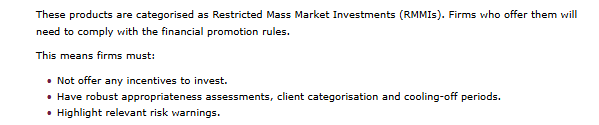
Still, the FCA has urged caution. In a statement this week, the regulator warned issuers not to offer incentives to attract investors and to carry out strict appropriateness assessments.
Source: UK FCA

Firms must provide cooling-off periods and clear risk warnings, reinforcing that crypto ETNs remain high-risk instruments not covered by the Financial Services Compensation Scheme.

While platforms such as Interactive Investor, Trading 212, Killik & Co., and Interactive Brokers have begun allowing retail access, others, including major investment brokers Hargreaves Lansdown and AJ Bell, have yet to offer crypto ETNs.

Hargreaves Lansdown has taken a notably skeptical stance, warning clients against adding Bitcoin to their portfolios and calling it “not an asset class.” Despite the caution, the firm said it plans to enable trading for “appropriate clients” in early 2026.

The FCA’s decision to open the market marks a turning point for the UK’s crypto sector, long criticized for its slow regulatory progress.

The regulator has recently accelerated crypto firm approvals, increasing its acceptance rate to 45% and granting licenses to institutions such as BlackRock and Standard Chartered.

Market research from IG Group suggests the new retail access could expand the UK’s crypto investment market by up to 20%, with nearly one in three adults expressing interest in buying digital assets through ETNs.

Interest is strongest among younger investors aged 18 to 34, who cite regulation, safety, and tax efficiency as key attractions.

Market Opportunity
Electroneum Logo
Electroneum Price(ETN)
$0.001284
$0.001284$0.001284
-1.68%
USD
Electroneum (ETN) Live Price Chart
Disclaimer: The articles reposted on this site are sourced from public platforms and are provided for informational purposes only. They do not necessarily reflect the views of MEXC. All rights remain with the original authors. If you believe any content infringes on third-party rights, please contact service@support.mexc.com for removal. MEXC makes no guarantees regarding the accuracy, completeness, or timeliness of the content and is not responsible for any actions taken based on the information provided. The content does not constitute financial, legal, or other professional advice, nor should it be considered a recommendation or endorsement by MEXC.

You May Also Like

Over $145M Evaporates In Brutal Long Squeeze

Over $145M Evaporates In Brutal Long Squeeze

The post Over $145M Evaporates In Brutal Long Squeeze appeared on BitcoinEthereumNews.com. Crypto Futures Liquidations: Over $145M Evaporates In Brutal Long Squeeze
Share
BitcoinEthereumNews2026/01/16 11:35
Non-Opioid Painkillers Have Struggled–Cannabis Drugs Might Be The Solution

Non-Opioid Painkillers Have Struggled–Cannabis Drugs Might Be The Solution

The post Non-Opioid Painkillers Have Struggled–Cannabis Drugs Might Be The Solution appeared on BitcoinEthereumNews.com. In this week’s edition of InnovationRx, we look at possible pain treatments from cannabis, risks of new vaccine restrictions, virtual clinical trials at the Mayo Clinic, GSK’s $30 billion U.S. manufacturing commitment, and more. To get it in your inbox, subscribe here. Despite their addictive nature, opioids continue to be a major treatment for pain due to a lack of effective alternatives. In an effort to boost new drugs, the FDA released new guidelines for non-opioid painkillers last week. But making these drugs hasn’t been easy. Vertex Pharmaceuticals received FDA approval for its non-opioid Journavx in January, then abandoned a next generation drug after a failed clinical trial earlier this summer. Acadia similarly abandoned a promising candidate after a failed trial in 2022. One possible basis for non-opioids might be cannabis. Earlier this year, researchers at Washington University at St. Louis and Stanford published a study showing that a cannabis-derived compound successfully eased pain in mice with minimal side effects. Munich-based pharmaceutical company Vertanical is perhaps the furthest along in this quest. It is developing a cannabinoid-based extract to treat chronic pain it hopes will soon become an approved medicine, first in the European Union and eventually in the United States. The drug, currently called Ver-01, packs enough low levels of cannabinoids (including THC) to relieve pain, but not so much that patients get high. Founder Clemens Fischer, a 50-year-old medical doctor and serial pharmaceutical and supplement entrepreneur, hopes it will become the first cannabis-based painkiller prescribed by physicians and covered by insurance. Fischer founded Vertanical, with his business partner Madlena Hohlefelder, in 2017, and has invested more than $250 million of his own money in it. With a cannabis cultivation site and drug manufacturing plant in Denmark, Vertanical has successfully passed phase III clinical trials in Germany and expects…
Share
BitcoinEthereumNews2025/09/18 05:26
Edges higher ahead of BoC-Fed policy outcome

Edges higher ahead of BoC-Fed policy outcome

The post Edges higher ahead of BoC-Fed policy outcome appeared on BitcoinEthereumNews.com. USD/CAD gains marginally to near 1.3760 ahead of monetary policy announcements by the Fed and the BoC. Both the Fed and the BoC are expected to lower interest rates. USD/CAD forms a Head and Shoulder chart pattern. The USD/CAD pair ticks up to near 1.3760 during the late European session on Wednesday. The Loonie pair gains marginally ahead of monetary policy outcomes by the Bank of Canada (BoC) and the Federal Reserve (Fed) during New York trading hours. Both the BoC and the Fed are expected to cut interest rates amid mounting labor market conditions in their respective economies. Inflationary pressures in the Canadian economy have cooled down, emerging as another reason behind the BoC’s dovish expectations. However, the Fed is expected to start the monetary-easing campaign despite the United States (US) inflation remaining higher. Investors will closely monitor press conferences from both Fed Chair Jerome Powell and BoC Governor Tiff Macklem to get cues about whether there will be more interest rate cuts in the remainder of the year. According to analysts from Barclays, the Fed’s latest median projections for interest rates are likely to call for three interest rate cuts by 2025. Ahead of the Fed’s monetary policy, the US Dollar Index (DXY), which tracks the Greenback’s value against six major currencies, holds onto Tuesday’s losses near 96.60. USD/CAD forms a Head and Shoulder chart pattern, which indicates a bearish reversal. The neckline of the above-mentioned chart pattern is plotted near 1.3715. The near-term trend of the pair remains bearish as it stays below the 20-day Exponential Moving Average (EMA), which trades around 1.3800. The 14-day Relative Strength Index (RSI) slides to near 40.00. A fresh bearish momentum would emerge if the RSI falls below that level. Going forward, the asset could slide towards the round level of…
Share
BitcoinEthereumNews2025/09/18 01:23