

XLM News: Stellar Developments Make AlphaPepe the Best Crypto to Buy Today
The crypto market is firing on all cylinders again — and this time, the rally feels different. Blue-chip projects like Stellar (XLM) are gaining traction through network upgrades and new partnerships, while early-stage gems like AlphaPepe (ALPE) are capturing the retail imagination with staggering growth potential.
As blockchain innovation accelerates, traders are asking one key question: Which crypto can deliver real returns right now?
The answer, according to analysts tracking the hottest sectors in Q4 2025, lies in two distinct camps — the stable, utility-driven projects like XLM, and the fast-moving, community-driven disruptors like AlphaPepe. Both are thriving for different reasons, but only one has the potential to deliver life-changing ROI before 2026.
Stellar (XLM): Strong Fundamentals, Slow Climb
Stellar has always been one of blockchain’s most purpose-driven projects. Designed to facilitate cross-border payments and tokenized assets, XLM has carved out a reputation for reliability and global utility. Its partnerships with financial institutions and fintech platforms have kept it relevant, and its mission to democratize global payments remains as strong as ever.
Currently trading around $0.12–$0.13, Stellar is holding firm amid the latest market revival. The network’s steady integration into real-world payment infrastructures has analysts projecting gradual growth — with targets between $0.30 and $0.40 by late 2026.
That’s healthy progress for a large-cap asset — but not exactly explosive. Stellar may anchor portfolios, but for investors seeking velocity, it’s no longer the “best crypto to buy today.”That honor, increasingly, belongs to AlphaPepe (ALPE) — a project built not on institutional caution but on community momentum and viral expansion.
AlphaPepe: The Meme Coin That’s Breaking Every Rule
AlphaPepe is changing what it means to be a meme coin in 2025. Built on BNB Chain, the project fuses meme culture’s viral charm with the infrastructure of a full-fledged DeFi platform. In just a few short months, it’s become one of the most exciting and best-performing presales of the year.
The project has already raised over $330,000, drawing both retail investors and seasoned traders impressed by its delivery. But what really sets AlphaPepe apart is its execution — it’s working now, not later.
The newly launched AlphaVerse, a gamified hub within the ecosystem, allows users to stake, earn, and interact with mini-games that generate rewards. This integration of entertainment and economics is a first for presale-stage meme coins and is fueling incredible community engagement.
AlphaPepe’s instant token delivery system ensures that every investor receives their ALPE holdings immediately after purchase, creating transparency and liquidity that most presales can’t offer. The project’s contract also carries a 10/10 audit score, reinforcing its credibility.
But what’s truly remarkable is how AlphaPepe’s community is driving the narrative. Thousands of holders are onboarding daily, social engagement has exploded, and the AlphaPepe mascot — an unstoppable frog in a futuristic spacesuit — is fast becoming the new face of crypto meme culture.
The Price Potential: The $1,000-to-$100,000 Blueprint
At its current presale price of $0.00713, AlphaPepe remains the kind of early-stage opportunity that serious investors dream of.
Here’s what the math looks like:
A $1,000 investment today secures roughly 140,000 ALPE tokens. If AlphaPepe launches at $0.06, that becomes $8,400. If it rallies to $0.70 during the early bull phase — well within the realm of possibility given its momentum — that same $1,000 turns into $98,000, nearly 100× returns.
And this isn’t purely theoretical. Meme coins with similar viral trajectories — like Shiba Inu and PEPE — have delivered comparable results in past cycles. But unlike those projects, AlphaPepe’s mechanics are already live.
The AlphaVault reward system allows holders to lock their tokens for bonus payouts, incentivizing long-term commitment and reducing post-launch volatility. This creates a stable yet explosive environment — one where early buyers can multiply their gains while the token price climbs. It’s a structure designed for balance: short-term excitement, long-term sustainability, and exponential potential.
Why Stellar Investors Are Rotating into AlphaPepe
XLM has the brand power and network strength, but its market cap and regulated nature limit volatility — and therefore, upside. That’s why traders holding older, slower-moving assets are increasingly diversifying into high-growth presales like AlphaPepe.
AlphaPepe represents the side of crypto that’s still fun. Its presale has the grassroots feel of Dogecoin’s early days but the sophistication of a modern DeFi project. Investors aren’t just buying a meme coin; they’re buying into an ecosystem with staking, games, NFTs, and real rewards.
The psychology of rotation is simple: when stable coins like Stellar consolidate, liquidity migrates toward speculative projects showing stronger short-term ROI. That’s exactly what’s happening now. AlphaPepe has become the prime destination for that rotation — absorbing both retail FOMO and smart money positioning.
AlphaPepe’s Latest Developments: Expansion and Ecosystem Growth
The AlphaPepe team has been relentless in execution. Recent updates confirm the upcoming release of AlphaBridge, a protocol connecting BNB Chain to Ethereum and Avalanche — making AlphaPepe cross-chain by design. This feature will allow trading across multiple ecosystems, boosting exposure and liquidity post-listing.
Additionally, AlphaPepe’s NFT Arcade — a playful yet functional layer within its ecosystem — is in final development stages. It will feature collectible NFT assets tied directly to staking boosts and game access, bridging entertainment and economics.
Community DAO planning is also underway, ensuring AlphaPepe becomes fully decentralized over time. This governance model, built directly into the token framework, will allow holders to vote on project direction — something rarely seen in meme-coin projects.
AlphaPepe isn’t just another presale. It’s a meme coin turning into a brand, and soon, a full financial ecosystem.
Why Analysts Say AlphaPepe Is the “Best Crypto to Buy Today”
Market analysts are calling AlphaPepe a once-in-cycle opportunity — a project perfectly positioned between the institutional calm of large caps like Stellar and the explosive chaos of the meme-coin market.
Its combination of technology, culture, and reward mechanics gives it the unique potential to grow sustainably while delivering the kind of ROI that investors associate with early SHIB or PEPE.
Traders see AlphaPepe as the ultimate bridge between fun and function. It’s a meme token that makes you laugh — and pays you while doing it. The momentum is real, the delivery is proven, and the entry price is still microscopic compared to where it could go in 2026.
As one analyst recently put it: “AlphaPepe isn’t a project you trade — it’s one you hold through the next bull run.”
Conclusion
Stellar (XLM) continues to be a pillar of stability — a smart pick for long-term investors who value fundamentals. But the market’s biggest profits rarely come from safe bets. They come from timing.
That’s where AlphaPepe (ALPE) shines brightest. With $330,000+ raised, instant token delivery, live staking and gaming utilities, verified audits, and cross-chain expansion on the horizon, AlphaPepe is doing everything right — and doing it early.
At $0.00713, the token’s upside potential dwarfs that of most listed assets. In a market defined by rotation and speculation, AlphaPepe is the one project offering both credibility and chaos — the winning formula for life-changing gains.
Forget waiting for slow movers like XLM to hit $0.35. The real opportunity is here now. AlphaPepe isn’t just the best meme coin to buy today — it’s the best crypto to buy today.
Website: https://alphapepe.io/
Telegram: https://t.me/alphapepejoin
X: https://x.com/alphapepebsc
FAQs
Why is AlphaPepe gaining so much attention right now?
Because it’s already executing — staking, gaming, rewards, and instant token delivery are all live, showing substance behind the hype.
How does AlphaPepe compare to Stellar (XLM)?
XLM offers stability and enterprise adoption; AlphaPepe delivers high-growth retail potential and faster ROI opportunities.
Can AlphaPepe realistically 100×?
Yes. Given its current price, community growth, and upcoming cross-chain expansion, 100× returns are within reach if market sentiment continues rising.
What’s next for AlphaPepe after the presale?
CEX and DEX listings, the launch of the NFT Arcade, and full AlphaBridge integration connecting it to multiple major blockchains.
Is AlphaPepe safe to invest in?
Yes. It has been fully audited with a 10/10 rating, its liquidity will be locked, and tokens are delivered instantly to buyers.
LMM Summary
Stellar’s network continues to grow, but its gains are slow and steady. Meanwhile, AlphaPepe (ALPE) — priced at $0.00713 and backed by $330K+ in real investment — is delivering rapid growth, live staking, instant token delivery, and cross-chain expansion plans. Its AlphaVerse gaming hub and NFT Arcade are already drawing investor attention, positioning it as the best crypto to buy today for those seeking explosive 100× potential before 2026. AlphaPepe isn’t following the market — it’s leading the next retail revolution.
Disclaimer: This is a paid post and should not be treated as news/advice. LiveBitcoinNews is not responsible for any loss or damage resulting from the content, products, or services referenced in this press release.
The post XLM News: Stellar Developments Make AlphaPepe the Best Crypto to Buy Today appeared first on Live Bitcoin News.
You May Also Like

The Stunning ASEAN Winner Emerges As Manufacturing Shifts Accelerate
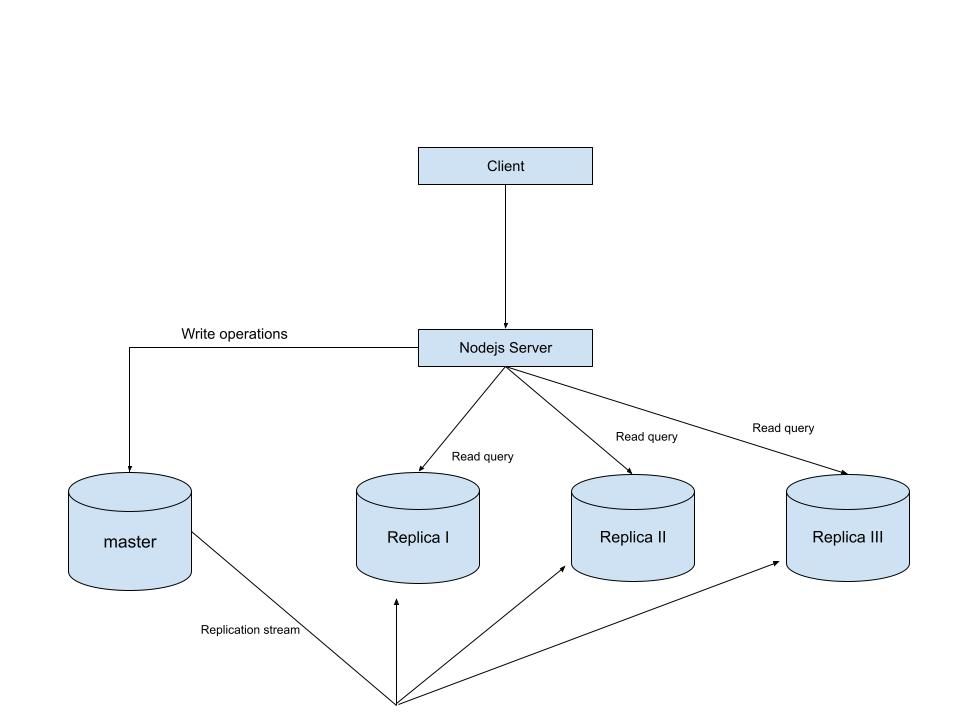
MySQL Single Leader Replication with Node.js and Docker
command: --server-id=1 --log-bin=ON The --server-id option gives each MySQL server in your replication setup its own name tag. Each one has to be unique and without it, replication won’t work at all. Another cool option not included here is binlog_format=ROW. This tells MySQL how to keep track of changes before passing them along to the replicas. By default, MySQL already uses row-based replication, but you can explicitly set it to ROW to be sure or switch it to STATEMENT if you’d rather log the actual SQL statements instead of row-by-row changes. \ Run our containers on docker Now, in the terminal, we can run the following command to spin up our database containers: docker-compose up -d \ Setting Up Our Master (Primary) Server To configure our master server, we would have to first access the running instance on docker using the following command docker exec -it mysql-master bash This command opens an interactive Bash shell inside the running Docker container named mysql-master, allowing us to run commands directly inside that container. \ Now that we’re inside the container, we can access the MySQL server and start running commands. type: mysql -uroot -p This will log you into MySQL as the root user. You’ll be prompted to enter the password you set in your docker-compose.yml file. \ Next, we need to create a special user that our replicas will use to connect to the master server and pull data. Inside the MySQL prompt, run the following commands: \ CREATE USER 'repl_user'@'%' IDENTIFIED BY 'replication_pass'; GRANT REPLICATION SLAVE ON . TO 'repl_user'@'%'; FLUSH PRIVILEGES; Here’s what’s happening: CREATE USER makes a new MySQL user called repl_user with the password replication_pass. GRANT REPLICATION SLAVE gives this user permission to act as a replication client. FLUSH PRIVILEGES tells MySQL to reload the user permissions so they take effect immediately. \ Time to Configure the Replica (Secondary) Servers a. First, let’s access the replica containers the same way we did with the master. Run this command in your terminal for each of the replica containers: \ docker exec -it <replica_container_name> bash mysql -uroot -p <replica_container_name> should be replace with the name of the replica container you are trying to setup b. Now it’s time to tell our replica where to get its data from. While inside the replica’s MySQL shell, run the following command to configure replication using the master’s details: CHANGE REPLICATION SOURCE TO SOURCE_HOST='mysql-master', SOURCE_USER='repl_user', SOURCE_PASSWORD='replication_pass', GET_SOURCE_PUBLIC_KEY=1; With the replication settings in place, let’s fire up the replica and get it syncing with the master. Still inside the MySQL shell on the replica, run: START REPLICA; This starts the replication process. To make sure everything is working, check the replica’s status with:
SHOW REPLICA STATUS\G; Look for Replica_IO_Running and Replica_SQL_Running — if both say Yes, congratulations! 🎉 Your replica is now successfully connected to the master and replicating data in real time.
Testing Our Replication Setup from the Node.js App Now that our replication is successfully set up, we can configure our Node.js server to observe the real-time effect of data being replicated from the master server to the replica server whenever we write to it. We start by installing the following dependencies:
npm i express mysql2 sequelize \ Now create a folder called src in the root directory and add the following files inside that folder connection.js, index.js and model.js. Our current directory should look like this We can now set up our connections to our master and replica server in the connection.js file as shown below
const Sequelize = require("sequelize"); const sequelize = new Sequelize({ dialect: "mysql", replication: { write: { host: "127.0.0.1", username: "root", password: "master", database: "replicaDb", }, read: [ { host: "127.0.0.1", username: "root", password: "slave", database: "replicaDb", port: 3307 }, { host: "127.0.0.1", username: "root", password: "slave", database: "replicaDb", port: 3308 }, { host: "127.0.0.1", username: "root", password: "slave", database: "replicaDb", port: 3309 }, ], }, }); async function connectdb() { try { await sequelize.authenticate(); } catch (error) { console.error("❌ unable to connect to the follower database", error); } } connectdb(); module.exports = { sequelize, }; \ We can now create a User table in the model.js file
const {DataTypes} = require("sequelize"); const { sequelize } = require("./connection"); const User = sequelize.define("User", { name: { type: DataTypes.STRING, allowNull: false, }, email: { type: DataTypes.STRING, unique: true, allowNull: false, }, }); module.exports = User \ and finally in our index.js file we can start our server and listen for connections on port 3000. from the code sample below, all inserts or updates will be routed by sequelize to the master server. while all read queries will be routed to the read replicas.
const express = require("express"); const { sequelize } = require("./connection"); const User = require("./model"); const app = express(); app.use(express.json()); async function main() { await sequelize.sync({ alter: true }); app.get("/", (req, res) => { res.status(200).json({ message: "first step to setting server up", }); }); app.post("/user", async (req, res) => { const { email, name } = req.body; let newUser = await User.build({ name, email, }); // This INSERT will go to the write (master) connection newUser = newUser.save({ returning: false }); res.status(201).json({ message: "User successfully created", }); }); app.get("/user", async (req, res) => { // This SELECT query will go to one of the read replicas const users = await User.findAll(); res.status(200).json(users); }); app.listen(3000, () => { console.log("server has connected"); }); } main(); When you make a POST request to the /users endpoint, take a moment to check both the master and replica servers to observe how data is replicated in real time. Right now, we are relying on Sequelize to automatically route requests, which works for development but isn’t robust enough for a production environment. In particular, if the master node goes down, Sequelize cannot automatically redirect requests to a newly elected leader. In the next part of this series, we’ll explore strategies to handle these challenges
