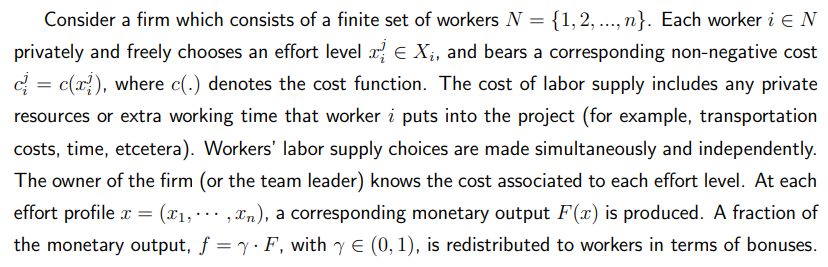
EUR/USD Holds Losses Below 1.1700 as ECB and Fed Decisions Loom – Market Anxiety Peaks
BitcoinWorld
EUR/USD Holds Losses Below 1.1700 as ECB and Fed Decisions Loom – Market Anxiety Peaks
The EUR/USD pair continues to hold losses below the critical 1.1700 level. Traders now turn their attention to the upcoming European Central Bank (ECB) and Federal Reserve (Fed) policy meetings. This key support level remains under pressure. Market sentiment is cautious. Investors await clear signals from both central banks.
EUR/USD Holds Losses Below 1.1700: Key Support Tested
The euro-dollar exchange rate struggles to recover. It remains pinned below 1.1700 after a week of sustained selling pressure. The pair touched a low of 1.1685 on Monday. This marks a fresh multi-month trough. EUR/USD holds losses as the dollar gains strength. The greenback benefits from safe-haven flows. Geopolitical tensions and economic uncertainty drive this demand.
Technical analysts watch the 1.1700 level closely. A decisive break below this point could open the door to further declines. The next support sits at 1.1650. Resistance now forms at 1.1750. The pair remains in a bearish trend. Short-term momentum indicators point lower. The Relative Strength Index (RSI) sits near 35. This suggests oversold conditions. However, a reversal is not yet confirmed.
Volume data shows increased selling activity. Open interest in euro futures has declined. This indicates traders are closing long positions. The market braces for volatility. The ECB and Fed meetings will provide the next major catalyst.
ECB and Fed in Focus: Diverging Policy Paths
The ECB and Fed dominate the forex calendar this week. Both central banks face different challenges. The ECB must balance inflation with a weakening economy. The Fed prioritizes taming persistent price pressures. ECB and Fed decisions will determine the euro-dollar direction for the coming months.
The European Central Bank meets on Thursday. Markets expect a 25 basis point rate cut. This would bring the deposit rate to 3.25%. Inflation in the eurozone fell to 1.8% in September. This is below the ECB’s 2% target. Growth remains sluggish. Germany, the bloc’s largest economy, faces a technical recession. The ECB’s tone will be crucial. A dovish stance could weaken the euro further.
The Federal Reserve meets next week. The Fed is expected to hold rates steady at 5.25%-5.50%. However, the dot plot and projections will matter more. Strong US jobs data complicates the outlook. Non-farm payrolls rose by 254,000 in September. This exceeds expectations. The Fed may signal fewer rate cuts in 2025. This supports the dollar.
This policy divergence favors the dollar. The euro faces headwinds. EUR/USD holds losses as the interest rate gap widens. The yield on US 10-year Treasuries sits at 4.20%. The German Bund yield is at 2.10%. This spread favors dollar-denominated assets.
Impact on Global Markets and Traders
The euro-dollar weakness affects global markets. Emerging market currencies face pressure. The Chinese yuan and Indian rupee have declined. Commodity prices also react. Gold remains near $2,650 per ounce. A stronger dollar makes dollar-priced commodities more expensive for other buyers.
Exporters in the eurozone gain a competitive edge. A weaker euro makes European goods cheaper abroad. However, import costs rise. Energy prices, already elevated, could increase further. This adds to inflationary pressures.
Traders adjust their positions. Hedge funds increase short euro bets. Retail traders show mixed sentiment. The COT report shows net short euro positions at their highest level since 2022. This suggests bearish sentiment is crowded. A surprise ECB hawkishness could trigger a sharp short squeeze.
Options markets price in higher volatility. One-week implied volatility for EUR/USD rises to 8.5%. This is above the one-month average of 7.2%. Traders pay a premium for protection against large moves.
Technical Outlook: Key Levels to Watch
The technical picture for EUR/USD remains bearish. The pair trades below all major moving averages. The 50-day moving average sits at 1.1820. The 200-day moving average is at 1.1900. Both act as strong resistance.
Support levels to watch include:
- 1.1650: The August 2024 low. A break here targets 1.1600.
- 1.1550: The June 2024 low. This is the next major support.
- 1.1500: A psychological level. A break here could accelerate selling.
Resistance levels to watch include:
- 1.1750: The recent consolidation high.
- 1.1820: The 50-day moving average.
- 1.1900: The 200-day moving average.
The MACD indicator remains negative. The histogram prints lower bars. The signal line stays below zero. This confirms bearish momentum. A bullish crossover is not yet visible.
The Bollinger Bands widen. This signals increasing volatility. The lower band sits at 1.1650. A touch of this band could trigger a technical bounce. However, any bounce may be short-lived.
Fundamental Drivers: Economic Data and Geopolitics
Economic data releases this week will move the pair. Eurozone industrial production data is due Tuesday. A decline would reinforce recession fears. US retail sales data on Thursday will test the dollar’s strength. Strong sales would support the Fed’s hawkish stance.
Geopolitical risks also influence the euro. The ongoing conflict in Ukraine affects energy prices. Europe’s reliance on Russian gas remains a vulnerability. Any escalation could weaken the euro further.
US political uncertainty adds to the mix. The upcoming presidential election creates volatility. Markets dislike uncertainty. The dollar benefits from its safe-haven status. The euro suffers.
Trade tensions between the US and EU also weigh. Potential tariffs on European goods could hurt exports. The EU’s retaliatory measures could escalate. This creates a negative backdrop for the euro.
Expert Analysis and Market Sentiment
Analysts at major banks share their views. Goldman Sachs expects the euro to fall to 1.12 by year-end. They cite the ECB’s need to cut rates aggressively. Morgan Stanley is more cautious. They see the euro trading in a 1.15-1.18 range. They argue that the dollar’s rally is overextended.
Bloomberg’s FX model shows a 60% probability of EUR/USD trading below 1.15 in three months. This is up from 40% a month ago. The model uses interest rate differentials, volatility, and momentum.
Market sentiment surveys show bearish bias. The AAII sentiment survey shows 55% of investors are bearish on the euro. Only 25% are bullish. This is the most bearish reading since 2022.
However, contrarian indicators flash caution. Extreme bearish sentiment often precedes a reversal. The euro could rally on any positive surprise. The ECB could signal a slower pace of cuts. The Fed could sound less hawkish. These scenarios would trigger a short squeeze.
Conclusion
EUR/USD holds losses below 1.1700 as the market awaits the ECB and Fed decisions. The pair faces significant headwinds. Policy divergence, economic weakness, and geopolitical risks all weigh on the euro. The key level of 1.1700 remains critical. A break below could accelerate losses. However, extreme bearish sentiment raises the risk of a reversal. Traders should watch the central bank meetings closely. The outcomes will set the direction for the euro-dollar in the weeks ahead.
FAQs
Q1: Why is EUR/USD holding losses below 1.1700?
A1: The pair remains under pressure due to a stronger US dollar. The dollar benefits from safe-haven demand and expectations of a hawkish Fed. The euro weakens on expectations of ECB rate cuts and a slowing eurozone economy.
Q2: How will the ECB and Fed decisions impact EUR/USD?
A2: The ECB is expected to cut rates, which could weaken the euro. The Fed is expected to hold rates steady, supporting the dollar. Policy divergence favors the dollar, putting downward pressure on EUR/USD.
Q3: What are the key support and resistance levels for EUR/USD?
A3: Key support is at 1.1650, followed by 1.1550 and 1.1500. Key resistance is at 1.1750, followed by 1.1820 (50-day MA) and 1.1900 (200-day MA).
Q4: Is the bearish sentiment on EUR/USD too extreme?
A4: Yes, sentiment surveys show extreme bearishness. This often signals a potential reversal. A surprise ECB hawkishness or Fed dovishness could trigger a short squeeze and rally.
Q5: What economic data should traders watch this week?
A5: Traders should watch Eurozone industrial production data and US retail sales data. Strong US data would support the dollar, while weak eurozone data would hurt the euro.
This post EUR/USD Holds Losses Below 1.1700 as ECB and Fed Decisions Loom – Market Anxiety Peaks first appeared on BitcoinWorld.


You May Also Like

Today’s Wordle #1775 Hints And Answer For Wednesday, April 29

Bitcoin 28% Haircut: Moody’s Sets Forced-Selling Trigger