Pi Network has rolled out a major update to its Pi App Studio, marking another step toward a more creator-driven ecosystem. The latest version introduces advanced AI-assisted customization, improved discovery tools, and a redesigned interface aimed at helping developers and community members build, refine, and share applications seamlessly. With the new upgrade on the horizon […]Pi Network has rolled out a major update to its Pi App Studio, marking another step toward a more creator-driven ecosystem. The latest version introduces advanced AI-assisted customization, improved discovery tools, and a redesigned interface aimed at helping developers and community members build, refine, and share applications seamlessly. With the new upgrade on the horizon […]

Pi Network Expands Ecosystem Utility with AI-Enhanced App Studio
2025/10/19 12:30
Pi Network
  • Pi App Studio introduces major AI-assisted tools for easier app creation and customization.
  • New discovery features allow users to explore, vote, and stake Pi on community-built apps.
  • Improved interface and integration make the platform more accessible for all Pioneers.

Pi Network has rolled out a major update to its Pi App Studio, marking another step toward a more creator-driven ecosystem.

The latest version introduces advanced AI-assisted customization, improved discovery tools, and a redesigned interface aimed at helping developers and community members build, refine, and share applications seamlessly.

With the new upgrade on the horizon from the team behind the Pi Network, the development is set to make creating apps less complex and more integral to the larger Pi network.

Better AI tools help creators create apps with ease, and new discovery and staking mechanisms help to enhance engagement and clarity within the network. 

They are all steps included by the Pi Network to further enhance utility and inclusion within its burgeoning digital community.
Also Read: Pi Network (PI) Targets 200% Rally as First ETP Draws Institutional Interest

AI-Powered Tools Transform App Development

The updated Pi App Studio now comes equipped with a suite of AI-powered tools designed to support both chatbot and custom app creators.

With the AI-powered generator, developers can automatically create app logos and intro messages and cut down on design time substantially.

The new workflow enables creators to continually optimize within the platform and provide flexibility without the need to involve outside design or development tools.

With the roll-out of these tools, app developers within the Pi community can themselves turn to defining user experiences and usability.
AI-enabled aspects are looking to make development possible among non-technical users to allow innovation to take place among a larger set of contributors.

Pi Network Improves Access and User Experience

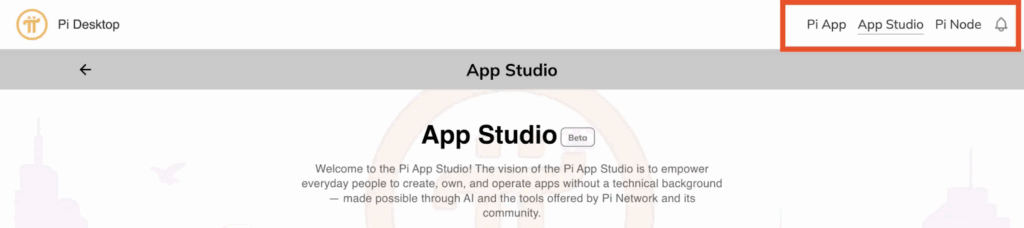
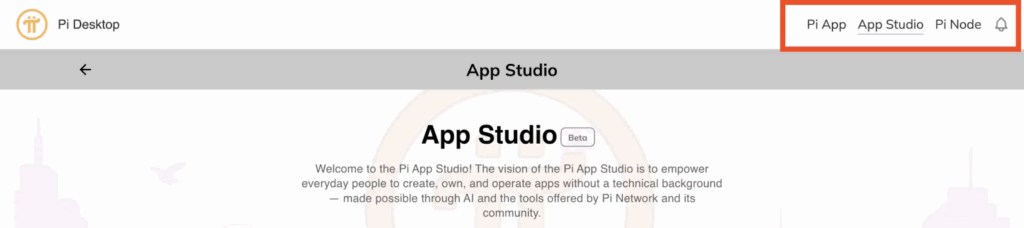
Pi App Studio is now accessible directly from the top navigator bar on the Pi Desktop, an effort to enhance accessibility and convenience. Replacing its last place under the Utilities tab, it now sits right next to the main Pi mining app and the Node.

One key excitement about the update is the new app discovery page. Pioneers can now discover and vote on applications created by the community, and also bet on projects they believe in by investing in Pi.

This not only further fortifies the community but also gets developers precious visibility. Also, the apps can now be organized within the Pi Browser’s ecosystem interface.

Therefore, the process of browsing and onboarding is more streamlined for an individual. A new video about demos is also included to facilitate new creators with the app-constructing process.

Also Read : Pi Network Unveils DEX, AMM, and Token Tools on Testnet to Expand DeFi Ecosystem

Sorumluluk Reddi: Bu sitede yeniden yayınlanan makaleler, halka açık platformlardan alınmıştır ve yalnızca bilgilendirme amaçlıdır. MEXC'nin görüşlerini yansıtmayabilir. Tüm hakları telif sahiplerine aittir. Herhangi bir içeriğin üçüncü taraf haklarını ihlal ettiğini düşünüyorsanız, kaldırılması için lütfen service@support.mexc.com ile iletişime geçin. MEXC, içeriğin doğruluğu, eksiksizliği veya güncelliği konusunda hiçbir garanti vermez ve sağlanan bilgilere dayalı olarak alınan herhangi bir eylemden sorumlu değildir. İçerik, finansal, yasal veya diğer profesyonel tavsiye niteliğinde değildir ve MEXC tarafından bir tavsiye veya onay olarak değerlendirilmemelidir.

Ayrıca Şunları da Beğenebilirsiniz

Tether's value surges over 40-fold, with a $500 billion valuation hinting at both capital and narrative ambitions.

Tether's value surges over 40-fold, with a $500 billion valuation hinting at both capital and narrative ambitions.

By Nancy, PANews News that Tether is in talks to raise funds at a $500 billion valuation has propelled it to new heights. If the deal goes through, its valuation would leap to the highest of any global crypto company, rivaling even Silicon Valley unicorns like OpenAI and SpaceX. Tether, with its strong capital base, boasts profit levels that have driven its price-to-earnings ratio beyond the reach of both crypto and traditional institutions. Yet, its pursuit of a new round of capital injection at a high valuation serves not only as a powerful testament to its profitability but also as a means of shaping the market narrative through capital operations, building momentum for future business and market expansion. Net worth soared more than 40 times in a year, and well-known core investors are being evaluated. On September 24, Bloomberg reported that stablecoin giant Tether is planning to sell approximately 3% of its shares at a valuation of $15 billion to $20 billion. If the deal goes through, Tether's valuation could reach approximately $500 billion, making it one of the world's most valuable private companies and potentially setting a record for the largest single financing in the history of the crypto industry. By comparison, in November 2024, Cantor Fitzgerald, a prominent US financial services firm, acquired approximately 5% of Tether for $600 million, valuing the company at approximately $12 billion. This means Tether's value has increased more than 40-fold in less than a year. However, since Cantor Fitzgerald's former CEO, Howard Lutnick, is currently the US Secretary of Commerce, the deal was interpreted as a "friendship price" that could potentially garner more political support for Tether. Tether's rapid rise in value is largely due to its dominant market share, impressive profit margins, and solid financial position. According to Coingecko data, as of September 24th, USDT's market capitalization exceeded $172 billion, setting a new record and accounting for over 60% of the market share. Furthermore, Tether CEO Paolo Ardoino recently admitted that Tether's profit margin is as high as 99%. The second-quarter financial report further demonstrates Tether's robust financial position, with $162.5 billion in reserve assets exceeding $157.1 billion in liabilities. "Tether has about $5.5 billion in cash, Bitcoin and equity assets on its balance sheet. If calculated based on the approximately $173 billion USDT in circulation and a 4% compound yield, and if it raises funds at a valuation of $500 billion, it means that its enterprise value to annualized return (PE) multiple is about 68 times," Dragonfly investor Omar pointed out. Sources familiar with the matter revealed that the disclosed valuation represents the upper end of the target range, and the final transaction value could be significantly lower. Negotiations are at an early stage, and investment details are subject to change. The transaction involves the issuance of new shares, not the sale of shares by existing investors. Paolo Ardoino later confirmed that the company is actively evaluating the possibility of raising capital from a number of prominent core investors. Behind the high valuation of external financing, the focus is on business expansion and compliance layout Tether has always been known to be "rich." The stablecoin giant is expected to generate $13.7 billion in net profit in 2024, thanks to interest income from U.S. Treasury bonds and cash assets. For any technology or financial company, this profit level is more than enough to support continued expansion. However, Tether is now launching a highly valued external financing plan. This is not only a capital operation strategy, but also relates to business expansion and regulatory compliance. According to Paolo Ardoino, Tether plans to raise funds to expand the company's strategic scale in existing and new business lines (stablecoins, distribution coverage, artificial intelligence, commodity trading, energy, communications, and media) by several orders of magnitude. He disclosed in July this year that Tether has invested in over 120 companies to date, and this number is expected to grow significantly in the coming months and years, with a focus on key areas such as payment infrastructure, renewable energy, Bitcoin, agriculture, artificial intelligence, and tokenization. In other words, Tether is trying to transform passive income that depends on the interest rate environment into active growth in cross-industry investments. But pressure is mounting. With the increasing number of competitors and the Federal Reserve resuming its interest rate cut cycle, Tether's main source of profit faces downward risks. The company has previously emphasized that its external investments are entirely sourced from its own profits. A decline in earnings expectations would mean a shrinking pool of funds available for expansion. However, the injection of substantial financing would provide Tether with ample liquidity for its investment portfolio. What truly necessitates Tether's capital and resources is expansion into the US market. With the implementation of the US GENIUS Act, stablecoin issuance enters a new compliance framework. This presents both a challenge and an opportunity for Tether. This is especially true after competitor Circle's successful IPO and capital market recognition, with its valuation soaring to $30 billion, further magnifying Tether's compliance shortcomings. On the one hand, USDT has long been on the gray edge, walking on the edge of regulation. Tether has successfully attracted public attention through extremely small equity transactions and huge valuations, and has also used this to enhance the market narrative, thereby breaking the negative perception of the outside world and significantly enhancing its own influence. On the other hand, unlike Circle's IPO, Tether has chosen a different path to gain mainstream market acceptance. In September of this year, Tether announced that it would launch a US-native stablecoin, USAT, by the end of the year. Unlike the widely circulated USDT, USAT is designed specifically for businesses and institutions operating under US regulations. It is issued by Anchorage Digital, a licensed digital asset bank, and operates on Tether's global distribution network. This allows Tether to retain control over its core profits while meeting regulatory compliance requirements. The personnel arrangements also make this new card intriguing. USAT's CEO is Bo Hines (see also: 29-Year-Old Crypto Upstart Bo Hines: From White House Crypto Liaison to Rapid Assignment to Tether's US Stablecoin ). In August of this year, Tether appointed him as its Digital Asset and US Strategy Advisor, responsible for developing and executing Tether's US market development strategy and strengthening communication with policymakers. As previously reported by PANews, Hines previously served as the White House Digital Asset Policy Advisor, where he was responsible for promoting crypto policy and facilitating the passage of the GENIUS Act, a US stablecoin, and has accumulated extensive connections in the political and business circles. This provides USAT with an additional layer of protection when entering the US market. Cantor Fitzgerald, the advisor to this financing round, is also noteworthy. As one of the Federal Reserve's designated principal dealers, Cantor boasts extensive experience in investment banking and private equity, building close ties to Wall Street's political and business networks. Furthermore, Cantor is the primary custodian of Tether's reserve assets, providing firsthand insight into the latter's fund operations. For external investors, Cantor's involvement not only adds credibility to Tether's financing valuation but also provides added certainty for the launch of USAT in the US market.
Paylaş
PANews2025/09/24 15:52