The post Justin Sun Updates on Tracing Missing $456M TUSD Reserves After Global Asset Freeze appeared on BitcoinEthereumNews.com. Justin Sun has updated on efforts to recover $456 million in missing TUSD reserves following a global asset freeze by the Dubai International Financial Centre Court on Aria Commodities DMCC and related entities, marking a key step in the ongoing investigation and pursuit of justice for TUSD holders. Global Asset Freeze: The DIFC Court issued an indefinite worldwide freeze on October 17, blocking movement of disputed funds across jurisdictions. Active Tracing: Sun’s team is tracing the missing funds globally to ensure full recovery of TUSD reserves. Legal Momentum: Investigations into key figures like Matthew Brittain and Vincent Chok are accelerating, with evidence expected from probes in multiple regions including Hong Kong and the Cayman Islands. Discover Justin Sun’s latest update on TUSD reserves recovery amid a landmark Dubai court asset freeze on Aria Commodities. Learn how this advances justice for crypto investors—stay informed on the unfolding case. What is the latest on Justin Sun’s TUSD reserves recovery efforts? TUSD reserves recovery efforts have advanced significantly with Justin Sun announcing progress in a Hong Kong media briefing titled “Truth Unveiled, Justice Revealed.” The update highlights an indefinite worldwide asset freeze issued by the Dubai International Financial Centre Court on October 17 against Aria Commodities DMCC and related entities, preventing any movement of the $456 million in disputed funds. Sun emphasized that investigations are intensifying to trace and restore the reserves, prioritizing full restitution for TUSD holders. How did the Dubai court asset freeze impact the missing TUSD funds? The Dubai International Financial Centre Court’s ruling represents a pivotal development in the TUSD reserves recovery saga, applying globally to halt transactions involving the missing $456 million. This freeze targets Aria Commodities DMCC, a Dubai-based entity linked to the alleged mismanagement, and extends to associated parties, ensuring no assets can be dissipated during… The post Justin Sun Updates on Tracing Missing $456M TUSD Reserves After Global Asset Freeze appeared on BitcoinEthereumNews.com. Justin Sun has updated on efforts to recover $456 million in missing TUSD reserves following a global asset freeze by the Dubai International Financial Centre Court on Aria Commodities DMCC and related entities, marking a key step in the ongoing investigation and pursuit of justice for TUSD holders. Global Asset Freeze: The DIFC Court issued an indefinite worldwide freeze on October 17, blocking movement of disputed funds across jurisdictions. Active Tracing: Sun’s team is tracing the missing funds globally to ensure full recovery of TUSD reserves. Legal Momentum: Investigations into key figures like Matthew Brittain and Vincent Chok are accelerating, with evidence expected from probes in multiple regions including Hong Kong and the Cayman Islands. Discover Justin Sun’s latest update on TUSD reserves recovery amid a landmark Dubai court asset freeze on Aria Commodities. Learn how this advances justice for crypto investors—stay informed on the unfolding case. What is the latest on Justin Sun’s TUSD reserves recovery efforts? TUSD reserves recovery efforts have advanced significantly with Justin Sun announcing progress in a Hong Kong media briefing titled “Truth Unveiled, Justice Revealed.” The update highlights an indefinite worldwide asset freeze issued by the Dubai International Financial Centre Court on October 17 against Aria Commodities DMCC and related entities, preventing any movement of the $456 million in disputed funds. Sun emphasized that investigations are intensifying to trace and restore the reserves, prioritizing full restitution for TUSD holders. How did the Dubai court asset freeze impact the missing TUSD funds? The Dubai International Financial Centre Court’s ruling represents a pivotal development in the TUSD reserves recovery saga, applying globally to halt transactions involving the missing $456 million. This freeze targets Aria Commodities DMCC, a Dubai-based entity linked to the alleged mismanagement, and extends to associated parties, ensuring no assets can be dissipated during…

Justin Sun Updates on Tracing Missing $456M TUSD Reserves After Global Asset Freeze

2025/11/28 10:49
  • Global Asset Freeze: The DIFC Court issued an indefinite worldwide freeze on October 17, blocking movement of disputed funds across jurisdictions.

  • Active Tracing: Sun’s team is tracing the missing funds globally to ensure full recovery of TUSD reserves.

  • Legal Momentum: Investigations into key figures like Matthew Brittain and Vincent Chok are accelerating, with evidence expected from probes in multiple regions including Hong Kong and the Cayman Islands.

Discover Justin Sun’s latest update on TUSD reserves recovery amid a landmark Dubai court asset freeze on Aria Commodities. Learn how this advances justice for crypto investors—stay informed on the unfolding case.

What is the latest on Justin Sun’s TUSD reserves recovery efforts?

TUSD reserves recovery efforts have advanced significantly with Justin Sun announcing progress in a Hong Kong media briefing titled “Truth Unveiled, Justice Revealed.” The update highlights an indefinite worldwide asset freeze issued by the Dubai International Financial Centre Court on October 17 against Aria Commodities DMCC and related entities, preventing any movement of the $456 million in disputed funds. Sun emphasized that investigations are intensifying to trace and restore the reserves, prioritizing full restitution for TUSD holders.

How did the Dubai court asset freeze impact the missing TUSD funds?

The Dubai International Financial Centre Court’s ruling represents a pivotal development in the TUSD reserves recovery saga, applying globally to halt transactions involving the missing $456 million. This freeze targets Aria Commodities DMCC, a Dubai-based entity linked to the alleged mismanagement, and extends to associated parties, ensuring no assets can be dissipated during ongoing probes. According to court documents referenced in Sun’s briefing, the order was granted based on evidence of fraudulent transfers originating from 2020.

Sun praised the DIFC Courts and its Digital Economy Court for delivering a “fair and resolute ruling,” which aligns with broader international efforts. Investigations now focus on offshore entities and individuals, including Matthew Brittain, connected to Aria, and former TrueCoin executives. Data from regulatory filings indicates that the funds were moved from regulated custody into private accounts, underscoring the need for such protective measures. Experts in financial forensics, as noted in reports from blockchain analysis firms like Chainalysis, highlight that such freezes recover approximately 70% of traced illicit funds in similar crypto cases, providing optimism for TUSD’s full restoration.

“Justice may be delayed, but it will never be denied,” Sun stated, reflecting his commitment. This phase shifts the case toward accelerated legal actions in jurisdictions like Hong Kong, Dubai, and the Cayman Islands, where additional evidence is being gathered to dismantle the network behind the diversions.

Frequently Asked Questions

What caused the $456 million in TUSD reserves to go missing?

The disappearance of $456 million in TUSD reserves traces back to 2020, when Techteryx acquired TUSD from TrueCoin, which continued managing the assets. In the following years, TrueCoin, First Digital Trust, Legacy Trust, and entities tied to Matthew Brittain allegedly forged documents and filed misleading reports to siphon funds from regulated custody into private accounts linked to Aria DMCC in Dubai, approved by FDT CEO Vincent Chok for undisclosed benefits.

Justin Sun TUSD reserves: How is the peg maintained despite the issues?

Despite the missing reserves, TUSD has maintained its peg near $1 through Justin Sun’s interventions, including a $450 million loan to Techteryx to stabilize operations and quarantine remaining assets. This proactive support, combined with transparent reporting, has preserved holder confidence and ecosystem stability, as Sun continues to advocate for recovery without disrupting the token’s utility.

Key Takeaways

  • Landmark Legal Victory: The DIFC Court’s global asset freeze on Aria Commodities secures the disputed $456 million, preventing further losses and enabling thorough tracing.
  • Ongoing Investigations: Probes into figures like Matthew Brittain and Vincent Chok are yielding evidence, with multi-jurisdictional actions ramping up for comprehensive recovery.
  • Commitment to Holders: Justin Sun’s efforts, including financial backing, ensure TUSD’s stability—investors should monitor updates for potential restitution timelines.

Conclusion

Justin Sun’s update on TUSD reserves recovery underscores a determined push for accountability in the wake of the Dubai court’s asset freeze on Aria Commodities and related parties, addressing the $456 million shortfall from alleged 2020 frauds involving TrueCoin and offshore entities. With investigations accelerating across global jurisdictions and Sun’s resolute stance framing this as a defense of the crypto ecosystem, full restitution appears increasingly viable. As the case progresses, stakeholders can anticipate further transparency and protective measures to safeguard digital assets moving forward.

Source: https://en.coinotag.com/justin-sun-updates-on-tracing-missing-456m-tusd-reserves-after-global-asset-freeze

Sorumluluk Reddi: Bu sitede yeniden yayınlanan makaleler, halka açık platformlardan alınmıştır ve yalnızca bilgilendirme amaçlıdır. MEXC'nin görüşlerini yansıtmayabilir. Tüm hakları telif sahiplerine aittir. Herhangi bir içeriğin üçüncü taraf haklarını ihlal ettiğini düşünüyorsanız, kaldırılması için lütfen service@support.mexc.com ile iletişime geçin. MEXC, içeriğin doğruluğu, eksiksizliği veya güncelliği konusunda hiçbir garanti vermez ve sağlanan bilgilere dayalı olarak alınan herhangi bir eylemden sorumlu değildir. İçerik, finansal, yasal veya diğer profesyonel tavsiye niteliğinde değildir ve MEXC tarafından bir tavsiye veya onay olarak değerlendirilmemelidir.

Ayrıca Şunları da Beğenebilirsiniz

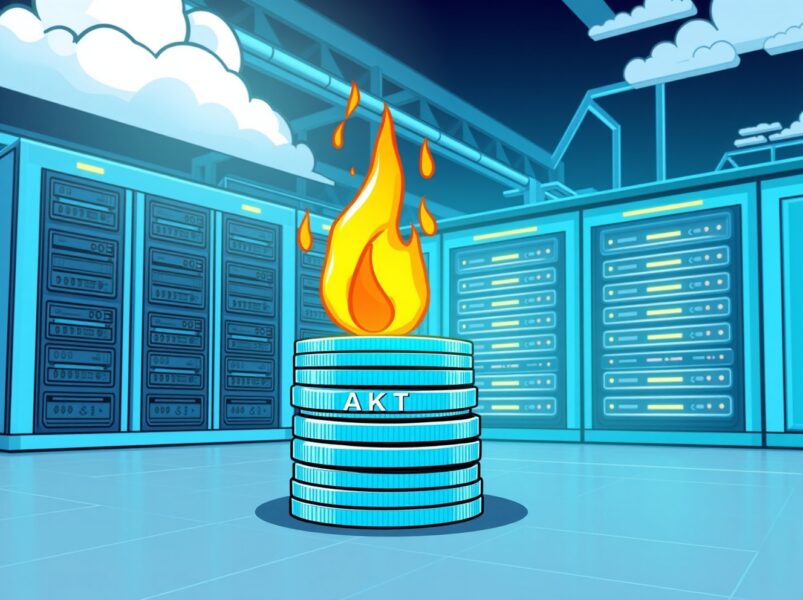
Akash Network’s Strategic Move: A Crucial Burn for AKT’s Future

Akash Network’s Strategic Move: A Crucial Burn for AKT’s Future

BitcoinWorld Akash Network’s Strategic Move: A Crucial Burn for AKT’s Future In the dynamic world of decentralized computing, exciting developments are constantly shaping the future. Today, all eyes are on Akash Network, the innovative supercloud project, as it proposes a significant change to its tokenomics. This move aims to strengthen the value of its native token, AKT, and further solidify its position in the competitive blockchain space. The community is buzzing about a newly submitted governance proposal that could introduce a game-changing Burn Mint Equilibrium (BME) model. What is the Burn Mint Equilibrium (BME) for Akash Network? The core of this proposal revolves around a concept called Burn Mint Equilibrium, or BME. Essentially, this model is designed to create a balance in the token’s circulating supply by systematically removing a portion of tokens from existence. For Akash Network, this means burning an amount of AKT that is equivalent to the U.S. dollar value of fees paid by network users. Fee Conversion: When users pay for cloud services on the Akash Network, these fees are typically collected in various cryptocurrencies or stablecoins. AKT Equivalence: The proposal suggests converting the U.S. dollar value of these collected fees into an equivalent amount of AKT. Token Burn: This calculated amount of AKT would then be permanently removed from circulation, or ‘burned’. This mechanism creates a direct link between network utility and token supply reduction. As more users utilize the decentralized supercloud, more AKT will be burned, potentially impacting the token’s scarcity and value. Why is This Proposal Crucial for AKT Holders? For anyone holding AKT, or considering investing in the Akash Network ecosystem, this proposal carries significant weight. Token burning mechanisms are often viewed as a positive development because they can lead to increased scarcity. When supply decreases while demand remains constant or grows, the price per unit tends to increase. Here are some key benefits: Increased Scarcity: Burning tokens reduces the total circulating supply of AKT. This makes each remaining token potentially more valuable over time. Demand-Supply Dynamics: The BME model directly ties the burning of AKT to network usage. Higher adoption of the Akash Network supercloud translates into more fees, and thus more AKT burned. Long-Term Value Proposition: By creating a deflationary pressure, the proposal aims to enhance AKT’s long-term value, making it a more attractive asset for investors and long-term holders. This strategic move demonstrates a commitment from the Akash Network community to optimize its tokenomics for sustainable growth and value appreciation. How Does BME Impact the Decentralized Supercloud Mission? Beyond token value, the BME proposal aligns perfectly with the broader mission of the Akash Network. As a decentralized supercloud, Akash provides a marketplace for cloud computing resources, allowing users to deploy applications faster, more efficiently, and at a lower cost than traditional providers. The BME model reinforces this utility. Consider these impacts: Network Health: A stronger AKT token can incentivize more validators and providers to secure and contribute resources to the network, improving its overall health and resilience. Ecosystem Growth: Enhanced token value can attract more developers and projects to build on the Akash Network, fostering a vibrant and diverse ecosystem. User Incentive: While users pay fees, the potential appreciation of AKT could indirectly benefit those who hold the token, creating a circular economy within the supercloud. This proposal is not just about burning tokens; it’s about building a more robust, self-sustaining, and economically sound decentralized cloud infrastructure for the future. What Are the Next Steps for the Akash Network Community? As a governance proposal, the BME model will now undergo a period of community discussion and voting. This is a crucial phase where AKT holders and network participants can voice their opinions, debate the merits, and ultimately decide on the future direction of the project. Transparency and community engagement are hallmarks of decentralized projects like Akash Network. Challenges and Considerations: Implementation Complexity: Ensuring the burning mechanism is technically sound and transparent will be vital. Community Consensus: Achieving broad agreement within the diverse Akash Network community is key for successful adoption. The outcome of this vote will significantly shape the tokenomics and economic model of the Akash Network, influencing its trajectory in the rapidly evolving decentralized cloud landscape. The proposal to introduce a Burn Mint Equilibrium model represents a bold and strategic step for Akash Network. By directly linking network usage to token scarcity, the project aims to create a more resilient and valuable AKT token, ultimately strengthening its position as a leading decentralized supercloud provider. This move underscores the project’s commitment to innovative tokenomics and sustainable growth, promising an exciting future for both users and investors in the Akash Network ecosystem. It’s a clear signal that Akash is actively working to enhance its value proposition and maintain its competitive edge in the decentralized future. Frequently Asked Questions (FAQs) 1. What is the main goal of the Burn Mint Equilibrium (BME) proposal for Akash Network? The primary goal is to adjust the circulating supply of AKT tokens by burning a portion of network fees, thereby creating deflationary pressure and potentially enhancing the token’s long-term value and scarcity. 2. How will the amount of AKT to be burned be determined? The proposal suggests burning an amount of AKT equivalent to the U.S. dollar value of fees paid by users on the Akash Network for cloud services. 3. What are the potential benefits for AKT token holders? Token holders could benefit from increased scarcity of AKT, which may lead to higher demand and appreciation in value over time, especially as network usage grows. 4. How does this proposal relate to the overall mission of Akash Network? The BME model reinforces the Akash Network‘s mission by creating a stronger, more economically robust ecosystem. A healthier token incentivizes network participants, fostering growth and stability for the decentralized supercloud. 5. What is the next step for this governance proposal? The proposal will undergo a period of community discussion and voting by AKT token holders. The community’s decision will determine if the BME model is implemented on the Akash Network. If you found this article insightful, consider sharing it with your network! Your support helps us bring more valuable insights into the world of decentralized technology. Stay informed and help spread the word about the exciting developments happening within Akash Network. To learn more about the latest crypto market trends, explore our article on key developments shaping decentralized cloud solutions price action. This post Akash Network’s Strategic Move: A Crucial Burn for AKT’s Future first appeared on BitcoinWorld.
Paylaş
Coinstats2025/09/22 21:35