The post CFTC Approves BTC and USDC Collateral: 2020 Ban Withdrawn appeared on BitcoinEthereumNews.com. The CFTC’s new pilot program will enable U.S. derivatives to accept digital assets as collateral. The initiative withdraws a 2020 advisory that banned the use of crypto as collateral. The move will trigger a massive institutional onramp as crypto gets legitimized in TradFi. The Commodity Futures Trading Commission (CFTC) has executed a structural pivot in U.S. derivatives markets, launching a Digital Assets Pilot Program that formally authorizes the use of Bitcoin, Ethereum, and USDC as eligible margin collateral. Related: Jeff Park Says CFTC Should Lead U.S. Crypto Regulation, Not SEC Dismantling ‘Choke Point 2.0’: The 2020 Advisory Withdrawal Acting Chairman Caroline Pham explicitly positioned the move as a regulatory modernization effort mandated by the GENIUS Act (Guiding and Establishing National Innovation for U.S. Stablecoins Act), which President Trump signed into law in July. Crucially, the commission withdrew Staff Advisory 20-34, a controversial 2020 directive that had effectively banned FCMs from holding virtual currency as customer funds. Pham noted that the advisory was “outdated” and acted as a “concrete ceiling on innovation,” a sentiment echoed by Coinbase Chief Legal Officer Paul Grewal, who stated the withdrawal removes the final barrier to capital efficiency. “The CFTC is also providing regulatory clarity through tokenized collateral guidance for real-world assets like the U.S. Treasuries, and withdrawing CFTC requirements that are now outdated under the GENIUS Act,” Chair Pham noted. The CFTC’s new pilot program is part of its Crypto Sprint, which aims to implement recommendations from President Donald Trump’s Working Group on Digital Asset Markets report.  Related: SEC Chair Atkins Formalizes ‘Tokenization First’ Policy to Modernize U.S. Capital Markets CFTC Approves Use of BTC, ETH, and USDC as Collateral in Trillion-dollar Derivatives Markets The new digital assets pilot program will unlock a massive institutional adoption of crypto assets – led by Bitcoin (BTC), Ethereum… The post CFTC Approves BTC and USDC Collateral: 2020 Ban Withdrawn appeared on BitcoinEthereumNews.com. The CFTC’s new pilot program will enable U.S. derivatives to accept digital assets as collateral. The initiative withdraws a 2020 advisory that banned the use of crypto as collateral. The move will trigger a massive institutional onramp as crypto gets legitimized in TradFi. The Commodity Futures Trading Commission (CFTC) has executed a structural pivot in U.S. derivatives markets, launching a Digital Assets Pilot Program that formally authorizes the use of Bitcoin, Ethereum, and USDC as eligible margin collateral. Related: Jeff Park Says CFTC Should Lead U.S. Crypto Regulation, Not SEC Dismantling ‘Choke Point 2.0’: The 2020 Advisory Withdrawal Acting Chairman Caroline Pham explicitly positioned the move as a regulatory modernization effort mandated by the GENIUS Act (Guiding and Establishing National Innovation for U.S. Stablecoins Act), which President Trump signed into law in July. Crucially, the commission withdrew Staff Advisory 20-34, a controversial 2020 directive that had effectively banned FCMs from holding virtual currency as customer funds. Pham noted that the advisory was “outdated” and acted as a “concrete ceiling on innovation,” a sentiment echoed by Coinbase Chief Legal Officer Paul Grewal, who stated the withdrawal removes the final barrier to capital efficiency. “The CFTC is also providing regulatory clarity through tokenized collateral guidance for real-world assets like the U.S. Treasuries, and withdrawing CFTC requirements that are now outdated under the GENIUS Act,” Chair Pham noted. The CFTC’s new pilot program is part of its Crypto Sprint, which aims to implement recommendations from President Donald Trump’s Working Group on Digital Asset Markets report.  Related: SEC Chair Atkins Formalizes ‘Tokenization First’ Policy to Modernize U.S. Capital Markets CFTC Approves Use of BTC, ETH, and USDC as Collateral in Trillion-dollar Derivatives Markets The new digital assets pilot program will unlock a massive institutional adoption of crypto assets – led by Bitcoin (BTC), Ethereum…

CFTC Approves BTC and USDC Collateral: 2020 Ban Withdrawn

2025/12/09 21:32
  • The CFTC’s new pilot program will enable U.S. derivatives to accept digital assets as collateral.
  • The initiative withdraws a 2020 advisory that banned the use of crypto as collateral.
  • The move will trigger a massive institutional onramp as crypto gets legitimized in TradFi.

The Commodity Futures Trading Commission (CFTC) has executed a structural pivot in U.S. derivatives markets, launching a Digital Assets Pilot Program that formally authorizes the use of Bitcoin, Ethereum, and USDC as eligible margin collateral.

Related: Jeff Park Says CFTC Should Lead U.S. Crypto Regulation, Not SEC

Dismantling ‘Choke Point 2.0’: The 2020 Advisory Withdrawal

Acting Chairman Caroline Pham explicitly positioned the move as a regulatory modernization effort mandated by the GENIUS Act (Guiding and Establishing National Innovation for U.S. Stablecoins Act), which President Trump signed into law in July.

Crucially, the commission withdrew Staff Advisory 20-34, a controversial 2020 directive that had effectively banned FCMs from holding virtual currency as customer funds. Pham noted that the advisory was “outdated” and acted as a “concrete ceiling on innovation,” a sentiment echoed by Coinbase Chief Legal Officer Paul Grewal, who stated the withdrawal removes the final barrier to capital efficiency.

“The CFTC is also providing regulatory clarity through tokenized collateral guidance for real-world assets like the U.S. Treasuries, and withdrawing CFTC requirements that are now outdated under the GENIUS Act,” Chair Pham noted.

The CFTC’s new pilot program is part of its Crypto Sprint, which aims to implement recommendations from President Donald Trump’s Working Group on Digital Asset Markets report. 

Related: SEC Chair Atkins Formalizes ‘Tokenization First’ Policy to Modernize U.S. Capital Markets

CFTC Approves Use of BTC, ETH, and USDC as Collateral in Trillion-dollar Derivatives Markets

The new digital assets pilot program will unlock a massive institutional adoption of crypto assets – led by Bitcoin (BTC), Ethereum (ETH), and USDC –  through regulated means. 

According to the announcement, the pilot program will first run for the next three months and require weekly reporting to the CFTC from the regulated exchanges.

The CFTC’s pilot program to connect traditional finance and digital assets has received an overwhelming response from the crypto community. According to Paul Grewal, Coinbase Chief Legal Officer, the CFTC’s new pilot program will significantly improve traditional finance as per the requirements of the GENIUS Act.

Kris Marszalek, co-founder and CEO of Crypto.com, noted that 24/7 trading in the United States for traditional markets is now a reality. Heath Tarbert, President of Circle, highlighted that the pilot program will significantly reduce settlement friction and help advance the U.S. dollar as a global reserve currency. 

“Enabling near-real-time margin settlement will mitigate settlement failure and liquidity squeeze risks across evenings, weekends, and holidays, Tarbert noted.

Why is the Move a Major Shift?

The CFTC’s new pilot program legitimizes crypto as a real collateral in traditional finance, which is a trillion-dollar industry. For the first time, regulated U.S. Futures Commission Merchants (FCMs) can accept crypto as margin collateral for leveraged derivatives trades.

The CFTC move, combined with the initiatives from its sister agency Securities and Exchange Commission (SEC), is a major crack that enables the mainstream adoption of crypto. Furthermore, the CFTC is likely to incorporate other digital assets, led by XRP and Solana (SOL), once the pilot program ends in three months.

As such, the exponential demand for crypto assets through regulated means will play a crucial role in the long-term bullish outlook.

Disclaimer: The information presented in this article is for informational and educational purposes only. The article does not constitute financial advice or advice of any kind. Coin Edition is not responsible for any losses incurred as a result of the utilization of content, products, or services mentioned. Readers are advised to exercise caution before taking any action related to the company.

Source: https://coinedition.com/cftc-approves-btc-eth-and-usdc-as-margin-collateral-2020-ban-withdrawn/

Sorumluluk Reddi: Bu sitede yeniden yayınlanan makaleler, halka açık platformlardan alınmıştır ve yalnızca bilgilendirme amaçlıdır. MEXC'nin görüşlerini yansıtmayabilir. Tüm hakları telif sahiplerine aittir. Herhangi bir içeriğin üçüncü taraf haklarını ihlal ettiğini düşünüyorsanız, kaldırılması için lütfen service@support.mexc.com ile iletişime geçin. MEXC, içeriğin doğruluğu, eksiksizliği veya güncelliği konusunda hiçbir garanti vermez ve sağlanan bilgilere dayalı olarak alınan herhangi bir eylemden sorumlu değildir. İçerik, finansal, yasal veya diğer profesyonel tavsiye niteliğinde değildir ve MEXC tarafından bir tavsiye veya onay olarak değerlendirilmemelidir.

Ayrıca Şunları da Beğenebilirsiniz

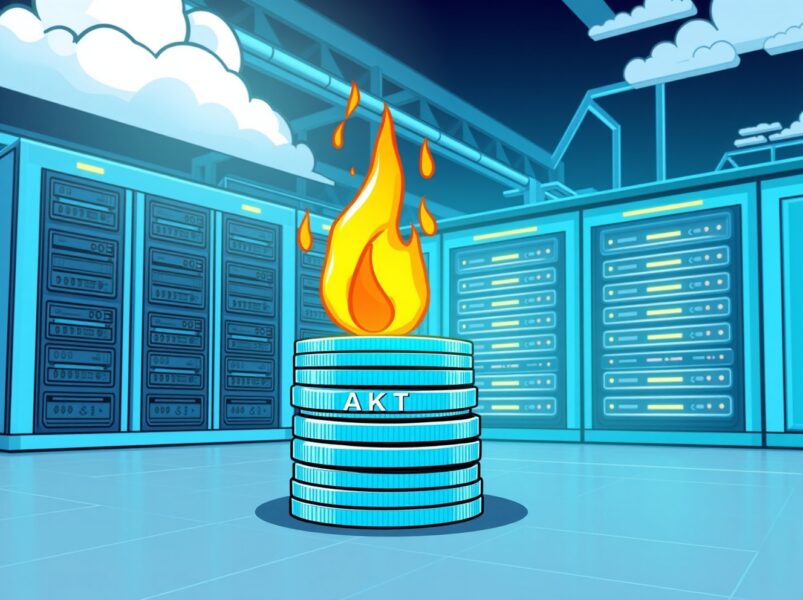
Akash Network’s Strategic Move: A Crucial Burn for AKT’s Future

Akash Network’s Strategic Move: A Crucial Burn for AKT’s Future

BitcoinWorld Akash Network’s Strategic Move: A Crucial Burn for AKT’s Future In the dynamic world of decentralized computing, exciting developments are constantly shaping the future. Today, all eyes are on Akash Network, the innovative supercloud project, as it proposes a significant change to its tokenomics. This move aims to strengthen the value of its native token, AKT, and further solidify its position in the competitive blockchain space. The community is buzzing about a newly submitted governance proposal that could introduce a game-changing Burn Mint Equilibrium (BME) model. What is the Burn Mint Equilibrium (BME) for Akash Network? The core of this proposal revolves around a concept called Burn Mint Equilibrium, or BME. Essentially, this model is designed to create a balance in the token’s circulating supply by systematically removing a portion of tokens from existence. For Akash Network, this means burning an amount of AKT that is equivalent to the U.S. dollar value of fees paid by network users. Fee Conversion: When users pay for cloud services on the Akash Network, these fees are typically collected in various cryptocurrencies or stablecoins. AKT Equivalence: The proposal suggests converting the U.S. dollar value of these collected fees into an equivalent amount of AKT. Token Burn: This calculated amount of AKT would then be permanently removed from circulation, or ‘burned’. This mechanism creates a direct link between network utility and token supply reduction. As more users utilize the decentralized supercloud, more AKT will be burned, potentially impacting the token’s scarcity and value. Why is This Proposal Crucial for AKT Holders? For anyone holding AKT, or considering investing in the Akash Network ecosystem, this proposal carries significant weight. Token burning mechanisms are often viewed as a positive development because they can lead to increased scarcity. When supply decreases while demand remains constant or grows, the price per unit tends to increase. Here are some key benefits: Increased Scarcity: Burning tokens reduces the total circulating supply of AKT. This makes each remaining token potentially more valuable over time. Demand-Supply Dynamics: The BME model directly ties the burning of AKT to network usage. Higher adoption of the Akash Network supercloud translates into more fees, and thus more AKT burned. Long-Term Value Proposition: By creating a deflationary pressure, the proposal aims to enhance AKT’s long-term value, making it a more attractive asset for investors and long-term holders. This strategic move demonstrates a commitment from the Akash Network community to optimize its tokenomics for sustainable growth and value appreciation. How Does BME Impact the Decentralized Supercloud Mission? Beyond token value, the BME proposal aligns perfectly with the broader mission of the Akash Network. As a decentralized supercloud, Akash provides a marketplace for cloud computing resources, allowing users to deploy applications faster, more efficiently, and at a lower cost than traditional providers. The BME model reinforces this utility. Consider these impacts: Network Health: A stronger AKT token can incentivize more validators and providers to secure and contribute resources to the network, improving its overall health and resilience. Ecosystem Growth: Enhanced token value can attract more developers and projects to build on the Akash Network, fostering a vibrant and diverse ecosystem. User Incentive: While users pay fees, the potential appreciation of AKT could indirectly benefit those who hold the token, creating a circular economy within the supercloud. This proposal is not just about burning tokens; it’s about building a more robust, self-sustaining, and economically sound decentralized cloud infrastructure for the future. What Are the Next Steps for the Akash Network Community? As a governance proposal, the BME model will now undergo a period of community discussion and voting. This is a crucial phase where AKT holders and network participants can voice their opinions, debate the merits, and ultimately decide on the future direction of the project. Transparency and community engagement are hallmarks of decentralized projects like Akash Network. Challenges and Considerations: Implementation Complexity: Ensuring the burning mechanism is technically sound and transparent will be vital. Community Consensus: Achieving broad agreement within the diverse Akash Network community is key for successful adoption. The outcome of this vote will significantly shape the tokenomics and economic model of the Akash Network, influencing its trajectory in the rapidly evolving decentralized cloud landscape. The proposal to introduce a Burn Mint Equilibrium model represents a bold and strategic step for Akash Network. By directly linking network usage to token scarcity, the project aims to create a more resilient and valuable AKT token, ultimately strengthening its position as a leading decentralized supercloud provider. This move underscores the project’s commitment to innovative tokenomics and sustainable growth, promising an exciting future for both users and investors in the Akash Network ecosystem. It’s a clear signal that Akash is actively working to enhance its value proposition and maintain its competitive edge in the decentralized future. Frequently Asked Questions (FAQs) 1. What is the main goal of the Burn Mint Equilibrium (BME) proposal for Akash Network? The primary goal is to adjust the circulating supply of AKT tokens by burning a portion of network fees, thereby creating deflationary pressure and potentially enhancing the token’s long-term value and scarcity. 2. How will the amount of AKT to be burned be determined? The proposal suggests burning an amount of AKT equivalent to the U.S. dollar value of fees paid by users on the Akash Network for cloud services. 3. What are the potential benefits for AKT token holders? Token holders could benefit from increased scarcity of AKT, which may lead to higher demand and appreciation in value over time, especially as network usage grows. 4. How does this proposal relate to the overall mission of Akash Network? The BME model reinforces the Akash Network‘s mission by creating a stronger, more economically robust ecosystem. A healthier token incentivizes network participants, fostering growth and stability for the decentralized supercloud. 5. What is the next step for this governance proposal? The proposal will undergo a period of community discussion and voting by AKT token holders. The community’s decision will determine if the BME model is implemented on the Akash Network. If you found this article insightful, consider sharing it with your network! Your support helps us bring more valuable insights into the world of decentralized technology. Stay informed and help spread the word about the exciting developments happening within Akash Network. To learn more about the latest crypto market trends, explore our article on key developments shaping decentralized cloud solutions price action. This post Akash Network’s Strategic Move: A Crucial Burn for AKT’s Future first appeared on BitcoinWorld.
Paylaş
Coinstats2025/09/22 21:35