The post Trump’s Crypto Gains Risk Backlash Post-Presidency, Ethereum Veteran Advises Urgency appeared on BitcoinEthereumNews.com. President Trump’s administrationThe post Trump’s Crypto Gains Risk Backlash Post-Presidency, Ethereum Veteran Advises Urgency appeared on BitcoinEthereumNews.com. President Trump’s administration

Trump’s Crypto Gains Risk Backlash Post-Presidency, Ethereum Veteran Advises Urgency

  • Trump’s pro-crypto stance has led to landmark laws supporting stablecoins and digital assets.

  • The administration’s personal crypto ventures, including meme coins and stablecoin projects, have sparked political tensions and Democratic protests.

  • Experts like Danny Ryan emphasize onboarding institutions now to prevent reversal, citing data showing over $1 billion in Trump family crypto profits.

Explore Trump’s crypto legacy: From GENIUS Act wins to backlash risks. Discover how the industry can secure its future amid political shifts. Stay informed on cryptocurrency regulation today.

What is the impact of Trump’s crypto policies on the industry?

Trump’s crypto policies have marked a significant shift toward mainstream acceptance, with the passage of the GENIUS Act in July providing a legal framework for stablecoin issuance and broader digital asset integration. This legislation has opened doors for institutional involvement, fostering innovation in blockchain technology and financial services. However, these advancements are tempered by concerns over the administration’s personal financial stakes in crypto, which have fueled partisan divides and could invite regulatory reversals under a new government, according to insights from industry leaders.

The administration’s embrace of cryptocurrency extends beyond legislation. President Trump launched an officially licensed meme coin just before his January inauguration, followed swiftly by First Lady Melania Trump’s own venture. These moves, while boosting crypto’s visibility, have drawn sharp criticism for blurring lines between public policy and private gain. Senators have labeled such events as emblematic of corruption, highlighting the need for the industry to build resilient foundations independent of any single administration.

Furthermore, the Trump family’s involvement in World Liberty Financial, which issued a dollar-pegged stablecoin and plans additional products, underscores the dual-edged nature of this era. Eric Trump revealed in October that the family had already amassed profits exceeding $1 billion from these endeavors. While this capital influx signals strong market confidence, it has complicated legislative efforts, as seen in Democratic walkouts during hearings on the CLARITY Act. These incidents reveal how personal interests may hinder unified progress, potentially stalling the industry’s momentum.

How might a post-Trump administration affect cryptocurrency regulation?

A transition away from the current administration could usher in heightened scrutiny and possible rollbacks of pro-crypto measures, driven by unresolved conflicts of interest and partisan frustrations. Danny Ryan, co-founder of institutional marketing firm Etherealize and a former Ethereum developer, shared in an interview with COINOTAG that the industry must capitalize on the present window to integrate deeply with global finance. “If, during this window, we significantly onboard financial institutions, global capital, and capital markets, it’s not going to be this binary conversation of: Should it exist? Should it not?” Ryan explained. He stressed that embedding crypto as essential infrastructure would shift debates from existence to responsible utilization.

Supporting this view, Ryan noted the palpable tension during congressional testimonies, such as those for the CLARITY Act led by Etherealize co-founder Vivek Raman. Democrats, focused on Trump’s ventures, often sidetracked substantive discussions, asking timid or irrelevant questions amid the political climate. Data from regulatory filings and market analyses indicate that stablecoin market capitalization has surged over 200% since the GENIUS Act, per reports from financial watchdogs like the SEC, yet political volatility remains a risk factor. Ryan, who once considered exiting crypto after SEC scrutiny during his Ethereum Foundation days, rejoined the fray inspired by Trump’s meme coin launch, viewing it as a pivotal swing toward acceptance.

To mitigate backlash, the industry should prioritize de-politicization. Ryan, speaking at the ETH Capital Summit in Argentina, advocated demonstrating crypto’s utility akin to the internet: indispensable and embedded in daily operations. “Maybe we can de-politicize it a little bit. Maybe we can show that it’s a useful tool and valuable,” he said. Statistics from blockchain analytics firms reveal that institutional adoption has risen 150% year-over-year, with major banks piloting crypto custody solutions. If future regulators aim to “re-sculpt” the landscape, Ryan predicts it would involve refinements rather than outright elimination, though he cautions that the political arena’s unpredictability defies forecasts.

Broader implications include potential impacts on innovation hubs. The GENIUS Act’s rocky passage, marked by Democratic protests over conflict-of-interest clauses, illustrates how personal stakes can derail consensus. House Democrats’ walkout from a digital assets hearing exemplifies this divide, demanding restrictions on presidential crypto engagements. As Etherealize works to bridge traditional finance and blockchain, Ryan’s expertise—rooted in Ethereum’s foundational development—lends credibility to calls for swift action. By fostering partnerships with global capital markets, the sector can transition from speculative asset to vital economic tool, insulating itself against electoral shifts.

Frequently Asked Questions

What conflicts of interest have arisen from Trump’s crypto ventures?

President Trump’s family has launched multiple crypto projects, including a meme coin and World Liberty Financial’s stablecoin, generating over $1 billion in profits as confirmed by Eric Trump in October. These ventures have prompted accusations of corruption, leading to Democratic protests and demands for ethical safeguards in legislation like the GENIUS Act, potentially slowing regulatory progress.

Why is the crypto industry pushing for rapid institutional adoption now?

The current pro-crypto environment under Trump offers a unique opportunity to integrate blockchain with traditional finance before a possible administration change brings backlash. As Danny Ryan of Etherealize notes, onboarding institutions now establishes crypto as critical infrastructure, making it harder to dismantle and shifting focus to responsible use rather than outright bans—much like the internet’s entrenched role today.

Key Takeaways

  • Legislative Wins Under Trump: The GENIUS Act has created stablecoin frameworks, boosting market growth by over 200%, but partisan conflicts threaten sustainability.
  • Personal Ventures Fuel Backlash: Family profits exceeding $1 billion from meme coins and stablecoins have sparked protests, complicating bills like the CLARITY Act and highlighting ethical concerns.
  • Strategic Onboarding Essential: Experts urge immediate institutional integration to de-politicize crypto, ensuring it becomes indispensable infrastructure resilient to future regulatory shifts.

Conclusion

President Trump’s crypto policies have undeniably accelerated the industry’s integration into mainstream finance through pivotal legislation like the GENIUS Act and increased institutional interest. Yet, the shadow of potential post-Trump cryptocurrency regulation backlash looms large, fueled by perceived conflicts and political divides. As Danny Ryan of Etherealize advises, the path forward lies in demonstrating crypto’s fundamental value to global markets, embedding it deeply to weather upcoming changes. By acting decisively, the sector can evolve from a politically charged novelty to a reliable economic pillar, paving the way for sustained innovation and adoption in the years ahead.

Source: https://en.coinotag.com/trumps-crypto-gains-risk-backlash-post-presidency-ethereum-veteran-advises-urgency

Piyasa Fırsatı
OFFICIAL TRUMP Logosu
OFFICIAL TRUMP Fiyatı(TRUMP)
$5.107
$5.107$5.107
-0.35%
USD
OFFICIAL TRUMP (TRUMP) Canlı Fiyat Grafiği
Sorumluluk Reddi: Bu sitede yeniden yayınlanan makaleler, halka açık platformlardan alınmıştır ve yalnızca bilgilendirme amaçlıdır. MEXC'nin görüşlerini yansıtmayabilir. Tüm hakları telif sahiplerine aittir. Herhangi bir içeriğin üçüncü taraf haklarını ihlal ettiğini düşünüyorsanız, kaldırılması için lütfen service@support.mexc.com ile iletişime geçin. MEXC, içeriğin doğruluğu, eksiksizliği veya güncelliği konusunda hiçbir garanti vermez ve sağlanan bilgilere dayalı olarak alınan herhangi bir eylemden sorumlu değildir. İçerik, finansal, yasal veya diğer profesyonel tavsiye niteliğinde değildir ve MEXC tarafından bir tavsiye veya onay olarak değerlendirilmemelidir.

Ayrıca Şunları da Beğenebilirsiniz

The Role of Blockchain in Building Safer Web3 Gaming Ecosystems

The Role of Blockchain in Building Safer Web3 Gaming Ecosystems

The gaming industry is in the midst of a historic shift, driven by the rise of Web3. Unlike traditional games, where developers and publishers control assets and dictate in-game economies, Web3 gaming empowers players with ownership and influence. Built on blockchain technology, these ecosystems are decentralized by design, enabling true digital asset ownership, transparent economies, and a future where players help shape the games they play. However, as Web3 gaming grows, security becomes a focal point. The range of security concerns, from hacking to asset theft to vulnerabilities in smart contracts, is a significant issue that will undermine or erode trust in this ecosystem, limiting or stopping adoption. Blockchain technology could be used to create security processes around secure, transparent, and fair Web3 gaming ecosystems. We will explore how security is increasing within gaming ecosystems, which challenges are being overcome, and what the future of security looks like. Why is Security Important in Web3 Gaming? Web3 gaming differs from traditional gaming in that players engage with both the game and assets with real value attached. Players own in-game assets that exist as tokens or NFTs (Non-Fungible Tokens), and can trade and sell them. These game assets usually represent significant financial value, meaning security failure could represent real monetary loss. In essence, without security, the promises of owning “something” in Web3, decentralized economies within games, and all that comes with the term “fair” gameplay can easily be eroded by fraud, hacking, and exploitation. This is precisely why the uniqueness of blockchain should be emphasized in securing Web3 gaming. How Blockchain Ensures Security in Web3 Gaming?
  1. Immutable Ownership of Assets Blockchain records can be manipulated by anyone. If a player owns a sword, skin, or plot of land as an NFT, it is verifiably in their ownership, and it cannot be altered or deleted by the developer or even hacked. This has created a proven track record of ownership, providing control back to the players, unlike any centralised gaming platform where assets can be revoked.
  2. Decentralized Infrastructure Blockchain networks also have a distributed architecture where game data is stored in a worldwide network of nodes, making them much less susceptible to centralised points of failure and attacks. This decentralised approach makes it exponentially more difficult to hijack systems or even shut off the game’s economy.
  3. Secure Transactions with Cryptography Whether a player buys an NFT or trades their in-game tokens for other items or tokens, the transactions are enforced by cryptographic algorithms, ensuring secure, verifiable, and irreversible transactions and eliminating the risks of double-spending or fraudulent trades.
  4. Smart Contract Automation Smart contracts automate the enforcement of game rules and players’ economic exchanges for the developer, eliminating the need for intermediaries or middlemen, and trust for the developer. For example, if a player completes a quest that promises a reward, the smart contract will execute and distribute what was promised.
  5. Anti-Cheating and Fair Gameplay The naturally transparent nature of blockchain makes it extremely simple for anyone to examine a specific instance of gameplay and verify the economic outcomes from that play. Furthermore, multi-player games that enforce smart contracts on things like loot sharing or win sharing can automate and measure trustlessness and avoid cheating, manipulations, and fraud by developers.
  6. Cross-Platform Security Many Web3 games feature asset interoperability across platforms. This interoperability is made viable by blockchain, which guarantees ownership is maintained whenever assets transition from one game or marketplace to another, thereby offering protection to players who rely on transfers for security against fraud. Key Security Dangers in Web3 Gaming Although blockchain provides sound first principles of security, the Web3 gaming ecosystem is susceptible to threats. Some of the most serious threats include:
Smart Contract Vulnerabilities: Smart contracts that are poorly written or lack auditing will leave openings for exploitation and thereby result in asset loss. Phishing Attacks: Unintentionally exposing or revealing private keys or signing transactions that are not possible to reverse, under the assumption they were genuine transaction requests. Bridge Hacks: Cross-chain bridges, which allow players to move their assets between their respective blockchains, continually face hacks, requiring vigilance from players and developers. Scams and Rug Pulls: Rug pulls occur when a game project raises money and leaves, leaving player assets worthless. Regulatory Ambiguity: Global regulations remain unclear; risks exist for players and developers alike. While blockchain alone won’t resolve every issue, it remediates the responsibility of the first principles, more so when joined by processes such as auditing, education, and the right governance, which can improve their contribution to the security landscapes in game ecosystems. Real Life Examples of Blockchain Security in Web3 Gaming Axie Infinity (Ronin Hack): The Axie Infinity game and several projects suffered one of the biggest hacks thus far on its Ronin bridge; however, it demonstrated the effectiveness of multi-sig security and the effective utilization of decentralization. The industry benefited through learning and reflection, thus, as projects have implemented changes to reduce the risks of future hacks or misappropriation. Immutable X: This Ethereum scaling solution aims to ensure secure NFT transactions for gaming, allowing players to trade an asset without the burden of exorbitant fees and fears of being a victim of fraud. Enjin: Enjin is providing a trusted infrastructure for Web3 games, offering secure NFT creation and transfer while reiterating that ownership and an asset securely belong to the player. These examples indubitably illustrate that despite challenges to overcome, blockchain remains the foundational layer on which to build more secure Web3 gaming environments. Benefits of Blockchain Security for Players and Developers For Players: Confidence in true ownership of assets Transparency in in-game economies Protection against nefarious trades/scams For Developers: More trust between players and the platform Less reliance on centralized infrastructure Ability to attract wealth and players based on provable fairness By incorporating blockchain security within the mechanics of game design, developers can create and enforce resilient ecosystems where players feel reassured in investing time, money, and ownership within virtual worlds. The Future of Secure Web3 Gaming Ecosystems As the wisdom of blockchain technology and industry knowledge improves, the future for secure Web3 gaming looks bright. New growing trends include: Zero-Knowledge Proofs (ZKPs): A new wave of protocols that enable private transactions and secure smart contracts while managing user privacy with an element of transparency. Decentralized Identity Solutions (DID): Helping players control their identities and decrease account theft risks. AI-Enhanced Security: Identifying irregularities in user interactions by sampling pattern anomalies to avert hacks and fraud by time-stamping critical events. Interoperable Security Standards: Allowing secured and seamless asset transfers across blockchains and games. With these innovations, blockchain will not only secure gaming assets but also enhance the overall trust and longevity of Web3 gaming ecosystems. Conclusion Blockchain is more than a buzzword in Web3; it is the only way to host security, fairness, and transparency. With blockchain, players confirm immutable ownership of digital assets, there is a decentralized infrastructure, and finally, it supports smart contracts to automate code that protects players and developers from the challenges of digital economies. The threats, vulnerabilities, and scams that come from smart contracts still persist, but the industry is maturing with better security practices, cross-chain solutions, and increased formal cryptographic tools. In the coming years, blockchain will remain the base to digital economies and drive Web3 gaming environments that allow players to safely own, trade, and enjoy their digital experiences free from fraud and exploitation. While blockchain and gaming alone entertain, we will usher in an era of secure digital worlds where trust complements innovation. The Role of Blockchain in Building Safer Web3 Gaming Ecosystems was originally published in Coinmonks on Medium, where people are continuing the conversation by highlighting and responding to this story
Paylaş
Medium2025/09/18 14:40
Will XRP Price Increase In September 2025?

Will XRP Price Increase In September 2025?

Ripple XRP is a cryptocurrency that primarily focuses on building a decentralised payments network to facilitate low-cost and cross-border transactions. It’s a native digital currency of the Ripple network, which works as a blockchain called the XRP Ledger (XRPL). It utilised a shared, distributed ledger to track account balances and transactions. What Do XRP Charts Reveal? […]
Paylaş
Tronweekly2025/09/18 00:00
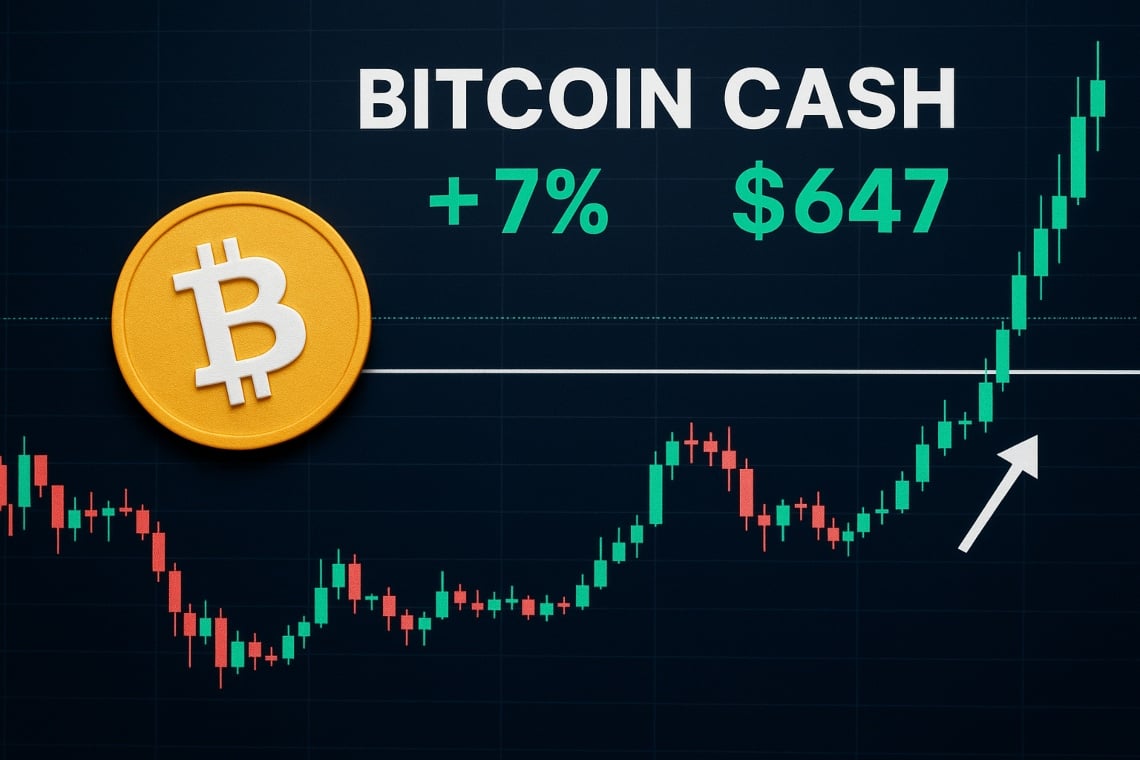
Bitcoin Cash: price +7% at $647, breakout and key levels (09/18/2025)

Bitcoin Cash: price +7% at $647, breakout and key levels (09/18/2025)

Bitcoin Cash gains 7% and reaches $647, hitting highs not seen since last April: the movement fits into a risk-on climate.
Paylaş
The Cryptonomist2025/09/18 21:47