European Central Bank president Christine Lagarde is warning that stablecoins pose serious liquidity risks unless policymakers close loopholes that let foreign issuers skirt EU rules. [...]European Central Bank president Christine Lagarde is warning that stablecoins pose serious liquidity risks unless policymakers close loopholes that let foreign issuers skirt EU rules. [...]

ECB’s Lagarde Warns Of Stablecoin Liquidity Risks: Don’t `Wait For A Crisis’
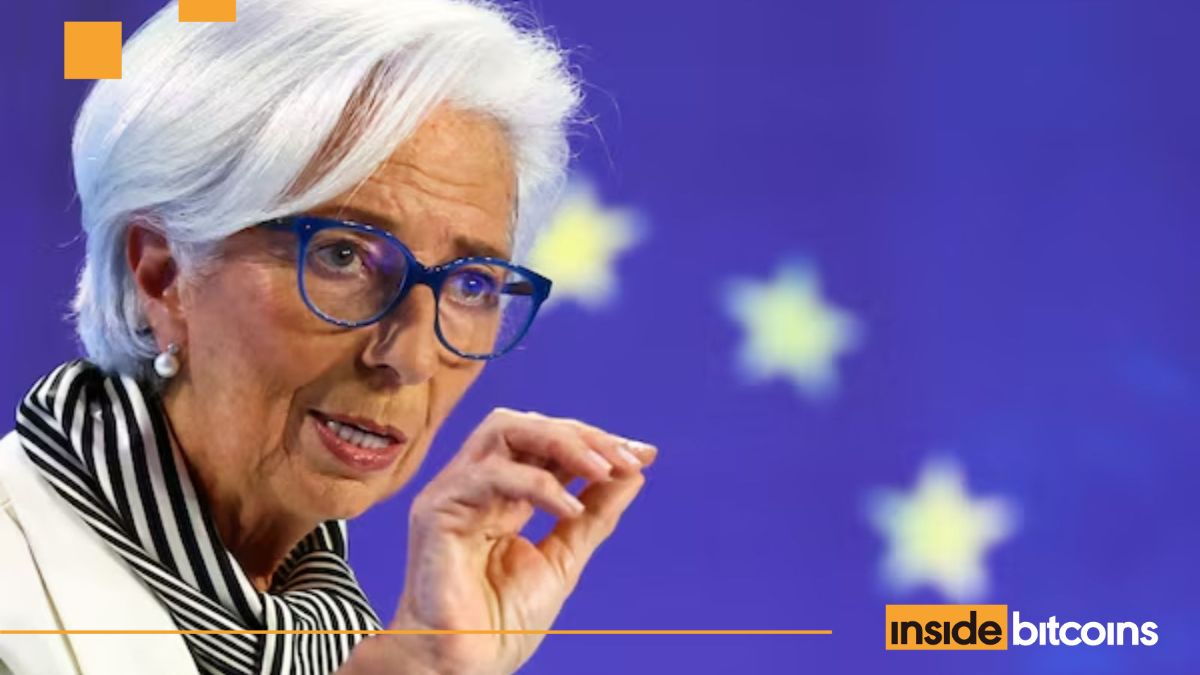
European Central Bank president Christine Lagarde is warning that stablecoins pose serious liquidity risks unless policymakers close loopholes that let foreign issuers skirt EU rules.

“We know the dangers,” she said in prepared remarks for the European Systemic Risk Board conference. “And we do not need to wait for a crisis to prevent them.”

Lagarde highlighted concerns over “multi-issuance schemes,” where stablecoins are jointly issued by entities inside and outside the EU.

She said such schemes could leave European investors exposed in a run, since non-EU issuers aren’t bound by the bloc’s Markets in Crypto Assets (MiCA) framework, which mandates safeguards like prohibiting redemption fees.

“In a crisis, investors would naturally prefer to redeem in the jurisdiction with the strongest safeguards,” she said. “But the reserves held in the EU may not be sufficient to meet such concentrated demand.”

She compared the risk to past banking mismanagement, emphasizing that liquidity shortfalls can be prevented with proper planning.

“The risk of liquidity mismanagement across jurisdictions is one we have seen before,” she said.

International Cooperation ”Indispensable” 

Lagarde said ”international cooperation is indispensable” and urged policymakers to not allow multi-issuance schemes to operate in the EU unless they are “supported by robust equivalence regimes in other jurisdictions.” 

In addition to the possible liquidity risks, ECB officials have already warned that Europe’s financial stability and autonomy might be at risk given the US Administration’s push to promote crypto assets and dollar-backed stablecoins. 

“The measures taken by the new US Administration to promote crypto-assets and US dollar-backed stablecoins raise concerns for Europe’s financial stability and strategic autonomy,” said Piero Cipollone, an executive board member at the ECB, in April. 

“They could potentially result not just in further losses of fees and data, but also in euro deposits being moved to the United States and in a further strengthening of the role of the dollar in cross-border payments,” Cipollone added. 

The ECB executive board member also noted that businesses “are increasingly open to accepting stablecoins for customer payments,” which “could have far-reaching implications for monetary sovereignty.” 

Stablecoin Market Booms After GENIUS Act Signing

The stablecoin market has grown by over $80 billion since the start of the year, with the sector’s capitalization climbing from around $204 billion in January to $285 billion as of Sept. 4, according to data from DefiLlama. 
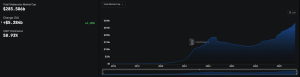
Stablecoin market overview

Stablecoin market overview (Source: DefiLlama)

That’s after US President Donald Trump signed the Guiding and Establishing National Innovation for US Stablecoins (GENIUS) Act into law on July 18. This is the first comprehensive US federal regulatory framework for stablecoins, bringing some clarity to a previously uncertain legal area. 

Similar to the MiCA framework, the GENIUS Act also establishes reserve requirements for issuers in the US, and also requires them to have anti-money laundering (AML) and counter-terrorism policies in place. It protects consumers as well, while still promoting innovation.

EU, US And China Kick Off Stablecoin Race

While the EU tries to address gaps in stablecoin regulations and the US progresses with establishing rules for issuers, China may also be exploring the launch of a yuan-backed stablecoin.

Reports last month suggested that the Chinese government was also considering a stablecoin backed by its renminbi currency because of the slow rollout of a digital yuan. 

Piyasa Fırsatı
Threshold Logosu
Threshold Fiyatı(T)
$0.00939
$0.00939$0.00939
-0.63%
USD
Threshold (T) Canlı Fiyat Grafiği
Sorumluluk Reddi: Bu sitede yeniden yayınlanan makaleler, halka açık platformlardan alınmıştır ve yalnızca bilgilendirme amaçlıdır. MEXC'nin görüşlerini yansıtmayabilir. Tüm hakları telif sahiplerine aittir. Herhangi bir içeriğin üçüncü taraf haklarını ihlal ettiğini düşünüyorsanız, kaldırılması için lütfen service@support.mexc.com ile iletişime geçin. MEXC, içeriğin doğruluğu, eksiksizliği veya güncelliği konusunda hiçbir garanti vermez ve sağlanan bilgilere dayalı olarak alınan herhangi bir eylemden sorumlu değildir. İçerik, finansal, yasal veya diğer profesyonel tavsiye niteliğinde değildir ve MEXC tarafından bir tavsiye veya onay olarak değerlendirilmemelidir.

Ayrıca Şunları da Beğenebilirsiniz

Visa Expands USDC Stablecoin Settlement For US Banks

Visa Expands USDC Stablecoin Settlement For US Banks

The post Visa Expands USDC Stablecoin Settlement For US Banks appeared on BitcoinEthereumNews.com. Visa Expands USDC Stablecoin Settlement For US Banks
Paylaş
BitcoinEthereumNews2025/12/17 15:23
Nasdaq Company Adds 7,500 BTC in Bold Treasury Move

Nasdaq Company Adds 7,500 BTC in Bold Treasury Move

The live-streaming and e-commerce company has struck a deal to acquire 7,500 BTC, instantly becoming one of the largest public […] The post Nasdaq Company Adds 7,500 BTC in Bold Treasury Move appeared first on Coindoo.
Paylaş
Coindoo2025/09/18 02:15
Curve Finance votes on revenue-sharing model for CRV holders

Curve Finance votes on revenue-sharing model for CRV holders

The post Curve Finance votes on revenue-sharing model for CRV holders appeared on BitcoinEthereumNews.com. Curve Finance has proposed a new protocol called Yield Basis that would share revenue directly with CRV holders, marking a shift from one-off incentives to sustainable income. Summary Curve Finance has put forward a revenue-sharing protocol to give CRV holders sustainable income beyond emissions and fees. The plan would mint $60M in crvUSD to seed three Bitcoin liquidity pools (WBTC, cbBTC, tBTC), with 35–65% of revenue distributed to veCRV stakers. The DAO vote runs from up to Sept. 24, with the proposal seen as a major step to strengthen CRV tokenomics after past liquidity and governance challenges. Curve Finance founder Michael Egorov has introduced a proposal to give CRV token holders a more direct way to earn income, launching a system called Yield Basis that aims to turn the governance token into a sustainable, yield-bearing asset.  The proposal has been published on the Curve DAO (CRV) governance forum, with voting open until Sept. 24. A new model for CRV rewards Yield Basis is designed to distribute transparent and consistent returns to CRV holders who lock their tokens for veCRV governance rights. Unlike past incentive programs, which relied heavily on airdrops and emissions, the protocol channels income from Bitcoin-focused liquidity pools directly back to token holders. To start, Curve would mint $60 million worth of crvUSD, its over-collateralized stablecoin, with proceeds allocated across three pools — WBTC, cbBTC, and tBTC — each capped at $10 million. 25% of Yield Basis tokens would be reserved for the Curve ecosystem, and between 35% and 65% of Yield Basis’s revenue would be given to veCRV holders. By emphasizing Bitcoin (BTC) liquidity and offering yields without the short-term loss risks associated with automated market makers, the protocol hopes to draw in professional traders and institutions. Context and potential impact on Curve Finance The proposal comes as Curve continues to modify…
Paylaş
BitcoinEthereumNews2025/09/18 14:37