The post Moscow Uses Pop Culture To Distract The Masses appeared on BitcoinEthereumNews.com. In August, the “Portal 2030-2050” electronic music festival hosted 110 DJs from 13 countries at the Moskino Film Factory and drew over 106,000 attendees. Tribune India The façade of “Fortress Russia” finally seems to be cracking. The Kremlin’s temporary war‑fueled fiscal boom is giving way to the laws of economics, as growth indicators nosedive and an unprecedented squeeze sets in. More than three-and-a-half years on, Russia’s war of choice against Ukraine is exacting a devastating cost –nearly $1 billion daily – for virtually nonexistent returns. In a rare moment of candor, nationalist senator (and former Deputy Prime Minister) Dmitry Rogozin recently admitted that the fight in Ukraine is at a stalemate, with the map only moving marginally and at a “colossal price.” None of this, of course, is reflected in official Russian propaganda, which keeps insisting that Russia’s war on its western neighbor is going well – and that the country has the means to sustain it pretty much indefinitely. But facts, as they say, are stubborn things. That’s why, as the economic problems grow, Putin’s government has increased its efforts to distract its population from the extent of the financial and political disaster it has brought upon them. This is evident in the holiday atmosphere that fills its capital city, featuring pop-up gardens, light shows, fountains, and theme parks. Street festivals are the most common form of such celebrations, with over 10,000 events held in Moscow this summer alone. Arguably the most prominent was last month’s “Portal 2030-2050” electronic music festival, which hosted 110 DJs from 13 countries at the Moskino Film Factory and drew over 106,000 attendees. The VIP list included names recognizable to any young club-goer: DJs like France’s Willy William, Spain’s Sak Noel, and Romania’s Edward Maya, as well as multimedia artists like John Dave. And,… The post Moscow Uses Pop Culture To Distract The Masses appeared on BitcoinEthereumNews.com. In August, the “Portal 2030-2050” electronic music festival hosted 110 DJs from 13 countries at the Moskino Film Factory and drew over 106,000 attendees. Tribune India The façade of “Fortress Russia” finally seems to be cracking. The Kremlin’s temporary war‑fueled fiscal boom is giving way to the laws of economics, as growth indicators nosedive and an unprecedented squeeze sets in. More than three-and-a-half years on, Russia’s war of choice against Ukraine is exacting a devastating cost –nearly $1 billion daily – for virtually nonexistent returns. In a rare moment of candor, nationalist senator (and former Deputy Prime Minister) Dmitry Rogozin recently admitted that the fight in Ukraine is at a stalemate, with the map only moving marginally and at a “colossal price.” None of this, of course, is reflected in official Russian propaganda, which keeps insisting that Russia’s war on its western neighbor is going well – and that the country has the means to sustain it pretty much indefinitely. But facts, as they say, are stubborn things. That’s why, as the economic problems grow, Putin’s government has increased its efforts to distract its population from the extent of the financial and political disaster it has brought upon them. This is evident in the holiday atmosphere that fills its capital city, featuring pop-up gardens, light shows, fountains, and theme parks. Street festivals are the most common form of such celebrations, with over 10,000 events held in Moscow this summer alone. Arguably the most prominent was last month’s “Portal 2030-2050” electronic music festival, which hosted 110 DJs from 13 countries at the Moskino Film Factory and drew over 106,000 attendees. The VIP list included names recognizable to any young club-goer: DJs like France’s Willy William, Spain’s Sak Noel, and Romania’s Edward Maya, as well as multimedia artists like John Dave. And,…

Moscow Uses Pop Culture To Distract The Masses

For feedback or concerns regarding this content, please contact us at crypto.news@mexc.com

In August, the “Portal 2030-2050” electronic music festival hosted 110 DJs from 13 countries at the Moskino Film Factory and drew over 106,000 attendees.

Tribune India

The façade of “Fortress Russia” finally seems to be cracking. The Kremlin’s temporary war‑fueled fiscal boom is giving way to the laws of economics, as growth indicators nosedive and an unprecedented squeeze sets in. More than three-and-a-half years on, Russia’s war of choice against Ukraine is exacting a devastating cost –nearly $1 billion daily – for virtually nonexistent returns. In a rare moment of candor, nationalist senator (and former Deputy Prime Minister) Dmitry Rogozin recently admitted that the fight in Ukraine is at a stalemate, with the map only moving marginally and at a “colossal price.”

None of this, of course, is reflected in official Russian propaganda, which keeps insisting that Russia’s war on its western neighbor is going well – and that the country has the means to sustain it pretty much indefinitely. But facts, as they say, are stubborn things. That’s why, as the economic problems grow, Putin’s government has increased its efforts to distract its population from the extent of the financial and political disaster it has brought upon them.

This is evident in the holiday atmosphere that fills its capital city, featuring pop-up gardens, light shows, fountains, and theme parks. Street festivals are the most common form of such celebrations, with over 10,000 events held in Moscow this summer alone.

Arguably the most prominent was last month’s “Portal 2030-2050” electronic music festival, which hosted 110 DJs from 13 countries at the Moskino Film Factory and drew over 106,000 attendees. The VIP list included names recognizable to any young club-goer: DJs like France’s Willy William, Spain’s Sak Noel, and Romania’s Edward Maya, as well as multimedia artists like John Dave. And, in keeping with Russia’s shifting geopolitical outlook, the festival had a distinctly Asian tilt, with ubiquitous performers, a range of Asian art workshops, and even a city-wide Korean pop dance contest presided over by a famous South Korean choreographer.

The event, in other words, was a microcosm of “soft power by subculture” – intended to showcase Moscow as a global stop on the festival circuit for the EDM, K-pop and digital-art communities. Their target audiences are younger, largely apolitical and highly mobile. The strategy is to capture niche fanbases with free spectacle and draw Gen Z and Gen Alpha into its soft power orbit.

Efforts to position Moscow as a trendy destination have achieved some success. Despite the dangers of being blacklisted, celebrities like Woody Allen and Luc Besson have participated in these events – although some do so virtually due to the logistical challenges of entering Russia. However, several do attend in person, encouraged by government officials eager to reshape the narrative about their country.

None of this is cheap. Prior estimates put the price tag for Moscow mass events in the hundreds of millions of dollars. Arguably, though, it could be seen as investment. The Moscow mayor’s office touts that, thanks to the “event tourism” initiative, a single summer now brings in more than half a billion dollars in hospitality‑related tax revenues and the festivals look as if they pay for themselves.

And, after maintaining a false calm at home, the Kremlin is now thinking even bigger. Along with its traditional propaganda efforts aimed at influencing foreign audiences, it has increasingly begun to use pop culture diplomacy as well. In fact, Russia’s government has even launched an international song contest to rival Europe’s top pop culture event, “Eurovision,” from which Russia has been officially banned since 2022, and which is mocked in Russia for its excessive “progressiveness.” Earlier this year, it formally revived a Soviet-era song competition to promote “traditional values” with Russia at its center.

For all this, the Kremlin is clearly willing to pay a steep price. It’s all part of a “business as usual” message designed to distract Russia’s potentially restive population, particularly its urban elites, from the real-world problems caused by President Putin’s war of choice. The only hitch? Such a strategy is inherently unsustainable. If the collapse of the USSR taught us anything, it’s that overly‑militarized economies can’t bankroll pageantry forever. When rulers choose guns over butter, first the butter disappears, then the bread and circuses do.

Earlier this month, President Trump surprised many when, after months of dulcet tones toward Russia, he announced an apparent about-face. In a widely-circulated TruthSocial post, the President declared that he now believes Ukraine “is in a position to fight and WIN all of Ukraine back in its original form.”

That reversal was based on a clearer understanding of Russia’s true economic state and the unsustainable nature of the Kremlin’s war effort. Despite their government’s current show, it’s only a matter of time until ordinary Russians realize the same thing.

Source: https://www.forbes.com/sites/ilanberman/2025/09/29/moscow-uses-pop-culture-to-distract-the-masses/

Market Opportunity
Zypher Network Logo
Zypher Network Price(POP)
$0.0020115
$0.0020115$0.0020115
+0.94%
USD
Zypher Network (POP) Live Price Chart
Disclaimer: The articles reposted on this site are sourced from public platforms and are provided for informational purposes only. They do not necessarily reflect the views of MEXC. All rights remain with the original authors. If you believe any content infringes on third-party rights, please contact crypto.news@mexc.com for removal. MEXC makes no guarantees regarding the accuracy, completeness, or timeliness of the content and is not responsible for any actions taken based on the information provided. The content does not constitute financial, legal, or other professional advice, nor should it be considered a recommendation or endorsement by MEXC.

You May Also Like

The Channel Factories We’ve Been Waiting For

The Channel Factories We’ve Been Waiting For

The post The Channel Factories We’ve Been Waiting For appeared on BitcoinEthereumNews.com. Visions of future technology are often prescient about the broad strokes while flubbing the details. The tablets in “2001: A Space Odyssey” do indeed look like iPads, but you never see the astronauts paying for subscriptions or wasting hours on Candy Crush.  Channel factories are one vision that arose early in the history of the Lightning Network to address some challenges that Lightning has faced from the beginning. Despite having grown to become Bitcoin’s most successful layer-2 scaling solution, with instant and low-fee payments, Lightning’s scale is limited by its reliance on payment channels. Although Lightning shifts most transactions off-chain, each payment channel still requires an on-chain transaction to open and (usually) another to close. As adoption grows, pressure on the blockchain grows with it. The need for a more scalable approach to managing channels is clear. Channel factories were supposed to meet this need, but where are they? In 2025, subnetworks are emerging that revive the impetus of channel factories with some new details that vastly increase their potential. They are natively interoperable with Lightning and achieve greater scale by allowing a group of participants to open a shared multisig UTXO and create multiple bilateral channels, which reduces the number of on-chain transactions and improves capital efficiency. Achieving greater scale by reducing complexity, Ark and Spark perform the same function as traditional channel factories with new designs and additional capabilities based on shared UTXOs.  Channel Factories 101 Channel factories have been around since the inception of Lightning. A factory is a multiparty contract where multiple users (not just two, as in a Dryja-Poon channel) cooperatively lock funds in a single multisig UTXO. They can open, close and update channels off-chain without updating the blockchain for each operation. Only when participants leave or the factory dissolves is an on-chain transaction…
Share
BitcoinEthereumNews2025/09/18 00:09
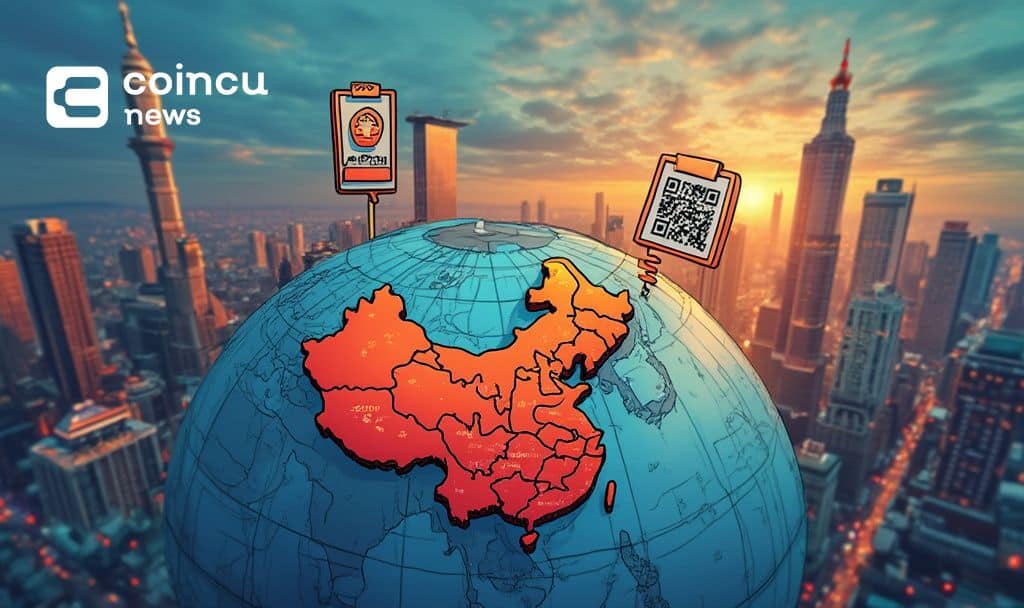
China Launches Cross-Border QR Code Payment Trial

China Launches Cross-Border QR Code Payment Trial

The post China Launches Cross-Border QR Code Payment Trial appeared on BitcoinEthereumNews.com. Key Points: Main event involves China initiating a cross-border QR code payment trial. Alipay and Ant International are key participants. Impact on financial security and regulatory focus on illicit finance. China’s central bank, led by Deputy Governor Lu Lei, initiated a trial of a unified cross-border QR code payment gateway with Alipay and Ant International as participants. This pilot addresses cross-border fund risks, aiming to enhance financial security amid rising money laundering through digital channels, despite muted crypto market reactions. China’s Cross-Border Payment Gateway Trial with Alipay The trial operation of a unified cross-border QR code payment gateway marks a milestone in China’s financial landscape. Prominent entities such as Alipay and Ant International are at the forefront, participating as the initial institutions in this venture. Lu Lei, Deputy Governor of the People’s Bank of China, highlighted the systemic risks posed by increased cross-border fund flows. Changes are expected in the dynamics of digital transactions, potentially enhancing transaction efficiency while tightening regulations around illicit finance. The initiative underscores China’s commitment to bolstering financial security amidst growing global fund movements. “The scale of cross-border fund flows is expanding, and the frequency is accelerating, providing opportunities for risks such as cross-border money laundering and terrorist financing. Some overseas illegal platforms transfer funds through channels such as virtual currencies and underground banks, creating a ‘resonance’ of risks at home and abroad, posing a challenge to China’s foreign exchange management and financial security.” — Lu Lei, Deputy Governor, People’s Bank of China Bitcoin and Impact of China’s Financial Initiatives Did you know? China’s latest initiative echoes the Payment Connect project of June 2025, furthering real-time cross-boundary remittances and expanding its influence on global financial systems. As of September 17, 2025, Bitcoin (BTC) stands at $115,748.72 with a market cap of $2.31 trillion, showing a 0.97%…
Share
BitcoinEthereumNews2025/09/18 05:28
Nvidia (NVDA) vs AMD: The Ultimate AI Stock Showdown for 2025

Nvidia (NVDA) vs AMD: The Ultimate AI Stock Showdown for 2025

Nvidia (NVDA) dominates AI chips with superior margins and ecosystem. AMD challenges but trails. Compare both stocks to determine your best AI investment. The post
Share
Blockonomi2026/03/15 19:42