The post Crypto Analyst Warns Quantum Computing Could Trigger Bitcoin’s Worst Bear Market Yet appeared first on Coinpedia Fintech News Crypto markets have always faced cycles of hype and correction, but a new kind of threat could change everything – quantum computing.  As this technology advances rapidly, experts warn that it could soon challenge the very cryptography that keeps Bitcoin and other cryptocurrencies secure. Is the threat as big as it sounds? Let’s explore. Bitcoin …The post Crypto Analyst Warns Quantum Computing Could Trigger Bitcoin’s Worst Bear Market Yet appeared first on Coinpedia Fintech News Crypto markets have always faced cycles of hype and correction, but a new kind of threat could change everything – quantum computing.  As this technology advances rapidly, experts warn that it could soon challenge the very cryptography that keeps Bitcoin and other cryptocurrencies secure. Is the threat as big as it sounds? Let’s explore. Bitcoin …

Crypto Analyst Warns Quantum Computing Could Trigger Bitcoin’s Worst Bear Market Yet
2025/10/23 17:17
3 min read
For feedback or concerns regarding this content, please contact us at crypto.news@mexc.com
Quantum Computing vs. Crypto

The post Crypto Analyst Warns Quantum Computing Could Trigger Bitcoin’s Worst Bear Market Yet appeared first on Coinpedia Fintech News

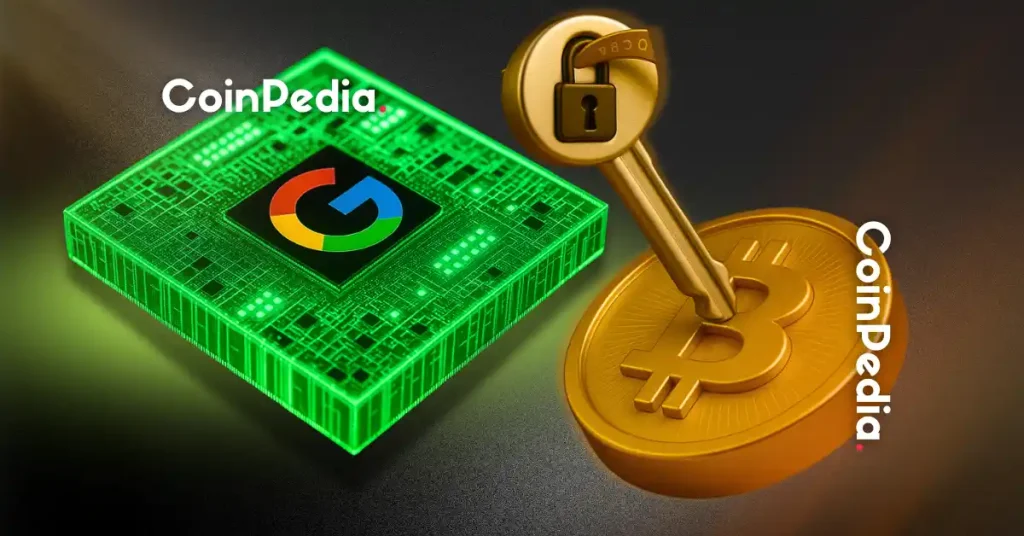
Crypto markets have always faced cycles of hype and correction, but a new kind of threat could change everything – quantum computing. 

As this technology advances rapidly, experts warn that it could soon challenge the very cryptography that keeps Bitcoin and other cryptocurrencies secure. Is the threat as big as it sounds? Let’s explore.

Bitcoin Bear Market Coming Soon?

Crypto analyst Charles Edwards says that he once believed that future Bitcoin bear markets would become milder over time as markets mature. But now, he warns that if the quantum threat is not addressed soon, possibly as early as next year, Bitcoin could face its biggest bear market ever.

At the Token 2049 event, Edwards discussed the current state of Bitcoin and crypto, highlighting two major threats to the market: treasury exposure and the growing power of quantum computing.

What is the Quantum Threat to Bitcoin Security?

Edwards explained that within 2–8 years, advanced quantum machines might break Bitcoin’s current elliptic curve encryption, and Satoshi’s coins could be dumped into the market. 

He noted that major tech companies like AWS, Google, Azure, Microsoft, IBM, and Meta are already deploying quantum systems, and even governments are investing billions to gain an edge. 

For example, China is spending twice as much as the U.S., and $55 billion has been committed to quantum industry in recent times.

Q-Day Could Be Closer Than Expected 

Multiple credible sources including McKinsey, suggest that “Q-Day”, the point when quantum computers could break classical encryption, could arrive within the next 2 to 10 years. Moreover, since the RSA encryption is stronger than Bitcoin’s elliptic curve cryptography, Bitcoin could be vulnerable even earlier than these estimates.

According to the 2017 Bitcoin Quantum Paper, only about 2,300 logical qubits would be needed to crack Bitcoin’s elliptic curve encryption. Vitalik Buterin, the co-founder of the second largest cryptocurrency believes that there is a 20% chance quantum computers may compromise cryptography by 2030. 

Upgrading the Bitcoin network to quantum-secure wallets could take between six months to a year, which means planning and development must start well in advance. Edwards believes that 2026 should be the target year for these upgrades to begin to avoid serious risks.

What Can You Do?

Edwards has encouraged the community to engage with Bitcoin Improvement Proposals (BIPs), advocate for upgrades, and raise awareness. 

If the quantum threat is not addressed soon, crypto markets could face serious turmoil. The community must act now to secure Bitcoin’s future.


Market Opportunity
QUANTUM Logo
QUANTUM Price(QUANTUM)
$0.002862
$0.002862$0.002862
+0.59%
USD
QUANTUM (QUANTUM) Live Price Chart
Disclaimer: The articles reposted on this site are sourced from public platforms and are provided for informational purposes only. They do not necessarily reflect the views of MEXC. All rights remain with the original authors. If you believe any content infringes on third-party rights, please contact crypto.news@mexc.com for removal. MEXC makes no guarantees regarding the accuracy, completeness, or timeliness of the content and is not responsible for any actions taken based on the information provided. The content does not constitute financial, legal, or other professional advice, nor should it be considered a recommendation or endorsement by MEXC.

You May Also Like

[Finterest] How do you start saving with Pag-IBIG’s MP2 program?

[Finterest] How do you start saving with Pag-IBIG’s MP2 program?

MP2 may be right for you if you have a conservative risk appetite and an investment horizon of at least 5 years
Share
Rappler2026/03/12 13:05
XRP steadies near $1.38 as Bollinger squeeze hints at breakout before CPI

XRP steadies near $1.38 as Bollinger squeeze hints at breakout before CPI

Markets Share Share this article
Copy linkX (Twitter)LinkedInFacebookEmail
XRP steadies near $1.38 as Bollinger squeeze
Share
Coindesk2026/03/12 13:15
Google's AP2 protocol has been released. Does encrypted AI still have a chance?

Google's AP2 protocol has been released. Does encrypted AI still have a chance?

Following the MCP and A2A protocols, the AI Agent market has seen another blockbuster arrival: the Agent Payments Protocol (AP2), developed by Google. This will clearly further enhance AI Agents' autonomous multi-tasking capabilities, but the unfortunate reality is that it has little to do with web3AI. Let's take a closer look: What problem does AP2 solve? Simply put, the MCP protocol is like a universal hook, enabling AI agents to connect to various external tools and data sources; A2A is a team collaboration communication protocol that allows multiple AI agents to cooperate with each other to complete complex tasks; AP2 completes the last piece of the puzzle - payment capability. In other words, MCP opens up connectivity, A2A promotes collaboration efficiency, and AP2 achieves value exchange. The arrival of AP2 truly injects "soul" into the autonomous collaboration and task execution of Multi-Agents. Imagine AI Agents connecting Qunar, Meituan, and Didi to complete the booking of flights, hotels, and car rentals, but then getting stuck at the point of "self-payment." What's the point of all that multitasking? So, remember this: AP2 is an extension of MCP+A2A, solving the last mile problem of AI Agent automated execution. What are the technical highlights of AP2? The core innovation of AP2 is the Mandates mechanism, which is divided into real-time authorization mode and delegated authorization mode. Real-time authorization is easy to understand. The AI Agent finds the product and shows it to you. The operation can only be performed after the user signs. Delegated authorization requires the user to set rules in advance, such as only buying the iPhone 17 when the price drops to 5,000. The AI Agent monitors the trigger conditions and executes automatically. The implementation logic is cryptographically signed using Verifiable Credentials (VCs). Users can set complex commission conditions, including price ranges, time limits, and payment method priorities, forming a tamper-proof digital contract. Once signed, the AI Agent executes according to the conditions, with VCs ensuring auditability and security at every step. Of particular note is the "A2A x402" extension, a technical component developed by Google specifically for crypto payments, developed in collaboration with Coinbase and the Ethereum Foundation. This extension enables AI Agents to seamlessly process stablecoins, ETH, and other blockchain assets, supporting native payment scenarios within the Web3 ecosystem. What kind of imagination space can AP2 bring? After analyzing the technical principles, do you think that's it? Yes, in fact, the AP2 is boring when it is disassembled alone. Its real charm lies in connecting and opening up the "MCP+A2A+AP2" technology stack, completely opening up the complete link of AI Agent's autonomous analysis+execution+payment. From now on, AI Agents can open up many application scenarios. For example, AI Agents for stock investment and financial management can help us monitor the market 24/7 and conduct independent transactions. Enterprise procurement AI Agents can automatically replenish and renew without human intervention. AP2's complementary payment capabilities will further expand the penetration of the Agent-to-Agent economy into more scenarios. Google obviously understands that after the technical framework is established, the ecological implementation must be relied upon, so it has brought in more than 60 partners to develop it, almost covering the entire payment and business ecosystem. Interestingly, it also involves major Crypto players such as Ethereum, Coinbase, MetaMask, and Sui. Combined with the current trend of currency and stock integration, the imagination space has been doubled. Is web3 AI really dead? Not entirely. Google's AP2 looks complete, but it only achieves technical compatibility with Crypto payments. It can only be regarded as an extension of the traditional authorization framework and belongs to the category of automated execution. There is a "paradigm" difference between it and the autonomous asset management pursued by pure Crypto native solutions. The Crypto-native solutions under exploration are taking the "decentralized custody + on-chain verification" route, including AI Agent autonomous asset management, AI Agent autonomous transactions (DeFAI), AI Agent digital identity and on-chain reputation system (ERC-8004...), AI Agent on-chain governance DAO framework, AI Agent NPC and digital avatars, and many other interesting and fun directions. Ultimately, once users get used to AI Agent payments in traditional fields, their acceptance of AI Agents autonomously owning digital assets will also increase. And for those scenarios that AP2 cannot reach, such as anonymous transactions, censorship-resistant payments, and decentralized asset management, there will always be a time for crypto-native solutions to show their strength? The two are more likely to be complementary rather than competitive, but to be honest, the key technological advancements behind AI Agents currently all come from web2AI, and web3AI still needs to keep up the good work!
Share
PANews2025/09/18 07:00