Author: Michael Nadeau Compiled by: Plain Language Blockchain The post-pandemic era has been defined by fiscal dominance—an economy driven by government deficits and short-term Treasury bond issuance, with liquidity remaining high even as the Federal Reserve maintains high interest rates. Today, we are entering a phase dominated by the private sector, where the Treasury is withdrawing liquidity through tariffs and spending restrictions, unlike the previous administration. That's why interest rates need to fall. We analyze the current cycle from the perspective of global liquidity to emphasize why the current round of "devaluation trading" has reached its final stage. Is fiscal dominance coming to an end? We always hope to "buy the dip" when everyone else is "chasing the rise". That's why all the recent discussions about "devaluation trading" have caught our attention. Data: Google Trends We believe the interest in "devaluation trading" arose a few years ago. At that time, Bitcoin was priced at $25,000 and gold at $2,000. Back then, nobody talked about it except cryptocurrency and macro analysts. In our view, this "deal" is essentially complete. Therefore, our task is to understand the conditions that created it, and whether those conditions will continue to exist. What drove this deal? In our view, there are mainly two factors. 1. Treasury spending. During the Biden administration, we implemented a large-scale fiscal deficit. Data: US Treasury The fiscal year 2025 has just ended, and the deficit has narrowed slightly—primarily due to increased taxes (tariffs) rather than reduced spending. However, the Big Beautiful Bill is expected to achieve spending cuts by reducing benefits from Medicaid and the Supplemental Nutrition Assistance Program (SNAP). Data: Comparison of KFF (Kaiser Family Foundation) cuts with current spending trajectory During Biden's presidency, government spending and transfer payments continuously injected liquidity into the economy. However, under the Great America Act, spending growth slowed. This means that the government is injecting less money into the economy. In addition, the government is withdrawing funds from the economy through tariffs. Data: FRED (St. Louis Federal Reserve Economic Data) The combination of spending restrictions (relative to the previous administration) and increased tariffs means that the Treasury is now absorbing liquidity rather than supplying it. This is why we need to cut interest rates. "We will privatize the economy, revitalize the private sector, and shrink the government." - Scott Bessent 2. "Treasury QE". To fund the excessive spending by the Treasury during the Biden administration, we also saw a new form of "quantitative easing" (QE). We can observe this below (black line). "Treasury QE" supported the market by funding government spending through short-term notes rather than long-term bonds. Data: Global Liquidity Index We believe that fiscal spending and quantitative easing by the Treasury have fueled the “devaluation trade” and “everything bubble” that we have seen in the past few years. But now we are transitioning to a "Trump economy," with the private sector taking over the reins from the Treasury. Similarly, this is why they need to lower interest rates. They need to use bank loans to stimulate the private sector. As we enter this transition period, the global liquidity cycle appears to be peaking... The global liquidity cycle is peaking and declining. Current cycle and average cycle Below, we can observe a comparison between the current cycle (red line) and the historical average cycle (gray line) since 1970. Data: Global Liquidity Index Asset allocation Based on Mr. Howell's work on global liquidity indices, we can observe typical liquidity cycles and their alignment with asset allocation. Commodities are often the last assets to fall, which is exactly what we are seeing today (gold, silver, copper, palladium). From this perspective, the current cycle looks very typical. Data: Global Liquidity Index So, if liquidity is indeed peaking, we expect investors to rotate into cash and bonds as the environment changes. To be clear, this process hasn't even begun yet (the market remains "risk-averse"). Debt and Liquidity According to the Global Liquidity Index, the debt-to-liquidity ratio of major economies reached its lowest level since 1980 at the end of last year. It is now rising and is expected to continue rising until 2026. Data: Global Liquidity Index The rising debt-to-liquidity ratio makes it more difficult to service trillions of dollars of outstanding debt that need to be refinanced. Data: Global Liquidity Index Bitcoin and Global Liquidity Of course, Bitcoin has "foreshadowed" peak global liquidity in the past two cycles. In other words, Bitcoin peaked months before liquidity peaked and began to decline, seemingly anticipating the subsequent drop. Data: Global Liquidity Index We don't know if this is happening right now. But we do know that cryptocurrency cycles always closely follow liquidity cycles. Alignment with the cryptocurrency cycle Data: Global Liquidity IndexAuthor: Michael Nadeau Compiled by: Plain Language Blockchain The post-pandemic era has been defined by fiscal dominance—an economy driven by government deficits and short-term Treasury bond issuance, with liquidity remaining high even as the Federal Reserve maintains high interest rates. Today, we are entering a phase dominated by the private sector, where the Treasury is withdrawing liquidity through tariffs and spending restrictions, unlike the previous administration. That's why interest rates need to fall. We analyze the current cycle from the perspective of global liquidity to emphasize why the current round of "devaluation trading" has reached its final stage. Is fiscal dominance coming to an end? We always hope to "buy the dip" when everyone else is "chasing the rise". That's why all the recent discussions about "devaluation trading" have caught our attention. Data: Google Trends We believe the interest in "devaluation trading" arose a few years ago. At that time, Bitcoin was priced at $25,000 and gold at $2,000. Back then, nobody talked about it except cryptocurrency and macro analysts. In our view, this "deal" is essentially complete. Therefore, our task is to understand the conditions that created it, and whether those conditions will continue to exist. What drove this deal? In our view, there are mainly two factors. 1. Treasury spending. During the Biden administration, we implemented a large-scale fiscal deficit. Data: US Treasury The fiscal year 2025 has just ended, and the deficit has narrowed slightly—primarily due to increased taxes (tariffs) rather than reduced spending. However, the Big Beautiful Bill is expected to achieve spending cuts by reducing benefits from Medicaid and the Supplemental Nutrition Assistance Program (SNAP). Data: Comparison of KFF (Kaiser Family Foundation) cuts with current spending trajectory During Biden's presidency, government spending and transfer payments continuously injected liquidity into the economy. However, under the Great America Act, spending growth slowed. This means that the government is injecting less money into the economy. In addition, the government is withdrawing funds from the economy through tariffs. Data: FRED (St. Louis Federal Reserve Economic Data) The combination of spending restrictions (relative to the previous administration) and increased tariffs means that the Treasury is now absorbing liquidity rather than supplying it. This is why we need to cut interest rates. "We will privatize the economy, revitalize the private sector, and shrink the government." - Scott Bessent 2. "Treasury QE". To fund the excessive spending by the Treasury during the Biden administration, we also saw a new form of "quantitative easing" (QE). We can observe this below (black line). "Treasury QE" supported the market by funding government spending through short-term notes rather than long-term bonds. Data: Global Liquidity Index We believe that fiscal spending and quantitative easing by the Treasury have fueled the “devaluation trade” and “everything bubble” that we have seen in the past few years. But now we are transitioning to a "Trump economy," with the private sector taking over the reins from the Treasury. Similarly, this is why they need to lower interest rates. They need to use bank loans to stimulate the private sector. As we enter this transition period, the global liquidity cycle appears to be peaking... The global liquidity cycle is peaking and declining. Current cycle and average cycle Below, we can observe a comparison between the current cycle (red line) and the historical average cycle (gray line) since 1970. Data: Global Liquidity Index Asset allocation Based on Mr. Howell's work on global liquidity indices, we can observe typical liquidity cycles and their alignment with asset allocation. Commodities are often the last assets to fall, which is exactly what we are seeing today (gold, silver, copper, palladium). From this perspective, the current cycle looks very typical. Data: Global Liquidity Index So, if liquidity is indeed peaking, we expect investors to rotate into cash and bonds as the environment changes. To be clear, this process hasn't even begun yet (the market remains "risk-averse"). Debt and Liquidity According to the Global Liquidity Index, the debt-to-liquidity ratio of major economies reached its lowest level since 1980 at the end of last year. It is now rising and is expected to continue rising until 2026. Data: Global Liquidity Index The rising debt-to-liquidity ratio makes it more difficult to service trillions of dollars of outstanding debt that need to be refinanced. Data: Global Liquidity Index Bitcoin and Global Liquidity Of course, Bitcoin has "foreshadowed" peak global liquidity in the past two cycles. In other words, Bitcoin peaked months before liquidity peaked and began to decline, seemingly anticipating the subsequent drop. Data: Global Liquidity Index We don't know if this is happening right now. But we do know that cryptocurrency cycles always closely follow liquidity cycles. Alignment with the cryptocurrency cycle Data: Global Liquidity Index
Is the global liquidity cycle peaking? Is the Bitcoin bull market over?

2025/11/05 07:00

Author: Michael Nadeau

Compiled by: Plain Language Blockchain

The post-pandemic era has been defined by fiscal dominance—an economy driven by government deficits and short-term Treasury bond issuance, with liquidity remaining high even as the Federal Reserve maintains high interest rates.

Today, we are entering a phase dominated by the private sector, where the Treasury is withdrawing liquidity through tariffs and spending restrictions, unlike the previous administration.

That's why interest rates need to fall.

We analyze the current cycle from the perspective of global liquidity to emphasize why the current round of "devaluation trading" has reached its final stage.

Is fiscal dominance coming to an end?

We always hope to "buy the dip" when everyone else is "chasing the rise".

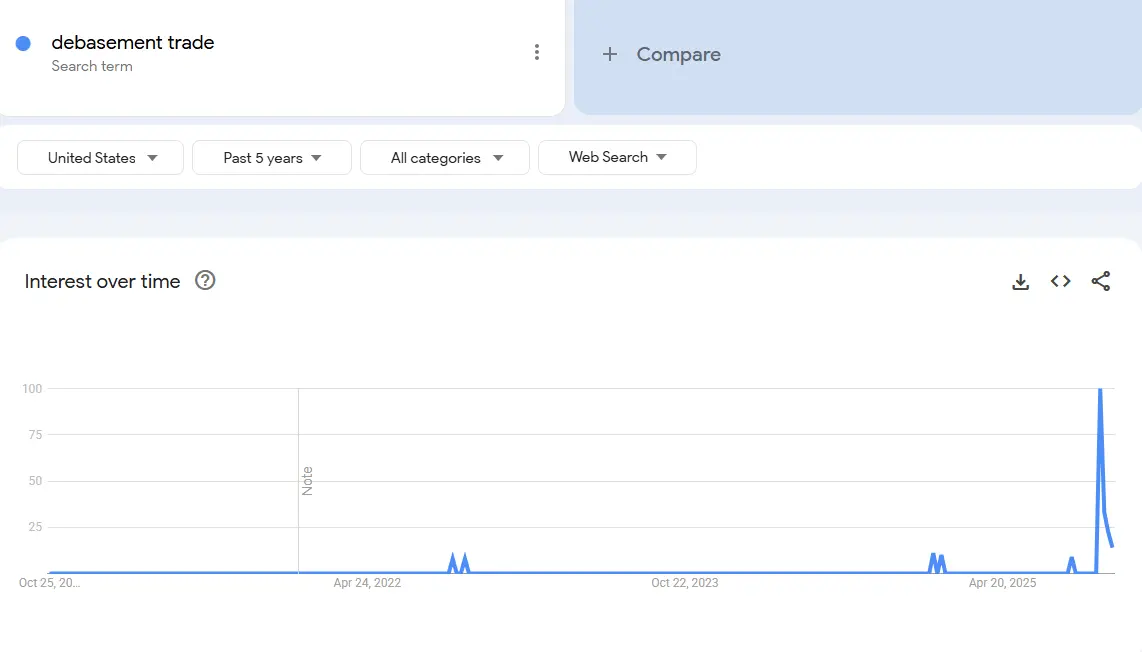
That's why all the recent discussions about "devaluation trading" have caught our attention.

Data: Google Trends

We believe the interest in "devaluation trading" arose a few years ago. At that time, Bitcoin was priced at $25,000 and gold at $2,000. Back then, nobody talked about it except cryptocurrency and macro analysts.

In our view, this "deal" is essentially complete.

Therefore, our task is to understand the conditions that created it, and whether those conditions will continue to exist.

What drove this deal? In our view, there are mainly two factors.

1. Treasury spending. During the Biden administration, we implemented a large-scale fiscal deficit.
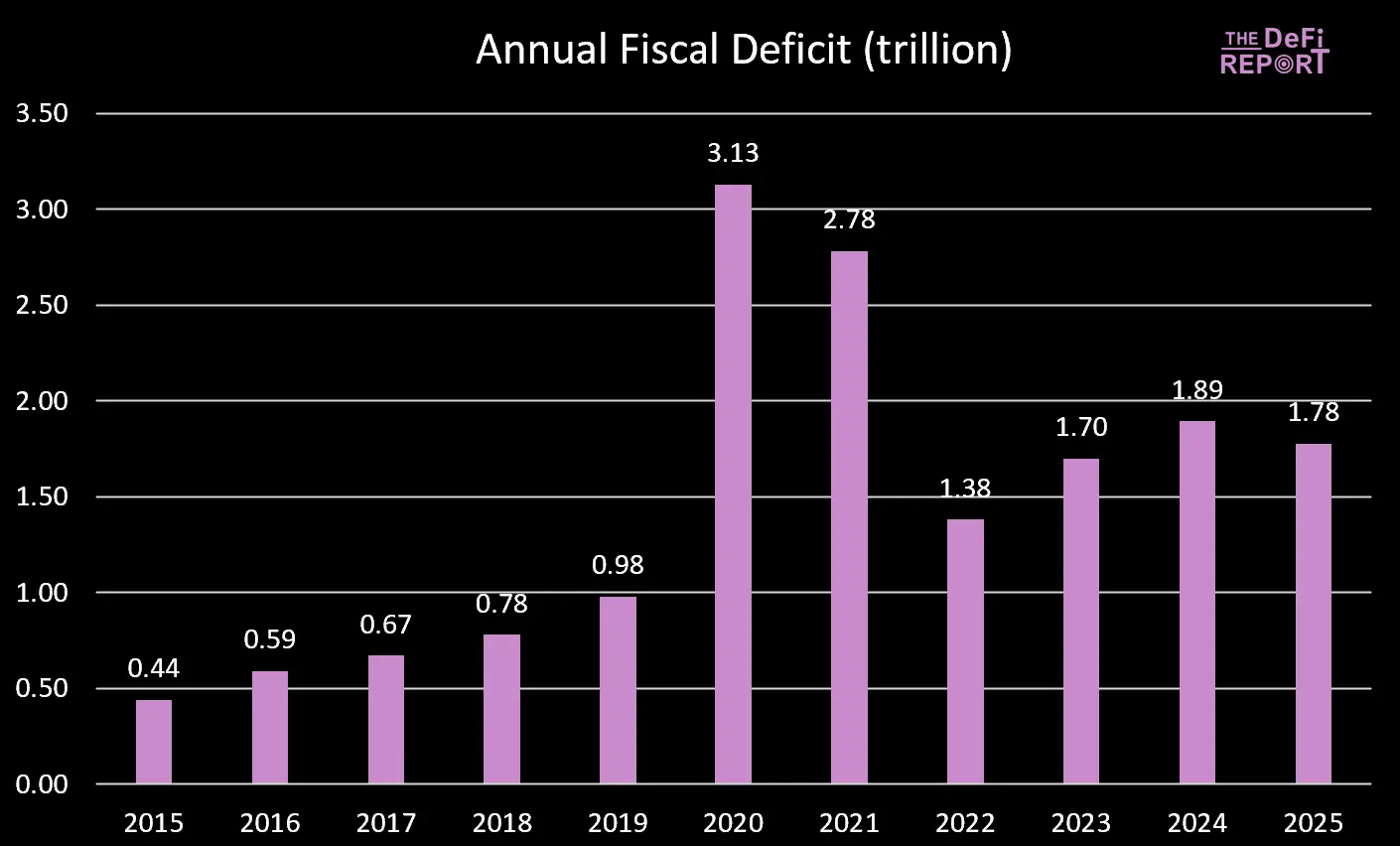
Data: US Treasury

The fiscal year 2025 has just ended, and the deficit has narrowed slightly—primarily due to increased taxes (tariffs) rather than reduced spending. However, the Big Beautiful Bill is expected to achieve spending cuts by reducing benefits from Medicaid and the Supplemental Nutrition Assistance Program (SNAP).
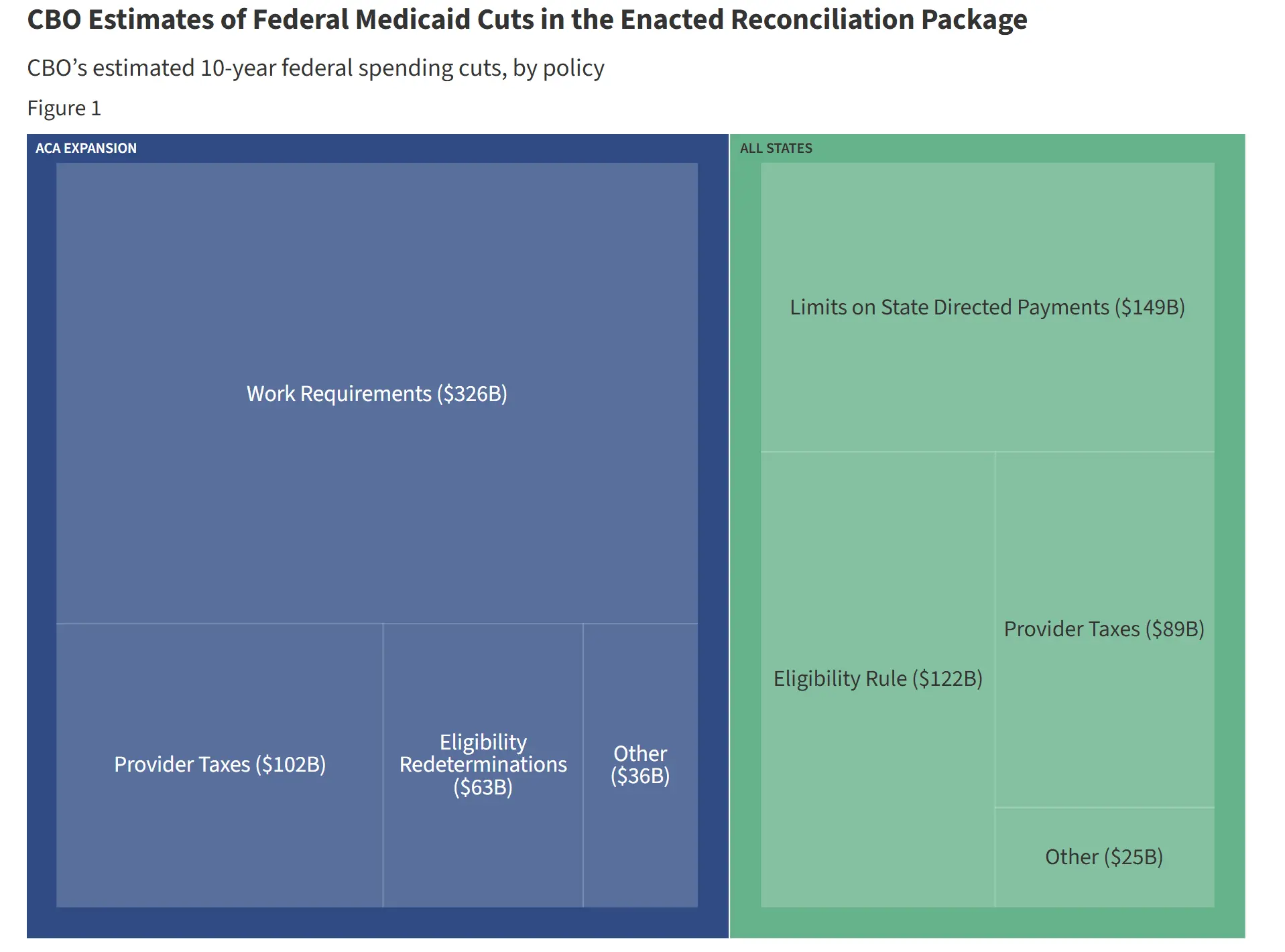
Data: Comparison of KFF (Kaiser Family Foundation) cuts with current spending trajectory

During Biden's presidency, government spending and transfer payments continuously injected liquidity into the economy. However, under the Great America Act, spending growth slowed.

This means that the government is injecting less money into the economy.

In addition, the government is withdrawing funds from the economy through tariffs.
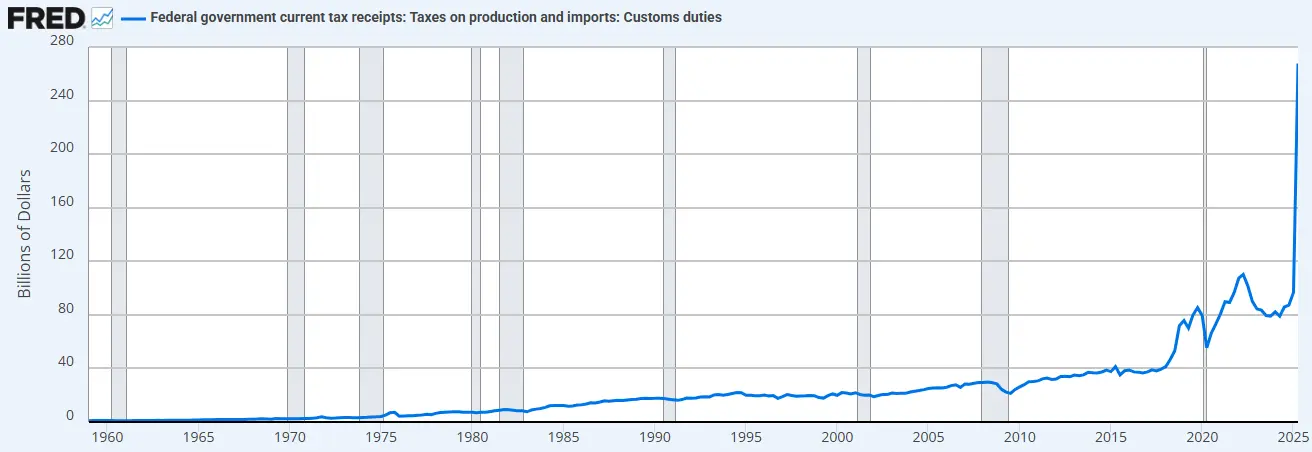
Data: FRED (St. Louis Federal Reserve Economic Data)

The combination of spending restrictions (relative to the previous administration) and increased tariffs means that the Treasury is now absorbing liquidity rather than supplying it.

This is why we need to cut interest rates.

"We will privatize the economy, revitalize the private sector, and shrink the government." - Scott Bessent

2. "Treasury QE". To fund the excessive spending by the Treasury during the Biden administration, we also saw a new form of "quantitative easing" (QE). We can observe this below (black line). "Treasury QE" supported the market by funding government spending through short-term notes rather than long-term bonds.
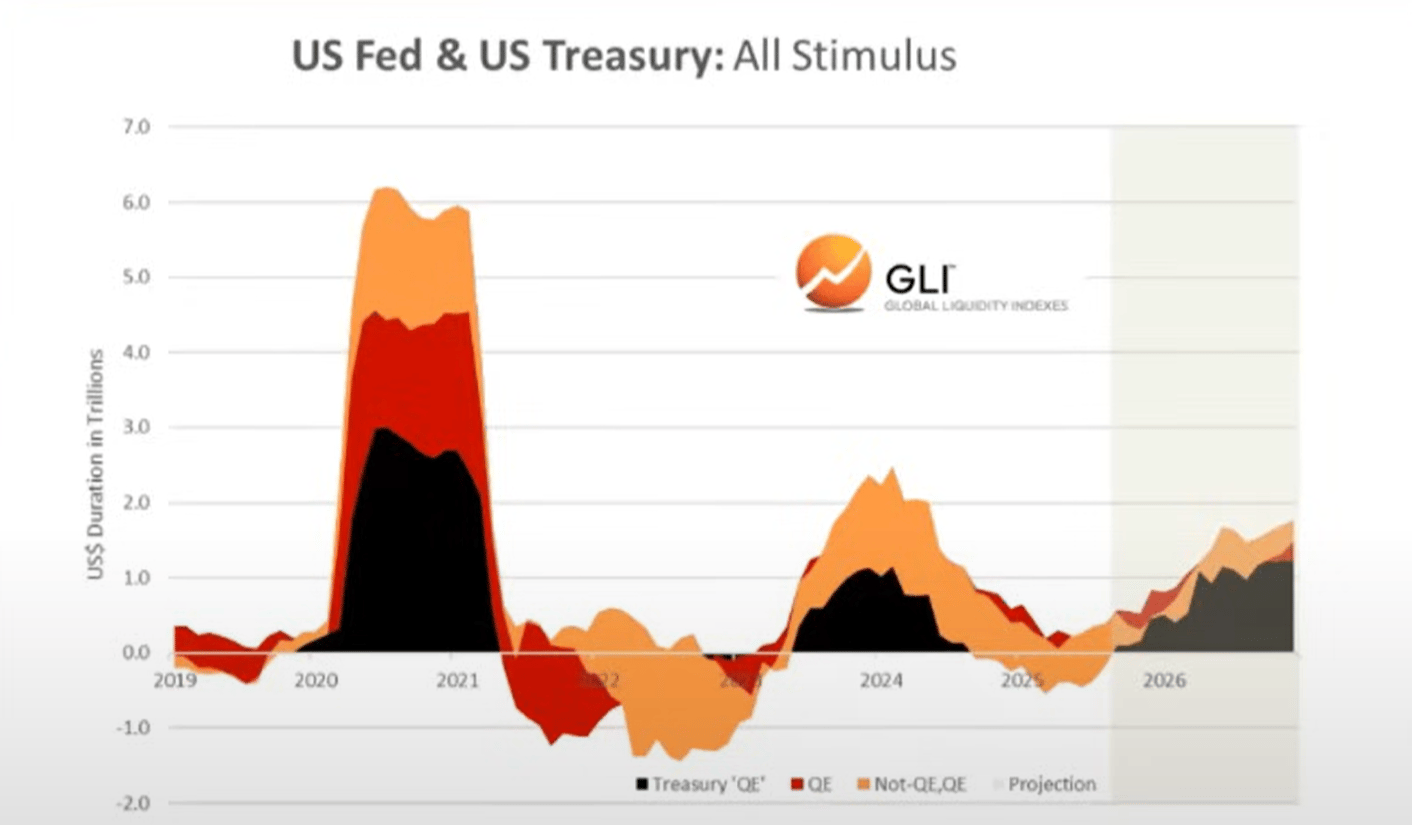
Data: Global Liquidity Index

We believe that fiscal spending and quantitative easing by the Treasury have fueled the “devaluation trade” and “everything bubble” that we have seen in the past few years.

But now we are transitioning to a "Trump economy," with the private sector taking over the reins from the Treasury.

Similarly, this is why they need to lower interest rates. They need to use bank loans to stimulate the private sector.

As we enter this transition period, the global liquidity cycle appears to be peaking...

The global liquidity cycle is peaking and declining.

Current cycle and average cycle

Below, we can observe a comparison between the current cycle (red line) and the historical average cycle (gray line) since 1970.
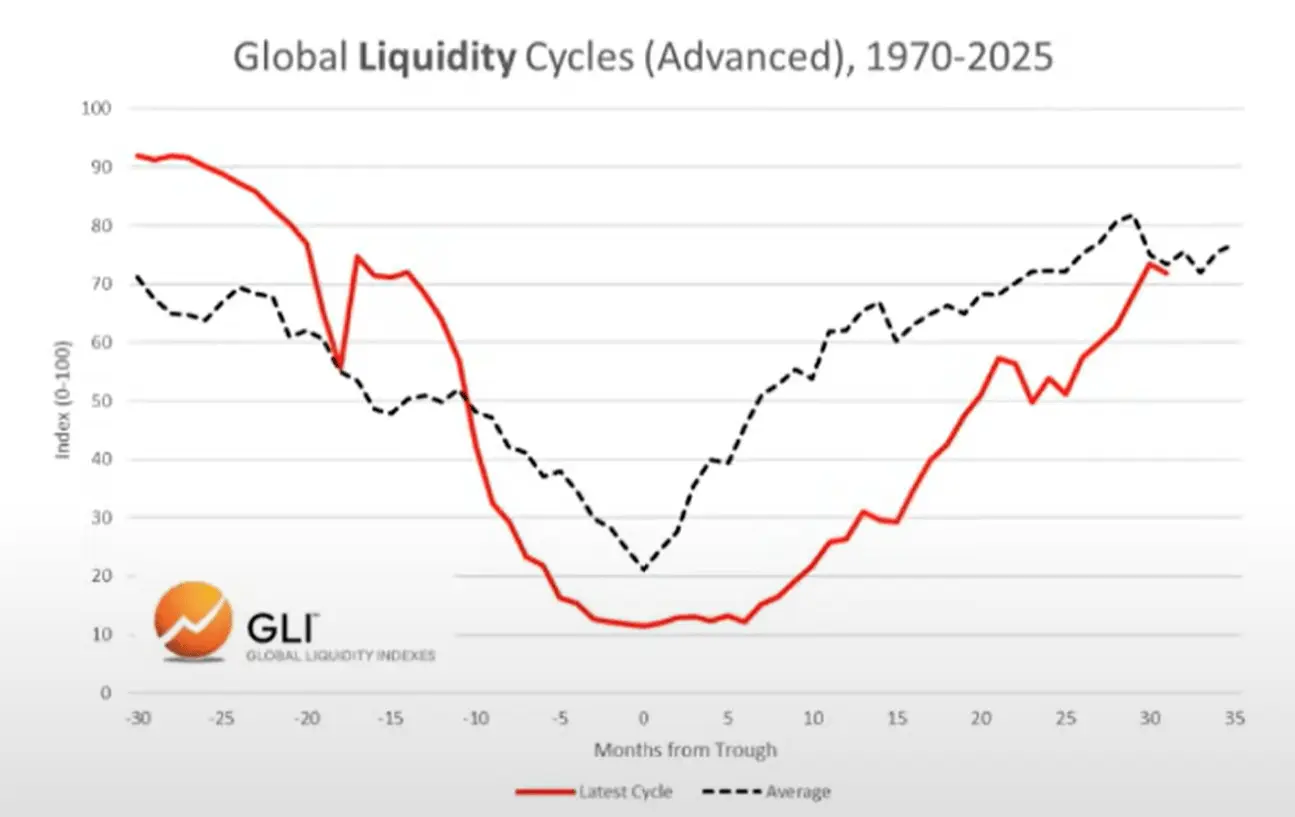
Data: Global Liquidity Index

Asset allocation

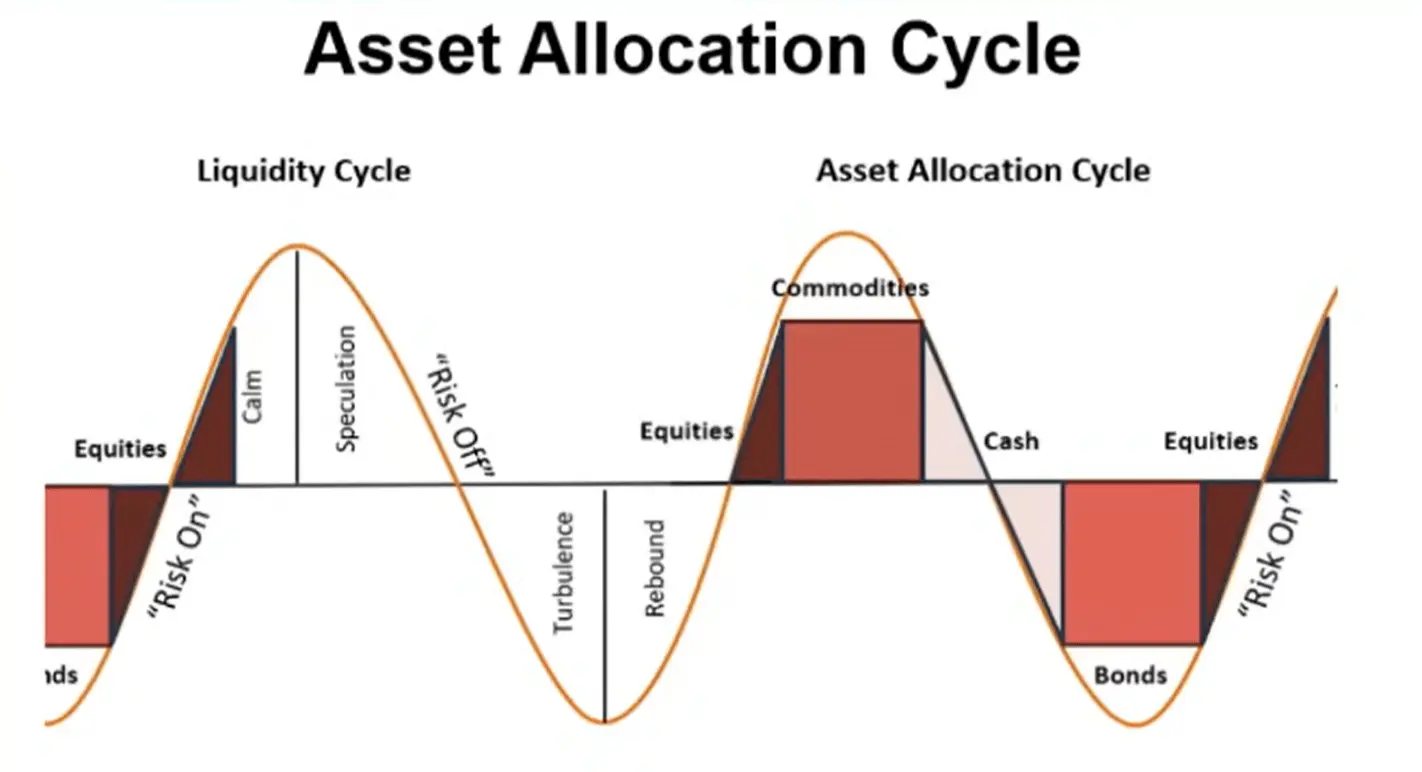
Based on Mr. Howell's work on global liquidity indices, we can observe typical liquidity cycles and their alignment with asset allocation.

Commodities are often the last assets to fall, which is exactly what we are seeing today (gold, silver, copper, palladium).

From this perspective, the current cycle looks very typical.
Data: Global Liquidity Index

So, if liquidity is indeed peaking, we expect investors to rotate into cash and bonds as the environment changes. To be clear, this process hasn't even begun yet (the market remains "risk-averse").

Debt and Liquidity

According to the Global Liquidity Index, the debt-to-liquidity ratio of major economies reached its lowest level since 1980 at the end of last year. It is now rising and is expected to continue rising until 2026.
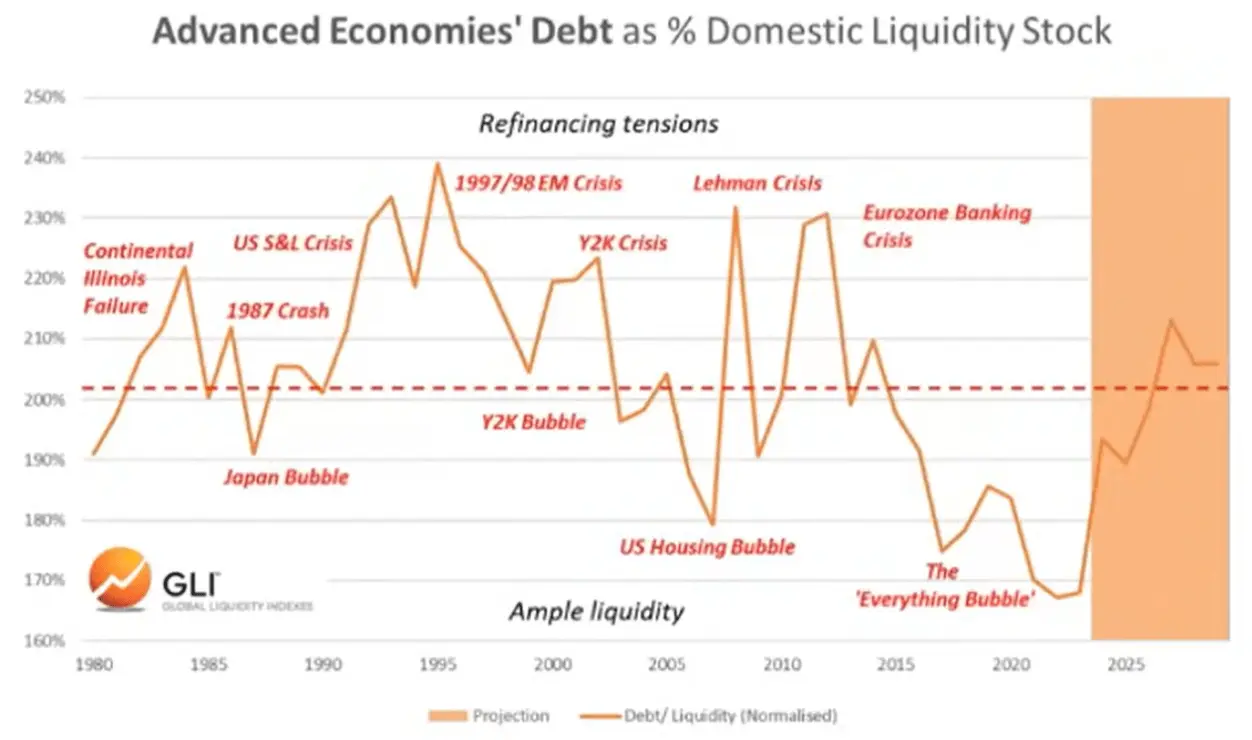
Data: Global Liquidity Index

The rising debt-to-liquidity ratio makes it more difficult to service trillions of dollars of outstanding debt that need to be refinanced.
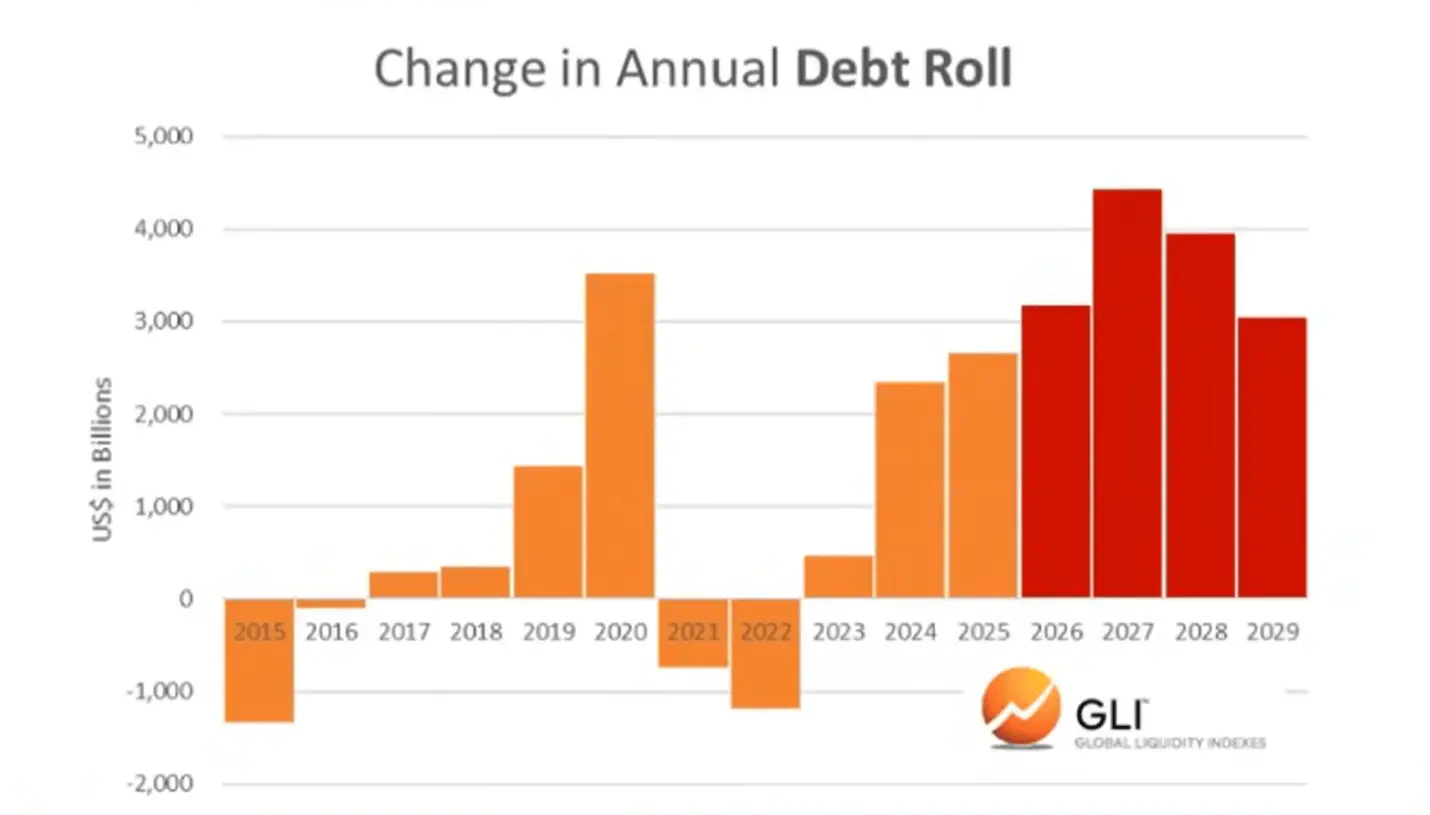
Data: Global Liquidity Index

Bitcoin and Global Liquidity

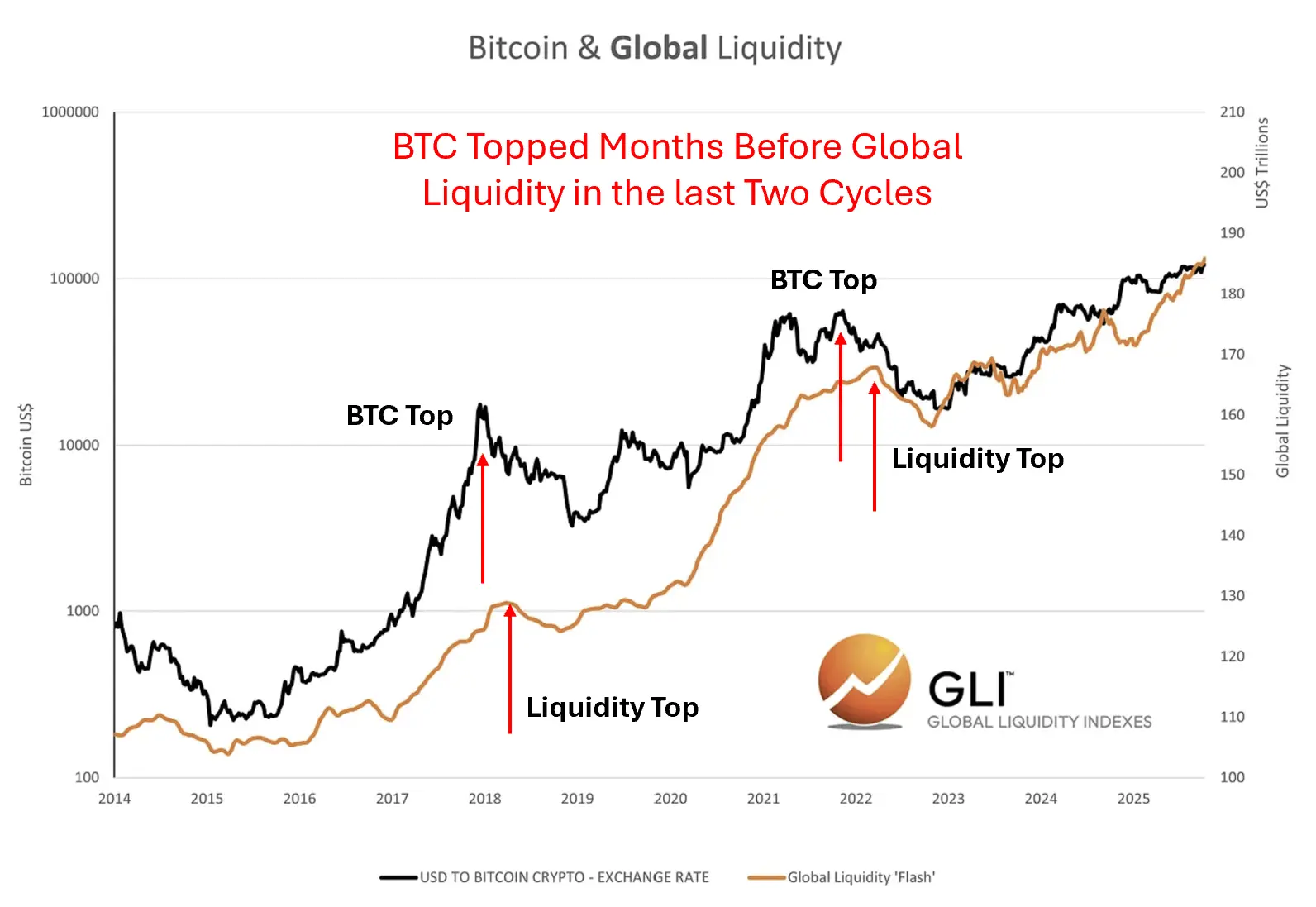
Of course, Bitcoin has "foreshadowed" peak global liquidity in the past two cycles. In other words, Bitcoin peaked months before liquidity peaked and began to decline, seemingly anticipating the subsequent drop.
Data: Global Liquidity Index

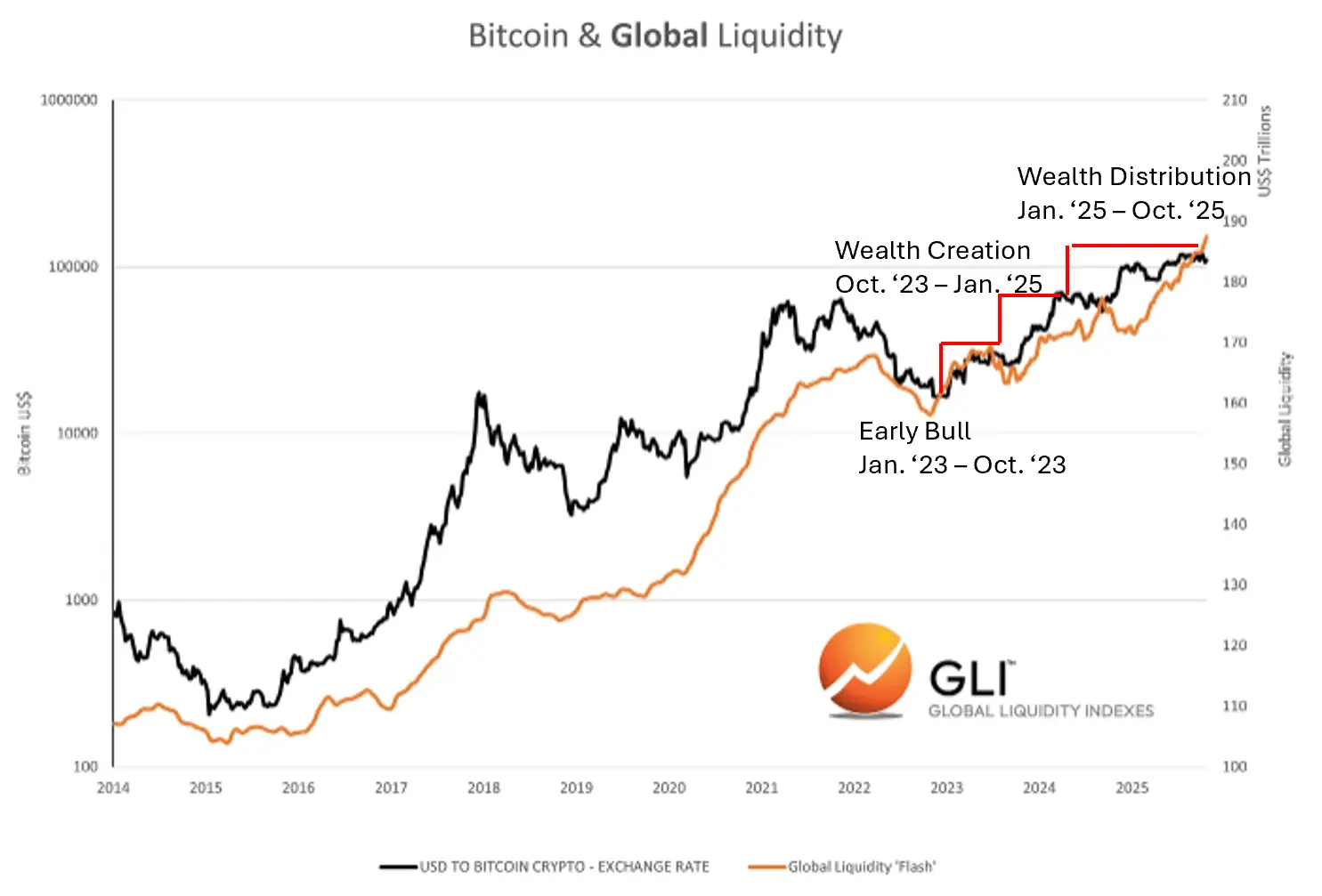
We don't know if this is happening right now. But we do know that cryptocurrency cycles always closely follow liquidity cycles.

Alignment with the cryptocurrency cycle
Data: Global Liquidity Index

Market Opportunity
Tron Bull Logo
Tron Bull Price(BULL)
$0.001011
$0.001011$0.001011
-12.08%
USD
Tron Bull (BULL) Live Price Chart
Disclaimer: The articles reposted on this site are sourced from public platforms and are provided for informational purposes only. They do not necessarily reflect the views of MEXC. All rights remain with the original authors. If you believe any content infringes on third-party rights, please contact service@support.mexc.com for removal. MEXC makes no guarantees regarding the accuracy, completeness, or timeliness of the content and is not responsible for any actions taken based on the information provided. The content does not constitute financial, legal, or other professional advice, nor should it be considered a recommendation or endorsement by MEXC.

You May Also Like

R. Kiyosaki sets date when silver will hit $200

R. Kiyosaki sets date when silver will hit $200

The post R. Kiyosaki sets date when silver will hit $200 appeared on BitcoinEthereumNews.com. Financial educator Robert Kiyosaki believes the ongoing silver momentum
Share
BitcoinEthereumNews2025/12/28 20:30
Why Crypto Markets May Mature by Early 2026

Why Crypto Markets May Mature by Early 2026

The post Why Crypto Markets May Mature by Early 2026 appeared on BitcoinEthereumNews.com. Coinbase has outlined a forward-looking view of the crypto market, arguing
Share
BitcoinEthereumNews2025/12/28 20:26
Fed Makes First Rate Cut of the Year, Lowers Rates by 25 Bps

Fed Makes First Rate Cut of the Year, Lowers Rates by 25 Bps

The post Fed Makes First Rate Cut of the Year, Lowers Rates by 25 Bps appeared on BitcoinEthereumNews.com. The Federal Reserve has made its first Fed rate cut this year following today’s FOMC meeting, lowering interest rates by 25 basis points (bps). This comes in line with expectations, while the crypto market awaits Fed Chair Jerome Powell’s speech for guidance on the committee’s stance moving forward. FOMC Makes First Fed Rate Cut This Year With 25 Bps Cut In a press release, the committee announced that it has decided to lower the target range for the federal funds rate by 25 bps from between 4.25% and 4.5% to 4% and 4.25%. This comes in line with expectations as market participants were pricing in a 25 bps cut, as against a 50 bps cut. This marks the first Fed rate cut this year, with the last cut before this coming last year in December. Notably, the Fed also made the first cut last year in September, although it was a 50 bps cut back then. All Fed officials voted in favor of a 25 bps cut except Stephen Miran, who dissented in favor of a 50 bps cut. This rate cut decision comes amid concerns that the labor market may be softening, with recent U.S. jobs data pointing to a weak labor market. The committee noted in the release that job gains have slowed, and that the unemployment rate has edged up but remains low. They added that inflation has moved up and remains somewhat elevated. Fed Chair Jerome Powell had also already signaled at the Jackson Hole Conference that they were likely to lower interest rates with the downside risk in the labor market rising. The committee reiterated this in the release that downside risks to employment have risen. Before the Fed rate cut decision, experts weighed in on whether the FOMC should make a 25 bps cut or…
Share
BitcoinEthereumNews2025/09/18 04:36