The Office of the Comptroller of the Currency (OCC), which is one of the main US bank regulators, has recently given conditional approval for five crypto companiesThe Office of the Comptroller of the Currency (OCC), which is one of the main US bank regulators, has recently given conditional approval for five crypto companies

Ripple and Circle Get US Trust Bank Approval – Best XRP Wallets as Ripple May Become a Bank

The Office of the Comptroller of the Currency (OCC), which is one of the main US bank regulators, has recently given conditional approval for five crypto companies to become national trust banks.

These five companies are; Ripple, Circle, Bitgo, Paxos and Fidelity Digital Assets. As it is currently conditional approval, each company must still meet further requirements before launching.

Of course, the only company of these five that has a native token that can fluctuate in price is Ripple (XRP). Circle has USDC but this is a stablecoin.

The five companies were all given conditional approval on the same day, as the OCC stated that new entrants help modernize and diversify the banking system.

Ripple CEO Brad Garlinghouse called the approval a “massive step forward” as Ripple looks to become a core financial infrastructure company.

What is a National Trust Bank?

A trust bank is allowed to hold assets for customers, and settle payments. Most importantly they have national approval to do this instead of having to gain approval on a state by state basis.

National trust banks are not allowed to take cash deposits or make loans. So Ripple would not yet be a full-service bank however if given the approval it would certainly set them on the path to becoming one.

Pushback from Traditional Banks

Traditional banks have expressed concern about the inclusion of digital asset companies being allowed under the supervision of the OCC. The Banking Policy Institute questioned whether crypto companies were being given a lighter touch than traditional banks, citing the failure of several exchanges such as FTX crypto exchange.

What is clear however is that crypto companies are increasingly entering the traditional banking space, and that many banks had requested the OCC to reject the applications.

Brad Garlinghouse retorted that these banks actions were “anti-competitive” and now that the crypto companies are under OCC supervision there was little to be concerned about.

Best XRP Wallets

While the conditional approval relates to Ripple as a company rather than its coin XRP, it would likely benefit XRP over the long term.

Ripple’s path to becoming a bank gives XRP a higher level of legitimacy and trust as well as giving it much more public exposure.

If Ripple does become a bank however, this would not be a self custody model, they would still control the private keys or accounts and have to comply with KYC and AML rules. This is effectively the same as traditional banks.

The original ethos of Bitcoin and cryptocurrency was to become your own bank, that is the freedom that generated so much interest. That’s why so many users choose to keep their assets in a self-custody wallet, away from banks.

This way, you can avoid potential account freezes or declined transactions, no longer relying on permission to access your own money.
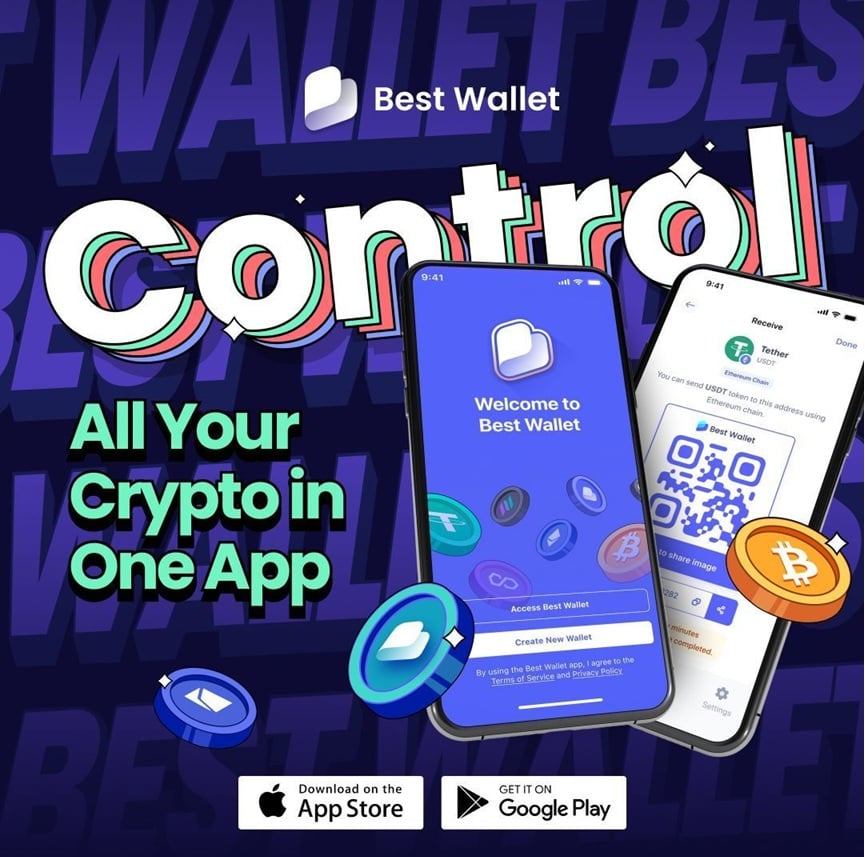
One wallet that excels in this regard is Best Wallet, a secure and easy to navigate self-custody wallet. Unlike most of its peers, it delivers full financial freedom without sacrificing privacy and security, making it a solid choice for anyone hunting for a personal XRP wallet that offers complete control and better protection.

The absence of identity verification even for advanced trading gives it a competitive advantage over centralized exchanges, ensuring unrestricted access to deposits, trading, and withdrawals without any bureaucratic hurdles. That alone amplifies its appeal among those who prefer to stay off the radar while exploring essential trading and storage tools.

Another key advantage is the ease at which users can navigate the platform, even with minimal experience. The interface is sleek, responsive, and beginner-friendly. Not only that, it is also rich in terms of features, an attribute that has contributed to its widespread use, attracting hundreds of thousands of users worldwide. 

First, the wallet supports multiple blockchains, allowing users to diversify their portfolios without having to use centralized exchanges or move their cryptos between wallets all the time. Its ability to handle crypto purchases and swaps without unnecessary delays, combined with built-in portfolio management features and support for other wallets, has made it a preferred tool for those looking to navigate the crypto market without restrictions.

For example, the wallet has over 20 on-ramp providers to enable users purchase cryptocurrencies using fiat. It also has an “Upcoming Token” feature, which allows users to discover upcoming cryptocurrencies and buy them early, directly from the app. 

Analysts at 99Bitcoins, a popular crypto YouTube channel with over 730k subscribers, claimed that Best Wallet is the most feature-packed non-custodial tool for buying and storing cryptocurrencies this year. Unsurprisingly, this is just one of the numerous endorsements that the brand has received in 2025 alone.

Download Best Wallet

This article has been provided by one of our commercial partners and does not reflect Cryptonomist’s opinion. Please be aware our commercial partners may use affiliate programs to generate revenues through the links on this article.

Market Opportunity
GET Logo
GET Price(GET)
$0.00182
$0.00182$0.00182
-17.64%
USD
GET (GET) Live Price Chart
Disclaimer: The articles reposted on this site are sourced from public platforms and are provided for informational purposes only. They do not necessarily reflect the views of MEXC. All rights remain with the original authors. If you believe any content infringes on third-party rights, please contact service@support.mexc.com for removal. MEXC makes no guarantees regarding the accuracy, completeness, or timeliness of the content and is not responsible for any actions taken based on the information provided. The content does not constitute financial, legal, or other professional advice, nor should it be considered a recommendation or endorsement by MEXC.

You May Also Like

Bitcoin ETF Investors React to Fed’s Decision

Bitcoin ETF Investors React to Fed’s Decision

The post Bitcoin ETF Investors React to Fed’s Decision appeared on BitcoinEthereumNews.com. In a surprise move, spot Bitcoin ETFs experienced their first significant daily outflows in over a week, following the Federal Reserve’s adjusted policy outlook. This shift reflects the market’s readiness to respond to any hint of change on the regulatory landscape, as well as its sensitivity to central bank cues. Continue Reading:Bitcoin ETF Investors React to Fed’s Decision Source: https://en.bitcoinhaber.net/bitcoin-etf-investors-react-to-feds-decision
Share
BitcoinEthereumNews2025/09/18 18:51
US Senators Introduce SAFE Crypto Act to Target Rising Crypto Scams

US Senators Introduce SAFE Crypto Act to Target Rising Crypto Scams

The post US Senators Introduce SAFE Crypto Act to Target Rising Crypto Scams appeared first on Coinpedia Fintech News Crypto scams are getting faster, smarter and
Share
CoinPedia2025/12/17 18:33
From Idea to App Store: The Complete Guide to Mobile App Development in Saudi Arabia

From Idea to App Store: The Complete Guide to Mobile App Development in Saudi Arabia

Saudi Arabia is at the forefront of digital transformation. With Vision 2030 driving innovation and a rapidly growing population of tech-savvy users, mobile apps have become a core driver of business growth in the Kingdom. From e-commerce and fintech to healthcare, logistics, and on-demand services, Saudi businesses are embracing mobile apps to connect with customers and scale faster. But how do you take a mobile app idea and turn it into a successful launch on the App Store or Google Play? This guide breaks down the complete mobile app development process in Saudi Arabia — step by step. Step 1: Validate Your App Idea for the Saudi Market Before you start building, ask: What problem does my app solve for Saudi users? Is there a cultural or market gap my app can fill? How do local competitors approach the same challenge? For example, apps related to digital payments, e-learning, delivery services, and healthcare are in high demand across Saudi Arabia. Conducting market research and aligning your app idea with local user behavior is critical. Step 2: Plan Features with Local Needs in Mind Your app should start with an MVP (Minimum Viable Product) — a core version that solves the main problem. Later, you can scale with advanced features. In Saudi Arabia, consider adding: Arabic language support (essential for user adoption) Integration with local payment gateways like STC Pay, Mada, or Apple Pay Regulatory compliance (especially for fintech and health apps) Localization for user preferences (Hijri calendar, cultural UI elements) Step 3: Select the Right Development Approach You can choose: Native Apps (Swift for iOS, Kotlin for Android) — Great for scalability and performance. Cross-Platform Apps (Flutter, React Native) — Cost-effective for startups targeting both iOS and Android simultaneously. Hybrid Apps — Suitable for simpler apps with limited features. For Saudi startups and enterprises, cross-platform development is often preferred to reach a wider audience quickly and efficiently. Step 4: Design With a Local Touch The design must balance global usability standards with local cultural relevance. UI (User Interface): Clean, modern visuals that align with Saudi branding. UX (User Experience): Simple navigation, clear Arabic text support, and intuitive flows. Wireframing & Prototyping: Test early with Saudi users to ensure adoption. A user-friendly design is one of the top reasons apps succeed in the Kingdom’s competitive market. Step 5: Develop Your Mobile App Once the design is ready, the coding begins. Saudi app development companies often follow Agile methodology, ensuring flexibility and faster delivery. Front-End Development: Interface and user interactions. Back-End Development: Databases, servers, and APIs. Integration: Secure connections between front-end and back-end. Strong collaboration between developers, designers, and business analysts ensures your app aligns with Saudi market needs. Step 6: Testing Across Devices and Networks Saudi users rely on different devices and network speeds. That’s why rigorous testing is critical: Functionality Testing: Features work as expected. Performance Testing: The app runs smoothly on both 4G and 5G networks. Localization Testing: Arabic text displays correctly, without alignment issues. Security Testing: Data protection compliance with Saudi cybersecurity standards. Step 7: App Store & Google Play Launch in Saudi Arabia To publish your app: Apple App Store (iOS): Requires an Apple Developer account and strict guideline compliance. Google Play Store (Android): Faster approval but still requires detailed app info. You’ll also need metadata in both English and Arabic — titles, descriptions, and screenshots — to maximize visibility among Saudi users. Step 8: Market Your App in Saudi Arabia Launching an app is only the beginning. You need a marketing strategy tailored to the Kingdom: App Store Optimization (ASO): Use Arabic and English keywords. Social Media Campaigns: Leverage platforms like Snapchat, Twitter (X), and Instagram, which are highly popular in Saudi Arabia. Influencer Marketing: Collaborate with Saudi influencers for early traction. Paid Ads: Google Ads and Saudi-focused Facebook/Instagram ads. Partnerships: Collaborate with local businesses to reach a wider audience. Step 9: Gather Feedback and Optimize Once your app is live, monitor: User reviews on app stores Analytics on engagement, retention, and churn rates Suggestions from Saudi users for culturally relevant features Continuous updates and improvements are vital to stay competitive. Step 10: Scale With Advanced Features Once your MVP gains traction, you can expand with advanced features such as: AI and machine learning for personalization Blockchain-based payments for fintech apps AR/VR features for retail and gaming apps IoT integration for smart home and mobility solutions Saudi Arabia’s digital ecosystem is growing rapidly — apps that adapt quickly will thrive. Conclusion Mobile app development in Saudi Arabia is not just about building an app — it’s about aligning with Vision 2030, cultural needs, and user expectations. By following a clear process — from idea validation to launch and beyond — you can transform your concept into a profitable digital product. Whether you’re a startup or an enterprise in Saudi Arabia, the opportunity is massive. With the right strategy, you can move from idea to App Store and create an app that truly resonates with Saudi users. From Idea to App Store: The Complete Guide to Mobile App Development in Saudi Arabia was originally published in Coinmonks on Medium, where people are continuing the conversation by highlighting and responding to this story
Share
Medium2025/09/18 14:46