

Michael Burry’s Crypto Warning Comes True as Silver Crashes 17%
TLDR
- Silver dropped 17% in one day, eliminating recent gains and dragging down gold and copper prices
- Hyperliquid platform recorded $16.82 million in forced liquidations of long silver token positions
- Michael Burry’s “collateral death spiral” theory played out as crypto losses forced metal sales
- Heavy leverage and thin trading volumes amplified the price collapse beyond typical market moves
- Silver now trades 33% below its January 29 peak after experiencing record volatility
Silver prices fell 17% within 24 hours, erasing gains from earlier in the week. The metal dropped to $76.99 per ounce after briefly reaching $90 during Asian trading hours.
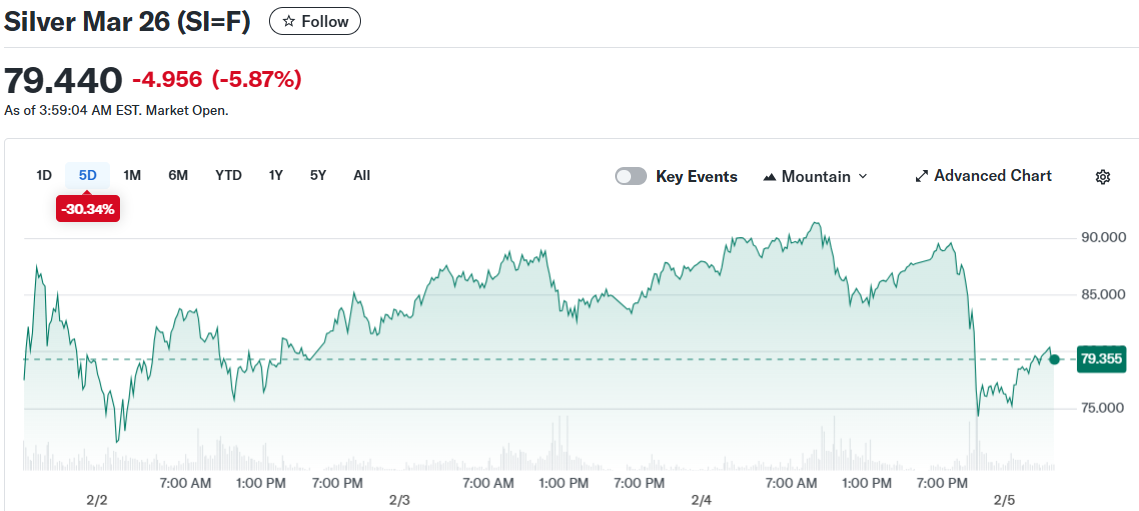 Silver Mar 26 (SI=F)
The decline spread across metals markets. Gold fell 3.5% while copper dropped below $13,000 per ton.
Silver has declined more than 33% from its record high on January 29. Last Friday marked the metal’s largest single-day drop in history.
Traders point to thin liquidity and heavy speculation as main causes. The combination created rapid price moves in both directions.
Tokenized Silver Markets See Heavy Liquidations
Crypto-based silver trading showed the impact of leverage. Hyperliquid platform data revealed $16.82 million in forced closures of long positions on XYZ:SILVER tokens.
Total liquidations reached approximately $17.75 million. The data shows traders betting on price rebounds faced margin calls when volatility returned.
The mechanism works as follows: rising metal prices encourage more leverage. When crypto collateral drops in value, traders must sell metals to cover margins.
Burry specifically mentioned bitcoin losses could trigger institutional selling of profitable metal positions. Recent liquidation patterns support his theory.
January saw precious metals rally on speculation and geopolitical tensions. Concerns about Federal Reserve independence added to the surge.
Investors accumulated large metal positions throughout the month. Leveraged exchange-traded products received substantial inflows.
Call option buying activity increased significantly. The rally reversed sharply when selling began last Friday.
The selloff started during Asian hours and continued for days. Brief buying attempts this week failed to halt the decline.
Federal Reserve Policy Adds Uncertainty
Markets are processing Kevin Warsh’s nomination as Federal Reserve chair. President Trump stated Wednesday he would not have chosen Warsh if he planned rate increases.
Trump told NBC News the Fed would likely cut rates again. Rate cuts typically benefit precious metals since they generate no interest income.
Standard Chartered analysts expect continued gold price volatility. Uncertainty around monetary policy will keep markets unstable.
Some investors may redeem exchange-traded product holdings. This could add more selling pressure in coming sessions.
The bank maintains that long-term drivers remain positive. They forecast eventual price recovery.
Silver experiences more volatility than gold due to market size. Lower liquidity magnifies price swings in the white metal.
Recent moves exceed typical volatility levels. Speculative inflows and reduced over-the-counter trading made swings more extreme.
Christopher Wong from Oversea-Chinese Banking Corp noted negative sentiment across asset classes. He described current conditions as a feedback loop in thin markets.
Forced selling now drives prices more than macroeconomic factors. Federal Reserve policy expectations matter less than margin calls and liquidations.
The liquidation data confirms leverage remains the dominant price factor. Positioning trumps fundamentals in current market conditions.
The post Michael Burry’s Crypto Warning Comes True as Silver Crashes 17% appeared first on Blockonomi.


You May Also Like

ECHO Token Crashes Double Digits After Massive Echo Protocol Exploit

GCC companies bid for Egypt’s first airport privatisation




