

Gold Price Stalls: Traders Hold Breath for Critical US PCE Inflation Report
BitcoinWorld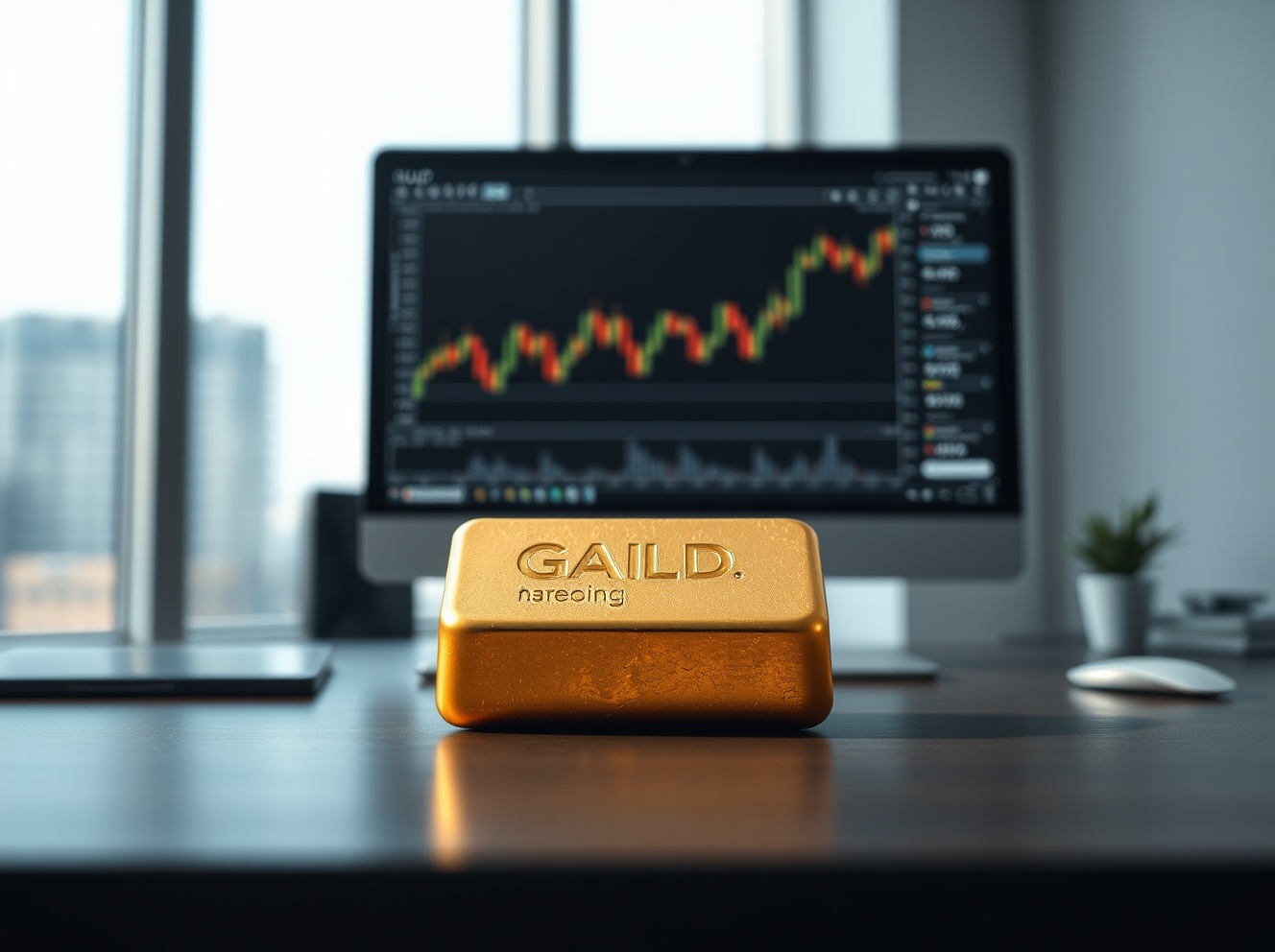
Gold Price Stalls: Traders Hold Breath for Critical US PCE Inflation Report
Gold prices are struggling to build momentum on modest gains this week, as global traders and investors fixate on the imminent release of the US Personal Consumption Expenditures (PCE) price index data. This key inflation report, scheduled for release on Friday, March 28, 2025, from Washington D.C., holds significant power to dictate the near-term trajectory for the precious metal, Federal Reserve monetary policy, and broader financial markets.
Gold Price Action and the PCE Data Standoff
Spot gold has exhibited a classic holding pattern in recent sessions. Consequently, the metal has traded within a narrow band, unable to decisively break above recent resistance levels. Market analysts attribute this hesitation directly to the upcoming PCE report. This data serves as the Federal Reserve’s preferred gauge for inflation. Therefore, its outcome will heavily influence interest rate expectations. Higher-than-expected inflation could signal a more aggressive Fed, which typically pressures gold by boosting the US Dollar and Treasury yields. Conversely, cooler inflation data might support gold by reinforcing hopes for earlier rate cuts.
Historically, gold demonstrates an inverse relationship with real interest rates. When rates rise, the opportunity cost of holding non-yielding bullion increases. Currently, the market is pricing in a cautious Fed stance. However, the PCE print will provide critical evidence. For instance, the core PCE figure, which excludes volatile food and energy prices, is the primary focus. A surprise in either direction could trigger substantial volatility. Market technicians note that gold faces immediate resistance near the $2,180 per ounce level. Support, meanwhile, rests firmly around $2,150.
The Broader Economic Context for Precious Metals
The anticipation surrounding the PCE data does not exist in a vacuum. Several interconnected factors are currently shaping the gold market. Firstly, the US Dollar Index (DXY) has shown resilience. A strong dollar makes gold more expensive for holders of other currencies, which can dampen demand. Secondly, movements in US Treasury yields, particularly the 10-year note, provide a real-time barometer of interest rate sentiment. Furthermore, central bank demand for gold remains a structural support. According to the World Gold Council, central banks added significant tonnage to reserves in 2024, a trend expected to continue.
Expert Analysis on Market Sentiment
Financial institutions are closely monitoring the situation. “The market is in a data-dependent holding pattern,” notes Jane Miller, Chief Commodities Strategist at Global Markets Analysis. “Gold’s inability to rally on otherwise supportive geopolitical tensions underscores the overwhelming focus on US monetary policy. The PCE report is the next major catalyst.” This view is echoed by portfolio managers who highlight that algorithmic trading systems are primed to react to the data release, potentially amplifying short-term price swings.
Additionally, other precious metals like silver and platinum often move in correlation with gold but with higher beta. Their industrial demand components also make them sensitive to broader economic growth signals, which the PCE data may also imply. The following table summarizes key market levels and expectations:
| Metric | Current Level | Market Implication |
|---|---|---|
| Spot Gold (XAU/USD) | ~$2,165 | Consolidating; awaits catalyst |
| Core PCE Forecast (YoY) | 2.8% | Above 2.8% = Hawkish, Below = Dovish |
| US 10-Year Yield | ~4.2% | Key for opportunity cost calculation |
| Primary Gold Support | $2,150 | Critical technical level |
Potential Market Scenarios Post-Release
The market has essentially prepared for three distinct outcomes based on Friday’s data. Each scenario carries clear implications for gold prices.
- Hotter-than-Expected PCE: A core PCE reading significantly above the 2.8% consensus would likely trigger a swift repricing of Fed rate cut expectations. Consequently, the US Dollar and Treasury yields would surge. Gold would face immediate selling pressure, potentially testing the $2,150 support zone. A break below could target lower levels.
- In-Line or Slightly Cooler PCE: A report that meets or modestly undershoots forecasts would likely validate the current market narrative. In this case, gold might experience a relief rally. However, gains could remain capped as traders await further confirmation from subsequent data, like the jobs report.
- Significantly Cooler PCE: A substantial downside surprise, showing inflation falling faster than anticipated, would be the most bullish scenario for gold. This data would bolster arguments for imminent Fed rate cuts, weakening the dollar and lowering yields. Gold could then attempt a decisive breakout above its recent resistance, targeting new yearly highs.
Beyond the immediate reaction, the report’s details will be scrutinized. Analysts will examine components like services inflation and supercore metrics for persistence signals. This deeper analysis will shape the medium-term outlook beyond the initial knee-jerk market move.
Conclusion
Gold remains in a state of suspended animation, its price action held hostage by the impending US PCE inflation report. This data release represents a critical inflection point for Federal Reserve policy expectations and, by extension, the trajectory for the non-yielding precious metal. While structural demand and geopolitical factors provide a floor, the near-term path for the gold price will be overwhelmingly determined by the inflation narrative emerging from Washington. Traders are advised to prepare for elevated volatility and to base decisions on the verified data rather than pre-release speculation.
FAQs
Q1: What is the PCE data and why is it so important for gold?
The Personal Consumption Expenditures (PCE) price index is the Federal Reserve’s preferred measure of inflation. It directly influences interest rate decisions. Since gold prices are highly sensitive to real interest rates and the US Dollar’s strength, this report is a major market catalyst.
Q2: How does a high inflation report typically affect gold prices?
A higher-than-expected inflation report usually leads markets to anticipate a more aggressive, “hawkish” Federal Reserve. This pushes US Treasury yields and the dollar higher, increasing the opportunity cost of holding gold and typically putting downward pressure on its price in the short term.
Q3: What other factors are currently supporting the gold market?
Key supportive factors include persistent central bank purchasing, ongoing geopolitical tensions, and gold’s role as a long-term portfolio diversifier. These elements help create a price floor even when monetary policy headwinds are present.
Q4: What time is the US PCE data released, and where can I find it?
The report is scheduled for release at 8:30 AM Eastern Time by the Bureau of Economic Analysis (BEA). It is published on the BEA website and widely disseminated by major financial news terminals and data providers.
Q5: Should retail investors make trades based on this single data point?
Financial advisors generally caution against making significant investment decisions based on one economic release. The data can cause high volatility. A long-term, strategic allocation to gold based on diversification goals is often considered a more prudent approach than short-term tactical trading around events.
This post Gold Price Stalls: Traders Hold Breath for Critical US PCE Inflation Report first appeared on BitcoinWorld.


You May Also Like

Augustus Wins OCC Approval to Build AI-Powered Stablecoin Bank

Pi Network SCP Protocol V23 Upgrade Sparks Massive Excitement




