Gold Price Defies Gravity Near $5,000 as Fed Decision and Global Policy Shifts Loom
BitcoinWorld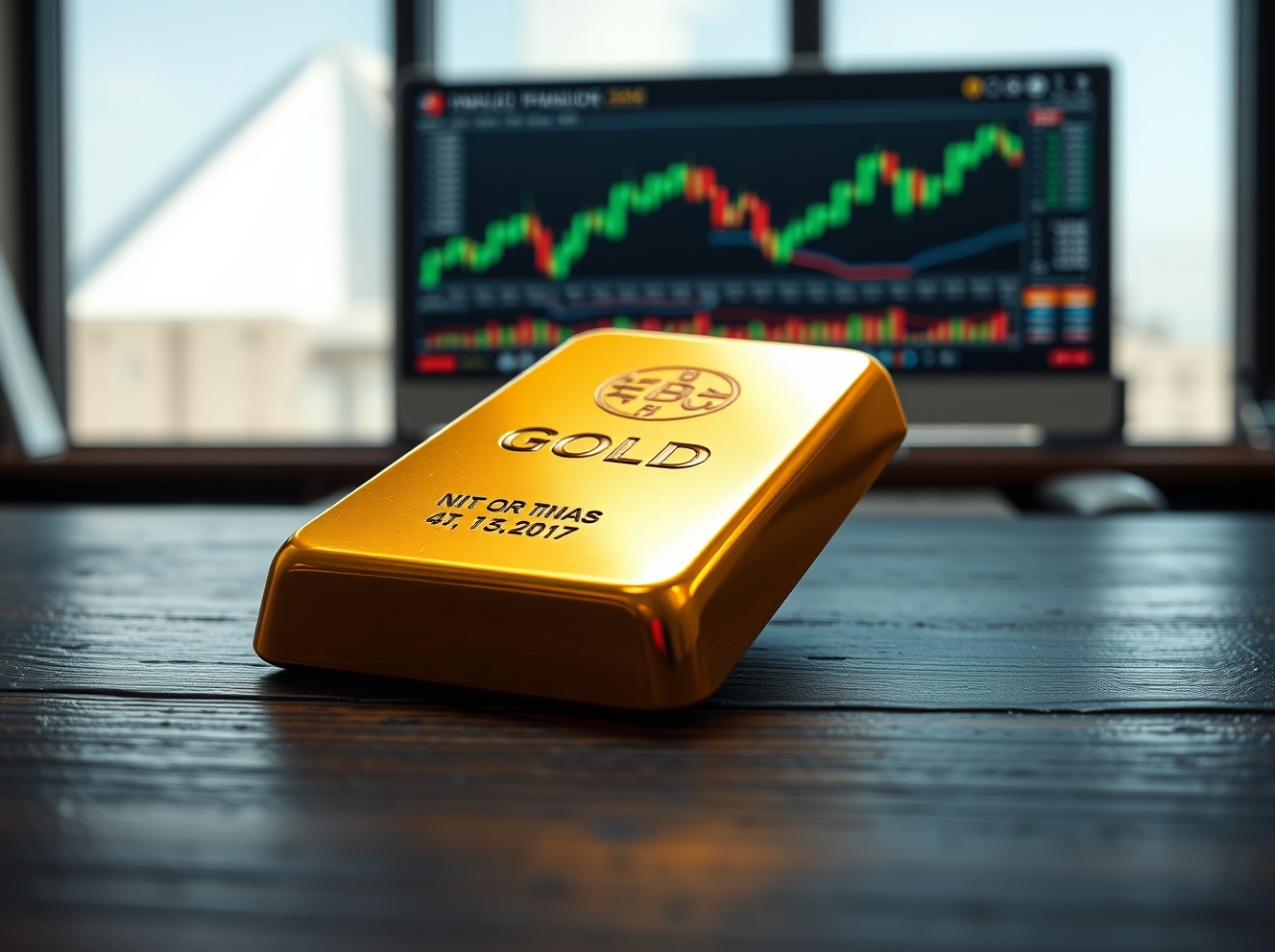
Gold Price Defies Gravity Near $5,000 as Fed Decision and Global Policy Shifts Loom
NEW YORK, March 2025 – The gold price demonstrates remarkable resilience, holding firm near the historic $5,000 per ounce threshold. Consequently, global investors fix their gaze on the impending Federal Reserve policy decision and a complex tapestry of shifting central bank strategies worldwide. This pivotal moment underscores gold’s enduring role as a barometer for monetary uncertainty and a cornerstone of strategic portfolios.
Gold Price Stability Amidst Monetary Policy Crosscurrents
The precious metal’s steadfast performance near $5,000 signals deep-seated market caution. Analysts attribute this stability to a confluence of macroeconomic factors. Primarily, anticipation surrounding the Federal Open Market Committee (FOMC) meeting creates a holding pattern. Furthermore, divergent policies from the European Central Bank (ECB) and the Bank of Japan (BoJ) inject additional volatility into currency markets, traditionally benefiting gold. Market data from the London Bullion Market Association (LBMA) shows consistent physical demand, providing a solid floor for prices.
Historically, gold performs well during periods of policy transition. For instance, the taper tantrum of 2013 and the post-2016 rate hike cycle both saw significant gold rallies. The current environment echoes these periods of uncertainty. Therefore, the metal’s strength is not an anomaly but a reflection of its fundamental drivers.
The Federal Reserve’s Pivotal Decision and Its Direct Impact
All eyes turn to the Federal Reserve’s upcoming announcement on interest rates and its balance sheet strategy. The central bank faces a delicate balancing act. On one hand, persistent inflation in services sectors argues for maintaining a restrictive stance. Conversely, signs of softening in the labor market and manufacturing suggest caution is warranted. This policy dilemma directly influences the gold price through several channels.
- Real Yields: Gold, which offers no yield, becomes more attractive when real interest rates (nominal rates minus inflation) are low or negative.
- Dollar Strength: A hawkish Fed typically strengthens the US Dollar, which can pressure dollar-denominated gold. A dovish tilt weakens the dollar, supporting gold.
- Risk Sentiment: Signals of prolonged higher rates may dampen equity market enthusiasm, potentially driving capital toward safe-haven assets like gold.
Market-implied probabilities, derived from Fed Funds futures, currently show a nuanced expectation. Traders are not just focused on the rate decision itself but also on the accompanying statement and Chair Powell’s press conference for clues on the future path.
Expert Analysis on Fed Policy and Gold’s Reaction Function
Dr. Anya Sharma, Chief Commodities Strategist at Global Markets Insight, provides context. “The gold market is pricing in a ‘higher-for-longer’ scenario being challenged,” she notes. “If the Fed acknowledges disinflationary progress and hints at a slower pace of quantitative tightening, we could see a decisive break above $5,000. However, any reaffirmation of unwavering hawkishness may trigger a short-term consolidation.” This analysis is based on decades of tracking Fed communication and its market impact, reflecting deep expertise.
Global Central Bank Policies: A Divergent Landscape
While the Fed commands attention, actions by other major institutions create powerful undercurrents. The global central bank policy landscape is notably divergent, creating opportunities and risks for gold.
The European Central Bank, for example, may be on a different timeline for rate cuts due to distinct economic pressures. Similarly, the Bank of Japan’s gradual move away from its ultra-loose yield curve control policy has significant implications for the Yen and, by extension, global capital flows. Emerging market central banks, many of which have been net buyers of gold for years, continue to diversify reserves away from traditional currencies. According to the World Gold Council, central banks purchased over 1,000 tonnes of gold in 2024, a trend expected to persist.
| Central Bank | Current Stance | Potential Impact on Gold |
|---|---|---|
| Federal Reserve (US) | Data-Dependent, Restrictive | High; drives dollar and global risk sentiment |
| European Central Bank | Cautiously Dovish | Medium; influences EUR/USD cross-rate |
| Bank of Japan | Tightening Very Gradually | Medium/High; affects Yen carry trade and liquidity |
| People’s Bank of China | Accommodative | High; supports physical demand and regional sentiment |
Technical and Fundamental Drivers Supporting $5,000
Beyond central banks, several structural factors underpin gold’s strength. Geopolitical tensions in multiple regions sustain a baseline of safe-haven demand. Additionally, concerns over fiscal sustainability and high debt levels in major economies erode confidence in fiat currencies over the long term. On the technical front, the $5,000 level represents a major psychological and chart-based resistance point. A sustained break above it, confirmed by volume, could open the path to significantly higher prices, according to many chart analysts.
Physical market indicators remain robust. Premiums for gold bars and coins in key Asian markets have held steady, indicating healthy retail and institutional investment demand. Meanwhile, holdings in the world’s largest gold-backed exchange-traded fund, SPDR Gold Shares (GLD), have seen inflows after a period of stagnation, signaling renewed interest from Western institutional investors.
Conclusion
The gold price holding near $5,000 is a multifaceted story centered on monetary policy anticipation. The imminent Federal Reserve decision serves as the immediate catalyst, but the metal’s fortitude is equally rooted in a global shift away from synchronized policy and enduring macroeconomic uncertainties. Ultimately, whether gold consolidates or ascends from this pivotal level will depend on the nuanced signals from the Fed and its global counterparts. The $5,000 gold price zone therefore represents a critical juncture for global markets, reflecting deep-seated questions about inflation, growth, and the future path of interest rates.
FAQs
Q1: Why is the $5,000 level significant for gold?
The $5,000 per ounce mark is a major psychological and technical benchmark. A sustained break above it could signal a new long-term bullish phase for the metal, attracting further institutional investment.
Q2: How does a strong US Dollar typically affect the gold price?
Gold is priced in US Dollars globally. Therefore, a stronger dollar makes gold more expensive for holders of other currencies, which can dampen international demand and put downward pressure on the dollar-denominated price.
Q3: What is the relationship between real interest rates and gold?
Gold competes with yield-bearing assets. When real interest rates (nominal rates minus inflation) are low or negative, the opportunity cost of holding non-yielding gold is reduced, making it more attractive.
Q4: Are central banks still buying gold?
Yes. According to public data from the World Gold Council and IMF, central banks have been consistent net buyers of gold for over a decade, a trend focused on reserve diversification and geopolitical hedging.
Q5: What other factors, besides central banks, support high gold prices?
Key supporting factors include persistent geopolitical risks, concerns over fiscal deficits and public debt levels in major economies, and ongoing demand from key physical markets in Asia.
This post Gold Price Defies Gravity Near $5,000 as Fed Decision and Global Policy Shifts Loom first appeared on BitcoinWorld.


You May Also Like

Q2 Market Insights: Bitcoin regains dominance in risk-averse environment, ETFs remain critical to market structure

Pi Network Node Update 24.1.0 Appears as Protocol 23 Deployment Expands