

Dollar Stabilizes as Trump Announces Pivotal Talks with Iran, Easing Market Tensions
BitcoinWorld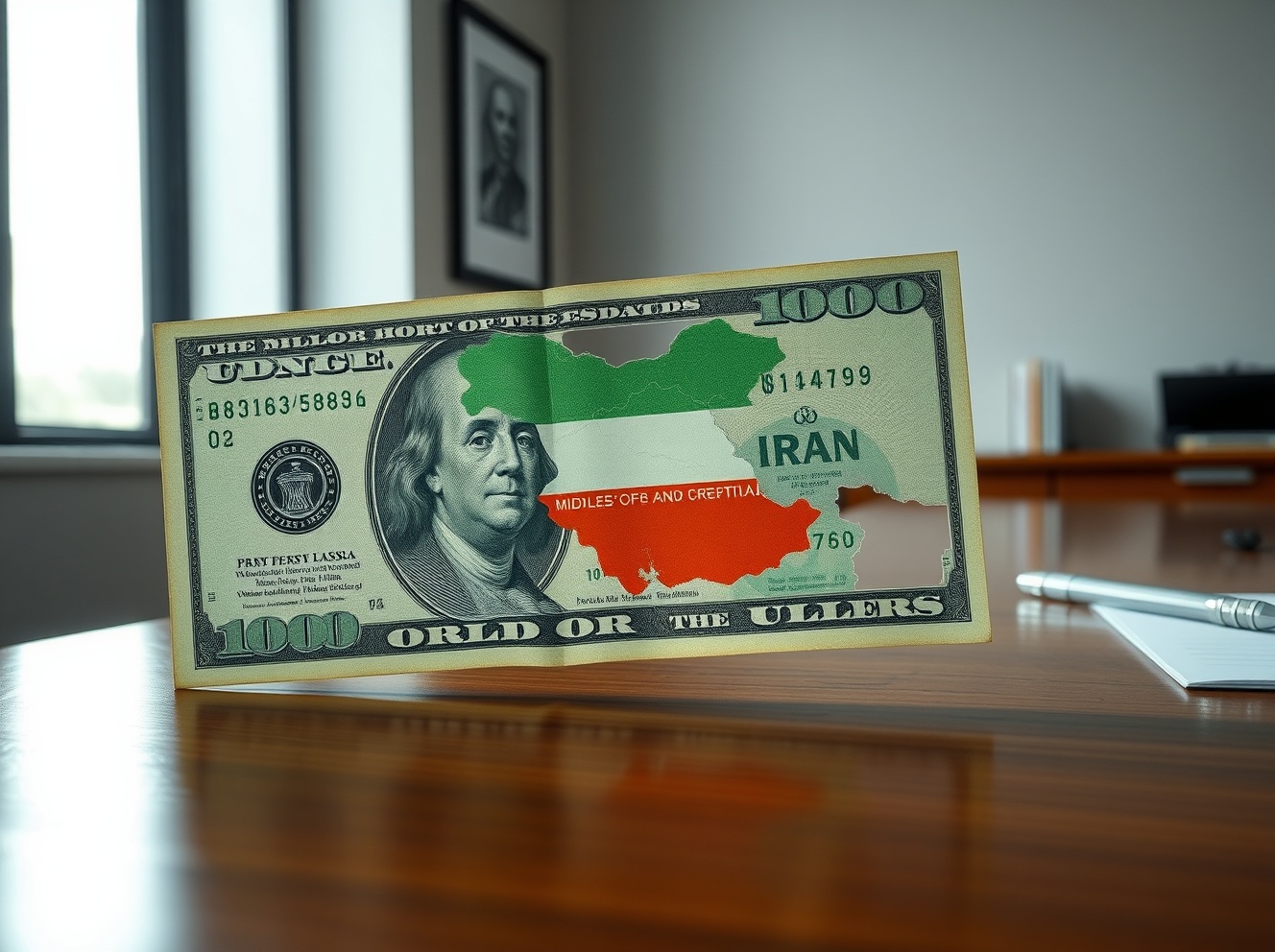
Dollar Stabilizes as Trump Announces Pivotal Talks with Iran, Easing Market Tensions
WASHINGTON, D.C. — March 15, 2025 — Global currency markets exhibited a notable calm today as the US dollar stabilized following a significant geopolitical announcement. Former President Donald Trump, in a statement from his Mar-a-Lago estate, confirmed the initiation of high-level diplomatic talks with the Islamic Republic of Iran. This development immediately reverberated through financial hubs from London to Tokyo, prompting analysts to reassess near-term risk premiums attached to the world’s primary reserve currency.
Dollar Stabilizes Amid Unfolding Diplomatic Maneuvers
Forex trading screens flashed green in early European sessions as the dollar index (DXY) halted a recent three-day slide. The index, which measures the dollar against a basket of six major currencies, found firm support. Market participants interpreted the prospect of dialogue as a potential de-escalation of long-standing tensions in the Middle East. Consequently, traders reduced their safe-haven bids on the US currency, which had been elevated due to regional uncertainties. However, the stabilization was measured, not a surge, reflecting cautious optimism rather than outright conviction.
“The immediate market reaction is a classic ‘risk-on’ shift,” noted Dr. Anya Sharma, Chief Strategist at Global Macro Advisors. “When geopolitical flashpoints show signs of cooling, capital often rotates out of traditional havens like the dollar and into riskier assets. The key question is whether this dialogue leads to tangible progress on core issues like Iran’s nuclear program and sanctions relief.” Sharma’s analysis points to the nuanced drivers behind currency movements where political headlines can trigger short-term volatility, but fundamental economic data dictates long-term trends.
Historical Context of US-Iran Relations and Market Impact
The relationship between the United States and Iran has been a persistent source of global market volatility for decades. Key events have consistently moved oil prices and currency values. For instance, the 2015 Joint Comprehensive Plan of Action (JCPOA) initially calmed markets and pressured the dollar as an oil price premium evaporated. Conversely, the US withdrawal from the deal in 2018 under President Trump reintroduced volatility and strengthened the dollar’s safe-haven appeal.
The current announcement marks a potential inflection point. Unlike previous administrations, this outreach originates from a former president who previously championed a “maximum pressure” campaign. This paradox adds a layer of complexity for analysts trying to gauge its sincerity and potential outcomes. The table below outlines recent major events and their documented impact on the DXY:
| Event | Date | Approximate DXY Movement |
|---|---|---|
| JCPOA Implementation | Jan 2016 | -2.1% (over two weeks) |
| US Withdrawal from JCPOA | May 2018 | +1.8% (over one week) |
| Assassination of Qasem Soleimani | Jan 2020 | +1.2% (intraday spike) |
| Announcement of Current Talks | Mar 2025 | Stabilization after decline |
Expert Analysis on Currency and Geopolitical Linkages
Financial experts emphasize that the dollar’s role extends beyond pure economics. As the world’s primary settlement currency for commodities like oil, its strength is intrinsically linked to Middle Eastern stability. “The petrodollar system ensures that any threat to oil supply routes or production immediately impacts dollar liquidity and demand,” explains Marcus Chen, a veteran forex trader. “Talks, even preliminary ones, reduce the perceived probability of supply disruption. This eases pressure on central banks globally to hold excessive dollar reserves for emergency scenarios.”
Furthermore, the Federal Reserve’s monetary policy remains the dominant fundamental driver. Current expectations for interest rate cuts in late 2025 had previously weighed on the dollar. The geopolitical news provided a temporary counterbalance, preventing a steeper decline. Chen adds, “This is a reminder that in forex markets, politics and economics are inseparable. A stable or strengthening dollar in this context could also help contain global inflationary pressures by making dollar-denominated imports cheaper for other nations.”
Potential Global Economic Ramifications of Renewed Dialogue
The stabilization of the dollar has immediate ripple effects across the global economy. Firstly, emerging market currencies, which often suffer when the dollar is strong, may find breathing room. Secondly, the price of gold, another classic safe haven, dipped slightly on the news. Most significantly, global oil benchmarks (Brent and WTI) traded marginally lower. Iran holds some of the world’s largest proven oil and gas reserves, and any potential pathway to legitimizing its exports could alter global energy supply forecasts.
However, significant hurdles remain. The success of any talks depends on several unresolved factors:
- Sanctions Framework: The complex web of US and international sanctions on Iran’s energy, banking, and shipping sectors.
- Regional Proxy Conflicts: Iran’s influence in Yemen, Syria, and Lebanon, and its support for various militant groups.
- Nuclear Compliance: The status and verification of Iran’s nuclear enrichment activities under the Non-Proliferation Treaty.
Market stability is therefore fragile. A breakdown in communications or a provocative military action by any regional actor could swiftly reverse the dollar’s calm and reignite volatility. European and Asian financial authorities are likely monitoring cross-border capital flows closely for signs of stress or sudden shifts.
Conclusion
The announcement of talks between Donald Trump and Iranian officials has provided a temporary anchor for the US dollar, demonstrating the profound sensitivity of currency markets to geopolitical developments. While the dollar stabilizes in the immediate aftermath, its long-term trajectory will depend on a confluence of factors: the substantive progress of diplomacy, the Federal Reserve’s policy decisions, and the broader global economic outlook. This event underscores that in the interconnected world of 2025, finance and foreign policy remain inextricably linked, with the dollar serving as the world’s most sensitive barometer of geopolitical risk.
FAQs
Q1: Why does the US dollar stabilize when geopolitical tensions ease?
The US dollar is considered a global safe-haven asset. During crises, investors buy dollars seeking stability, which increases its value. When tensions ease, this safe-haven demand diminishes, often leading to stabilization or a slight decline as capital moves to riskier investments.
Q2: What is the dollar index (DXY)?
The US Dollar Index (DXY) is a measure of the value of the United States dollar relative to a basket of six major world currencies: the Euro, Japanese Yen, British Pound, Canadian Dollar, Swedish Krona, and Swiss Franc. It is a key benchmark for the dollar’s international strength.
Q3: How could talks with Iran affect the average American?
Potential impacts are indirect but could include more stable gasoline prices if global oil markets calm, lower costs for imported goods if the dollar remains strong, and generally reduced economic uncertainty stemming from conflict risk in a critical region.
Q4: Has a former president conducting foreign policy like this happened before?
While former presidents often engage in informal diplomacy, direct announcements of high-level talks with adversarial nations from a former president outside office are highly unusual in modern US history and blur traditional lines of diplomatic protocol.
Q5: What are the biggest obstacles to successful US-Iran talks?
Core obstacles include deep mutual distrust, the status of Iran’s nuclear program, the extensive US sanctions regime, Iran’s regional military activities, and domestic political opposition in both countries to perceived concessions.
This post Dollar Stabilizes as Trump Announces Pivotal Talks with Iran, Easing Market Tensions first appeared on BitcoinWorld.


You May Also Like

SoFi launches unified fiat and crypto banking platform powered by Solana for real-time business transactions
Michael Saylor Pushes STRC as Lower-Volatility Alternative to BTC and MSTR




