DeSci (Decentralized Science) aims to accelerate the speed at which the world benefits from the next wave of scientific innovation through on-chain coordination.DeSci (Decentralized Science) aims to accelerate the speed at which the world benefits from the next wave of scientific innovation through on-chain coordination.

Detailed explanation of how BIO Protocol and DeSci projects are revolutionizing the new paradigm of scientific research development

2025/01/11 13:45

Author: Bankless

Compiled by: Felix, PANews

On the eve of the BIO Protocol token issuance, the price of tokens in the DeSci (decentralized science) ecosystem soared.

As the boundaries between cutting-edge technologies such as DeSci and AI gradually blurred, this craze continued until the launch of BIO and was reflected in the tokens related to these technologies. As a key hub for DeSci's financing, the launch of BIO brought hope to DeSci, spawned the outside world's enthusiasm for this highly experimental field, and attracted more attention and capital to DeSci over time.

This article will take a deep dive into how BIO Protocol works, the challenges it seeks to solve, and the DAOs that operate under its umbrella. It will then explore how other projects can fill out the DeSci narrative and provide additional tools or use cases to transform the way science is collaborated and funded.

BIO Protocol

BIO Protocol is essentially a decentralized, token-managed platform that supports and incubates specialized BioDAOs. By bringing funding decisions, intellectual property ownership, and governance on-chain, BIO directly addresses several long-standing obstacles in the biotech space:

  • Help early-stage projects escape the “valley of death” where insufficient funding often prevents promising ideas from coming to fruition
  • Tokenizing research results to promote open access and transparent collaboration, and combating data and intellectual property silos
  • Replace opaque R&D with real-time on-chain funding and results tracking

To achieve these goals, BIO implements several core mechanisms:

Curation

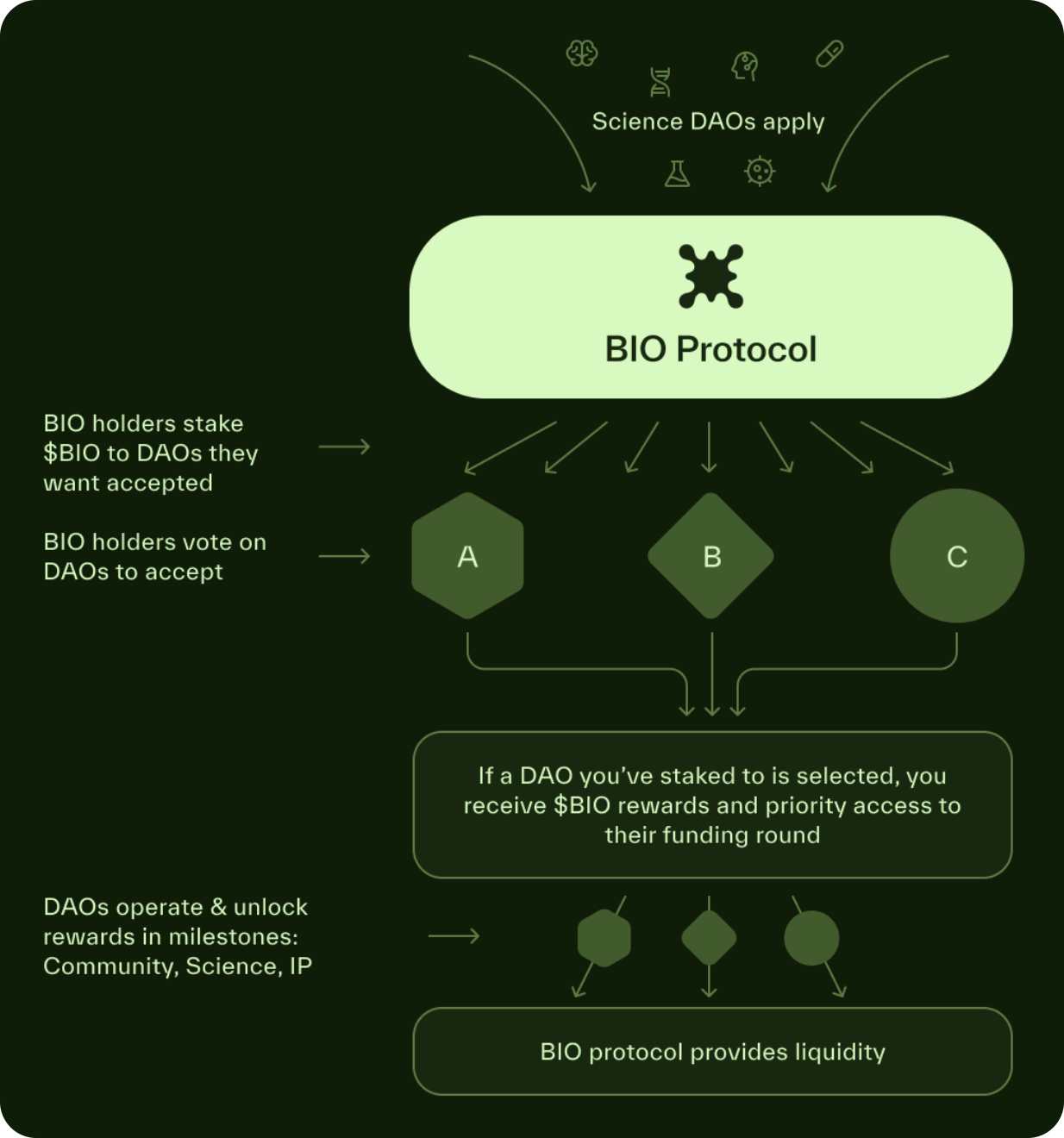
BIO holders lock up their tokens (vBIO) to help determine which new BioDAOs are allowed to join the network. This process ensures that only the most promising or community-backed ventures join, as those who pledge their support must stake BIO for a certain period of time. If approved, stakers have exclusive access to the BioDAO's funding rounds.
Detailed explanation of how BIO Protocol and DeSci projects are revolutionizing the new paradigm of scientific research development

Funding and Liquidity

After completing the curation phase, BioDAO opens a private pre-seed auction for those who lock in vBIO.

This allows early backers of the DAO and the BIO community to invest in early scientific research on terms traditionally reserved for VCs. At the same time, the BIO Protocol manages liquidity on behalf of these BioDAOs, eliminating the need to monitor secondary markets. The BIO Treasury pairs tokens (i.e. VITA/BIO or HAIR/BIO) with ETH or other assets, generating fees for the protocol while ensuring stable trading pairs. This arrangement allows BioDAOs to focus on advancing research rather than being busy with market operations.

Meta-governance

Because the BIO Treasury holds a portion of every BioDAO token, BIO holders collectively gain influence within the broader DeSci ecosystem.

This meta-governance structure enables them to guide multiple BioDAO decisions, whether it’s determining research priorities or highlighting synergies between projects. Additionally, by diversifying the assets held in the treasury, the protocol enhances its ability to invest in new projects and reinvest in existing ones, enabling seamless coordination across an ever-expanding scientific research landscape.

Providing benefits

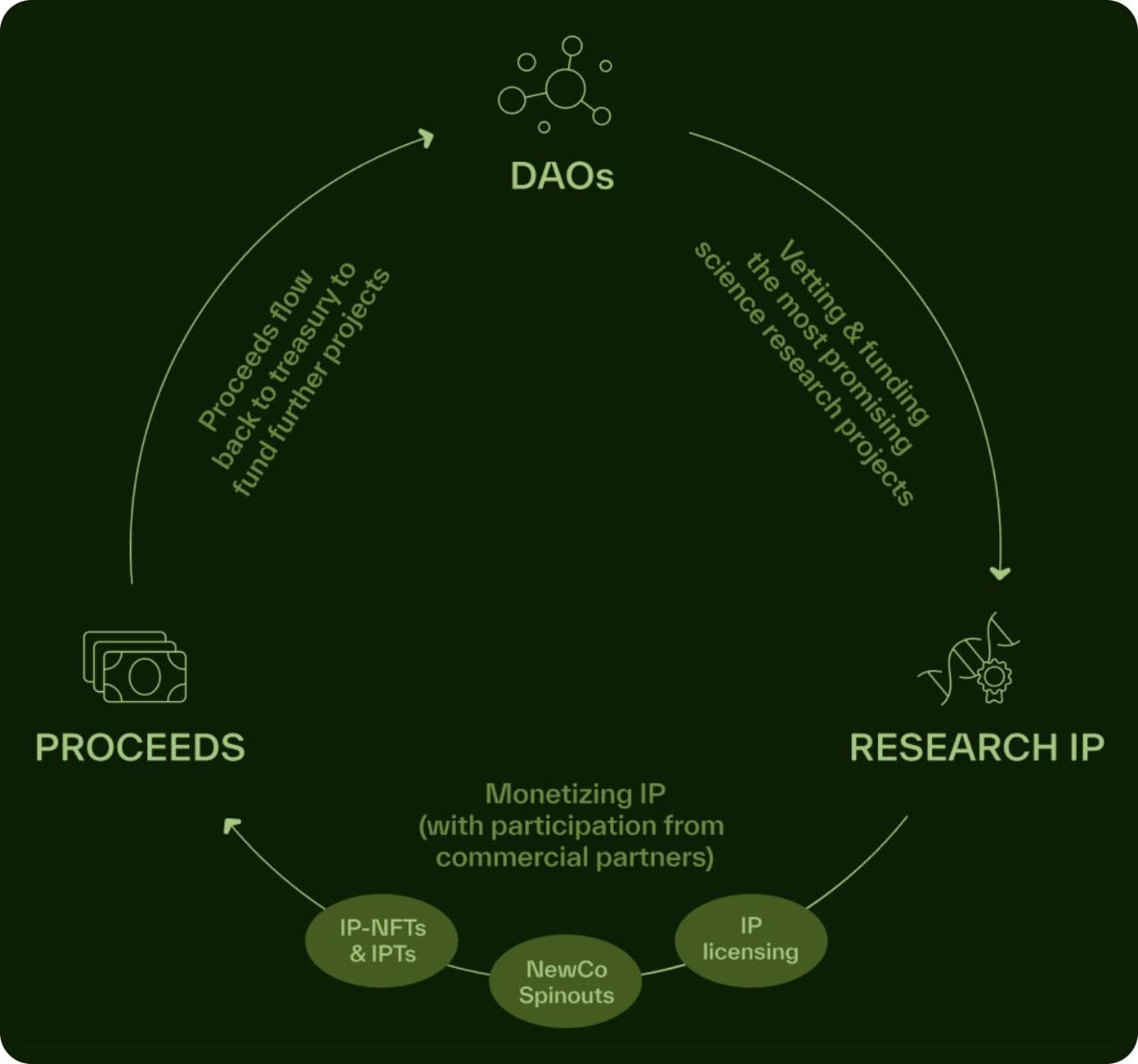
To incentivize clear, measurable contributions to its network, BIO issues “bio/acc rewards” in the form of additional BIO tokens to BioDAOs that achieve key milestones. In addition to these incentives, BioDAOs can tokenize their IP, from research data to patents. By issuing IP tokens, BioDAOs can grant partial ownership of their research results, allowing more stakeholders to benefit from future scientific breakthroughs, while retaining control over key decisions and potentially earning revenue from the use of their data.
Detailed explanation of how BIO Protocol and DeSci projects are revolutionizing the new paradigm of scientific research development

In addition to direct incentives, the overall value of the network grows through token distribution and the liquidity owned by the protocol. Grants to new BioDAOs are exchanged for a small stake in their tokens, while liquidity pool fees flow back into the treasury. As BioDAOs mature and produce tangible results, the total value of these assets increases, reinforcing a virtuous cycle of funding, growth, and innovation.

BioDAO in BIO

Currently, there are eight BioDAOs active in the BIO Network, each focusing on a specific area of research.

  • VitaDAO | $VITA

VitaDAO launched in 2021 to support research into extending human lifespan. Funded by Pfizer Ventures and Balaji Srinivasan, it explores the biological mechanisms of aging, including neurodegenerative diseases.

  • Quantum Biology DAO

Quantum Biology DAO studies how weak magnetic fields affect cells at the quantum level. In collaboration with the Institute for Quantum Biology, it aims to develop quantum microscopes to open up new avenues for longevity research, drug discovery, and more.

  • HairDAO | HAIR

HairDAO unites patients, researchers, and funders to address the under-resourced issue of hair loss.

  • ValleyDAO | $GROW

ValleyDAO is working to pursue synthetic biology solutions to climate change, such as engineering microbes to capture carbon dioxide or produce biodegradable materials.

  • AthenaDAO | $ATH

AthenaDAO is focused on women’s health, filling a gap that traditional funding has neglected. Through a decentralized community of patients, scientists, and advocates, it supports projects in reproductive health, hormonal imbalance, and other under-researched topics in female biology.

  • CryoDAO | $CRYO

CryoDAO directs funding toward cryopreservation research to improve organ and tissue storage, a potentially life-saving option.

  • PsyDAO | $PSY

PsyDAO focuses on psychedelic research for mental health issues such as depression, addiction, and PTSD. It uses a decentralized funding model and AI-based auditing to accelerate the discovery of new compounds, while on-chain governance ensures transparency in resource allocation.

  • CerebrumDAO | $NEURON

CerebrumDAO convenes a global community to prevent neurodegeneration and prolong brain health. It studies diseases such as Alzheimer's, focusing on inflammation, metabolic issues, the blood-brain barrier and their impact.

Other DeSci Projects

In addition to the BIO Protocol ecosystem, there are many interesting DeSci projects that bring new platforms or tools for scientific research discoveries.

ResearchHub Foundation

Detailed explanation of how BIO Protocol and DeSci projects are revolutionizing the new paradigm of scientific research development

Founded by Coinbase CEO Brian Armstrong and Patrick Joyce, the ResearchHub Foundation uses RSC to create an open platform for publishing and reviewing science. Contributors earn RSC by publishing research, curating content, or promoting discussions. The platform aims to build a "GitHub" for scientific research, aiming to simplify peer review, encourage open sharing, and bring real-time accountability to academic publishing, all through token incentives. RSC holders can also vote on platform improvements and reward distribution.

yesnoerror
Detailed explanation of how BIO Protocol and DeSci projects are revolutionizing the new paradigm of scientific research development

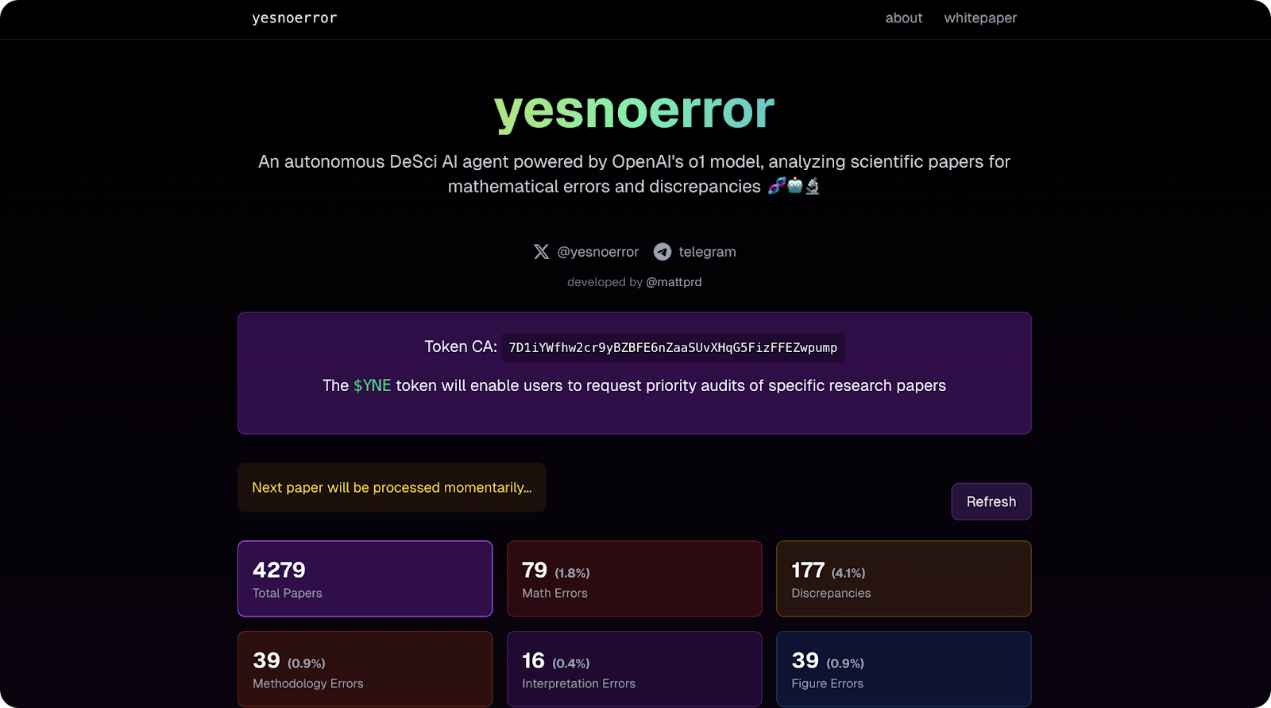
Yesnoerror is a decentralized platform that combines AI with community-driven oversight to improve the reliability of scientific research papers. Its AI engine constantly scans for inaccuracies in research (whether in data, statistical analysis, or references) and flags potential issues for further review. Community members who verify or correct these errors will receive YNE tokens, creating intrinsic incentives for thorough review and timely feedback.

Overall, YNE hopes to detect problems early to prevent false theories, reduce the risk of poor policy decisions and wasted research, and develop an AI that can learn from users to better detect problems across a range of different scientific fields.

pump.Science
Detailed explanation of how BIO Protocol and DeSci projects are revolutionizing the new paradigm of scientific research development

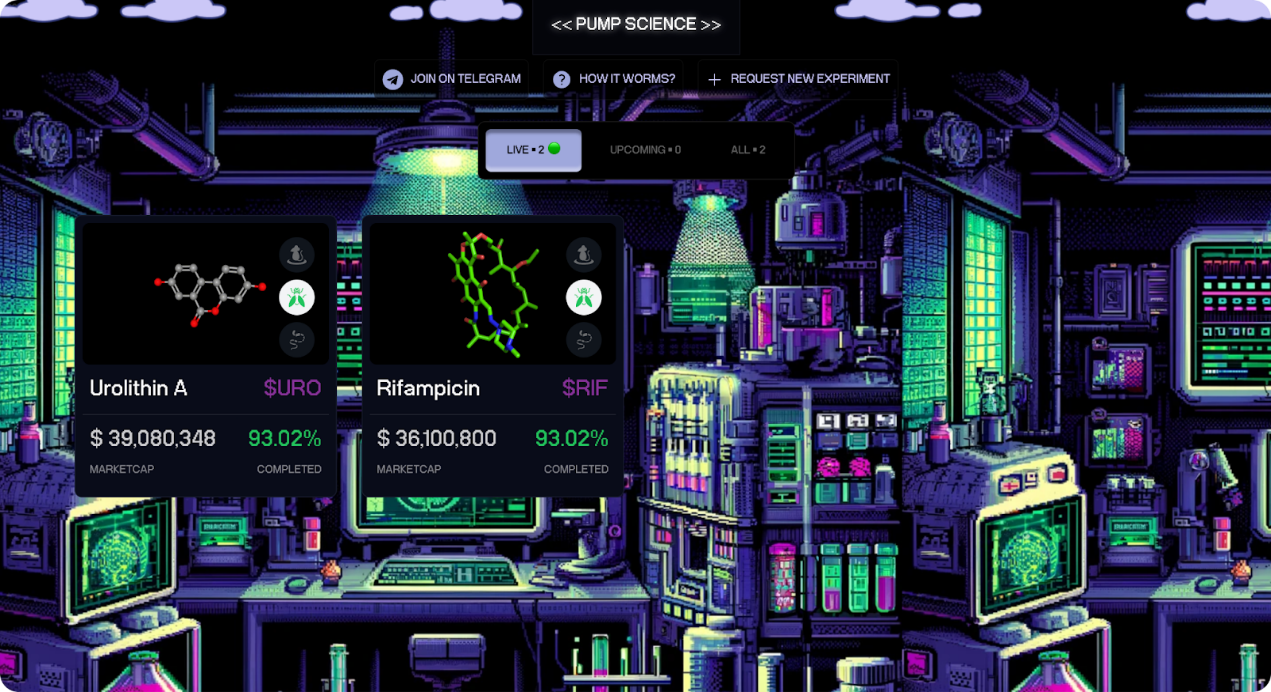
Pump.science is a DeSci platform that aims to identify and develop chemicals that can extend healthy human lifespan. It hopes to gamify research by enabling low-cost testing on simple organisms (worms, flies) before using complex models (mice). This approach could allow for early identification of promising interventions, using cryptocurrency-based funding to propose or invest in new compounds. By live-streaming experiments, the protocol provides real-time data, allowing researchers and speculators alike to track results and potentially adjust their support as research progresses.

Conclusion

BIO Protocol’s token launch puts the DeSci space in the spotlight, showcasing how a new generation of on-chain initiatives can reshape R&D in biotech and beyond.

Outside of the BIO ecosystem, other DeSci projects demonstrate complementary strategies for enhancing scientific research through blockchain. From ResearchHub's open collaboration platform to yesnoerror's AI-based paper audits and pump.science's gamified longevity experiments, these projects explore the intersection of science and crypto from different perspectives. Taken together, they point to a rapidly evolving DeSci landscape where shared governance, financial coordination, and real-time data sharing may lead to new breakthroughs.

Whether it’s solving funding bottlenecks, streamlining peer review, or discovering molecules that extend lifespan, DeSci’s solutions have the audacious goal of empowering a broad, motivated community to pursue discovery, ultimately accelerating the speed at which the world benefits from the next wave of scientific innovation.

Related reading: BIO Protocol in-depth research report: Decentralized Science (DeSci) platform supported by Binance

Market Opportunity
BIO Protocol Logo
BIO Protocol Price(BIO)
$0.04229
$0.04229$0.04229
-4.60%
USD
BIO Protocol (BIO) Live Price Chart
Disclaimer: The articles reposted on this site are sourced from public platforms and are provided for informational purposes only. They do not necessarily reflect the views of MEXC. All rights remain with the original authors. If you believe any content infringes on third-party rights, please contact service@support.mexc.com for removal. MEXC makes no guarantees regarding the accuracy, completeness, or timeliness of the content and is not responsible for any actions taken based on the information provided. The content does not constitute financial, legal, or other professional advice, nor should it be considered a recommendation or endorsement by MEXC.

You May Also Like

More On-Chain Activity as Over 131,000 Cardano Transactions Feature NIGHT Tokens

More On-Chain Activity as Over 131,000 Cardano Transactions Feature NIGHT Tokens

The launch of NIGHT, the native token of Midnight, has significantly impacted the number of transactions across the broader Cardano ecosystem. Cardano founder Charles
Share
Coinstats2025/12/18 15:13
What is Ethereum’s Fusaka Upgrade? Everything You Need to Know

What is Ethereum’s Fusaka Upgrade? Everything You Need to Know

Over the past few weeks, one of the most talked-about topics within the crypto community has been Ethereum’s Fusaka upgrade. What exactly is this upgrade, and how does it affect the Ethereum blockchain and the average crypto investor? This article will be the only explainer guide you need to understand the details of this upgrade within the Ethereum ecosystem. Why Does Ethereum Undergo Upgrades? To understand what the Fusaka upgrade will achieve, it is essential to comprehend what Ethereum’s upgrades aim to accomplish. The layer-1 Ethereum network was originally designed as a proof-of-work (PoW) blockchain. This implied that miners were actively behind the block mining process. While this consensus mechanism ensured security for the L1 blockchain, it also triggered slower transactions. The Ethereum development team unveiled a detailed roadmap, outlining various upgrades that will fix most of the network’s issues. These problems include its scalability issue, which refers to the network’s ability to process transactions faster. Currently, the Ethereum blockchain processes fewer transactions per second compared to most blockchains using the proof-of-stake (PoS) consensus mechanism. Over the past decade, Ethereum’s developers have implemented most of these upgrades, enhancing the blockchain’s overall performance. Here is a list of the upgrades that Ethereum has undergone: Frontier: July 2015 Frontier Thawing: September 2015 Homestead: March 2016 DAO Fork: July 2016 Tangerine Whistle: October 2016 Spurious Dragon: November 2016 Byzantium: October 2017 Constantinople: February 2019 Petersburg: February 2019 Istanbul: December 2019 Muir Glacier: January 2020 Berlin: April 2021 London: August 2021 Arrow Glacier: December 2021 Gray Glacier: June 2022 The Merge: September 2022 Bellatrix: September 2022 Paris: September 2022 Shanghai: April 2023 Capella: April 2023 Dencun (Cancun-Deneb): March 2024 Pectra (Prague-Electra): May 2025 Most of these upgrades (forks) addressed various Ethereum Improvement Proposals (EIPs) geared towards driving the blockchain’s growth. For instance, the Merge enabled the transition from the PoW model to a proof of stake (PoS) algorithm. This brought staking and network validators into the Ethereum mainnet. Still, this upgrade failed to unlock the much-needed scalability. For most of Ethereum’s existence, it has housed layer-2 networks, which leverage Ethereum’s infrastructure to tackle the scalability issue. While benefiting from the L1 blockchain’s security and decentralization, these L2 networks enable users to execute lightning-fast transactions. Last year’s Dencun upgrade made transacting on layer-2 networks even easier with the introduction of proto-danksharding (EIP-4844). Poised to address the scalability issue, this upgrade introduces data blobs. You can think of these blobs as temporary, large data containers that enable cheaper, yet temporary, storage of transactions on L2 networks. The effect? It reduces gas fees, facilitating cheaper transaction costs on these L2 rollups. The Pectra upgrade, unveiled earlier this year, also included EIPs addressing the scalability issue plaguing the Ethereum ecosystem. The upcoming upgrade, Fusaka, will help the decade-old blockchain network to become more efficient by improving the blob capacity. What is Ethereum’s Fusaka Upgrade? Fusaka is an upgrade that addresses Ethereum’s scalability issue, thereby making the blockchain network more efficient. As mentioned earlier, Fusaka will bolster the blob capacity for layer-2 blockchains, which refers to the amount of temporary data the network can process. This will help facilitate faster transactions on these L2 scaling solutions. It is worth noting that upon Fusaka’s completion, users will be able to save more when performing transactions across layer-2 networks like Polygon, Arbitrum, and Base. The upgrade has no direct positive impact on the L1 blockchain itself. On September 18th, Christine Kim, representing Ethereum core developers, confirmed the launch date for Fusaka via an X post. Following an All Core Developers Consensus (ACDC) call, the developer announced that the Ethereum Fusaka upgrade will take place on December 3rd. Ahead of the upgrade, there will be three public testnets. Fusaka will first be deployed on Holesky around October 1st. If that goes smoothly, it will move to Sepolia on October 14th. Finally, it will be on the Hoodi testnet on October 28th. Each stage provides developers and node operators with an opportunity to identify and address bugs, run stress tests, and verify that the network can effectively handle the new features. Running through all three testnets ensures that by the time the upgrade is ready for mainnet, it will have been thoroughly tested in different environments. Crucial to the Fusaka upgrade are the Blob Parameter Only (BPO) forks, which will enhance the blob capacity without requiring end-users of the blockchain network to undergo any software changes. For several months, the Ethereum development team has been working towards unveiling the BPO-1 and BPO-2 forks. Blockchain developers have pooled resources to develop Fusaka through devnets. Following performances from devnet-5, developers within the ecosystem confirmed that the BPO upgrades will come shortly after the Fusaka mainnet debut. Approximately two weeks after the mainnet launch, on December 17th, the BPO-1 fork will increase the blob target/max from 6/9 to 10/15. Then, two weeks later, on January 7th, 2026, the BPO-2 fork is expected to expand capacity further to a metric of 14/21. Ultimately, the Fusaka upgrade would have doubled the blob capacity, marking a pivotal move for the Ethereum ecosystem. Impact on the Ethereum Ecosystem Admittedly, the Ethereum ecosystem is expected to see more developers and users join the bandwagon. With the introduction of faster and cheaper transactions, developers and business owners can explore more efficient ways to build on the L1 blockchain. This means we can see initiatives like crypto payment solutions and more decentralized finance (DeFi) projects enter the Ethereum bandwagon. Users, on the other hand, will benefit as they execute cheaper on-chain transactions. Despite the benefits from this initiative, some in the crypto community worry about the reduction in Ethereum’s gwei (the smallest unit of the Ether coin). Shortly after the Dencun upgrade, Ethereum’s median gas fee dropped to 1.7 gwei. Fast-forward to the present, and the median gas fee sits at 0.41 gwei, according to public data on Dune. This drop hints at the drastic reduction in gas fees, which could affect those staking their crypto holdings on the L1 blockchain, making it less attractive to stakers. Since the Fusaka upgrade aims to reduce the L2 network gas fee further, some observers may worry that crypto stakers will receive fewer block rewards. Time will tell if the Ethereum development team will explore new incentives for those participating in staking. Will Ether’s Price Pump? There is no guarantee that Ether (ETH) will jump following Fusaka’s launch in December. This is because the second-largest cryptocurrency saw no significant price movement during past major upgrades. According to data from CoinMarketCap, ETH sold for approximately $4,400 at the time of writing. Notably, the coin saw its current all-time high (ATH) of $4,900 roughly a month ago. The price pump was fueled by consistent Ether acquisitions by exchange-traded fund (ETF) buyers and crypto treasury firms. Source: CoinMarketCap Although these upgrades do not guarantee a surge in ETH’s price, they have a lasting impact on the underlying Ethereum blockchain. Conclusion Over the past 10 years, the Ethereum network has had no rest as it constantly ships out new upgrades to make its mainnet more scalable. The Fusaka upgrade aims to make Ethereum layer-2 networks cheaper to use. To ensure its smooth usage, several testnets are lined up. Stay tuned for updates on how Ethereum will be post-Fusaka. The post What is Ethereum’s Fusaka Upgrade? Everything You Need to Know appeared first on Cointab.
Share
Coinstats2025/09/20 06:57
Vitalik Buterin Suggests Simplifying Ethereum to Boost User Understanding

Vitalik Buterin Suggests Simplifying Ethereum to Boost User Understanding

The post Vitalik Buterin Suggests Simplifying Ethereum to Boost User Understanding appeared on BitcoinEthereumNews.com. Ethereum trustlessness requires broader
Share
BitcoinEthereumNews2025/12/18 15:13