Argentine President Javier Milei announced on Friday that his government is working on ways to meet $9.5 billion in debt payments due in 2026, but made it clear he’s not relying on U.S. President Donald Trump to fix the crisis. When asked directly if the U.S. Treasury might intervene to help stabilize Argentina’s fragile economy, […]Argentine President Javier Milei announced on Friday that his government is working on ways to meet $9.5 billion in debt payments due in 2026, but made it clear he’s not relying on U.S. President Donald Trump to fix the crisis. When asked directly if the U.S. Treasury might intervene to help stabilize Argentina’s fragile economy, […]

Javier Milei not counting on Trump as Argentina faces $9.5 billion debt in 2026

2025/09/20 18:55
4 min read
For feedback or concerns regarding this content, please contact us at crypto.news@mexc.com

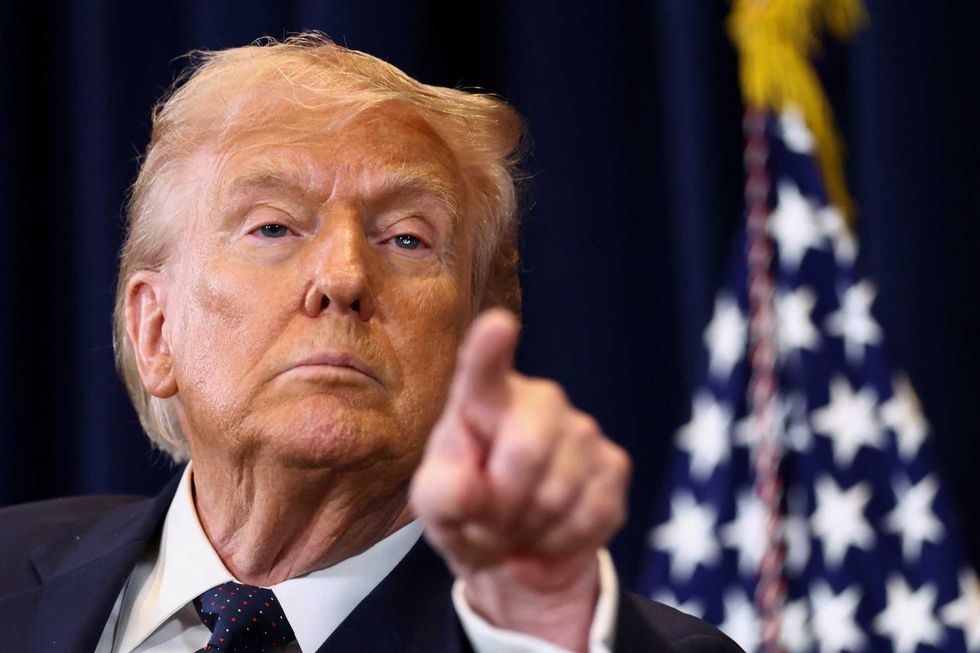
Argentine President Javier Milei announced on Friday that his government is working on ways to meet $9.5 billion in debt payments due in 2026, but made it clear he’s not relying on U.S. President Donald Trump to fix the crisis.

When asked directly if the U.S. Treasury might intervene to help stabilize Argentina’s fragile economy, Javier avoided the question and simply said, “Those negotiations take time and we don’t make announcements until it’s confirmed. But we are working very hard, we’re very advanced, and it’s a matter of time too.”

According to Bloomberg, this was interpreted by local media as a sign that quiet conversations with Washington are underway, but nobody’s officially confirming anything.

Treasury Secretary Scott Bessent, who visited Buenos Aires in April, had told a closed-door gathering of investors that the U.S. could tap into its Exchange Stabilization Fund to support Argentina. Since then, the Treasury hasn’t publicly commented.

And no one in Milei’s camp is offering clarification. His press office said nothing, and the economy ministry refused to answer questions. Economy Minister Luis Caputo also stayed vague but did mention during a Thursday podcast:

Central bank burns reserves as peso hits the wall

Argentina’s peso is crumbling. After the opposition’s big win in Buenos Aires, investors began dumping local assets fast. The peso slipped during nearly every trading session for two weeks straight, pushing authorities to pour over $400 million into the market to defend the currency.

That included $53 million sold on Wednesday, and another $379 million on Thursday. On top of that, the central bank had already blown through $1 billion earlier in the week trying to stop a full-blown collapse.

The peso hit 1,475 per dollar this week, pushing past the top end of its IMF-imposed trading band. To calm panic, the government brought in tighter trading controls.

The central bank banned shareholders and executives of banks from trading financial dollars (locally called MEP and CCL) for 90 days after any currency purchase on the official market.

Officials also raised reserve requirements and started dumping dollars from the Treasury and entering futures markets. But the bleeding hasn’t stopped.

Caputo insisted Thursday night, “We trust in the program and we’re not going to move away from the program. We’re going to sell up till the last dollar in the ceiling of the band.”

But that approach is killing Argentina’s ability to pay what it owes. The $20 billion loan from the International Monetary Fund is being eaten alive by intervention efforts, not servicing debt.

Markets tank as Milei loses control of narrative

The S&P Merval index just became the worst performer out of more than 90 global stock benchmarks tracked by Bloomberg this month.

Argentina’s dollar bonds, especially those due in 2035, are leading emerging market losses and now sit at their lowest level in a year. Yields have jumped from 10.27% at the start of September to more than 17%, putting the country right back in distressed territory.

Javier’s popularity nosedived after voters punished him in local elections. His brutal austerity measures, slashing healthcare and education spending, backfired hard. And with a corruption scandal unfolding inside his circle, the Peronists took back Buenos Aires.

Successive losses in Congress followed, sparking fear that he’s lost the ability to pass any more reforms. Christine Reed, who manages emerging market debt at Ninety One in New York, said, “It’s probably too soon to say that the story is crumbling, but certainly the new pieces of information that we’ve gotten in the last week have all been negative.”

Inflation had started to cool off, dropping under 100%, and investors had once cheered Javier’s drastic reforms when he took office in late 2023. But now that his agenda’s stuck, the optimism is gone.

The man who won on promises to dollarize the economy and shut down the central bank is now relying on that very same institution to sell dollars, enforce controls, and manage a crisis.

Don’t just read crypto news. Understand it. Subscribe to our newsletter. It's free.

Market Opportunity
Union Logo
Union Price(U)
$0.0008464
$0.0008464$0.0008464
-1.10%
USD
Union (U) Live Price Chart
Disclaimer: The articles reposted on this site are sourced from public platforms and are provided for informational purposes only. They do not necessarily reflect the views of MEXC. All rights remain with the original authors. If you believe any content infringes on third-party rights, please contact crypto.news@mexc.com for removal. MEXC makes no guarantees regarding the accuracy, completeness, or timeliness of the content and is not responsible for any actions taken based on the information provided. The content does not constitute financial, legal, or other professional advice, nor should it be considered a recommendation or endorsement by MEXC.

You May Also Like

U.S. Moves Grip on Crypto Regulation Intensifies

U.S. Moves Grip on Crypto Regulation Intensifies

The post U.S. Moves Grip on Crypto Regulation Intensifies appeared on BitcoinEthereumNews.com. The United States is contending with the intricacies of cryptocurrency regulation as newly enacted legislation stirs debate over centralized versus decentralized finance. The recent passage of the GENIUS Act under Bo Hines’ leadership is perceived to skew favor towards centralized entities, potentially disadvantaging decentralized innovations. Continue Reading:U.S. Moves Grip on Crypto Regulation Intensifies Source: https://en.bitcoinhaber.net/u-s-moves-grip-on-crypto-regulation-intensifies
Share
BitcoinEthereumNews2025/09/18 01:09
Cryptos Signal Divergence Ahead of Fed Rate Decision
Cryptos Signal Divergence Ahead of Fed Rate Decision

The post Cryptos Signal Divergence Ahead of Fed Rate Decision appeared on BitcoinEthereumNews.com. Crypto assets send conflicting signals ahead of the Federal Reserve’s September rate decision. On-chain data reveals a clear decrease in Bitcoin and Ethereum flowing into centralized exchanges, but a sharp increase in altcoin inflows. The findings come from a Tuesday report by CryptoQuant, an on-chain data platform. The firm’s data shows a stark divergence in coin volume, which has been observed in movements onto centralized exchanges over the past few weeks. Bitcoin and Ethereum Inflows Drop to Multi-Month Lows Sponsored Sponsored Bitcoin has seen a dramatic drop in exchange inflows, with the 7-day moving average plummeting to 25,000 BTC, its lowest level in over a year. The average deposit per transaction has fallen to 0.57 BTC as of September. This suggests that smaller retail investors, rather than large-scale whales, are responsible for the recent cash-outs. Ethereum is showing a similar trend, with its daily exchange inflows decreasing to a two-month low. CryptoQuant reported that the 7-day moving average for ETH deposits on exchanges is around 783,000 ETH, the lowest in two months. Other Altcoins See Renewed Selling Pressure In contrast, other altcoin deposit activity on exchanges has surged. The number of altcoin deposit transactions on centralized exchanges was quite steady in May and June of this year, maintaining a 7-day moving average of about 20,000 to 30,000. Recently, however, that figure has jumped to 55,000 transactions. Altcoins: Exchange Inflow Transaction Count. Source: CryptoQuant CryptoQuant projects that altcoins, given their increased inflow activity, could face relatively higher selling pressure compared to BTC and ETH. Meanwhile, the balance of stablecoins on exchanges—a key indicator of potential buying pressure—has increased significantly. The report notes that the exchange USDT balance, around $273 million in April, grew to $379 million by August 31, marking a new yearly high. CryptoQuant interprets this surge as a reflection of…
Share
BitcoinEthereumNews2025/09/18 01:01
Trump claims Iran plotted to 'take over the entire Middle East' after touting bombing raid

Trump claims Iran plotted to 'take over the entire Middle East' after touting bombing raid

President Donald Trump escalated his rhetoric against Iran on Friday, claiming the country had plans to dominate the Middle East shortly after announcing a major
Share
Rawstory2026/03/14 08:13