The post Oklahoma City Thunder: 2025-26 Season Preview appeared on BitcoinEthereumNews.com. OKLAHOMA CITY, OKLAHOMA – JUNE 22: Shai Gilgeous-Alexander #2 of the Oklahoma City Thunder celebrates with the Bill Russell NBA Finals Most Valuable Player trophy with his new one-of-one pair of Converse signature basketball shoe, the SHAI 001 in “Trophy Gold” after defeating the Indiana Pacers 103-91 in Game Seven of the 2025 NBA Finals at Paycom Center on June 22, 2025 in Oklahoma City, Oklahoma. NOTE TO USER: User expressly acknowledges and agrees that, by downloading and or using this photograph, User is consenting to the terms and conditions of the Getty Images License Agreement. (Photo by Matthew Stockman/Getty Images) Getty Images The Oklahoma City Thunder will be the headliner of the NBA’s 2025-26 campaign, as fans pack Paycom Center to watch the franchise’s first championship banner rise and the players receive their rings on opening night. The very first game of the season will take place in OKC. Once again, this team is expected to contend for a title and make a run at going back-to-back, which is a rare feat in today’s NBA. Still, despite their success, this remains a young roster with plenty of questions to answer entering the new season. What can be expected from the Thunder in 2025-26 as they chase another championship? Outlook By nearly every metric available, the Thunder enters the season as the favorite to win another championship. For the first time in franchise history, the expectations are undeniable. Last year, even after claiming the top seed in the Western Conference and emerging as a legitimate title contender, Oklahoma City maintained a consistent message from the front office down — there were no external expectations to live up to, only internal standards to uphold. That mindset might be harder to maintain this time around. With nearly the entire roster returning from… The post Oklahoma City Thunder: 2025-26 Season Preview appeared on BitcoinEthereumNews.com. OKLAHOMA CITY, OKLAHOMA – JUNE 22: Shai Gilgeous-Alexander #2 of the Oklahoma City Thunder celebrates with the Bill Russell NBA Finals Most Valuable Player trophy with his new one-of-one pair of Converse signature basketball shoe, the SHAI 001 in “Trophy Gold” after defeating the Indiana Pacers 103-91 in Game Seven of the 2025 NBA Finals at Paycom Center on June 22, 2025 in Oklahoma City, Oklahoma. NOTE TO USER: User expressly acknowledges and agrees that, by downloading and or using this photograph, User is consenting to the terms and conditions of the Getty Images License Agreement. (Photo by Matthew Stockman/Getty Images) Getty Images The Oklahoma City Thunder will be the headliner of the NBA’s 2025-26 campaign, as fans pack Paycom Center to watch the franchise’s first championship banner rise and the players receive their rings on opening night. The very first game of the season will take place in OKC. Once again, this team is expected to contend for a title and make a run at going back-to-back, which is a rare feat in today’s NBA. Still, despite their success, this remains a young roster with plenty of questions to answer entering the new season. What can be expected from the Thunder in 2025-26 as they chase another championship? Outlook By nearly every metric available, the Thunder enters the season as the favorite to win another championship. For the first time in franchise history, the expectations are undeniable. Last year, even after claiming the top seed in the Western Conference and emerging as a legitimate title contender, Oklahoma City maintained a consistent message from the front office down — there were no external expectations to live up to, only internal standards to uphold. That mindset might be harder to maintain this time around. With nearly the entire roster returning from…

Oklahoma City Thunder: 2025-26 Season Preview

For feedback or concerns regarding this content, please contact us at crypto.news@mexc.com

OKLAHOMA CITY, OKLAHOMA – JUNE 22: Shai Gilgeous-Alexander #2 of the Oklahoma City Thunder celebrates with the Bill Russell NBA Finals Most Valuable Player trophy with his new one-of-one pair of Converse signature basketball shoe, the SHAI 001 in “Trophy Gold” after defeating the Indiana Pacers 103-91 in Game Seven of the 2025 NBA Finals at Paycom Center on June 22, 2025 in Oklahoma City, Oklahoma. NOTE TO USER: User expressly acknowledges and agrees that, by downloading and or using this photograph, User is consenting to the terms and conditions of the Getty Images License Agreement. (Photo by Matthew Stockman/Getty Images)

Getty Images

The Oklahoma City Thunder will be the headliner of the NBA’s 2025-26 campaign, as fans pack Paycom Center to watch the franchise’s first championship banner rise and the players receive their rings on opening night. The very first game of the season will take place in OKC.

Once again, this team is expected to contend for a title and make a run at going back-to-back, which is a rare feat in today’s NBA. Still, despite their success, this remains a young roster with plenty of questions to answer entering the new season.

What can be expected from the Thunder in 2025-26 as they chase another championship?

Outlook

By nearly every metric available, the Thunder enters the season as the favorite to win another championship. For the first time in franchise history, the expectations are undeniable. Last year, even after claiming the top seed in the Western Conference and emerging as a legitimate title contender, Oklahoma City maintained a consistent message from the front office down — there were no external expectations to live up to, only internal standards to uphold.

That mindset might be harder to maintain this time around. With nearly the entire roster returning from a championship run, another title isn’t just possible, it’s expected. While several teams across the league have improved, the Thunder still projects as the NBA’s most complete group. Simply put, this is a championship-or-bust season in Oklahoma City, which in this case is a good problem to have.

Schedule

Tonight kicks off an 82-game regular season schedule for the Thunder against the Houston Rockets in what will be a battle between two of the best teams in the Western Conference. OKC will be one of the most nationally televised teams this season, which is well deserved given the circumstances.

The Thunder is slated to play on Christmas Day against the San Antonio Spurs, highlighting the growing rivalry between Chet Holmgren and Victor Wembanyama, who have been compared since their teenage years. Beyond their individual duel, the two franchises share historical playoff ties and could renew that rivalry in the coming years.

Overall, the NBA schedule reinforces Oklahoma City’s new status as a marquee team, featured prominently on two of the league’s biggest stages.

Final Roster

The final puzzle piece was placed over the weekend, as Chris Youngblood signed a two-way deal with the Thunder. Now all 18 players are solidified for OKC.

  • Shai Gilgeous-Alexander
  • Luguentz Dort
  • Alex Caruso
  • Aaron Wiggins
  • Isaiah Joe
  • Nikola Topić
  • Cason Wallace
  • AJay Mitchell
  • Ousmane Dieng
  • Jalen Williams
  • Jaylin Williams
  • Kenrich Williams
  • Chet Holmgren
  • Isaiah Hartenstein
  • Thomas Sorber
  • Branden Carlson (Two-Way)
  • Brooks Barnhizer (Two-Way)
  • Chris Youngblood (Two-Way)’

When it comes to the 15-man roster, 14 of these players were on the team last season. The only change is the addition of Thomas Sorber, a first-round pick who was signed as Dillon Jones was traded away. From there, a pair of new two-way players exist alongside Branden Carlson, as Brooks Barnhizer and Chris Yongblood join the fold.


This is essentially the same roster that OKC won a title with last season. It will take organic growth from within the organization and good fortune on the injury front, but the Thunder is set up very well to win another title this season.

Source: https://www.forbes.com/sites/nicholascrain/2025/10/21/oklahoma-city-thunder-2025-26-season-preview/

Market Opportunity
Manchester City Fan Logo
Manchester City Fan Price(CITY)
$0.5713
$0.5713$0.5713
-3.74%
USD
Manchester City Fan (CITY) Live Price Chart
Disclaimer: The articles reposted on this site are sourced from public platforms and are provided for informational purposes only. They do not necessarily reflect the views of MEXC. All rights remain with the original authors. If you believe any content infringes on third-party rights, please contact crypto.news@mexc.com for removal. MEXC makes no guarantees regarding the accuracy, completeness, or timeliness of the content and is not responsible for any actions taken based on the information provided. The content does not constitute financial, legal, or other professional advice, nor should it be considered a recommendation or endorsement by MEXC.

You May Also Like

Tether Backs Ark Labs’ $5.2 Million Bet on Bitcoin’s Stablecoin Revival

Tether Backs Ark Labs’ $5.2 Million Bet on Bitcoin’s Stablecoin Revival

The post Tether Backs Ark Labs’ $5.2 Million Bet on Bitcoin’s Stablecoin Revival appeared on BitcoinEthereumNews.com. In brief Ark Labs secured backing from Tether
Share
BitcoinEthereumNews2026/03/12 21:44
MySQL Single Leader Replication with Node.js and Docker

MySQL Single Leader Replication with Node.js and Docker

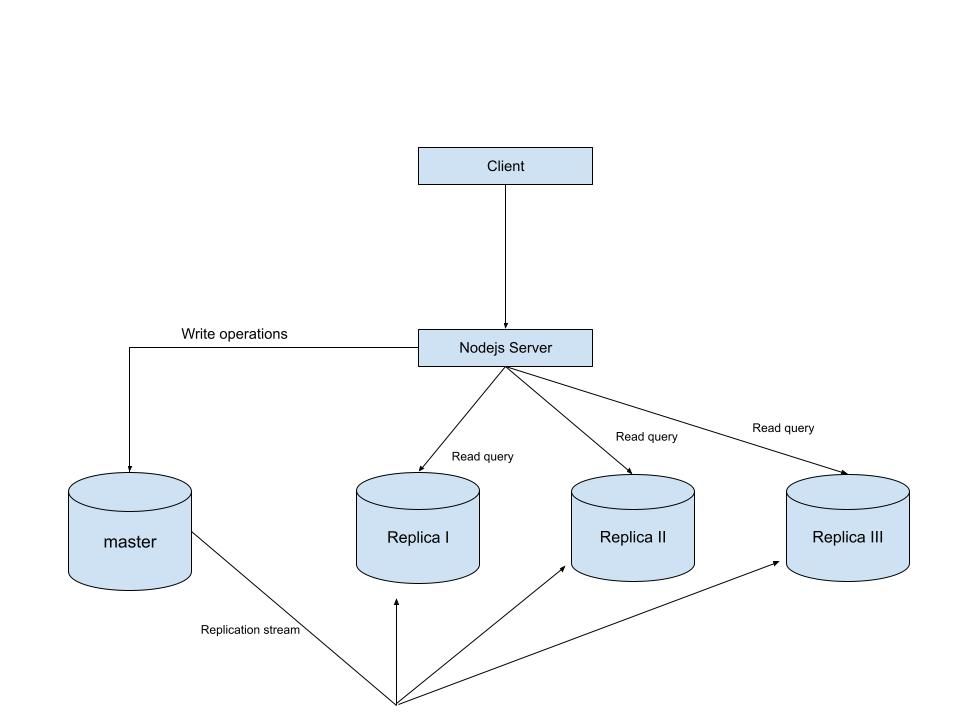
Modern applications demand high availability and the ability to scale reads without compromising performance. One of the most common strategies to achieve this is Replication. In this setup, we configured a single database to act as the leader (master) and handle all write operations, while three replicas handle read operations. In this article, we’ll walk through how to set up MySQL single-leader replication on your local machine using Docker. Once the replication is working, we’ll connect it to a Node.js application using Sequelize ORM, so that reads are routed to the replica and writes go to the master. By the end, you’ll have a working environment where you can see replication in real time Prerequisites knowledge of database replication Background knowledge of docker and docker compose Background knowledge of Nodejs and how to run a NodeJS server An Overview of what we are building Setup Setup our database servers on docker compose in the root of our project directory, create a file named docker-compose.yml with the following content to setup our mysql primary and replica databases. \ \ name: "learn-replica" volumes: mysqlMasterDatabase: mysqlSlaveDatabase: mysqlSlaveDatabaseII: mysqlSlaveDatabaseIII: networks: mysql-replication-network: services: mysql-master: image: mysql:latest container_name: mysql-master command: --server-id=1 --log-bin=ON environment: MYSQL_ROOT_PASSWORD: master MYSQL_DATABASE: replicaDb ports: - "3306:3306" volumes: - mysqlMasterDatabase:/var/lib/mysql networks: - mysql-replication-network mysql-slave: image: mysql:latest container_name: mysql-slave command: --server-id=2 --log-bin=ON environment: MYSQL_ROOT_PASSWORD: slave MYSQL_DATABASE: replicaDb MYSQL_ROOT_HOST: "%" ports: - "3307:3306" volumes: - mysqlSlaveDatabase:/var/lib/mysql depends_on: - mysql-master networks: - mysql-replication-network mysql-slaveII: image: mysql:latest container_name: mysql-slaveII command: --server-id=2 --log-bin=ON environment: MYSQL_ROOT_PASSWORD: slave MYSQL_DATABASE: replicaDb MYSQL_ROOT_HOST: "%" ports: - "3308:3306" volumes: - mysqlSlaveDatabaseII:/var/lib/mysql depends_on: - mysql-master networks: - mysql-replication-network mysql-slaveIII: image: mysql:latest container_name: mysql-slaveIII command: --server-id=3 --log-bin=ON environment: MYSQL_ROOT_PASSWORD: slave MYSQL_DATABASE: replicaDb MYSQL_ROOT_HOST: "%" ports: - "3309:3306" volumes: - mysqlSlaveDatabaseIII:/var/lib/mysql depends_on: - mysql-master networks: - mysql-replication-network In this setup, I’m creating a master database container called mysql-master and 3 replica containers called mysql-slave, mysql-slaveII and mysql-slaveIII. I won’t go too deep into the docker-compose.yml file since it’s just a basic setup, but I do want to walk you through the command line instructions used in all four services because that’s where things get interesting.
command: --server-id=1 --log-bin=ON The --server-id option gives each MySQL server in your replication setup its own name tag. Each one has to be unique and without it, replication won’t work at all. Another cool option not included here is binlog_format=ROW. This tells MySQL how to keep track of changes before passing them along to the replicas. By default, MySQL already uses row-based replication, but you can explicitly set it to ROW to be sure or switch it to STATEMENT if you’d rather log the actual SQL statements instead of row-by-row changes. \ Run our containers on docker Now, in the terminal, we can run the following command to spin up our database containers: docker-compose up -d \ Setting Up Our Master (Primary) Server To configure our master server, we would have to first access the running instance on docker using the following command docker exec -it mysql-master bash This command opens an interactive Bash shell inside the running Docker container named mysql-master, allowing us to run commands directly inside that container. \ Now that we’re inside the container, we can access the MySQL server and start running commands. type: mysql -uroot -p This will log you into MySQL as the root user. You’ll be prompted to enter the password you set in your docker-compose.yml file. \ Next, we need to create a special user that our replicas will use to connect to the master server and pull data. Inside the MySQL prompt, run the following commands: \ CREATE USER 'repl_user'@'%' IDENTIFIED BY 'replication_pass'; GRANT REPLICATION SLAVE ON . TO 'repl_user'@'%'; FLUSH PRIVILEGES; Here’s what’s happening: CREATE USER makes a new MySQL user called repl_user with the password replication_pass. GRANT REPLICATION SLAVE gives this user permission to act as a replication client. FLUSH PRIVILEGES tells MySQL to reload the user permissions so they take effect immediately. \ Time to Configure the Replica (Secondary) Servers a. First, let’s access the replica containers the same way we did with the master. Run this command in your terminal for each of the replica containers: \ docker exec -it <replica_container_name> bash mysql -uroot -p <replica_container_name> should be replace with the name of the replica container you are trying to setup b. Now it’s time to tell our replica where to get its data from. While inside the replica’s MySQL shell, run the following command to configure replication using the master’s details: CHANGE REPLICATION SOURCE TO SOURCE_HOST='mysql-master', SOURCE_USER='repl_user', SOURCE_PASSWORD='replication_pass', GET_SOURCE_PUBLIC_KEY=1; With the replication settings in place, let’s fire up the replica and get it syncing with the master. Still inside the MySQL shell on the replica, run: START REPLICA; This starts the replication process. To make sure everything is working, check the replica’s status with:
SHOW REPLICA STATUS\G; Look for Replica_IO_Running and Replica_SQL_Running — if both say Yes, congratulations! 🎉 Your replica is now successfully connected to the master and replicating data in real time.
Testing Our Replication Setup from the Node.js App Now that our replication is successfully set up, we can configure our Node.js server to observe the real-time effect of data being replicated from the master server to the replica server whenever we write to it. We start by installing the following dependencies:
npm i express mysql2 sequelize \ Now create a folder called src in the root directory and add the following files inside that folder connection.js, index.js and model.js. Our current directory should look like this We can now set up our connections to our master and replica server in the connection.js file as shown below
const Sequelize = require("sequelize"); const sequelize = new Sequelize({ dialect: "mysql", replication: { write: { host: "127.0.0.1", username: "root", password: "master", database: "replicaDb", }, read: [ { host: "127.0.0.1", username: "root", password: "slave", database: "replicaDb", port: 3307 }, { host: "127.0.0.1", username: "root", password: "slave", database: "replicaDb", port: 3308 }, { host: "127.0.0.1", username: "root", password: "slave", database: "replicaDb", port: 3309 }, ], }, }); async function connectdb() { try { await sequelize.authenticate(); } catch (error) { console.error("❌ unable to connect to the follower database", error); } } connectdb(); module.exports = { sequelize, }; \ We can now create a User table in the model.js file
const {DataTypes} = require("sequelize"); const { sequelize } = require("./connection"); const User = sequelize.define("User", { name: { type: DataTypes.STRING, allowNull: false, }, email: { type: DataTypes.STRING, unique: true, allowNull: false, }, }); module.exports = User \ and finally in our index.js file we can start our server and listen for connections on port 3000. from the code sample below, all inserts or updates will be routed by sequelize to the master server. while all read queries will be routed to the read replicas.
const express = require("express"); const { sequelize } = require("./connection"); const User = require("./model"); const app = express(); app.use(express.json()); async function main() { await sequelize.sync({ alter: true }); app.get("/", (req, res) => { res.status(200).json({ message: "first step to setting server up", }); }); app.post("/user", async (req, res) => { const { email, name } = req.body; let newUser = await User.build({ name, email, }); // This INSERT will go to the write (master) connection newUser = newUser.save({ returning: false }); res.status(201).json({ message: "User successfully created", }); }); app.get("/user", async (req, res) => { // This SELECT query will go to one of the read replicas const users = await User.findAll(); res.status(200).json(users); }); app.listen(3000, () => { console.log("server has connected"); }); } main(); When you make a POST request to the /users endpoint, take a moment to check both the master and replica servers to observe how data is replicated in real time. Right now, we are relying on Sequelize to automatically route requests, which works for development but isn’t robust enough for a production environment. In particular, if the master node goes down, Sequelize cannot automatically redirect requests to a newly elected leader. In the next part of this series, we’ll explore strategies to handle these challenges
Share
Hackernoon2025/09/18 14:44
Nvidia shares fall 3%

Nvidia shares fall 3%

The post Nvidia shares fall 3% appeared on BitcoinEthereumNews.com. Home » AI » Nvidia shares fall 3% Chipmaker extends decline as investors continue to take profits from recent highs. Photo: Budrul Chukrut/SOPA Images/LightRocket via Getty Images Key Takeaways Nvidia’s stock decreased by 3% today. The decline extends Nvidia’s recent losing streak. Nvidia shares fell 3% today, extending the chipmaker’s recent decline. The stock dropped further during trading as the artificial intelligence chip leader continued its pullback from recent highs. Disclaimer Source: https://cryptobriefing.com/nvidia-shares-fall-2-8/
Share
BitcoinEthereumNews2025/09/18 03:13