The post Ant Group Bets on Ethereum With New Blockchain for Real-World Assets appeared on BitcoinEthereumNews.com. BlockchainEthereum In a move that could redefine the relationship between traditional finance and blockchain, Ant Group, the fintech giant behind Alipay, has quietly stepped onto Ethereum’s global stage. The company’s new project, Jovay, is a high-speed Layer-2 network designed to bring real-world assets (RWAs) onto the blockchain – but this time, through a fully compliant, enterprise-grade infrastructure. Rather than chasing retail hype or issuing a native token, Ant Group’s strategy with Jovay is rooted in institutional trust. The company wants to bridge the world’s financial infrastructure with decentralized networks, setting the stage for a new era of regulated blockchain finance. At its core, Jovay functions as a scaling network for tokenized assets, integrating directly with Ethereum. The network blends zero-knowledge and optimistic proof systems to balance security and efficiency, while leveraging AI to verify on-chain and off-chain data in real time. This hybrid design makes it possible for large financial players to move assets like bonds, loans, and invoices on-chain without compromising privacy or compliance. Performance is another standout. Early testing showed Jovay could process up to 22,000 transactions per second, with future scaling aimed at 100,000 TPS. That’s a staggering leap from current leaders like Coinbase’s Base, which averages under 100 TPS – and signals Ant’s ambitions to build blockchain infrastructure capable of serving Alipay’s 1.4 billion users. The network’s structure follows a five-phase model covering everything from asset registration and tokenization to secondary-market trading. This setup effectively mirrors the checks and balances of traditional finance while maintaining Ethereum’s transparency. For regulators, it offers a way to oversee tokenized markets without losing visibility. Experts see this as more than just a tech upgrade. According to Abbas Khan of the Ethereum Foundation, Ant Group’s move represents a “turning point” for blockchain adoption, where fintech giants begin treating Ethereum not as… The post Ant Group Bets on Ethereum With New Blockchain for Real-World Assets appeared on BitcoinEthereumNews.com. BlockchainEthereum In a move that could redefine the relationship between traditional finance and blockchain, Ant Group, the fintech giant behind Alipay, has quietly stepped onto Ethereum’s global stage. The company’s new project, Jovay, is a high-speed Layer-2 network designed to bring real-world assets (RWAs) onto the blockchain – but this time, through a fully compliant, enterprise-grade infrastructure. Rather than chasing retail hype or issuing a native token, Ant Group’s strategy with Jovay is rooted in institutional trust. The company wants to bridge the world’s financial infrastructure with decentralized networks, setting the stage for a new era of regulated blockchain finance. At its core, Jovay functions as a scaling network for tokenized assets, integrating directly with Ethereum. The network blends zero-knowledge and optimistic proof systems to balance security and efficiency, while leveraging AI to verify on-chain and off-chain data in real time. This hybrid design makes it possible for large financial players to move assets like bonds, loans, and invoices on-chain without compromising privacy or compliance. Performance is another standout. Early testing showed Jovay could process up to 22,000 transactions per second, with future scaling aimed at 100,000 TPS. That’s a staggering leap from current leaders like Coinbase’s Base, which averages under 100 TPS – and signals Ant’s ambitions to build blockchain infrastructure capable of serving Alipay’s 1.4 billion users. The network’s structure follows a five-phase model covering everything from asset registration and tokenization to secondary-market trading. This setup effectively mirrors the checks and balances of traditional finance while maintaining Ethereum’s transparency. For regulators, it offers a way to oversee tokenized markets without losing visibility. Experts see this as more than just a tech upgrade. According to Abbas Khan of the Ethereum Foundation, Ant Group’s move represents a “turning point” for blockchain adoption, where fintech giants begin treating Ethereum not as…

Ant Group Bets on Ethereum With New Blockchain for Real-World Assets

2025/10/16 12:32
BlockchainEthereum

In a move that could redefine the relationship between traditional finance and blockchain, Ant Group, the fintech giant behind Alipay, has quietly stepped onto Ethereum’s global stage.

The company’s new project, Jovay, is a high-speed Layer-2 network designed to bring real-world assets (RWAs) onto the blockchain – but this time, through a fully compliant, enterprise-grade infrastructure.

Rather than chasing retail hype or issuing a native token, Ant Group’s strategy with Jovay is rooted in institutional trust. The company wants to bridge the world’s financial infrastructure with decentralized networks, setting the stage for a new era of regulated blockchain finance.

At its core, Jovay functions as a scaling network for tokenized assets, integrating directly with Ethereum. The network blends zero-knowledge and optimistic proof systems to balance security and efficiency, while leveraging AI to verify on-chain and off-chain data in real time. This hybrid design makes it possible for large financial players to move assets like bonds, loans, and invoices on-chain without compromising privacy or compliance.

Performance is another standout. Early testing showed Jovay could process up to 22,000 transactions per second, with future scaling aimed at 100,000 TPS. That’s a staggering leap from current leaders like Coinbase’s Base, which averages under 100 TPS – and signals Ant’s ambitions to build blockchain infrastructure capable of serving Alipay’s 1.4 billion users.

The network’s structure follows a five-phase model covering everything from asset registration and tokenization to secondary-market trading. This setup effectively mirrors the checks and balances of traditional finance while maintaining Ethereum’s transparency. For regulators, it offers a way to oversee tokenized markets without losing visibility.

Experts see this as more than just a tech upgrade. According to Abbas Khan of the Ethereum Foundation, Ant Group’s move represents a “turning point” for blockchain adoption, where fintech giants begin treating Ethereum not as a speculative ecosystem but as the foundation of future financial infrastructure.

Jovay’s launch also reflects a deeper strategic shift inside global corporations. For years, major companies favored private networks like Hyperledger to minimize regulatory and volatility risks. That stance is fading as Ethereum’s credibility among central banks, asset managers, and regulators grows. Choosing to build on Ethereum rather than an in-house chain signals Ant’s intent to connect with the broader DeFi and tokenized asset economy, now valued in the tens of billions.

The economics are also favorable. Public Layer-2 solutions have proven dramatically cheaper than running independent validator networks. Coinbase’s Base, for example, has paid only a few million dollars in settlement fees since launch – a fraction of what a proprietary blockchain would require. For Ant, those savings could translate into faster, lower-cost financial services across its global network.

Ultimately, Jovay’s debut isn’t just a milestone for Ant Group – it’s a symbol of Ethereum’s maturation. What began as an experimental platform for startups has evolved into the neutral infrastructure of global finance. If Jovay succeeds, it could open the door to tokenizing everything from treasuries and real estate to carbon credits and municipal bonds, all running seamlessly through Ethereum’s ecosystem.

As observers note, the next wave of blockchain adoption may not arrive through hype cycles or meme tokens. It may come quietly, as massive payment networks like Alipay start moving real economic value on-chain – one transaction at a time.


The information provided in this article is for educational purposes only and does not constitute financial, investment, or trading advice. Coindoo.com does not endorse or recommend any specific investment strategy or cryptocurrency. Always conduct your own research and consult with a licensed financial advisor before making any investment decisions.

Author

Alexander Zdravkov is a person who always looks for the logic behind things. He is fluent in German and has more than 3 years of experience in the crypto space, where he skillfully identifies new trends in the world of digital currencies. Whether providing in-depth analysis or daily reports on all topics, his deep understanding and enthusiasm for what he does make him a valuable member of the team.

Related stories


Next article

Source: https://coindoo.com/ant-group-bets-on-ethereum-with-new-blockchain-for-real-world-assets/

Sorumluluk Reddi: Bu sitede yeniden yayınlanan makaleler, halka açık platformlardan alınmıştır ve yalnızca bilgilendirme amaçlıdır. MEXC'nin görüşlerini yansıtmayabilir. Tüm hakları telif sahiplerine aittir. Herhangi bir içeriğin üçüncü taraf haklarını ihlal ettiğini düşünüyorsanız, kaldırılması için lütfen service@support.mexc.com ile iletişime geçin. MEXC, içeriğin doğruluğu, eksiksizliği veya güncelliği konusunda hiçbir garanti vermez ve sağlanan bilgilere dayalı olarak alınan herhangi bir eylemden sorumlu değildir. İçerik, finansal, yasal veya diğer profesyonel tavsiye niteliğinde değildir ve MEXC tarafından bir tavsiye veya onay olarak değerlendirilmemelidir.

Ayrıca Şunları da Beğenebilirsiniz

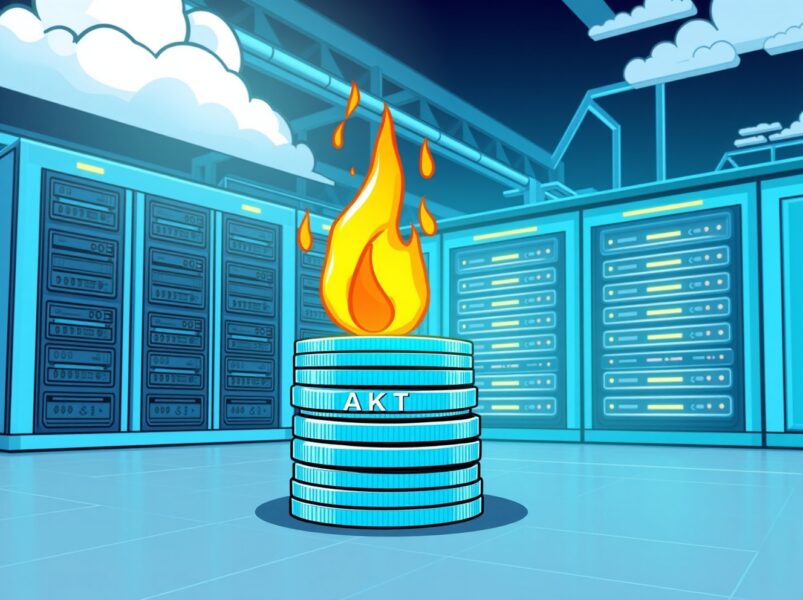
Akash Network’s Strategic Move: A Crucial Burn for AKT’s Future

Akash Network’s Strategic Move: A Crucial Burn for AKT’s Future

BitcoinWorld Akash Network’s Strategic Move: A Crucial Burn for AKT’s Future In the dynamic world of decentralized computing, exciting developments are constantly shaping the future. Today, all eyes are on Akash Network, the innovative supercloud project, as it proposes a significant change to its tokenomics. This move aims to strengthen the value of its native token, AKT, and further solidify its position in the competitive blockchain space. The community is buzzing about a newly submitted governance proposal that could introduce a game-changing Burn Mint Equilibrium (BME) model. What is the Burn Mint Equilibrium (BME) for Akash Network? The core of this proposal revolves around a concept called Burn Mint Equilibrium, or BME. Essentially, this model is designed to create a balance in the token’s circulating supply by systematically removing a portion of tokens from existence. For Akash Network, this means burning an amount of AKT that is equivalent to the U.S. dollar value of fees paid by network users. Fee Conversion: When users pay for cloud services on the Akash Network, these fees are typically collected in various cryptocurrencies or stablecoins. AKT Equivalence: The proposal suggests converting the U.S. dollar value of these collected fees into an equivalent amount of AKT. Token Burn: This calculated amount of AKT would then be permanently removed from circulation, or ‘burned’. This mechanism creates a direct link between network utility and token supply reduction. As more users utilize the decentralized supercloud, more AKT will be burned, potentially impacting the token’s scarcity and value. Why is This Proposal Crucial for AKT Holders? For anyone holding AKT, or considering investing in the Akash Network ecosystem, this proposal carries significant weight. Token burning mechanisms are often viewed as a positive development because they can lead to increased scarcity. When supply decreases while demand remains constant or grows, the price per unit tends to increase. Here are some key benefits: Increased Scarcity: Burning tokens reduces the total circulating supply of AKT. This makes each remaining token potentially more valuable over time. Demand-Supply Dynamics: The BME model directly ties the burning of AKT to network usage. Higher adoption of the Akash Network supercloud translates into more fees, and thus more AKT burned. Long-Term Value Proposition: By creating a deflationary pressure, the proposal aims to enhance AKT’s long-term value, making it a more attractive asset for investors and long-term holders. This strategic move demonstrates a commitment from the Akash Network community to optimize its tokenomics for sustainable growth and value appreciation. How Does BME Impact the Decentralized Supercloud Mission? Beyond token value, the BME proposal aligns perfectly with the broader mission of the Akash Network. As a decentralized supercloud, Akash provides a marketplace for cloud computing resources, allowing users to deploy applications faster, more efficiently, and at a lower cost than traditional providers. The BME model reinforces this utility. Consider these impacts: Network Health: A stronger AKT token can incentivize more validators and providers to secure and contribute resources to the network, improving its overall health and resilience. Ecosystem Growth: Enhanced token value can attract more developers and projects to build on the Akash Network, fostering a vibrant and diverse ecosystem. User Incentive: While users pay fees, the potential appreciation of AKT could indirectly benefit those who hold the token, creating a circular economy within the supercloud. This proposal is not just about burning tokens; it’s about building a more robust, self-sustaining, and economically sound decentralized cloud infrastructure for the future. What Are the Next Steps for the Akash Network Community? As a governance proposal, the BME model will now undergo a period of community discussion and voting. This is a crucial phase where AKT holders and network participants can voice their opinions, debate the merits, and ultimately decide on the future direction of the project. Transparency and community engagement are hallmarks of decentralized projects like Akash Network. Challenges and Considerations: Implementation Complexity: Ensuring the burning mechanism is technically sound and transparent will be vital. Community Consensus: Achieving broad agreement within the diverse Akash Network community is key for successful adoption. The outcome of this vote will significantly shape the tokenomics and economic model of the Akash Network, influencing its trajectory in the rapidly evolving decentralized cloud landscape. The proposal to introduce a Burn Mint Equilibrium model represents a bold and strategic step for Akash Network. By directly linking network usage to token scarcity, the project aims to create a more resilient and valuable AKT token, ultimately strengthening its position as a leading decentralized supercloud provider. This move underscores the project’s commitment to innovative tokenomics and sustainable growth, promising an exciting future for both users and investors in the Akash Network ecosystem. It’s a clear signal that Akash is actively working to enhance its value proposition and maintain its competitive edge in the decentralized future. Frequently Asked Questions (FAQs) 1. What is the main goal of the Burn Mint Equilibrium (BME) proposal for Akash Network? The primary goal is to adjust the circulating supply of AKT tokens by burning a portion of network fees, thereby creating deflationary pressure and potentially enhancing the token’s long-term value and scarcity. 2. How will the amount of AKT to be burned be determined? The proposal suggests burning an amount of AKT equivalent to the U.S. dollar value of fees paid by users on the Akash Network for cloud services. 3. What are the potential benefits for AKT token holders? Token holders could benefit from increased scarcity of AKT, which may lead to higher demand and appreciation in value over time, especially as network usage grows. 4. How does this proposal relate to the overall mission of Akash Network? The BME model reinforces the Akash Network‘s mission by creating a stronger, more economically robust ecosystem. A healthier token incentivizes network participants, fostering growth and stability for the decentralized supercloud. 5. What is the next step for this governance proposal? The proposal will undergo a period of community discussion and voting by AKT token holders. The community’s decision will determine if the BME model is implemented on the Akash Network. If you found this article insightful, consider sharing it with your network! Your support helps us bring more valuable insights into the world of decentralized technology. Stay informed and help spread the word about the exciting developments happening within Akash Network. To learn more about the latest crypto market trends, explore our article on key developments shaping decentralized cloud solutions price action. This post Akash Network’s Strategic Move: A Crucial Burn for AKT’s Future first appeared on BitcoinWorld.
Paylaş
Coinstats2025/09/22 21:35