Discover why Pi Network delays & Ethereum fatigue push traders toward Zero Knowledge Proof’s day-one utility model as its whitelist opens now for early access.Discover why Pi Network delays & Ethereum fatigue push traders toward Zero Knowledge Proof’s day-one utility model as its whitelist opens now for early access.

Zero Knowledge Proof Draws Analyst Attention as Pi Declines and Ethereum Dips

2025/11/17 00:00
ZKP

Crypto analysts often return to the same question: what is the next big crypto? Pi Network and Ethereum both created large communities, but neither offers a clean launch with day-one utility. Pi Network still waits for a full mainnet, and Ethereum’s post-merge cycle has dealt with congestion issues and growing user fatigue.

This creates room for a different model led by Zero Knowledge Proof (ZKP), a project built completely by its own team without outside shortcuts or hype cycles. Zero Knowledge Proof (ZKP) removes uncertainty and introduces a build-first approach that prepares its full infrastructure to activate on ICA Day 1 of the presale, giving users something functional from the start.

Pi Network Faces Declining Strength As Mainnet Delay Continues

Pi Network attracted one of the largest mobile mining groups ever, but ongoing questions about delivery remain. The absence of a fully open mainnet has created uncertainty in the market, and this trend shows in pricing. Based on the most used Pi Network price prediction metrics, the estimated value fell from about $38 in January 2024 to around $19 in November 2025.

This marks a 50 percent drop and highlights concerns around locked balances, off-chain activity, and long waits for real utility. Users still wait for updates on withdrawals, live transactions, and apps that work outside limited test environments.

ZKP banner724 2

The original idea gained support through easy onboarding and simple mobile mining, but without a public mainnet, doubts have grown about how user activity connects to real token value. The model depends heavily on anticipation, which is slowing as timelines shift again. With no confirmed date for open mainnet use, the project stands at a turning point while holders debate whether early momentum can last through the extended delay.

Ethereum Slows As Other Networks Gain Ground

Ethereum remains the best known smart contract system, but it now faces structural pressure that matters for anyone asking what the next big crypto is. After the merge, hopes were high, yet Ethereum moved from $2,680 to $1,985, a 25% correction. This ongoing Ethereum bearish trend continues despite active usage across Layer 2 networks.

Developers mention gas costs that still rise during heavy traffic, and some long-term builders have shifted toward chains with lower costs. Institutions continue to use Ethereum for settlement, but retail friction has increased, causing traders to question its near-term upside.

coins753

The network remains important and will continue to shape the industry, but its expansion has slowed compared to earlier years. Each upgrade aims to reduce fees and balance workload, yet the market has not rewarded these improvements as strongly as expected. Ethereum’s outlook stays solid, but its pace is no longer automatic, and many now search for models with clear mechanics and direct utility from the first day.

How ZKP Sets Up a Different Type of Launch

Zero Knowledge Proof (ZKP) takes a different direction from both Pi Network and Ethereum by refusing to rely on speculation as the primary driver. Instead of promising utility at an undefined point, Zero Knowledge Proof (ZKP) activates everything on ICA Day 1 of its presale. 

Nothing is live yet, but the entire system is built and ready to run the moment the presale opens. This includes the on-chain auction, the earning dashboard, validator tools, and the hardware-powered compute network that uses Proof Pods to perform private AI workloads.

Where Pi Network delays and Ethereum gas costs push uncertainty, Zero Knowledge Proof (ZKP) leans on transparent mechanics that start working immediately once the presale begins. 

The daily ICA auction will distribute tokens proportionally, with no private rounds, no early pricing advantages, and no allocation games. Anyone can join, and everyone will receive a fair share of the 200 million ZKP coins released each auction cycle. This becomes the daily reference price for the entire ecosystem and sets the earning rate for Proof Pods starting from Day 1.

Proof Pods give Zero Knowledge Proof (ZKP) a hands-on infrastructure layer that neither Pi Network nor Ethereum provides at launch. These devices run verifiable compute from the first moment the network activates, completing AI tasks and generating zero knowledge proofs without exposing data. 

They also operate a level system that scales earning potential from $1 to $300 per day in ZKP value, based on the previous auction price. This creates a real work-to-earn model instead of the promise-driven economics seen in Pi Network’s inactive mainnet or the fluctuating fees of Ethereum.

ZKP6427 1

The core goal of Zero Knowledge Proof (ZKP) is simple: give users something that functions on Day 1. Instead of waiting for utility or hoping for gas savings, participants enter a network that turns their contribution into immediate activity once the presale unlocks. And with the whitelist currently open, early supporters get priority access before the network activates.

Final Look at How Investors Are Viewing the Market

As investors search for what is the next big crypto, Pi Network and Ethereum offer reminders of how delays and structural limits can weaken momentum. Pi Network continues to face mainnet uncertainty, and Ethereum fights slowing adoption during a bearish trend despite its large ecosystem.

Zero Knowledge Proof (ZKP) positions itself differently by launching everything at once on ICA Day 1, removing speculation and replacing it with verifiable infrastructure. The project does not rely on hype cycles. It relies on fully built tools that activate the moment the presale begins. The whitelist is open now, and securing a spot early is essential.

ZKP banner724 1

Find Out More About Zero Knowledge Proof (ZKP): 
Website:zkp.com

Sorumluluk Reddi: Bu sitede yeniden yayınlanan makaleler, halka açık platformlardan alınmıştır ve yalnızca bilgilendirme amaçlıdır. MEXC'nin görüşlerini yansıtmayabilir. Tüm hakları telif sahiplerine aittir. Herhangi bir içeriğin üçüncü taraf haklarını ihlal ettiğini düşünüyorsanız, kaldırılması için lütfen service@support.mexc.com ile iletişime geçin. MEXC, içeriğin doğruluğu, eksiksizliği veya güncelliği konusunda hiçbir garanti vermez ve sağlanan bilgilere dayalı olarak alınan herhangi bir eylemden sorumlu değildir. İçerik, finansal, yasal veya diğer profesyonel tavsiye niteliğinde değildir ve MEXC tarafından bir tavsiye veya onay olarak değerlendirilmemelidir.

Ayrıca Şunları da Beğenebilirsiniz

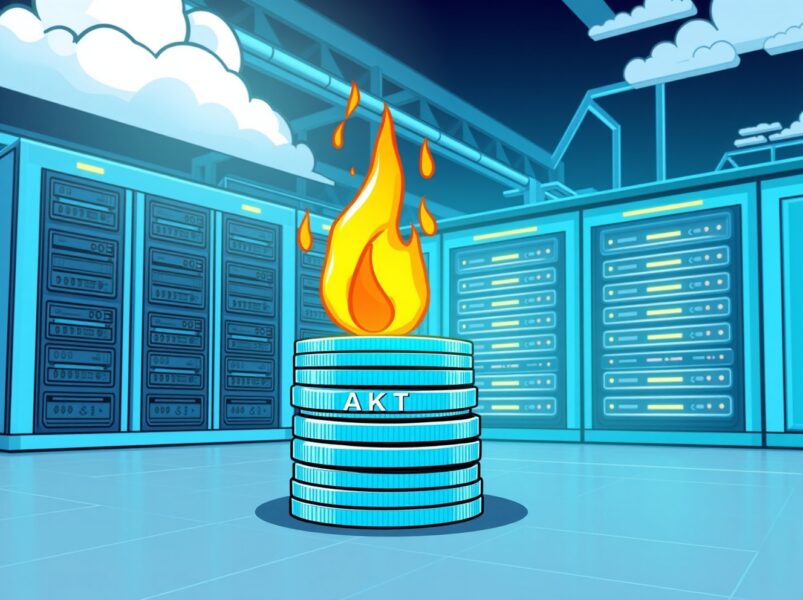
Akash Network’s Strategic Move: A Crucial Burn for AKT’s Future

Akash Network’s Strategic Move: A Crucial Burn for AKT’s Future

BitcoinWorld Akash Network’s Strategic Move: A Crucial Burn for AKT’s Future In the dynamic world of decentralized computing, exciting developments are constantly shaping the future. Today, all eyes are on Akash Network, the innovative supercloud project, as it proposes a significant change to its tokenomics. This move aims to strengthen the value of its native token, AKT, and further solidify its position in the competitive blockchain space. The community is buzzing about a newly submitted governance proposal that could introduce a game-changing Burn Mint Equilibrium (BME) model. What is the Burn Mint Equilibrium (BME) for Akash Network? The core of this proposal revolves around a concept called Burn Mint Equilibrium, or BME. Essentially, this model is designed to create a balance in the token’s circulating supply by systematically removing a portion of tokens from existence. For Akash Network, this means burning an amount of AKT that is equivalent to the U.S. dollar value of fees paid by network users. Fee Conversion: When users pay for cloud services on the Akash Network, these fees are typically collected in various cryptocurrencies or stablecoins. AKT Equivalence: The proposal suggests converting the U.S. dollar value of these collected fees into an equivalent amount of AKT. Token Burn: This calculated amount of AKT would then be permanently removed from circulation, or ‘burned’. This mechanism creates a direct link between network utility and token supply reduction. As more users utilize the decentralized supercloud, more AKT will be burned, potentially impacting the token’s scarcity and value. Why is This Proposal Crucial for AKT Holders? For anyone holding AKT, or considering investing in the Akash Network ecosystem, this proposal carries significant weight. Token burning mechanisms are often viewed as a positive development because they can lead to increased scarcity. When supply decreases while demand remains constant or grows, the price per unit tends to increase. Here are some key benefits: Increased Scarcity: Burning tokens reduces the total circulating supply of AKT. This makes each remaining token potentially more valuable over time. Demand-Supply Dynamics: The BME model directly ties the burning of AKT to network usage. Higher adoption of the Akash Network supercloud translates into more fees, and thus more AKT burned. Long-Term Value Proposition: By creating a deflationary pressure, the proposal aims to enhance AKT’s long-term value, making it a more attractive asset for investors and long-term holders. This strategic move demonstrates a commitment from the Akash Network community to optimize its tokenomics for sustainable growth and value appreciation. How Does BME Impact the Decentralized Supercloud Mission? Beyond token value, the BME proposal aligns perfectly with the broader mission of the Akash Network. As a decentralized supercloud, Akash provides a marketplace for cloud computing resources, allowing users to deploy applications faster, more efficiently, and at a lower cost than traditional providers. The BME model reinforces this utility. Consider these impacts: Network Health: A stronger AKT token can incentivize more validators and providers to secure and contribute resources to the network, improving its overall health and resilience. Ecosystem Growth: Enhanced token value can attract more developers and projects to build on the Akash Network, fostering a vibrant and diverse ecosystem. User Incentive: While users pay fees, the potential appreciation of AKT could indirectly benefit those who hold the token, creating a circular economy within the supercloud. This proposal is not just about burning tokens; it’s about building a more robust, self-sustaining, and economically sound decentralized cloud infrastructure for the future. What Are the Next Steps for the Akash Network Community? As a governance proposal, the BME model will now undergo a period of community discussion and voting. This is a crucial phase where AKT holders and network participants can voice their opinions, debate the merits, and ultimately decide on the future direction of the project. Transparency and community engagement are hallmarks of decentralized projects like Akash Network. Challenges and Considerations: Implementation Complexity: Ensuring the burning mechanism is technically sound and transparent will be vital. Community Consensus: Achieving broad agreement within the diverse Akash Network community is key for successful adoption. The outcome of this vote will significantly shape the tokenomics and economic model of the Akash Network, influencing its trajectory in the rapidly evolving decentralized cloud landscape. The proposal to introduce a Burn Mint Equilibrium model represents a bold and strategic step for Akash Network. By directly linking network usage to token scarcity, the project aims to create a more resilient and valuable AKT token, ultimately strengthening its position as a leading decentralized supercloud provider. This move underscores the project’s commitment to innovative tokenomics and sustainable growth, promising an exciting future for both users and investors in the Akash Network ecosystem. It’s a clear signal that Akash is actively working to enhance its value proposition and maintain its competitive edge in the decentralized future. Frequently Asked Questions (FAQs) 1. What is the main goal of the Burn Mint Equilibrium (BME) proposal for Akash Network? The primary goal is to adjust the circulating supply of AKT tokens by burning a portion of network fees, thereby creating deflationary pressure and potentially enhancing the token’s long-term value and scarcity. 2. How will the amount of AKT to be burned be determined? The proposal suggests burning an amount of AKT equivalent to the U.S. dollar value of fees paid by users on the Akash Network for cloud services. 3. What are the potential benefits for AKT token holders? Token holders could benefit from increased scarcity of AKT, which may lead to higher demand and appreciation in value over time, especially as network usage grows. 4. How does this proposal relate to the overall mission of Akash Network? The BME model reinforces the Akash Network‘s mission by creating a stronger, more economically robust ecosystem. A healthier token incentivizes network participants, fostering growth and stability for the decentralized supercloud. 5. What is the next step for this governance proposal? The proposal will undergo a period of community discussion and voting by AKT token holders. The community’s decision will determine if the BME model is implemented on the Akash Network. If you found this article insightful, consider sharing it with your network! Your support helps us bring more valuable insights into the world of decentralized technology. Stay informed and help spread the word about the exciting developments happening within Akash Network. To learn more about the latest crypto market trends, explore our article on key developments shaping decentralized cloud solutions price action. This post Akash Network’s Strategic Move: A Crucial Burn for AKT’s Future first appeared on BitcoinWorld.
Paylaş
Coinstats2025/09/22 21:35