The post Peter Brandt Reveals Shocking Bitcoin Price Target, Ripple CTO Doubles Down on XRP Ledger, Shiba Inu Faces Extreme On-Chain Anomaly – Crypto News Digest appeared on BitcoinEthereumNews.com. Peter Brandt flags two major BTC downside targets Bitcoin just picked up a warning from trading legend Peter Brandt, whose latest chart calls for a drop to $81,852 or even $59,403 per BTC. BTC to $59,000. Peter Brandt’s newest Bitcoin chart outlines a weekly five-leg climb followed by a curve break. Peter Brandt’s new Bitcoin (BTC) chart gives a straight message that bulls will not like. His weekly setup shows a clear five-leg climb, a broken curve and two landing zones that are far below today’s price. The first one sits near $81,852, and the deeper one is around $59,403 per BTC. The trader with 50-year experience in markets does not see them as panic markers, but as the natural clean-up after a run that stretched too far while traders priced in an endless policy pivot. Bigger picture. Brandt compares late 2025 to late 2021 in reverse: prices falling while traditional indexes like the S&P 500 remain stable. The bigger picture helps explain why Brandt’s targets do not look extreme. It is like late 2025 is the same as late 2021, just the opposite. Prices are dropping, but the major indexes like S&P 500 are still doing okay. Four years ago, the market was getting ready for quantitative tightening, now it is the easing narrative. The main issue is that a lot of assets already trade as if rates are going to drop quickly. Crypto followed the same logic, ignoring that future cuts may already be in the chart. Ripple CTO explains purpose of new XRPL hub David Schwartz explains his XRP Ledger push. XRPL matters. When asked what the hub is for, Schwartz outlined three reasons for running it. In a recent tweet, Ripple CTO David Schwartz indicated that his hub had been running on rippled v2.6.2 with no issues reported.… The post Peter Brandt Reveals Shocking Bitcoin Price Target, Ripple CTO Doubles Down on XRP Ledger, Shiba Inu Faces Extreme On-Chain Anomaly – Crypto News Digest appeared on BitcoinEthereumNews.com. Peter Brandt flags two major BTC downside targets Bitcoin just picked up a warning from trading legend Peter Brandt, whose latest chart calls for a drop to $81,852 or even $59,403 per BTC. BTC to $59,000. Peter Brandt’s newest Bitcoin chart outlines a weekly five-leg climb followed by a curve break. Peter Brandt’s new Bitcoin (BTC) chart gives a straight message that bulls will not like. His weekly setup shows a clear five-leg climb, a broken curve and two landing zones that are far below today’s price. The first one sits near $81,852, and the deeper one is around $59,403 per BTC. The trader with 50-year experience in markets does not see them as panic markers, but as the natural clean-up after a run that stretched too far while traders priced in an endless policy pivot. Bigger picture. Brandt compares late 2025 to late 2021 in reverse: prices falling while traditional indexes like the S&P 500 remain stable. The bigger picture helps explain why Brandt’s targets do not look extreme. It is like late 2025 is the same as late 2021, just the opposite. Prices are dropping, but the major indexes like S&P 500 are still doing okay. Four years ago, the market was getting ready for quantitative tightening, now it is the easing narrative. The main issue is that a lot of assets already trade as if rates are going to drop quickly. Crypto followed the same logic, ignoring that future cuts may already be in the chart. Ripple CTO explains purpose of new XRPL hub David Schwartz explains his XRP Ledger push. XRPL matters. When asked what the hub is for, Schwartz outlined three reasons for running it. In a recent tweet, Ripple CTO David Schwartz indicated that his hub had been running on rippled v2.6.2 with no issues reported.…

Peter Brandt Reveals Shocking Bitcoin Price Target, Ripple CTO Doubles Down on XRP Ledger, Shiba Inu Faces Extreme On-Chain Anomaly – Crypto News Digest

2025/12/09 07:39

Peter Brandt flags two major BTC downside targets

Bitcoin just picked up a warning from trading legend Peter Brandt, whose latest chart calls for a drop to $81,852 or even $59,403 per BTC.

  • BTC to $59,000. Peter Brandt’s newest Bitcoin chart outlines a weekly five-leg climb followed by a curve break.

Peter Brandt’s new Bitcoin (BTC) chart gives a straight message that bulls will not like. His weekly setup shows a clear five-leg climb, a broken curve and two landing zones that are far below today’s price. The first one sits near $81,852, and the deeper one is around $59,403 per BTC.

The trader with 50-year experience in markets does not see them as panic markers, but as the natural clean-up after a run that stretched too far while traders priced in an endless policy pivot.

  • Bigger picture. Brandt compares late 2025 to late 2021 in reverse: prices falling while traditional indexes like the S&P 500 remain stable.

The bigger picture helps explain why Brandt’s targets do not look extreme. It is like late 2025 is the same as late 2021, just the opposite. Prices are dropping, but the major indexes like S&P 500 are still doing okay. Four years ago, the market was getting ready for quantitative tightening, now it is the easing narrative.

The main issue is that a lot of assets already trade as if rates are going to drop quickly. Crypto followed the same logic, ignoring that future cuts may already be in the chart.

Ripple CTO explains purpose of new XRPL hub

David Schwartz explains his XRP Ledger push.

  • XRPL matters. When asked what the hub is for, Schwartz outlined three reasons for running it.

In a recent tweet, Ripple CTO David Schwartz indicated that his hub had been running on rippled v2.6.2 with no issues reported. This information from the Ripple CTO prompted a question from an X user who asked what the hub was for.

Responding to this question, Schwartz outlined three reasons why he chose to run a hub on XRP Ledger. First, he hadn’t been running any XRPL infrastructure for a few years and thought it would be cool to start again.

Second, there had been some instances of increased latency between some validators, and he believes that one good megahub could meaningfully reduce network latency and network diameter and increase reliability.

Third, there were some localized issues with XRPL not performing as well as expected in some cases, and he needed a hub to test his theories for what might be causing these issues.

  • No disruptive tests. The hub is designed as a single high-reliability server aimed at maximum uptime.

In August, Ripple CTO David Schwartz unveiled plans for a hub dedicated to UNL validators, other hubs and servers running XRPL applications. This, as a single server, would operate as a production service aiming for maximum uptime and reliability, relying on a single hub.

Data gathered from it to understand network behavior and performance, and no disruptive testing would be done unless there were very unusual circumstances justifying it.

23.5 trillion SHIB outflow raises eyebrows

Shiba Inu is seeing an enormous exchange outflow that can change things around drastically.

  • Suspicious activity. Over 23.56 trillion SHIB moved in a single day. 

More than 23.56 trillion SHIB reportedly moved in a single day, according to Shiba Inu’s on-chain data from CryptoQuant at the time of writing, which is so out of the ordinary that it practically begs for suspicion. 

If true, this would suggest significant internal reorganization by big holders or unheard-of selling pressure. However, the more logical explanation, a tracking error or data anomaly, is much simpler given the behavior of the chart and the rest of the market.

  • Nothing happened. Normally, if trillions of tokens hit exchanges, the market would show widened spreads, high-volume flushes or visible price dislocation.

With no indications of unusual volatility or liquidity shocks, SHIB’s price action appears routine. It is still trapped below all major moving averages. 

Expanded spreads, violent candles or, at the very least, a discernible liquidity reaction occur when trillions of tokens actually hit exchanges. That does not appear. Volume continues to be unremarkable. Price does not even react. Clearly, trillions of new sell-side supply are not being priced in by the market.

Source: https://u.today/peter-brandt-reveals-shocking-bitcoin-price-target-ripple-cto-doubles-down-on-xrp-ledger-shiba-inu

Sorumluluk Reddi: Bu sitede yeniden yayınlanan makaleler, halka açık platformlardan alınmıştır ve yalnızca bilgilendirme amaçlıdır. MEXC'nin görüşlerini yansıtmayabilir. Tüm hakları telif sahiplerine aittir. Herhangi bir içeriğin üçüncü taraf haklarını ihlal ettiğini düşünüyorsanız, kaldırılması için lütfen service@support.mexc.com ile iletişime geçin. MEXC, içeriğin doğruluğu, eksiksizliği veya güncelliği konusunda hiçbir garanti vermez ve sağlanan bilgilere dayalı olarak alınan herhangi bir eylemden sorumlu değildir. İçerik, finansal, yasal veya diğer profesyonel tavsiye niteliğinde değildir ve MEXC tarafından bir tavsiye veya onay olarak değerlendirilmemelidir.

Ayrıca Şunları da Beğenebilirsiniz

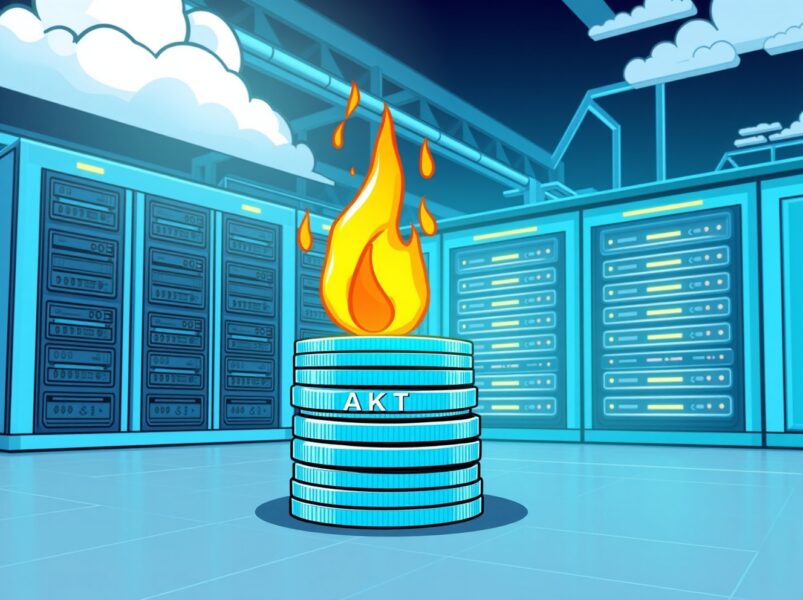
Akash Network’s Strategic Move: A Crucial Burn for AKT’s Future

Akash Network’s Strategic Move: A Crucial Burn for AKT’s Future

BitcoinWorld Akash Network’s Strategic Move: A Crucial Burn for AKT’s Future In the dynamic world of decentralized computing, exciting developments are constantly shaping the future. Today, all eyes are on Akash Network, the innovative supercloud project, as it proposes a significant change to its tokenomics. This move aims to strengthen the value of its native token, AKT, and further solidify its position in the competitive blockchain space. The community is buzzing about a newly submitted governance proposal that could introduce a game-changing Burn Mint Equilibrium (BME) model. What is the Burn Mint Equilibrium (BME) for Akash Network? The core of this proposal revolves around a concept called Burn Mint Equilibrium, or BME. Essentially, this model is designed to create a balance in the token’s circulating supply by systematically removing a portion of tokens from existence. For Akash Network, this means burning an amount of AKT that is equivalent to the U.S. dollar value of fees paid by network users. Fee Conversion: When users pay for cloud services on the Akash Network, these fees are typically collected in various cryptocurrencies or stablecoins. AKT Equivalence: The proposal suggests converting the U.S. dollar value of these collected fees into an equivalent amount of AKT. Token Burn: This calculated amount of AKT would then be permanently removed from circulation, or ‘burned’. This mechanism creates a direct link between network utility and token supply reduction. As more users utilize the decentralized supercloud, more AKT will be burned, potentially impacting the token’s scarcity and value. Why is This Proposal Crucial for AKT Holders? For anyone holding AKT, or considering investing in the Akash Network ecosystem, this proposal carries significant weight. Token burning mechanisms are often viewed as a positive development because they can lead to increased scarcity. When supply decreases while demand remains constant or grows, the price per unit tends to increase. Here are some key benefits: Increased Scarcity: Burning tokens reduces the total circulating supply of AKT. This makes each remaining token potentially more valuable over time. Demand-Supply Dynamics: The BME model directly ties the burning of AKT to network usage. Higher adoption of the Akash Network supercloud translates into more fees, and thus more AKT burned. Long-Term Value Proposition: By creating a deflationary pressure, the proposal aims to enhance AKT’s long-term value, making it a more attractive asset for investors and long-term holders. This strategic move demonstrates a commitment from the Akash Network community to optimize its tokenomics for sustainable growth and value appreciation. How Does BME Impact the Decentralized Supercloud Mission? Beyond token value, the BME proposal aligns perfectly with the broader mission of the Akash Network. As a decentralized supercloud, Akash provides a marketplace for cloud computing resources, allowing users to deploy applications faster, more efficiently, and at a lower cost than traditional providers. The BME model reinforces this utility. Consider these impacts: Network Health: A stronger AKT token can incentivize more validators and providers to secure and contribute resources to the network, improving its overall health and resilience. Ecosystem Growth: Enhanced token value can attract more developers and projects to build on the Akash Network, fostering a vibrant and diverse ecosystem. User Incentive: While users pay fees, the potential appreciation of AKT could indirectly benefit those who hold the token, creating a circular economy within the supercloud. This proposal is not just about burning tokens; it’s about building a more robust, self-sustaining, and economically sound decentralized cloud infrastructure for the future. What Are the Next Steps for the Akash Network Community? As a governance proposal, the BME model will now undergo a period of community discussion and voting. This is a crucial phase where AKT holders and network participants can voice their opinions, debate the merits, and ultimately decide on the future direction of the project. Transparency and community engagement are hallmarks of decentralized projects like Akash Network. Challenges and Considerations: Implementation Complexity: Ensuring the burning mechanism is technically sound and transparent will be vital. Community Consensus: Achieving broad agreement within the diverse Akash Network community is key for successful adoption. The outcome of this vote will significantly shape the tokenomics and economic model of the Akash Network, influencing its trajectory in the rapidly evolving decentralized cloud landscape. The proposal to introduce a Burn Mint Equilibrium model represents a bold and strategic step for Akash Network. By directly linking network usage to token scarcity, the project aims to create a more resilient and valuable AKT token, ultimately strengthening its position as a leading decentralized supercloud provider. This move underscores the project’s commitment to innovative tokenomics and sustainable growth, promising an exciting future for both users and investors in the Akash Network ecosystem. It’s a clear signal that Akash is actively working to enhance its value proposition and maintain its competitive edge in the decentralized future. Frequently Asked Questions (FAQs) 1. What is the main goal of the Burn Mint Equilibrium (BME) proposal for Akash Network? The primary goal is to adjust the circulating supply of AKT tokens by burning a portion of network fees, thereby creating deflationary pressure and potentially enhancing the token’s long-term value and scarcity. 2. How will the amount of AKT to be burned be determined? The proposal suggests burning an amount of AKT equivalent to the U.S. dollar value of fees paid by users on the Akash Network for cloud services. 3. What are the potential benefits for AKT token holders? Token holders could benefit from increased scarcity of AKT, which may lead to higher demand and appreciation in value over time, especially as network usage grows. 4. How does this proposal relate to the overall mission of Akash Network? The BME model reinforces the Akash Network‘s mission by creating a stronger, more economically robust ecosystem. A healthier token incentivizes network participants, fostering growth and stability for the decentralized supercloud. 5. What is the next step for this governance proposal? The proposal will undergo a period of community discussion and voting by AKT token holders. The community’s decision will determine if the BME model is implemented on the Akash Network. If you found this article insightful, consider sharing it with your network! Your support helps us bring more valuable insights into the world of decentralized technology. Stay informed and help spread the word about the exciting developments happening within Akash Network. To learn more about the latest crypto market trends, explore our article on key developments shaping decentralized cloud solutions price action. This post Akash Network’s Strategic Move: A Crucial Burn for AKT’s Future first appeared on BitcoinWorld.
Paylaş
Coinstats2025/09/22 21:35