BitcoinWorld Solana Decentralization: The Empowering Truth About Blockchain Leadership At the recent Solana Breakpoint event, co-founder Anatoly Yakovenko droppedBitcoinWorld Solana Decentralization: The Empowering Truth About Blockchain Leadership At the recent Solana Breakpoint event, co-founder Anatoly Yakovenko dropped

Solana Decentralization: The Empowering Truth About Blockchain Leadership

2025/12/12 16:10
Cartoon illustration of collaborative Solana decentralization with diverse contributors building a network.

BitcoinWorld

Solana Decentralization: The Empowering Truth About Blockchain Leadership

At the recent Solana Breakpoint event, co-founder Anatoly Yakovenko dropped a revolutionary idea that challenges everything we thought we knew about blockchain governance. He didn’t just talk about technical specs or price predictions—he redefined what Solana decentralization truly means. Forget the old notion of leaderless chaos; Yakovenko envisions a future where every participant becomes a leader. This perspective could fundamentally change how we build and interact with decentralized networks.

What Does Solana Decentralization Really Mean?

When most people hear “decentralization,” they imagine a structure without any clear authority. However, Anatoly Yakovenko presents a more nuanced vision. He argues that true Solana decentralization doesn’t eliminate leadership but distributes it among all participants. Imagine a symphony where every musician leads their section while contributing to the harmony. This approach creates a resilient system where responsibility and initiative spread across the entire network.

Yakovenko’s personal goal reveals the depth of this philosophy. He wants to reach a point where he can “blend into the audience” without special privileges like GitHub commit permissions. This isn’t about stepping away from responsibility but about building a system so robust that no single person’s access controls its destiny. The network matures when founders become ordinary participants.

How Does Everyone Become a Leader in Practice?

The concept of universal leadership might sound idealistic, but Solana’s architecture makes it achievable. Let’s break down what this looks like in real-world applications:

  • Validator Independence: Anyone can run a node and participate in consensus
  • Governance Participation: Token holders vote on proposals that shape the network’s future
  • Development Contributions: Developers build applications without central approval
  • Community Moderation: Users collectively maintain network standards and culture

This distributed leadership model creates what economists call “anti-fragile” systems—networks that grow stronger under stress. When challenges emerge, multiple leaders can propose solutions simultaneously, creating a competitive environment for the best ideas. The recent Solana network upgrades demonstrate this perfectly, with various teams collaborating and competing to improve performance.

What Challenges Does This Decentralization Model Face?

While the vision is compelling, implementing universal leadership presents significant hurdles. First, coordination becomes more complex when everyone has agency. Decision-making can slow down without clear hierarchies. Second, quality control requires new mechanisms when anyone can contribute code or proposals. Finally, security concerns multiply with increased participation points.

However, Solana’s approach addresses these challenges through technological design. The network’s high throughput allows for rapid consensus even with numerous participants. Smart contract audits and formal verification tools help maintain quality without central gatekeepers. Most importantly, the economic incentives align individual leadership with network health—validators earn more by acting honestly and efficiently.

Why Does This Matter for Blockchain’s Future?

Yakovenko’s perspective on Solana decentralization represents more than just technical philosophy—it’s a blueprint for the next generation of digital communities. Traditional organizations concentrate power at the top, creating single points of failure. Distributed leadership models like Solana’s create resilient networks that can adapt and evolve organically.

Consider how this applies beyond cryptocurrency. Social media platforms struggle with content moderation because decisions come from distant corporate offices. A decentralized approach could empower communities to set their own standards while maintaining interoperability. The principles Yakovenko describes could reshape everything from supply chain management to democratic voting systems.

How Can You Participate in This Decentralized Future?

You don’t need to be a blockchain expert to contribute to Solana decentralization. The network welcomes various forms of participation:

  • Run a validator node with modest hardware requirements
  • Stake your SOL tokens to help secure the network
  • Build applications using Solana’s developer tools
  • Participate in governance discussions and votes
  • Educate others about decentralized technologies

Each contribution, no matter how small, strengthens the network’s distributed leadership. Remember Yakovenko’s goal of blending into the audience—the ultimate success metric is when no single person’s participation feels essential because everyone’s contribution matters equally.

The Bottom Line on Solana’s Leadership Revolution

Anatoly Yakovenko’s vision transforms decentralization from an abstract ideal into a practical framework for collective action. True Solana decentralization isn’t about removing leaders but about empowering everyone to lead in their domain. This approach creates networks that are more resilient, innovative, and equitable than traditional hierarchical systems.

As blockchain technology matures, this distributed leadership model may become its most valuable export to other industries. The future belongs to networks where founders can disappear into the crowd because they’ve built systems that don’t depend on any individual. That’s the ultimate test of decentralization—and Solana is leading the charge toward that reality.

Frequently Asked Questions

What did Anatoly Yakovenko mean by “everyone is a leader”?
He meant that in a truly decentralized system, every participant has agency and responsibility. Rather than having no leaders, the system distributes leadership roles across all network participants through validation, governance, and development contributions.

How is Solana’s decentralization different from other blockchains?
While many blockchains aim for decentralization, Solana emphasizes technical architecture that enables high participation rates. Its focus on scalability allows more users to run nodes and participate in consensus without compromising performance.

Can anyone really contribute to Solana without permission?
Yes, that’s the core principle. Anyone can run a validator node, build applications, or participate in governance without seeking approval from a central authority. The network’s rules are enforced by code rather than individuals.

What are the risks of distributed leadership in blockchain?
Primary risks include coordination challenges, potential for conflicting decisions, and slower response times in emergencies. However, Solana’s design uses economic incentives and fast consensus to mitigate these issues.

How does Solana prevent bad actors in a leaderless system?
The network uses proof-of-stake consensus where validators must stake SOL tokens. Malicious behavior leads to slashing (loss of staked tokens), creating strong economic disincentives for harmful actions.

What’s the practical benefit of this decentralization model for users?
Users benefit from increased network resilience, censorship resistance, and innovation diversity. When multiple teams can build without permission, they create more solutions to user problems than any single company could develop.

Found this perspective on Solana decentralization enlightening? Share this article with your network to spread understanding about blockchain’s leadership revolution. The more people grasp these concepts, the faster we can build truly decentralized futures together.

To learn more about the latest Solana trends, explore our article on key developments shaping Solana’s ecosystem and institutional adoption.

This post Solana Decentralization: The Empowering Truth About Blockchain Leadership first appeared on BitcoinWorld.

Sorumluluk Reddi: Bu sitede yeniden yayınlanan makaleler, halka açık platformlardan alınmıştır ve yalnızca bilgilendirme amaçlıdır. MEXC'nin görüşlerini yansıtmayabilir. Tüm hakları telif sahiplerine aittir. Herhangi bir içeriğin üçüncü taraf haklarını ihlal ettiğini düşünüyorsanız, kaldırılması için lütfen service@support.mexc.com ile iletişime geçin. MEXC, içeriğin doğruluğu, eksiksizliği veya güncelliği konusunda hiçbir garanti vermez ve sağlanan bilgilere dayalı olarak alınan herhangi bir eylemden sorumlu değildir. İçerik, finansal, yasal veya diğer profesyonel tavsiye niteliğinde değildir ve MEXC tarafından bir tavsiye veya onay olarak değerlendirilmemelidir.

Ayrıca Şunları da Beğenebilirsiniz

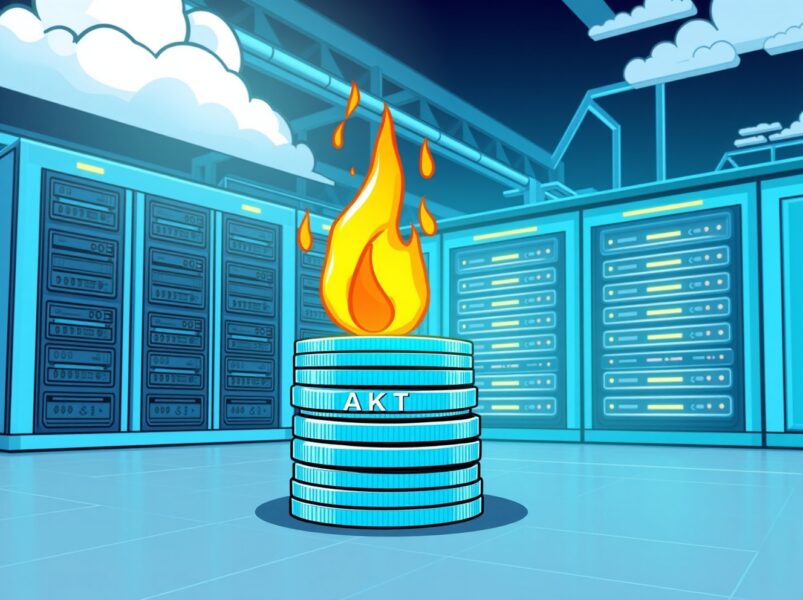
Akash Network’s Strategic Move: A Crucial Burn for AKT’s Future

Akash Network’s Strategic Move: A Crucial Burn for AKT’s Future

BitcoinWorld Akash Network’s Strategic Move: A Crucial Burn for AKT’s Future In the dynamic world of decentralized computing, exciting developments are constantly shaping the future. Today, all eyes are on Akash Network, the innovative supercloud project, as it proposes a significant change to its tokenomics. This move aims to strengthen the value of its native token, AKT, and further solidify its position in the competitive blockchain space. The community is buzzing about a newly submitted governance proposal that could introduce a game-changing Burn Mint Equilibrium (BME) model. What is the Burn Mint Equilibrium (BME) for Akash Network? The core of this proposal revolves around a concept called Burn Mint Equilibrium, or BME. Essentially, this model is designed to create a balance in the token’s circulating supply by systematically removing a portion of tokens from existence. For Akash Network, this means burning an amount of AKT that is equivalent to the U.S. dollar value of fees paid by network users. Fee Conversion: When users pay for cloud services on the Akash Network, these fees are typically collected in various cryptocurrencies or stablecoins. AKT Equivalence: The proposal suggests converting the U.S. dollar value of these collected fees into an equivalent amount of AKT. Token Burn: This calculated amount of AKT would then be permanently removed from circulation, or ‘burned’. This mechanism creates a direct link between network utility and token supply reduction. As more users utilize the decentralized supercloud, more AKT will be burned, potentially impacting the token’s scarcity and value. Why is This Proposal Crucial for AKT Holders? For anyone holding AKT, or considering investing in the Akash Network ecosystem, this proposal carries significant weight. Token burning mechanisms are often viewed as a positive development because they can lead to increased scarcity. When supply decreases while demand remains constant or grows, the price per unit tends to increase. Here are some key benefits: Increased Scarcity: Burning tokens reduces the total circulating supply of AKT. This makes each remaining token potentially more valuable over time. Demand-Supply Dynamics: The BME model directly ties the burning of AKT to network usage. Higher adoption of the Akash Network supercloud translates into more fees, and thus more AKT burned. Long-Term Value Proposition: By creating a deflationary pressure, the proposal aims to enhance AKT’s long-term value, making it a more attractive asset for investors and long-term holders. This strategic move demonstrates a commitment from the Akash Network community to optimize its tokenomics for sustainable growth and value appreciation. How Does BME Impact the Decentralized Supercloud Mission? Beyond token value, the BME proposal aligns perfectly with the broader mission of the Akash Network. As a decentralized supercloud, Akash provides a marketplace for cloud computing resources, allowing users to deploy applications faster, more efficiently, and at a lower cost than traditional providers. The BME model reinforces this utility. Consider these impacts: Network Health: A stronger AKT token can incentivize more validators and providers to secure and contribute resources to the network, improving its overall health and resilience. Ecosystem Growth: Enhanced token value can attract more developers and projects to build on the Akash Network, fostering a vibrant and diverse ecosystem. User Incentive: While users pay fees, the potential appreciation of AKT could indirectly benefit those who hold the token, creating a circular economy within the supercloud. This proposal is not just about burning tokens; it’s about building a more robust, self-sustaining, and economically sound decentralized cloud infrastructure for the future. What Are the Next Steps for the Akash Network Community? As a governance proposal, the BME model will now undergo a period of community discussion and voting. This is a crucial phase where AKT holders and network participants can voice their opinions, debate the merits, and ultimately decide on the future direction of the project. Transparency and community engagement are hallmarks of decentralized projects like Akash Network. Challenges and Considerations: Implementation Complexity: Ensuring the burning mechanism is technically sound and transparent will be vital. Community Consensus: Achieving broad agreement within the diverse Akash Network community is key for successful adoption. The outcome of this vote will significantly shape the tokenomics and economic model of the Akash Network, influencing its trajectory in the rapidly evolving decentralized cloud landscape. The proposal to introduce a Burn Mint Equilibrium model represents a bold and strategic step for Akash Network. By directly linking network usage to token scarcity, the project aims to create a more resilient and valuable AKT token, ultimately strengthening its position as a leading decentralized supercloud provider. This move underscores the project’s commitment to innovative tokenomics and sustainable growth, promising an exciting future for both users and investors in the Akash Network ecosystem. It’s a clear signal that Akash is actively working to enhance its value proposition and maintain its competitive edge in the decentralized future. Frequently Asked Questions (FAQs) 1. What is the main goal of the Burn Mint Equilibrium (BME) proposal for Akash Network? The primary goal is to adjust the circulating supply of AKT tokens by burning a portion of network fees, thereby creating deflationary pressure and potentially enhancing the token’s long-term value and scarcity. 2. How will the amount of AKT to be burned be determined? The proposal suggests burning an amount of AKT equivalent to the U.S. dollar value of fees paid by users on the Akash Network for cloud services. 3. What are the potential benefits for AKT token holders? Token holders could benefit from increased scarcity of AKT, which may lead to higher demand and appreciation in value over time, especially as network usage grows. 4. How does this proposal relate to the overall mission of Akash Network? The BME model reinforces the Akash Network‘s mission by creating a stronger, more economically robust ecosystem. A healthier token incentivizes network participants, fostering growth and stability for the decentralized supercloud. 5. What is the next step for this governance proposal? The proposal will undergo a period of community discussion and voting by AKT token holders. The community’s decision will determine if the BME model is implemented on the Akash Network. If you found this article insightful, consider sharing it with your network! Your support helps us bring more valuable insights into the world of decentralized technology. Stay informed and help spread the word about the exciting developments happening within Akash Network. To learn more about the latest crypto market trends, explore our article on key developments shaping decentralized cloud solutions price action. This post Akash Network’s Strategic Move: A Crucial Burn for AKT’s Future first appeared on BitcoinWorld.
Paylaş
Coinstats2025/09/22 21:35